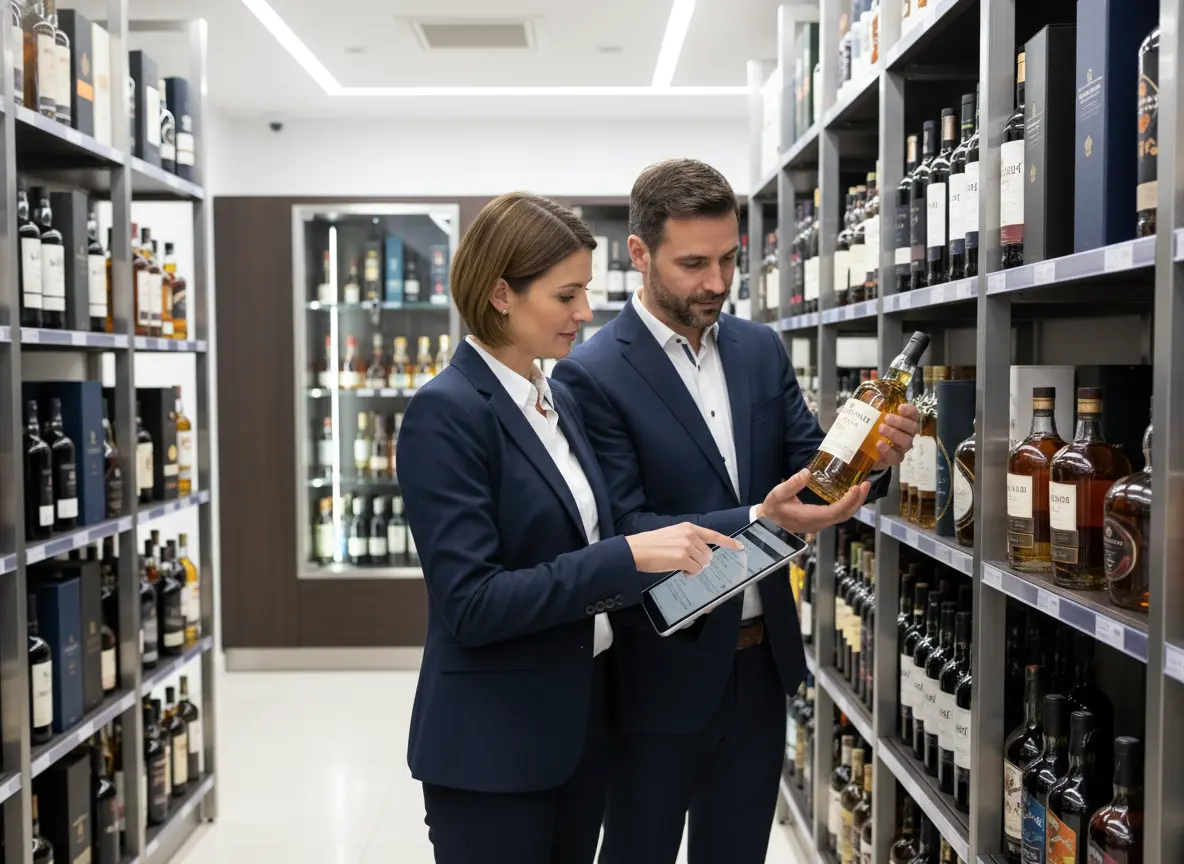
Welcome to the Bourbon Hunger Games
The truck rolls up. Your heart does a little pitter-patter. The distributor hands you the invoice, and there it is, nestled between ten cases of flavored vodka and a pallet of light beer: one—one—six-bottle case of E.H. Taylor. Or Blanton’s. Or, if the whiskey gods have truly smiled upon you, a bottle of something with the name "Van Winkle" on it.
And so it begins. Your phone will ring off the hook. Customers you haven't seen in six months will suddenly “just be in the neighborhood.” Your DMs will be a mess of hopeful pleas and thinly veiled demands. Congratulations, you’re no longer just a store owner; you’re the gatekeeper of the unobtainable, the curator of the allocated, the person standing between a whiskey lover and their liquid nirvana.
Managing high-value and allocated inventory is one of the most stressful, frustrating, and—let's be honest—glorious parts of this business. Screw it up, and you’ll be vilified on every local Facebook group. Handle it well, and you’ll build a fiercely loyal customer base that would follow you into battle. So, how do you turn this high-proof headache into a competitive advantage? Let's pour a drink and talk strategy.
The Art of the Allocation: Fairness, Profit, and Not Infuriating Everyone
First things first: you can’t make everyone happy. Someone is always going to be disappointed. The goal is to make them respectfully disappointed. Your allocation strategy needs to be clear, consistent, and as transparent as a bottle of gin. Here are a few of the most popular (and survivable) methods.
The Lottery System: Democracy in a Bottle
The lottery is the great equalizer. Anyone who walks in (or signs up online) has a shot. It’s simple: you announce you have a rare bottle, people enter their name, and you draw a winner. It feels fair, it generates a ton of excitement, and it’s a fantastic way to build your email and SMS marketing lists.
The Catch: It can be a slap in the face to your regulars—the folks who spend thousands with you every year—when a random person who only buys lottery tickets wins the Pappy 23. It also attracts "flippers" who have no intention of drinking the whiskey and will have it on a secondary market site before they even leave your parking lot. It’s like the Hunger Games, but with more bourbon and less archery. Hopefully.
The Points/Loyalty System: Rewarding Your Ride-or-Dies
This is the "put your money where your mouth is" approach. Customers earn points for every dollar they spend, and these points can be redeemed for the opportunity to purchase an allocated bottle. This is arguably the fairest way to reward the customers who actually keep your lights on day in and day out.
The Catch: It requires a robust POS system and meticulous tracking. More importantly, it can feel incredibly exclusionary to new customers. If someone walks in and learns they need to spend $10,000 just to get a whiff of a Weller, they might just walk right back out. Transparency is key here. If you run a points system, publicize the rules clearly so everyone knows how the game is played.
The "I Know a Guy" Method (Aka, Playing with Fire)
We all know it happens. A great customer comes in, you have a bottle of Stagg Jr. in the back, and you sell it to them. No fuss, no muss. This is a fantastic strategy if your business goal is to have exactly three very happy customers and a legion of very angry former ones spreading tales of your favoritism online. While rewarding your best clients is important, doing it in secret is a recipe for disaster. If word gets out—and it always gets out—you’ll be branded as the store that plays favorites, and the trust you’ve built will evaporate faster than the angel’s share.
The Fortress: Security, Storage, and Your Frontline Defense
Let's be blunt: that bottle of bourbon in your backroom might be worth more per ounce than the silver in your grandpa's fillings. Protecting it isn't just good business; it's essential loss prevention. This goes for both external and internal threats.
Turning Your Backroom into Fort Knox (On a Budget)
You don't need laser grids and pressure-sensitive floors, but you do need more than a flimsy door. A locked cage, a secure office, or at least a dedicated, camera-monitored area is non-negotiable for high-value stock. Your inventory system should be your bible. Regular cycle counts aren't just for tax purposes; they're to ensure that the bottle of Double Eagle Very Rare you logged last week didn't sprout legs and walk away. Remember, that "case break" could be an employee helping themselves to a very expensive five-finger discount.
Answering "Do You Have Blanton's?" 500 Times a Day
Your team is your frontline. They’re also probably sick of answering the same questions over and over. "When's the truck come?" "Did you get any Blanton's?" "Can you hold one for me?" These calls and questions chew up valuable time your staff could be using to stock shelves, help a customer find a great bottle of wine, or, you know, run the register.
This is where a little robotic help goes a long way. An in-store assistant like Stella can be your ultimate gatekeeper and information desk. Placed near the entrance, she can greet every customer and field those repetitive questions flawlessly. You can program Stella to explain your store's allocation policy, encourage customers to sign up for the email list for announcements, and politely inform the 38th person that, no, you do not have any Pappy today. This frees up your human team to focus on value-added tasks and high-touch customer service, instead of sounding like a broken record.
Beyond the Bottle: Leveraging Scarcity for Marketing Gold
Selling a $2,000 bottle is great for the daily numbers, but its real value lies in its marketing power. A single unicorn bottle can be used to drive traffic, move other products, and solidify your store's reputation as *the* place to go for connoisseurs.
The Unicorn as a Traffic Driver
Don't just hide your trophies in the back. Put them on display (behind thick, locked glass, obviously). That bottle of Michter's 20-Year isn't just inventory; it's a 750ml billboard that screams, "We are a serious whiskey shop." It becomes a destination. People will come in just to see it. They'll take pictures, post them on social media, and tag your store. You can’t buy that kind of organic marketing. While they're there gawking at the unobtainable, they're also surrounded by hundreds of other bottles they can buy.
Bundling for Fun and Profit
One of the most effective (and sometimes controversial) strategies is bundling. To get the right to buy that coveted bottle of Weller 12, a customer might also have to purchase a store-pick single barrel or a bottle of something you're trying to move. This is a delicate dance. If it feels like a hostage negotiation, customers will resent it. But if you frame it correctly, it's a win-win.
"To celebrate this rare arrival, we've created a curated 'Bourbon Lover's Package' that includes our fantastic store-pick Russell's Reserve and a set of Glencairn glasses. The first 12 customers to buy the package also get the opportunity to purchase a bottle of Weller 12."
See? It’s not a shakedown; it's an exclusive offer. It moves other inventory, increases the average ticket size, and still feels like a special opportunity.
The Surprising Power of "No"
You’re going to say "no" a lot. Get good at it. A polite, confident "no" is better than a vague, string-along "maybe." Train your staff to pivot. "I'm sorry, all our Eagle Rare is spoken for, but if you love that flavor profile, you have to try this single barrel from a local craft distillery. It's absolutely phenomenal and on the shelf right now." Turning a "no" into a helpful, expert recommendation builds trust. It shows you're not just a gatekeeper; you're a guide who can help them discover their *next* favorite bottle, not just the one they saw on Instagram.
A Quick Reminder About Stella
While you're busy devising lottery systems and building your bourbon fortress, don't forget who's watching the door. A retail assistant like Stella ensures every single customer is greeted and gets the information they need, freeing your expert staff to handle the expert-level problems that allocated inventory inevitably creates.
Conclusion: Embrace the Chaos
Let's face it, managing allocated bottles is a chaotic, high-stakes game. But with a solid strategy built on transparency, security, and smart marketing, you can transform this operational nightmare into one of your store's greatest assets. A clear and fair allocation system builds community, leveraging scarcity creates buzz, and protecting your assets protects your bottom line.
It’s part art, part science, and part knowing when to hide in the backroom with the inventory sheet and a stiff drink of something you wisely kept for yourself. But with a plan, you can build a reputation that's as top-shelf as the bottles you sell. Now, go update that spreadsheet and double-check the lock on the liquor cabinet. You've got a line forming.