Let's Be Honest: You're Not Just Selling Old Clothes
You’re a curator, a historian, a treasure hunter. You’ve sifted through countless dusty racks, haggled at estate sales at the crack of dawn, and meticulously restored a 1950s swing dress that smelled faintly of mothballs and regret. Your store isn’t just a shop; it’s a carefully assembled archive of wearable history. A museum where people can actually buy the exhibits.
But here’s the harsh, sequin-covered truth: to your average shopper, that priceless 1970s Halston gown might just look like a… well, a nice old dress. Without context, a story, or a little bit of magic, it’s just another garment on a crowded rack. Your job isn’t just to find the treasures; it's to make sure your customers know they've found a treasure. This is where storytelling through merchandising comes in. It’s the art of turning your store from a collection of items into a collection of experiences. And let’s face it, experiences sell a lot better than polyester.
Setting the Stage: Your Store as a Time Machine
Before a customer even touches a piece of clothing, they should feel like they've stepped into another world. Your store’s layout and displays are the first chapter of your story. Are you a gritty 90s grunge den, a glamorous 1940s film noir set, or a breezy 1960s Laurel Canyon bungalow? Don’t just sell the clothes; sell the entire era.
The Art of the Vignette
Stop organizing your store like a library—you know, all pants here, all blouses there. That’s boring and, frankly, a little uninspired. Instead, create vignettes: small, curated scenes that tell a complete story.
- The 'Mad Men' Corner Office: Pair a sharp 1960s wiggle dress with a string of pearls, elegant gloves, and a vintage typewriter on a nearby desk. Suddenly, it’s not just a dress; it’s a power move.
- The 'Summer of Love' Picnic: Lay out a vintage blanket and display a floral maxi dress, a pair of round sunglasses, a fringed leather bag, and maybe an old acoustic guitar. Customers can instantly picture themselves at a music festival, even if the closest they'll get is their own backyard.
These groupings don't just show off items; they show off a lifestyle. You’re selling an identity, an escape, and customers are far more willing to buy into a whole story than a single, lonely blouse.
Mannequins with More Personality Than Your Ex
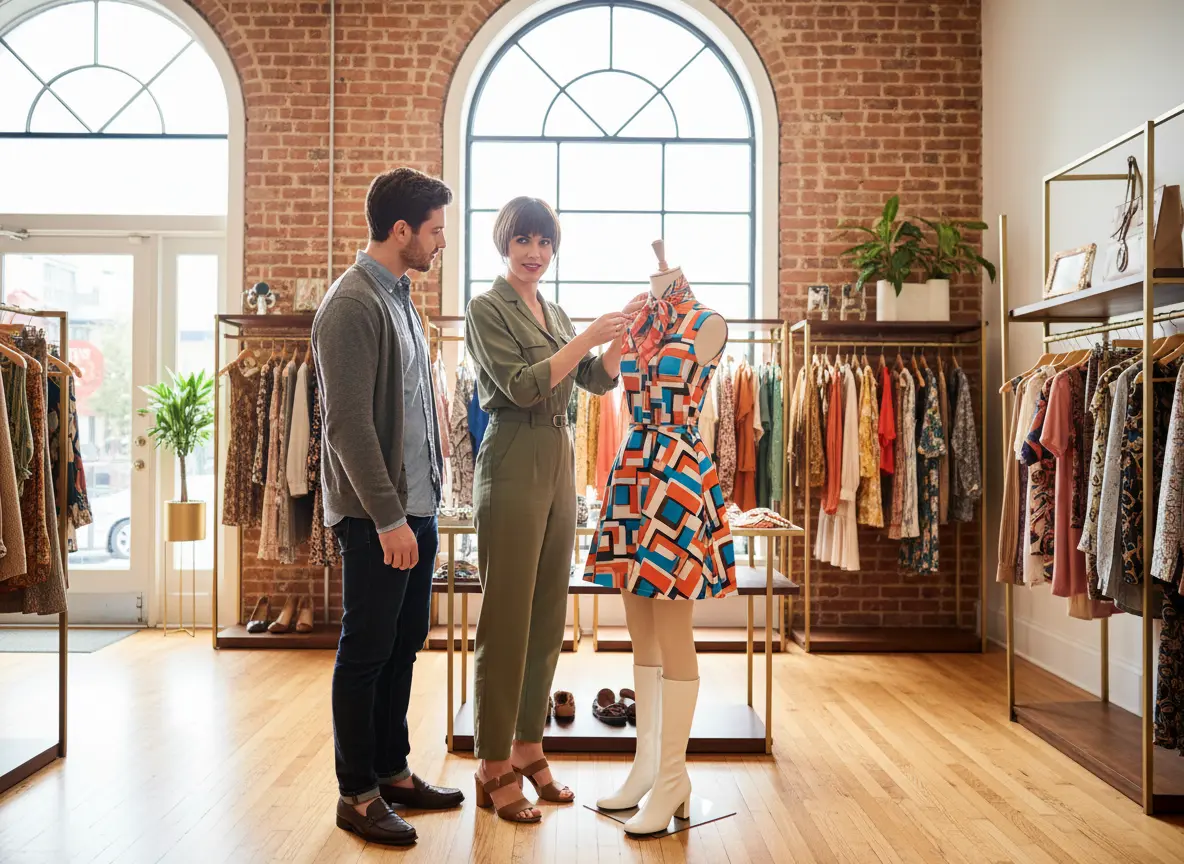
Your mannequins are your silent storytellers. Please, for the love of vintage Dior, don’t leave them naked or half-dressed. A mannequin wearing only a t-shirt is a tragedy. It’s a missed opportunity to showcase your vision. Every mannequin should represent a complete character with a story to tell.
Is she a 1920s flapper on her way to a secret speakeasy? Then she needs the feathered headband, the long beads, and the T-strap heels to complete the look. Is he a 1980s punk rocker heading to a gig? Get him in the distressed band tee, the ripped denim jacket, and the scuffed combat boots. By showing a full head-to-toe look, you’re not only inspiring your customers but also subtly cross-selling an entire outfit. You’re turning a simple question of "Do I like this shirt?" into "Do I want to be this person?" The answer to the second question is almost always more exciting.
The Narrator: Bringing Your Stories to Life
Okay, so your displays are impeccable time capsules. Your mannequins are styled to perfection. But merchandising can only do so much of the talking. Sometimes, a story needs a narrator to truly connect with the audience. This is where you can bridge the gap between a beautiful display and a completed sale, ensuring every customer gets the memo.
Giving Your Displays a Voice
You can’t be everywhere at once, personally telling every shopper the fascinating history of that WWII-era bomber jacket. And while descriptive tags are great, they’re passive. What if your stories could greet customers at the door? What if the narrative behind your curated collection could be an active part of the shopping experience?
This is where a little modern tech can elevate your vintage charm. Imagine a friendly face at the entrance who never gets tired, never needs a break, and knows the backstory of every piece you’ve painstakingly curated. An assistant like Stella can be programmed to be your store’s resident historian. As a customer walks by your "Disco Inferno" collection, Stella can chime in with, "Feeling groovy? That collection features authentic pieces from the late 70s—perfect for making an entrance. We even have a pair of original platform shoes over there that will complete the look." She transforms a static display into an interactive discovery.
The Details That Tell the Tale
The big picture sets the mood, but the magic of vintage is often found in the small details. These are the elements that build authenticity and make a customer feel like they’ve stumbled upon something truly special. It’s the difference between a store and a destination.
Signage That Sells (Without Shouting)
Ditch the neon-colored, all-caps "SALE" signs. They cheapen the experience and break the spell you’ve worked so hard to cast. Your signage should be as thoughtfully curated as your inventory. Consider using a vintage typewriter to create small, descriptive cards for key pieces.
"The Victory Garden Dress - c. 1943. This rayon tea dress, with its practical cut and cheerful print, was likely worn by a woman on the home front during WWII. Its story is one of resilience and everyday elegance. Handle with care, wear with pride. $85."
See the difference? You’ve just added emotional weight, historical significance, and about $50 of perceived value to that dress. The price is no longer just a number; it’s an investment in a piece of history.
The Treasure Hunt Effect
Part of the joy of vintage shopping is the thrill of the hunt. Don't make it too easy! While your main vignettes should be clear and inviting, create little nooks and crannies that reward the curious browser. Use antique trunks, old suitcases, or apothecary cabinets to house smaller accessories like jewelry, scarves, and clutch bags. Hang a stunning silk robe on the back of a dressing room door. Tucking away a few "secret" items makes customers feel like they’ve made a personal discovery, which creates a powerful sense of ownership before they’ve even reached the checkout counter.
Props Maketh the Period
The final layer of your story is ambiance, built with props that have nothing to do with sales and everything to do with world-building. These non-sellable items are critical for creating an immersive environment.
- Scatter period-appropriate magazines or books on coffee tables.
- Use a vintage rotary phone or a gramophone as a decorative piece.
- Play music from the eras you’re showcasing—some classic jazz for your 30s collection, some Motown for your 60s gear.
These props are the set dressing for your store's stage play. They anchor your collections in time and make the entire experience feel more authentic and memorable.
A Quick Reminder About Stella
While you’re busy curating these incredible stories and hunting for your next one-of-a-kind find, an in-store assistant can ensure every customer hears them. Stella is the reliable, always-on narrator who greets every guest, shares the history behind your collections, and lets you focus on what you do best.
Conclusion: Go Be a Storyteller
At the end of the day, anyone can sell used clothes. But you’re selling something more. You're selling nostalgia, identity, and the chance to own a piece of the past. By weaving stories into every aspect of your merchandising—from your grand displays to the tiniest handwritten tag—you elevate your business from a simple retail store to a must-visit destination.
Your homework? Pick one. Just one rack, one table, or one corner of your store this week. Give it a theme, a character, and a story. Style a mannequin, write a descriptive sign, and add a prop or two. Watch how your customers react. You’ll find that when you stop just selling clothes and start selling stories, you build a loyal following of fellow treasure hunters who will come back again and again. Now go turn those racks into a library of wearable history.