Let's Talk About Your Glass Boxes of Emotion
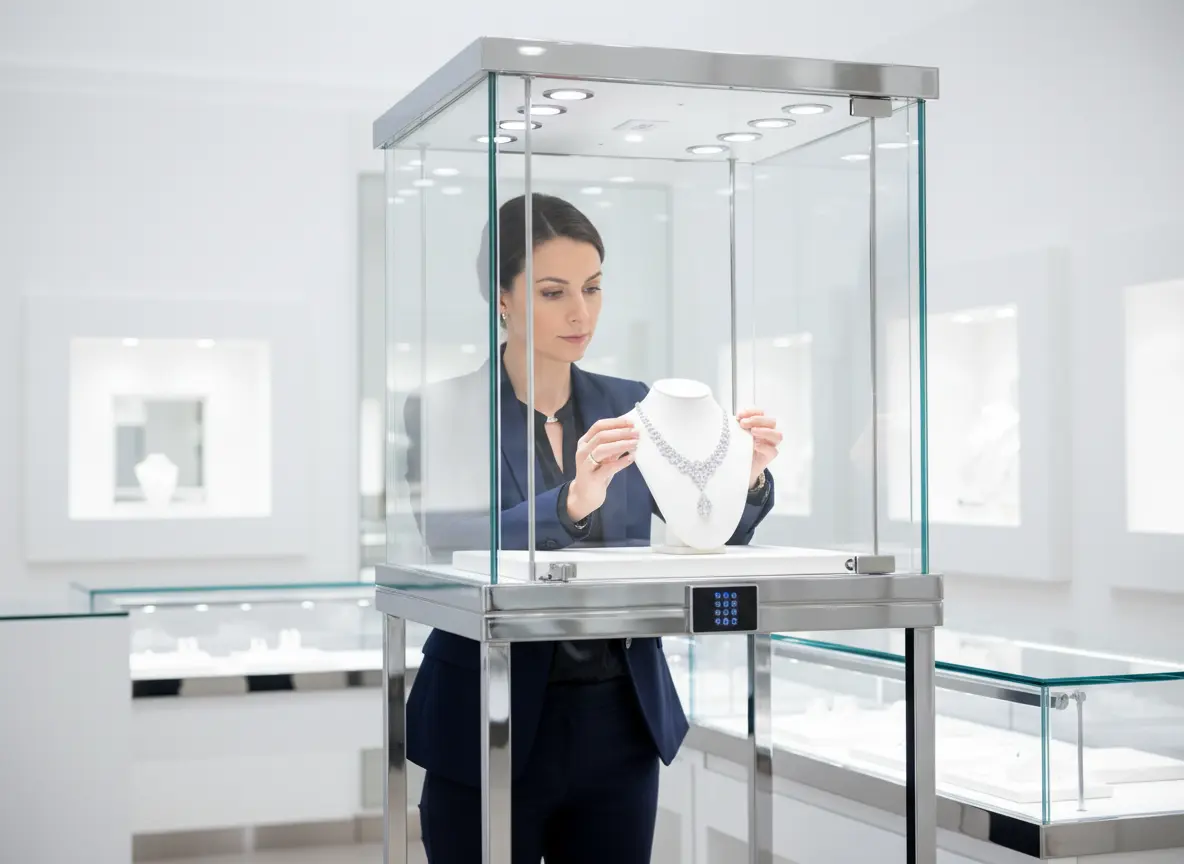
Ah, the jewelry display case. That gleaming glass sanctuary where dreams are born and credit cards are maxed out. It’s the centerpiece of your store, a silent salesperson that has to do two things at once: scream "Look at this impossibly sparkly thing!" while simultaneously whispering "Don't even think about it, buddy." It’s a delicate balance between a warm, inviting gallery and a cold, impenetrable fortress.
If you’ve ever wiped a child’s sticky handprint off the glass for the tenth time in an hour while nervously eyeing a shifty-looking character by the door, you know the struggle is real. You're selling tiny, high-value items that are frustratingly easy to pocket. So, how do you create a display that’s both stunningly beautiful and seriously secure? Let's get into it. Don’t worry, this will be more fun than untangling a kilogram of fine-chain necklaces. Probably.
The Art of the Sparkle: Designing Displays That Dazzle
Before a customer even considers the price tag, they're seduced by the presentation. A diamond ring sitting in a poorly lit, cluttered case looks… well, like a rock in a box. The same ring, under the perfect spotlight on a clean velvet riser, looks like a piece of a fallen star. Your job is to sell the starlight, not the rock.
Lighting Isn't Just for Interrogation Rooms
Proper lighting is arguably the single most important element of your display. It’s the difference between a diamond that winks and one that’s taking a nap. According to the Gemological Institute of America (GIA), the lighting environment can dramatically alter the appearance of a gemstone's color, clarity, and brilliance. You need a layered approach:
- Ambient Lighting: This is the general, overall light in your store. It should be warm and welcoming, not a harsh, fluorescent nightmare that makes everyone look like a zombie.
- Task Lighting: This is your in-case lighting. Cool, bright LED strips or spotlights are your best friends here. They bring out the fire in diamonds and the luster in pearls without generating heat that could damage delicate pieces like opals or amethysts.
- Accent Lighting: A few carefully aimed spotlights from above can highlight your "hero" pieces, drawing the customer's eye exactly where you want it to go.
Remember, different gems play well with different lights. Diamonds love a crisp, cool spotlight, while colored stones like emeralds and rubies often look richer under slightly warmer tones. Experiment. Your goal is to make your jewelry look so good under your lights that it looks slightly less impressive in the dull light of the real world, creating an "I have to have it" urgency. A little bit of retail magic, if you will.
Less Is More (Unless More Is More)
Stop treating your display case like a jewelry mosh pit. Jamming every single piece you own into one case creates visual noise and cheapens the entire collection. It screams "clearance sale," not "exclusive luxury."
Instead, think like a museum curator.
- Group with purpose: Arrange items by collection, designer, color story, or metal type. This creates a cohesive, easy-to-understand narrative for the shopper.
- Give them space: Let your pieces breathe. A stunning necklace surrounded by empty space feels important. The same necklace squeezed between ten other chains feels like just another option.
- Anoint a hero: Every case should have a focal point—a "hero" piece that captures immediate attention. Place it centrally, elevate it on a riser, and give it the best lighting. The other pieces in the case should complement it, not compete with it.
Your display case is a curated gallery, not your grandmother's cluttered attic. Unless your grandmother's attic is full of vintage Cartier, in which case, please send us the address.
The Unsung Heroes: Props, Risers, and Fabrics
The surfaces your jewelry rests on matter. They set the mood and enhance the product. A wrinkled, faded velvet display pad tells a very different story than a clean, taut linen one. Use materials to define your brand's aesthetic. Dark velvets or suedes scream classic luxury. Light-colored linen or textured wood can feel modern and organic. Clear acrylic risers offer a minimalist, "floating" look that lets the jewelry be the star.
Use color theory to your advantage. A simple rule of thumb is to use contrasting backgrounds: dark stones on light surfaces, and vice versa. And for the love of all that is holy, keep it clean. Dust is the enemy of sparkle. A weekly deep clean of all display surfaces, props, and the glass itself is non-negotiable.
Fort Knox in a Retail Space: Security Without the Scare Tactics
Okay, now for the less glamorous but infinitely more important part: making sure your tiny treasures don't walk out the door in someone's pocket. Security shouldn't make your store feel like a prison, but it does need to be effective. The key is integrating security measures that feel seamless and professional, not intimidating.
Making Eyes-On Security Work for You
The most effective deterrent is an attentive staff. Thieves target stores where employees are distracted, overwhelmed, or absent. But what happens when you're tied up with a high-value client, or your only other associate is in the back? The front of the store becomes vulnerable. This is where a little robotic assistance can make a world of difference. An in-store assistant like Stella can be a game-changer for a jewelry store's front-line security posture.
Imagine every single person who walks through your door is instantly and pleasantly greeted. Stella stands as a constant, vigilant presence, ensuring no one enters unnoticed. That simple act of acknowledgment is a powerful psychological deterrent to potential shoplifters. Furthermore, she can be programmed to proactively and strategically guide customers. For instance, she can say, "Welcome! Our exclusive sapphire collection is secured in the display to your right. Just ask one of our associates, and they’ll be happy to show you the pieces up close." This not only promotes a key collection but also subtly communicates that high-value items are monitored and require staff assistance, filtering out casual browsers from serious, supervised buyers.
The Psychology of the Sale: How Displays Influence Buyers
Everything we’ve discussed—lighting, layout, security—isn’t just for show. It directly impacts your bottom line by influencing customer psychology and behavior. A well-executed display strategy doesn't just show off jewelry; it actively sells it.
Creating a Path to Purchase
Your store layout and case arrangement should tell a story and guide the customer on a journey. Don't just place things randomly.
- The Decompression Zone: The first few feet inside your door are the "decompression zone." Customers are adjusting from being outside. Don't put your most valuable items here. Instead, use this space for approachable, entry-level pieces or bold, eye-catching displays that set the tone.
- Guide Their Gaze: Arrange your cases to create a natural flow through the store, typically counter-clockwise. Place your most popular and high-margin collections along this main path. Use your "hero" pieces in each case to act as visual waypoints, drawing the customer deeper into the store.
- The Power of Adjacency: Merchandising is matchmaking. Place the matching earrings and pendant next to that stunning engagement ring. You're not just showing inventory; you're planting a seed for an upsell. It’s a very sparkly, very effective suggestion.
The Power of Perceived Value
Humans are funny. We instinctively assign higher value to things that are presented beautifully and protected carefully. A clean, brilliantly lit, and organized display in a secure case sends a powerful non-verbal message: "The items in here are valuable, exquisite, and worth the price." This builds trust and justifies your price points before you even say a word.
Conversely, a dusty case with a flickering light and a flimsy lock screams, "We don't really care about this stuff, so maybe you shouldn't either. Want to make me an offer?" Your presentation is a direct reflection of your brand's quality and your belief in your own products. Don't let sloppy displays sabotage your sales.
A Quick Reminder About Stella
While you're busy perfecting the lighting and layout of your cases, remember that a world-class customer experience begins the moment someone walks in. A friendly AI retail assistant like Stella ensures every single shopper is greeted and engaged, freeing your human team to provide the white-glove service and security oversight that your beautiful jewelry deserves.
Conclusion: Time to Make It Sparkle
So, there you have it. Your display cases are so much more than glass and shelves. They are your primary marketing tool, your silent security guard, and your stage for the incredible works of art you sell. The trifecta of a perfect jewelry display is simple in theory but requires dedication in practice: brilliant lighting, a thoughtful layout, and robust locks.
Your mission, should you choose to accept it, is to go audit one—just one—of your display cases right now. Seriously. Stand in front of it and look at it through a customer’s eyes. Is it telling the right story? Is it clean? Does it feel both inviting and secure? Even a small change, like adjusting a spotlight or removing a few pieces to reduce clutter, can have a huge impact.
Your jewelry is special. It deserves a home that's just as brilliant—and a security plan that's just as tough. Now go make things sparkle.