Let’s Be Honest: Your Shelves Are Probably Boring
You hear it. That glorious sound. A table of four is erupting in laughter, two players are locked in a silent, high-stakes standoff, and someone just yelled, “You sank my battleship!” (Okay, maybe not that last one, but you get the picture). Your board game cafe is buzzing. It’s a vibrant, living, breathing hub of fun and community. Meanwhile, over in your retail section, pristine, shrink-wrapped boxes of those very same games are sitting in silent judgment, collecting a fine layer of dust and existential dread.
Sound familiar? If you’re in the business of selling experiences—be it games, hobby supplies, boutique clothing, or artisanal cheese—you face a unique challenge. How do you translate the joy of the doing into the thrill of the buying? Your merchandise can't just sit there looking pretty. It needs to tell a story, invite interaction, and practically leap off the shelf into a customer's tote bag.
Merchandising for a modern retail space, especially one like a game cafe, isn't about following ancient planogram rules written by someone who thinks "customer engagement" is a line item on a spreadsheet. It’s about creating a seamless, irresistible journey from play to purchase. Let's roll the dice and get started.
The Art of the 'Playable' Shelf
The biggest enemy of a sale is a barrier. For us, that barrier is a thin layer of plastic wrap. It screams, “I am a pristine, untouched artifact! Admire me from a distance, mortal, but do not DARE handle me!” We need to tear down that wall, literally and figuratively.
De-Shrinkwrap and Conquer: The Power of the Demo Copy
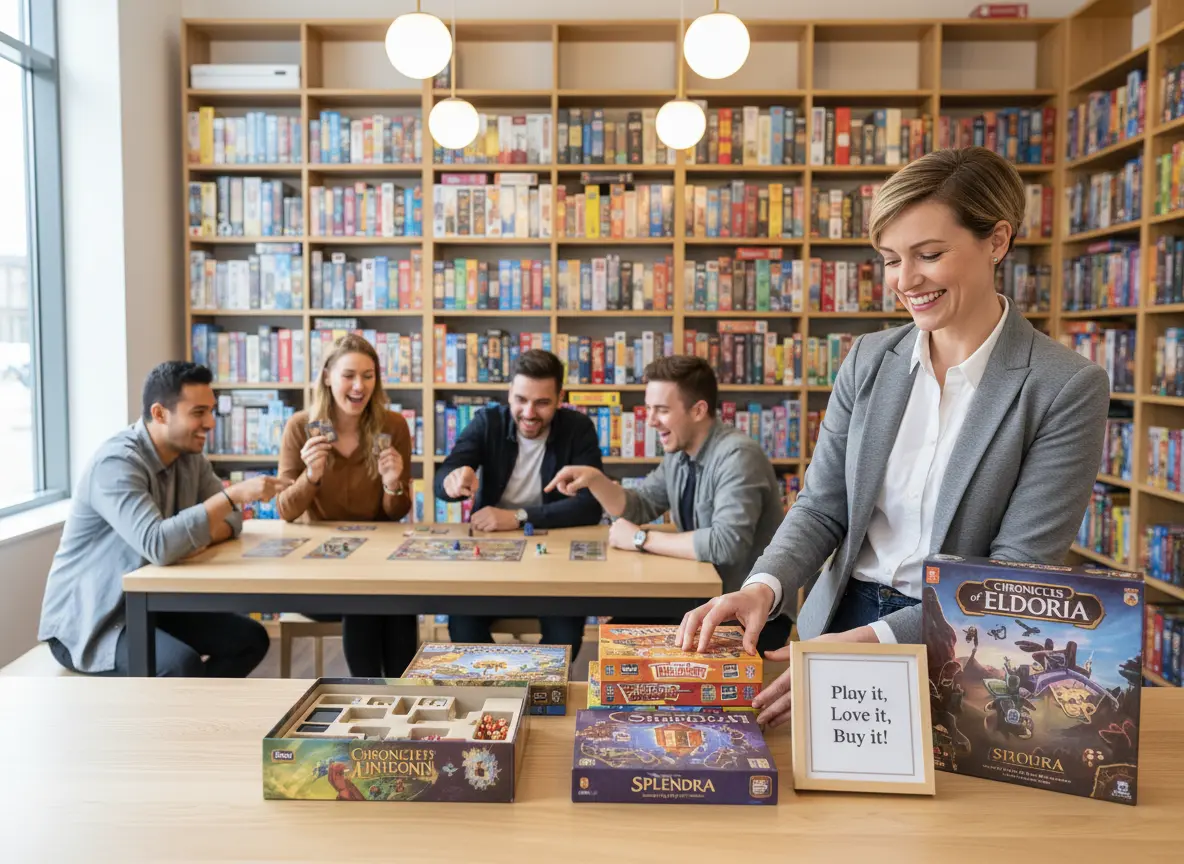
I can hear the gasps from here. “Open a game? But… its resale value! The pristine corners!” Yes, I’m telling you to sacrifice one, just one, beautiful box to the gods of commerce. Having a demo copy of your key games is the single most effective sales tool you have. It’s the ultimate "try before you buy." It lets customers feel the heft of the components, admire the art, and skim the rules. It demystifies the product and replaces shopper uncertainty with confidence.
Think about it: a customer who plays a round of Ticket to Ride with the demo copy is about 500% more likely to buy it than someone who just stares at the box art. That’s not a real statistic, but it feels right, doesn’t it? That one sacrificed unit becomes your hardest-working salesperson, one that never calls in sick.
The 'What Are They Playing?' Display
Social proof is a ridiculously powerful force. When people see others having fun, they want in on the action. You need to leverage the energy from your play space and channel it directly toward your retail shelves. Create a small, dynamic display near your checkout counter or at the front of the store with a sign that reads, “Tonight's Most Popular Game” or “As Seen on Table 4.”
Feature the game that’s getting the most table time that week. Stack a few copies high. This simple act connects the abstract concept of “a game in a box” with the very real, tangible fun happening just a few feet away. It creates an immediate, powerful sense of FOMO (Fear Of Missing Out) that is far more persuasive than any sales pitch.
Thematic Grouping: It’s Not Clutter, It’s Curation
Stop organizing your shelves like a library card catalog. Alphabetical order is for librarians and people who enjoy crushing joy. Your customers don't walk in thinking, "I'd like to browse games from Z-Man Games today." They walk in thinking, "I need a fun game for a party this weekend," or "I want something my partner and I can play after the kids go to bed."
So, merchandise for their mindset. Create sections like:
- Epic Date Night Duels: For two-player games that are more engaging than another night of Netflix.
- Party Starters & Icebreakers: Loud, fast, and hilarious games for groups.
- Brain-Burning Solo Adventures: For those who want a challenge without having to, you know, talk to other people.
- Gateway Games: Your Friends Will Thank You: Perfect introductions for people new to the hobby.
This approach doesn't just help customers find what they want; it helps them discover what they want. You're no longer just a store; you're a trusted curator, a game sommelier, guiding them to their next favorite experience.
Your Unblinking, Tireless Hype-Bot
Let's be real. You can't be everywhere at once. While you’re passionately explaining the supply chain mechanics of Brass: Birmingham, a family of five just walked in, looked around confused for 30 seconds, and walked out. That’s lost revenue. This is where a little robotic assistance goes a long way.
The Automated Game Master
Imagine having a team member at the front of your store whose only job is to greet every single person and highlight what's awesome that day. That's Stella. While your human staff is busy making milkshakes or running a tournament, she’s engaging customers the moment they walk in. She can be programmed to say, “Welcome! Our featured game this week is Cascadia. We have a demo copy right on that front table, and it's 10% off today only!” She never gets tired, never has an off day, and can upsell with a relentless, cheerful charm that would make even the most cynical customer crack a smile.
Turning Foot Traffic into Data
Which promotions actually work? Do people respond better to a discount on a specific game or a "Buy 2 Get 1 Free" on small box games? Guessing is for amateurs. An AI assistant like Stella can provide insights into what greetings and promotions get the most engagement. By tracking customer interactions (anonymously, of course), you can see what piques their interest. It's like having a full-time market researcher who runs on electricity and doesn't steal your good pens.
Engineering the Customer Journey from 'Hmm' to 'Here's My Money'
Great visual merchandising gets a customer to pick up the box. But how do you get them from holding it to buying it? You need to guide them through the final steps of the journey with smart, subtle cues.
The Anatomy of a Shelf Talker
A price tag tells a customer what something costs. A shelf talker tells them why it's worth it. These small, well-placed signs are your silent salespeople, offering mini-reviews and recommendations 24/7. Ditch the boring "On Sale" signs and inject some personality.
Bad Shelf Talker: "$59.99"
Good Shelf Talker: "A staff favorite! If you love strategy but hate waiting, this is your game. Fast turns, beautiful art. Plays in under an hour."
Use them to answer the questions a customer is silently asking: How many players? How long does it take? What other game is it like? A few bullet points of helpful, human-centric information can be the final nudge someone needs to commit.
Bundling for Fun and Profit
Bundling isn't just a way to move slow-moving inventory; it's a way to provide a complete solution for your customer. It increases your average transaction value while making the customer feel like they’re getting a great deal. Instead of just selling a game, you're selling an entire experience.
Create curated bundles that make perfect sense:
- The Family Game Night Starter Kit: A popular gateway game (like King of Tokyo), a pack of premium card sleeves to protect it, and a gift certificate for snacks from your cafe.
- The RPG Adventurer's Pack: A core rulebook, a set of fancy dice, and a beginner-friendly adventure module.
This strategy positions you as an expert who understands their needs, transforming a simple transaction into a thoughtful, value-added purchase. In fact, research shows that smart recommendations like bundling can increase revenue by as much as 30%.
The Checkout Counter: Your Final Boss Battle
The checkout counter is your last—and best—opportunity for an impulse buy. This is prime real estate, so don’t waste it on hand sanitizer and business cards. Stock this area with small, high-margin items that are easy "add-ons." Think unique dice sets, small-box card games, miniatures, or geeky enamel pins.
Train your staff to move beyond the perfunctory, “Will that be all for you today?” Instead, try a more engaging, "Hey, while I'm ringing you up, have you seen these new quick-play card games? They're perfect for when you're waiting for your whole group to show up." It's not pushy; it's a helpful suggestion from one gamer to another.
A Quick Reminder About Stella
As you focus on curating the perfect in-store experience, remember that you don't have to do it all alone. An AI retail assistant like Stella acts as your force multiplier, ensuring every single customer gets a warm welcome and a rundown of what’s new and exciting. She frees up your human staff to do what they do best: share their passion and build genuine connections with your community.
Conclusion: Go Forth and Sell Fun
Merchandising in a store like ours is less of a science and more of a dark art. It’s about understanding human psychology, creating a sense of discovery, and making it incredibly easy for people to take a piece of the fun home with them. It’s about transforming passive shelves into active storytellers.
So, here’s your homework: go find your best-selling game, tear the shrink wrap off a fresh copy, and leave it out for people to touch. Write one witty, helpful shelf talker. Create one clever bundle. These small changes bridge the gap between playing and purchasing, turning your bustling community hub into a thriving retail success.
Now, go make your shelves as exciting as your tables. Your bottom line will thank you for it.