Welcome to the Maze: Or, How to Not Make Your Store Feel Like One
Ever watch a customer walk into your store, pause, look around like a deer in headlights, and then walk right back out? It’s a feeling that ranks somewhere between stepping on a LEGO and realizing you replied-all to a company-wide email. You’ve got great products, your staff is friendly (on most days), and your lighting is on point. So, what went wrong?
Chances are, the silent saboteur is your store layout. You might see beautifully arranged shelves, but your customer sees a confusing labyrinth with an invisible minotaur guarding the clearance section. Designing a retail space isn't just about making it look pretty; it's a calculated science of psychology, behavior, and subtle manipulation. And yes, we said manipulation—but in a good, “please-buy-this-lovely-scarf” kind of way.
This isn't about tricking your customers. It's about creating an intuitive, enjoyable journey that makes them want to explore, discover, and ultimately, spend. Let's break down how to guide your shoppers from the front door to the checkout without them needing a map and a compass.
The First Impression: Mastering the Entrance
The first 10 seconds a customer spends in your store are the most critical. This is where they decide if they’re sticking around to browse or making a beeline for the exit. You have to get this part right, and it starts the moment they cross the threshold.
The Decompression Zone: Give Them a Moment
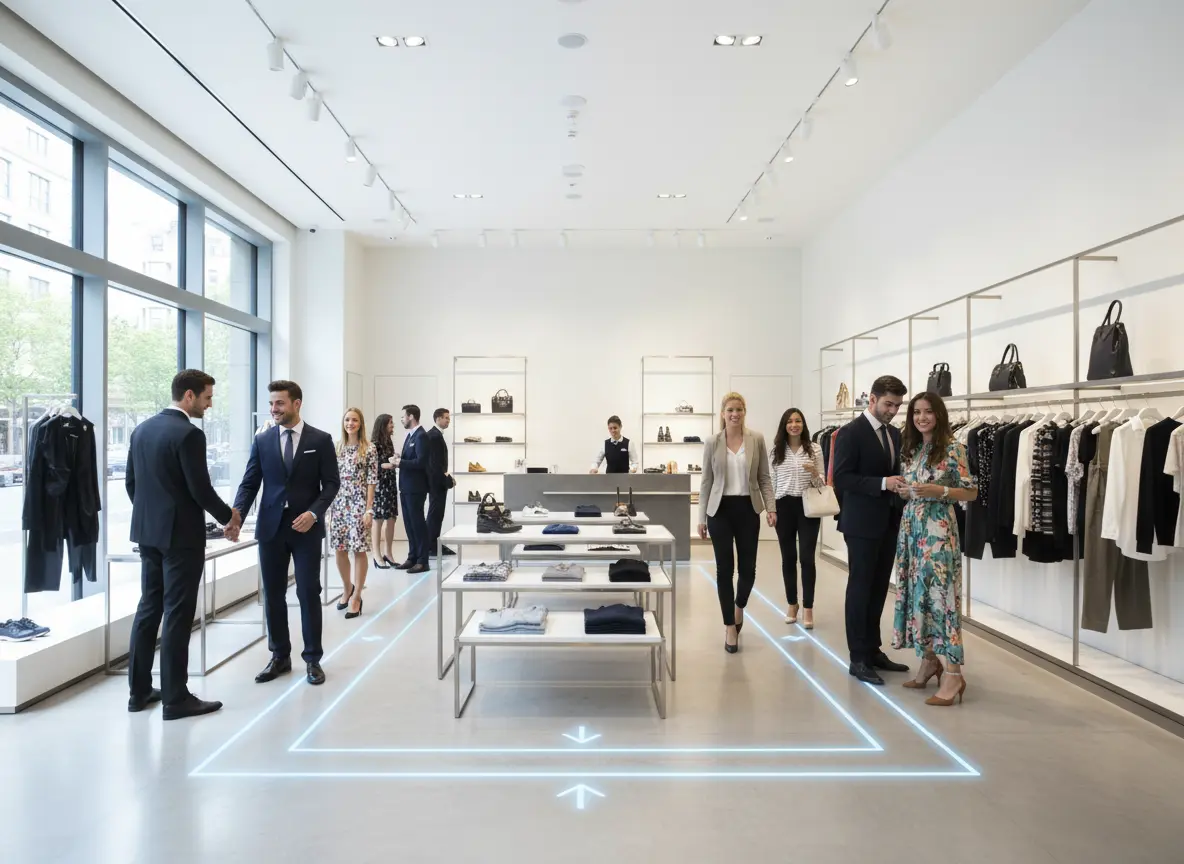
Imagine walking into a loud party. You don't immediately start a deep conversation; you pause, scan the room, and get your bearings. The entrance of your store is no different. This initial area, typically the first 5 to 15 feet, is called the "Decompression Zone." Shoppers use this space to transition from the outside world (dodging traffic, wrestling with parking meters) to your retail environment. Their brains are still processing the sensory shift, and they are effectively blind to anything you place here.
Putting your most important signage, a basket of key sale items, or a complex display right at the entrance is like trying to hand someone a drink while they’re still taking their coat off. It’s overwhelming. Keep this area open, clean, and uncluttered. Let it be a welcoming mat, not an obstacle course. The goal is to let them breathe, adjust, and then consciously decide to engage with your store.
The Right-Hand Rule: A Predictable Path to Profit
Here’s a fun fact for your next trivia night: studies have shown that up to 90% of shoppers in North America instinctively turn right after entering a store. It’s a deeply ingrained habit, likely tied to the fact that most people are right-handed and we drive on the right side of the road. You can fight this, or you can use this predictable behavior to your advantage.
Since you know where most eyes will land first, make that area count. The wall to the right of your entrance is often called the "power wall," and it’s your store’s prime real estate. This is the perfect spot for:
- New arrivals: Showcase what's fresh and exciting.
- High-margin products: Get your most profitable items in front of them immediately.
- Seasonal displays: Hook them with timely, relevant merchandise.
By placing your most compelling products along this natural path, you’re not forcing a journey on them; you’re simply curating the one they were already going to take.
Guiding the Journey, Not Forcing a March
Once a customer is comfortably inside and has chosen their initial path (to the right, probably), your next job is to make the rest of their journey just as effortless and engaging. You want to create a path that feels natural, not a forced march through aisles they have no interest in.
The Stella Effect: Your High-Tech Greeter
Remember that awkward Decompression Zone where customers are adjusting? It’s the perfect place for a non-human touch that feels surprisingly human. While a staff member rushing a customer can feel pushy, a friendly, stationary assistant offers a low-pressure welcome. This is where Stella shines. Placed strategically near the entrance but out of the direct path, she can greet every single shopper with a warm, consistent message. She doesn't follow them, she doesn't interrupt their thoughts—she simply offers help.
As a customer pauses to get their bearings, Stella can highlight the day's promotions or point them toward that all-important power wall. "Welcome! Did you know all our new summer arrivals are just to your right?" It's a gentle, helpful nudge that transforms a moment of uncertainty into a moment of discovery, all without adding to your payroll or overwhelming your staff.
Optimizing the In-Store Experience
You’ve nailed the entrance and created a path. Now, let’s fine-tune the details of the shopping experience to keep customers engaged, increase dwell time, and maximize the value of every visit.
Aisle Etiquette: The Goldilocks Principle
Aisle width is a delicate balance. If your aisles are too narrow, your store feels cramped and claustrophobic. Shoppers might experience the dreaded "butt-brush effect," where they avoid an aisle simply because they don't want to awkwardly squeeze past another person. On the other hand, if your aisles are too wide, your store can feel sparse and empty, and it discourages shoppers from looking at both sides. You want the "just right" width that allows for comfortable browsing (and is ADA compliant, of course). This encourages them to slow down and actually look at the products you’ve so carefully curated.
The "Speed Bump" Strategy
A long, uninterrupted aisle is like a highway—it encourages customers to speed right through to their destination. To get them to slow down and browse, you need to install some "speed bumps." These are visual breaks that catch the eye and interrupt the flow. Think of things like:
- Endcaps: Professionally merchandised displays at the end of aisles are perfect for promotions or cross-selling.
- Mannequins or unique fixtures: A well-styled mannequin can stop a shopper in their tracks.
- Signage: Use signs to call out special categories or "staff picks."
These speed bumps create points of interest, encouraging shoppers to pause, look around, and discover items they weren't initially looking for. It’s how a trip for a single t-shirt turns into a new pair of jeans and a belt, too.
The Checkout Counter: Your Final Pitch
The checkout line is not just a place for transactions; it's your last chance to make a sale. This is the kingdom of the impulse buy. Customers waiting in line are a captive audience, often bored and looking for a distraction. Surround your point-of-sale area with low-cost, high-margin, easy-to-grab items. Think phone chargers, lip balm, gourmet chocolates, quirky socks—anything that screams, "Treat yourself! You deserve it for surviving this shopping trip." A well-stocked checkout counter can significantly boost your average transaction value with minimal effort.
A Quick Reminder About Your New Best Employee
As you're rethinking your floor plan and customer flow, remember that the most impactful change can be the first face—or interface—your customers see. Stella ensures every single person who walks through your door gets a perfect, professional, and helpful greeting, setting a positive tone for their entire journey.
Conclusion: Become the Architect of Your Sales
Your store’s layout is more than just furniture placement; it's a powerful tool for shaping the customer experience and driving revenue. It’s a silent salesperson that works 24/7. Don't leave it to chance.
Start small. Take an afternoon to stand at your store's entrance and just watch. Where do people go first? Where do they hesitate? Where do they get stuck? Use these observations to make one small, informed change. Maybe you'll clear out your decompression zone or build a compelling display on your power wall.
Remember, the goal is to create a space that feels less like a maze and more like a curated adventure. Be the architect of an experience so seamless and enjoyable, your customers won’t even realize they’re being expertly guided toward that final, satisfying tap of their credit card.