Let's Be Honest: Your "Sale" Sign Isn't As Charming As You Think
You’ve done it. You’ve spent hours meticulously arranging a display. You’ve printed a beautiful, eye-catching sign that screams “30% OFF!” in a font you’re pretty sure isn’t Comic Sans. You place it at the front of the store, step back, and admire your marketing genius. And then you watch as 9 out of 10 customers walk right past it, their eyes glazed over, on a mission for the one specific thing they came for. Your sign has become little more than expensive wallpaper.
If this scenario feels painfully familiar, you’re not alone. For decades, brick-and-mortar retail has relied on what we’ll generously call the “shout and hope” method of marketing. We put up a sign, arrange an endcap, and hope the right person happens to notice it. Meanwhile, our online counterparts are busy tracking every click, tailoring every pop-up, and personalizing offers so precisely it’s borderline creepy. It’s time to stop bringing a paper sign to a data-driven algorithm fight. It’s time to talk about AI-powered personalization for your physical store.
Why "One Size Fits All" Is a Recipe for Retail Disaster
The core problem with traditional in-store marketing is that it’s built on a foundation of guesswork. We market to a vague, mythical creature known as the "average shopper," who, spoiler alert, doesn't actually exist. Treating every person who walks through your door the same is like trying to sell a steak to a vegetarian—a waste of everyone’s time.
The Myth of the "Average Shopper"
Think about the last two customers who came into your store. One was a teenager on a tight budget looking for a gift. The other was a busy professional ready to spend on high-margin convenience items. A generic “Welcome, check out our deals!” message is background noise to both of them. Personalization works because it’s relevant. According to McKinsey, 71% of consumers expect companies to deliver personalized interactions. When you fail to meet that expectation, you’re not just missing a sale; you’re telling the customer you don’t really understand them.
The Black Hole of In-Store Data
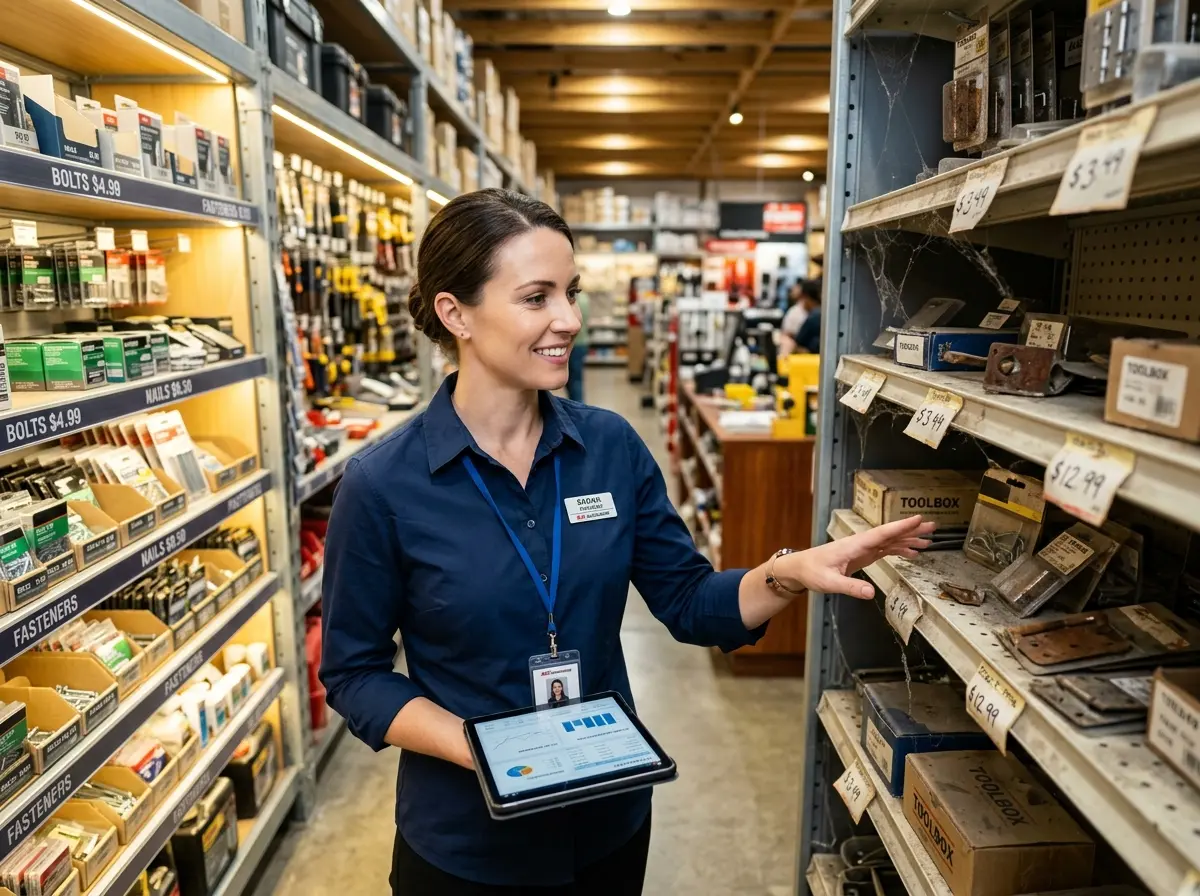
E-commerce stores have it easy. They know who is browsing, what they looked at, how long they stayed on a page, and what they left in their cart. What do most physical retailers have? A sales report at the end of the day. You see what sold, but you have almost no insight into the why. How many people considered the slow-moving jackets in the back corner but didn't buy? What promotions actually caught someone's eye versus the ones that were ignored? Without this data, you’re essentially flying blind, making merchandising and marketing decisions based on gut feelings and incomplete information.
When Your Promotions Fall on Deaf Ears
Let's go back to that sad "30% OFF" sign. The promotion itself might be great, but it's completely out of context. The customer looking for new arrivals doesn’t care about last season’s clearance. The customer in a rush won’t even see it. Effective marketing is about delivering the right message to the right person at the right time. A static sign is, by definition, almost always the wrong message for most of the people seeing it. It’s a monologue in a world that demands a conversation.
Your New Front-of-House AI MVP
So, how do you start having those conversations without hiring a small army of mind-reading sales associates? You start with a smart, consistent, and impossibly charming first point of contact. This is where a dedicated AI assistant can fundamentally change your in-store dynamic.
Greeting Every Customer with a Purpose
Imagine if your greeter never got tired, never had a bad day, and was always perfectly on-message. That’s the baseline. Now, imagine that greeter could intelligently and conversationally highlight the most relevant promotion. An in-store AI assistant like Stella can be programmed to greet customers with timely, dynamic information. Instead of a generic welcome, Stella can say, “Hi there, welcome! Just so you know, all our craft beers are 15% off today, perfect for the big game this weekend.” Suddenly, your promotion isn't just a sign—it's a helpful, relevant suggestion delivered by a friendly face (or a friendly robotic one, at least).
Turning Questions into Opportunities
Customer questions are a goldmine for personalization. When a shopper asks, "Where are the gluten-free pastas?" they're giving you a massive clue about their needs. While your human staff is busy helping other customers or stocking shelves, an AI assistant can instantly turn that query into a personalized upsell. Stella can respond, "You'll find the gluten-free pastas in aisle 4. Since you're looking for that, you might also love our new gluten-free pizza crusts, which are on a special introductory offer near the deli." This isn’t pushy; it's helpful, contextual, and something that a static sign could never, ever do.
Actionable AI Strategies You Can Actually Implement
Okay, deploying a friendly robot assistant is one (very cool) way to jump into the world of AI. But personalization doesn't have to be an all-or-nothing game. There are several tiers of technology you can use to make your store smarter, more responsive, and more profitable.
Dynamic Digital Signage: Your Silent, Smart Salesperson
If you're not ready for a talking robot, start with a screen that does the talking for you. AI-powered digital signage can automatically change the content it displays based on a variety of factors.
- Time of Day: A cafe's screen can promote breakfast sandwiches and coffee until 11 AM, then switch to lunch combos and iced tea in the afternoon.
- Weather: Is it suddenly raining? Your digital sign near the entrance can automatically feature umbrellas and raincoats.
- Demographics: Some advanced systems use anonymous video analytics to detect general demographic data (like age range or gender) of the person looking at the screen and tailor the ad accordingly. A little "Minority Report"? Maybe. Effective? Absolutely.
This makes your signage a living, breathing part of the store environment, not just a static poster.
Smart Loyalty Programs that Actually Build Loyalty
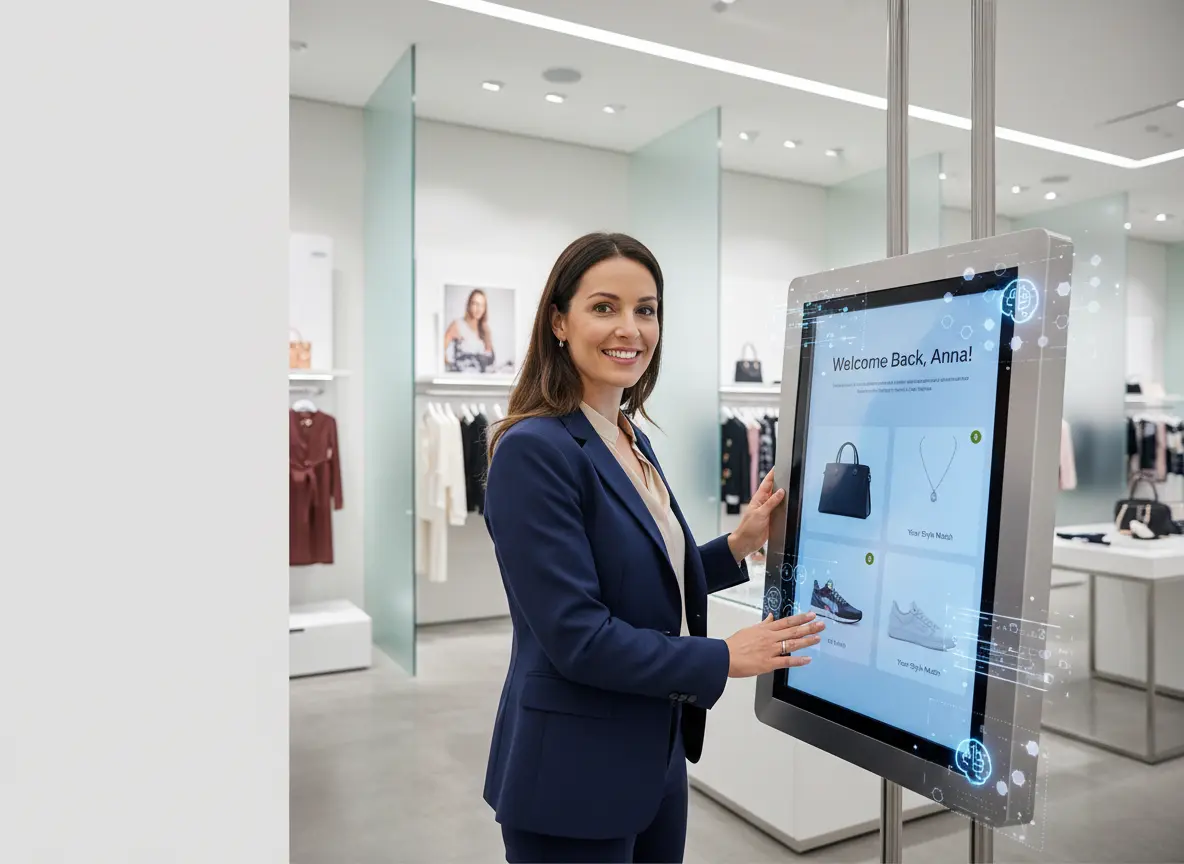
The dusty "buy nine, get the tenth free" punch card is dead. Your customer data is your most valuable asset, and a modern loyalty program is the best way to collect it. By linking sales to specific customers, AI algorithms can get to work finding patterns. Instead of sending a mass email blast about a store-wide sale, you can send hyper-targeted offers that feel personal. For example: "Hi Jane, we noticed you love Brand X dog food. We're having a 20% flash sale on it, just for you, this weekend only." That’s an offer that builds real loyalty and drives a specific visit.
Using AI Analytics to Understand Your Store's Rhythm
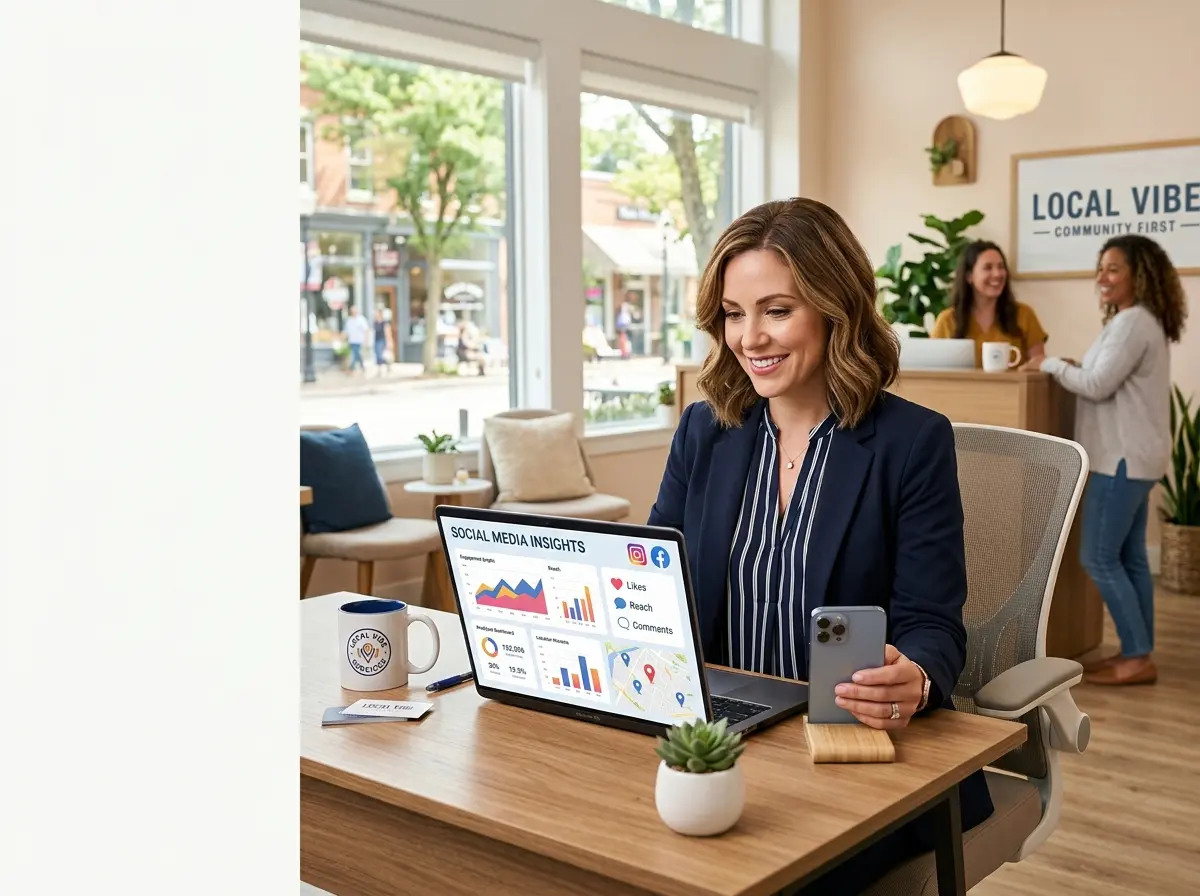
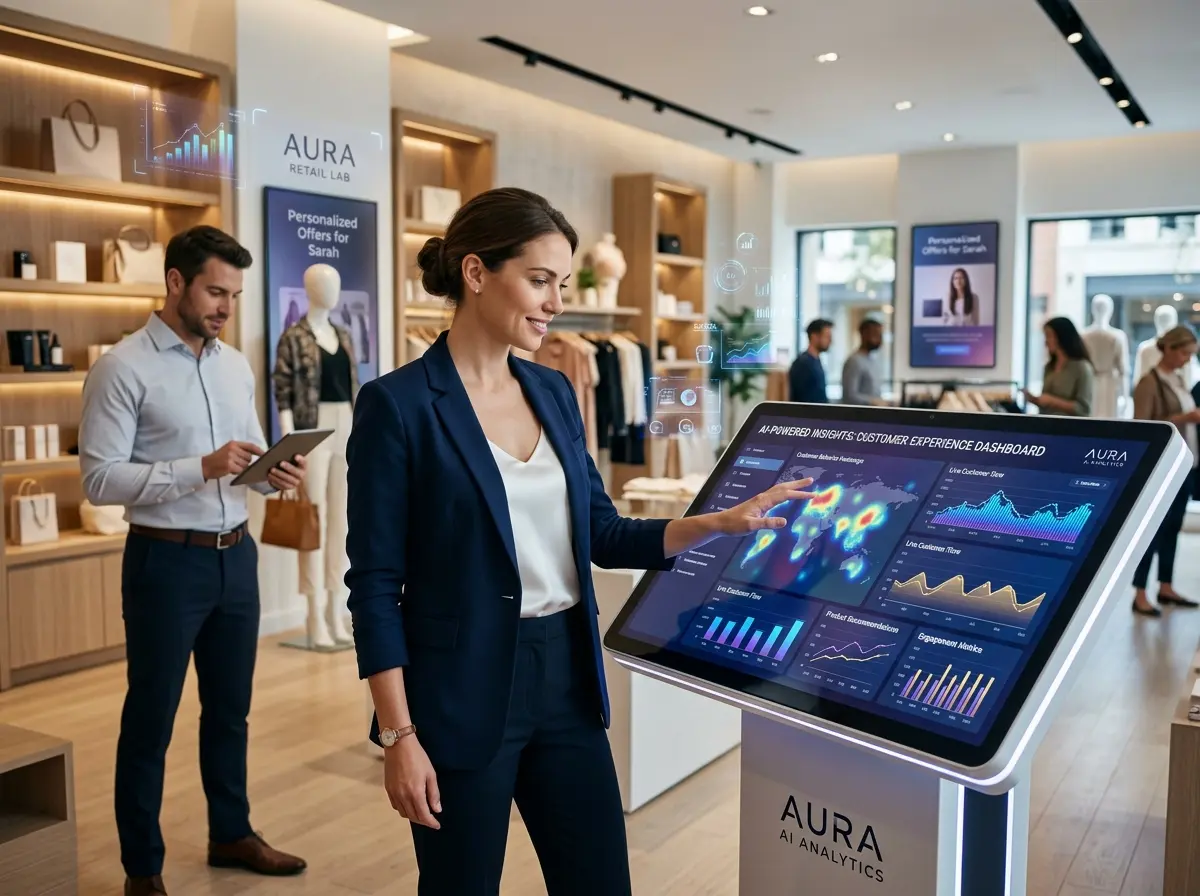
The most powerful AI tools work behind the scenes to give you insights you’d never find on your own. By combining sales data with in-store traffic data (from simple beam counters or more advanced camera systems), AI can uncover powerful correlations. You might discover that your high-end wine sells 25% more when it's merchandised next to the artisan cheese display. Or that foot traffic to the electronics section dies after 7 PM, meaning you can reallocate staff to other departments. This isn't just data; it's a roadmap for optimizing your store layout, staffing, and promotions for maximum impact.
A Quick Reminder About Stella
Feeling overwhelmed? Don’t be. The easiest first step into in-store AI personalization is often the most direct one. An assistant like Stella provides a simple, affordable way to ensure every customer is greeted, informed, and engaged from the moment they walk in, taking the guesswork out of front-of-house marketing.
Conclusion: Stop Guessing, Start Engaging
The age of generic, one-size-fits-all retail is over. Your customers expect and reward personalized experiences, and the tools to deliver them are no longer the exclusive domain of billion-dollar e-commerce giants. AI in retail isn't about replacing your human staff with an army of robots; it's about empowering your business with the data and automation needed to make smarter decisions.
Your action plan is simple:
- Pick one area to improve. Don't try to do everything at once. Maybe it's improving your welcome, making your signage more dynamic, or finally upgrading that loyalty program.
- Explore your options. Look into accessible solutions that fit your budget and your needs.
- Measure the results. Did the new promotion get more attention? Did the cross-sell recommendation work? Use the data to refine and improve.
Stop shouting into the void with static signs and start having intelligent conversations with your customers. Your bottom line (and your sanity) will thank you for it.