Welcome to the Treasure Trove (Not the Tetanus Trap)
Let’s be honest. There’s a razor-thin line between a “charming antique shop filled with hidden gems” and a “hoarder’s paradise where you might need a search party to find the exit.” As an antique store owner, you traffic in nostalgia, history, and the beautifully forgotten. But when your customers need a machete to navigate the aisle of Victorian fainting couches, you’ve crossed that line. Your passion for preserving the past might be inadvertently burying your profits in the present.
If your shop feels more like an archaeological dig than a delightful discovery, you’re not alone. The constant influx of new (old) items, the emotional attachment to that one chipped teacup, and the sheer lack of time can turn a curated collection into a chaotic jumble. But fear not, intrepid purveyor of the past. This guide is your map to transforming your space from cluttered to collected, ensuring your customers are enchanted, not overwhelmed.
The Art of Curation (Or, How to Stop Hoarding with a Business License)
Your store isn't a museum storage unit; it's a gallery. Every item should earn its keep. Curation is the act of intentional selection and presentation. It’s about telling a story, creating a mood, and—most importantly—making it incredibly easy for customers to fall in love with something and give you their money. It’s time to get ruthless, in the most charming way possible.
The Great Purge: Deciding What Stays and What… Finds a New Home
We know, we know. Every piece has potential. That slightly-wobbly-but-full-of-character end table? Someone will love it! That box of tarnished, unidentified silver-ish utensils? A DIYer’s dream! But “potential” doesn’t pay the rent. It’s time to edit your collection with the cold, hard eye of a business owner.
- Ask the hard questions: Is it unique? Is it in good condition (or is its "distress" a feature, not a flaw)? Does it fit a theme or aesthetic you’re known for? And critically, is it profitable?
- Embrace the Three-Month Rule: If an item has been sitting in the same spot for over three months without a single soul giving it a second glance, it's time for a change. Move it, discount it, or move it out. Floor space is your most valuable asset; don’t let it be occupied by freeloaders.
From Piles to Vignettes: Selling a Story, Not Just a Stool
Nobody walks into a store hoping to buy a dusty chair. They’re buying the idea of a cozy reading nook. They don’t want a single candlestick; they want the centerpiece for their next dinner party. Stop selling objects and start selling scenes. This is where the magic of the vignette comes in.
A vignette is a small, curated grouping of items that tells a story. Think:
- A vintage leather armchair paired with a small wooden side table, a brass reading lamp, and a stack of classic novels.
- A 1950s-era bar cart styled with a crystal decanter, a few sparkling cocktail glasses, and a vintage cocktail recipe book.
- A rustic farmhouse table set with a mix of blue and white china, linen napkins, and a simple vase of wildflowers.
These staged moments don’t just look good; they do the imaginative work for your customers. You’re showing them how to live with these beautiful old things, making each piece infinitely more desirable. It's the difference between saying "here's a lamp" and "here's the perfect light for your late-night reading."
Navigating the Labyrinth: Forging Paths to Profit
If your customers have to turn sideways and suck in their stomachs to get past the grandfather clocks, you have a problem. A cluttered floor plan is a sales deterrent. It creates physical and psychological barriers, making customers feel anxious and rushed. Your goal is to create an environment that encourages slow, leisurely browsing.
Create clear, wide pathways throughout your store. Think about the flow of traffic. Where do you want them to go first? What’s the grand finale? Group items into logical zones or "departments." This could be by era (The Art Deco Corner), by function (Kitchen & Dining), or by theme (The Nautical Nook). This organization turns a chaotic hunt into a delightful, guided tour.
Engaging Your Intrepid Explorers
So you’ve decluttered and created stunning vignettes. Now what? The modern shopper, even one who loves old things, has a short attention span. You need to grab their attention the moment they walk in and guide them toward the good stuff. But you can't be in three places at once—pricing a new haul, helping a customer with a heavy mirror, and greeting the person who just walked in.
Your Unflappable Front-of-House Greeter
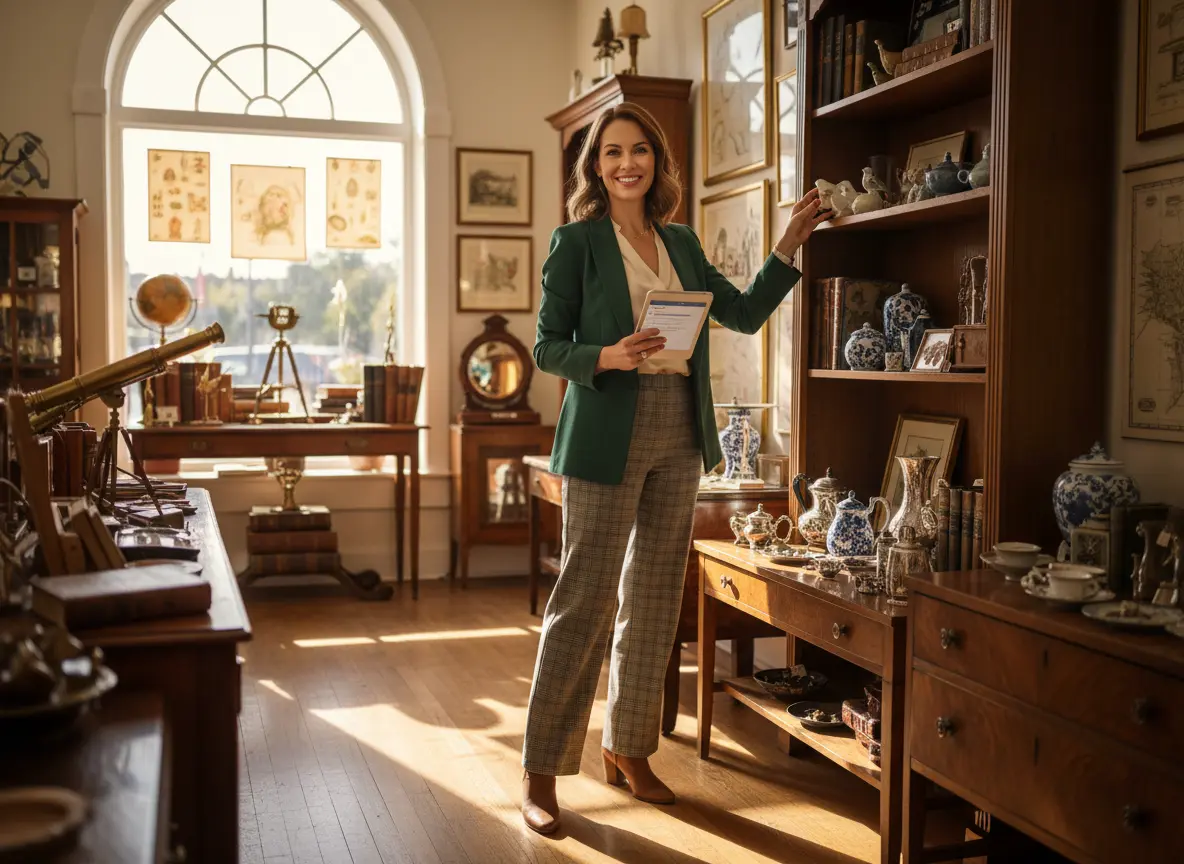
Imagine someone at your entrance who never gets tired, never needs a break, and is always ready with a charming welcome. This is where an in-store assistant like Stella can be a game-changer. While you’re in the back wrestling with a stubborn armoire, she’s out front, making sure no customer walks in unnoticed. She can greet every single person, point them toward your newly staged "Gentleman's Study" vignette, and even let them know that all vintage vinyl is 20% off this week.
This allows you and your staff to focus on what you do best: sharing the rich history of a piece, offering design advice, and closing high-value sales. Let Stella handle the initial hello and the frequently asked questions, so you can provide the expert human touch that truly makes your store special.
Turning Lookers into Lifelong Collectors
A well-organized store gets people in the door. A well-told story gets them to the checkout counter. Your final—and most important—job is to build a connection between the customer and your collection. This is how you transform a one-time browser into a loyal, repeat customer who tells all their friends about your amazing shop.
The Story Is the Sizzle: Why Provenance Sells
You’re not just selling wood, glass, and metal. You’re selling history. A customer might hesitate to spend $400 on a writing desk, but they’ll be far more tempted by a "$400 writing desk that belonged to a local 1920s journalist." The story adds intangible value that separates your items from mass-produced furniture.
Actionable Tip: Use beautifully designed tags to share a brief history or an interesting fact about your pieces. You don’t need a full biography, just a sentence or two to spark the imagination. "These teacups survived a transatlantic voyage in 1912." "This chair was salvaged from the historic Grand Hotel downtown." Studies have shown that a compelling narrative can significantly increase a product's perceived value. Narrative is currency in the antique world.
Pricing for Profit, Not for Posterity
Pricing is a delicate dance between art and science. Price an item too high, and it becomes a permanent resident. Price it too low, and you’re insulting its history and your bank account. The key is research and strategy.
- Do Your Homework: Use online marketplaces like Chairish, 1stDibs, and even eBay’s "sold" listings to research comparable items. Remember to factor in condition, rarity, and local market demand.
- Factor in Everything: Your price should reflect not just what you paid for the item, but the time you spent sourcing it, cleaning it, repairing it, and the overhead cost of the floor space it occupies.
- Be Strategic: Don't be afraid to price a stunning "hero" piece a bit higher. It acts as an anchor, making other items around it seem more reasonably priced. Use tags like "As-Is" to offer slight discounts on items with charming imperfections.
Modern Marketing for Ancient Wares
A "if you build it, they will come" mentality doesn't work anymore, not even for businesses that sell 200-year-old furniture. You need to meet modern customers where they are: online.
Start with Social Media: Instagram and Facebook are your visual best friends. You’re already creating beautiful vignettes in your store—photograph them! Post high-quality images of new arrivals, close-up shots of unique details, and short videos of you "unveiling" a new find. Use relevant hashtags like #antiquefurniture, #vintagedecor, and #shoplocal[YourCity] to attract a local and national audience.
Build an Email List: An email list is a direct line to your most interested customers. Keep a simple sign-up sheet at your checkout counter. Send out a simple, visually appealing newsletter once a week or every other week highlighting new arrivals, special promotions, or the story behind a particularly interesting piece. It keeps your store top-of-mind and drives repeat visits.
A Quick Reminder About Stella
While you’re busy curating collections and sharing stories, Stella can be your ever-vigilant brand ambassador. She makes sure every shopper gets a warm welcome, promotes your best pieces, and gathers insights on what grabs customer attention, all without ever needing a coffee break.
Conclusion: From Dust to Desirability
Transforming your antique store from a cluttered warehouse into a curated experience is the single most effective way to boost sales and build a loyal following. It's about respecting the items you sell by giving them the presentation they deserve. It’s about respecting your customers by giving them an experience that is inspiring, not exhausting.
Don't get overwhelmed. Start small. This week, pick just one thing to tackle:
- Clear one main pathway from front to back.
- Create one new, compelling vignette in a high-traffic area.
- Write a captivating story for the tag of your favorite piece in the shop.
By shifting your mindset from storing to storytelling, you’ll not only create a more profitable business, but you’ll also fall in love all over again with the history, beauty, and magic of the treasures you sell.