You Can't Manage What You Don't Measure (But You Already Knew That)
Here's a truth most gym owners learn the hard way: passion gets you through the doors, but data keeps the lights on. You can have the most energetic trainers, the cleanest locker rooms, and a smoothie bar that would make a wellness influencer weep with joy — and still find yourself wondering why cash flow feels tighter than your members' pre-workout budgets.
The culprit is almost always the same. Gut feelings are running the business instead of numbers. And while your gut has gotten you this far (respect), it's not exactly a reliable CFO.
The good news? You don't need a finance degree or a wall covered in whiteboards to get a handle on your gym's performance. You just need to know which Key Performance Indicators (KPIs) actually matter, how to track them, and — crucially — what to do when the numbers aren't saying what you want to hear. This post walks you through exactly that. No fluff, no filler, just the metrics that separate thriving gyms from the ones quietly bleeding out while posting motivational quotes on Instagram.
The Membership Metrics That Tell the Real Story
Membership numbers are the heartbeat of your gym. But raw headcount is only the beginning. Dig a little deeper and you'll find the metrics that actually explain why your business feels the way it does on any given month.
Member Retention Rate
Retention rate is arguably the single most important number in your gym. It measures the percentage of members who stick around from one month (or year) to the next. Industry benchmarks suggest that healthy gyms retain around 70–80% of their members annually — though boutique and specialty studios often do better. If your retention rate is below 60%, you're essentially running a leaky bucket: pouring new members in the top while losing them just as fast out the bottom.
To calculate it: (Members at end of period ÷ Members at start of period) × 100. Track this monthly, not just annually. A sudden dip in a particular month often points to something specific — a price increase, a staff change, a competitor opening nearby, or that one trainer who left and took half their clients with them.
Churn Rate and Its Evil Twin: Attrition Cost
Churn rate is the flip side of retention — it's the percentage of members who cancel in a given period. But here's the part gym owners often overlook: every churned member has a cost attached to them beyond just lost revenue. When you factor in the marketing spend, onboarding time, and promotional discounts used to acquire that member in the first place, losing a member frequently costs five to seven times more than keeping one. That context changes how you think about investing in member experience, follow-up programs, and retention incentives.
New Member Acquisition Rate
Growth requires new blood — there's no way around it. Your acquisition rate tells you how many new members are joining each month and, when paired with your marketing spend data, reveals your cost per acquisition (CPA). Knowing your CPA is essential for making smart decisions about where to invest your marketing budget. If Facebook ads are costing you $80 per new member but referral incentives are landing new members at $20 a head, that's a conversation worth having with yourself immediately.
Revenue and Financial KPIs Worth Losing Sleep Over
Membership numbers tell you about people. Revenue KPIs tell you about sustainability. These are the numbers your accountant cares about — and the ones you should care about too, ideally before your accountant has to bring them up.
Monthly Recurring Revenue (MRR) and Average Revenue Per Member (ARPM)
Monthly Recurring Revenue is your predictable income baseline — the total revenue generated from active memberships in a given month. It's the foundation on which everything else is built. But don't stop there. Divide your MRR by your total active members to get your Average Revenue Per Member (ARPM). If your ARPM is stagnant or declining, it's a signal that upselling and add-on services (personal training, nutrition coaching, premium classes, merchandise) aren't getting enough attention. A $10 increase in ARPM across 400 members is $4,000 more per month. That's a number worth chasing.
Revenue Per Square Foot
This one doesn't get nearly enough attention in the gym world, but it's invaluable for understanding whether your physical space is working as hard as you are. Divide your total monthly revenue by your gym's total square footage. If certain areas of your facility are consistently underutilized, that's lost potential just sitting there collecting dust (and possibly some rogue dumbbells). This metric becomes especially powerful when you're considering a renovation, expansion, or the addition of a new service area.
Using Technology to Stay on Top of It All
Tracking KPIs is one thing. Having the operational infrastructure to actually act on what the data tells you is another. This is where smart technology earns its keep — and where a lot of gym owners are still leaving money on the table.
Automate the Touchpoints That Eat Your Time
Think about how many revenue-critical interactions happen at your front desk or over the phone on any given day: prospective members asking about membership options, current members inquiring about class schedules, people wanting to know about personal training packages. Every one of those interactions is an opportunity — and every missed call or distracted front-desk moment is a potential member walking out the door (or hanging up and Googling your competitor).
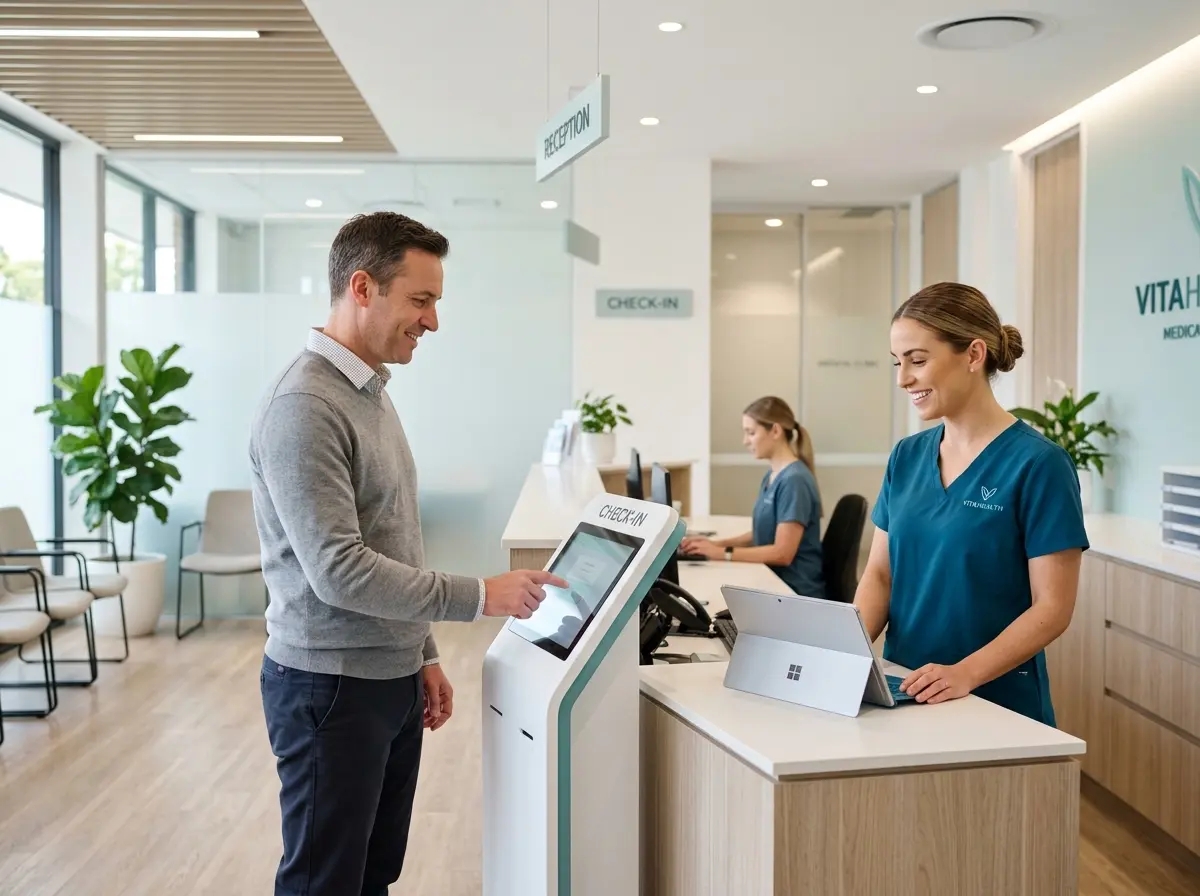
Stella, the AI robot employee and phone receptionist, was built to handle exactly this kind of constant, high-volume engagement. Her in-store kiosk greets walk-in prospects, answers their questions about memberships and promotions, and proactively engages people before they've even decided whether to stay — while her phone answering capability ensures no call goes unanswered, 24 hours a day. She also collects prospect information through conversational intake forms and stores everything in a built-in CRM, so your team always has context when following up. That's a lot of operational horsepower for a gym that's already stretched thin on staff.
The Operational KPIs Most Gym Owners Ignore
Financial and membership metrics get all the glory, but operational KPIs are what reveal the day-to-day health of your gym. Ignore them long enough and the financial numbers will start to reflect it.
Class and Facility Utilization Rate
Are your group fitness classes consistently packed, or are trainers leading sessions for a handful of loyalists? Utilization rate measures how much of your available capacity is actually being used. A class that's perpetually at 40% capacity isn't just a morale issue — it's an efficiency problem. Tracking this monthly helps you make smarter scheduling decisions, identify which classes to expand, and cut the ones that simply aren't resonating no matter how many times you rebrand them.
Lead Conversion Rate
How many of the people who inquire about your gym — whether by walking in, calling, or filling out a web form — actually become paying members? This is your lead conversion rate, and it's one of the most telling indicators of your sales process health. Industry averages hover around 20–30% for gym leads, but high-performing gyms push that significantly higher through consistent follow-up, compelling trial offers, and a frictionless sign-up experience. If you're generating plenty of interest but not closing, the problem isn't your marketing — it's what happens after the first contact.
Staff Productivity and Turnover Rate
High staff turnover in the fitness industry is so common it's practically a cliché — but that doesn't make it cheap. Recruiting, hiring, and training a new employee can cost anywhere from $3,000 to $10,000 when you factor in time, resources, and the productivity gap during the transition. Tracking your turnover rate annually (and your average employee tenure) gives you a clearer picture of your workplace culture and compensation competitiveness. Happy, well-compensated staff tend to produce happier, longer-retained members. That's not a coincidence.
A Quick Reminder About Stella
Stella is an AI robot employee and phone receptionist designed to support businesses exactly like yours — greeting customers in person, answering calls around the clock, and handling the repetitive-but-important interactions that eat into your team's time. At $99/month with no upfront hardware costs, she's one of the more straightforward ways to add a reliable, always-on presence to your gym without adding to your payroll headaches.
Start Measuring, Then Start Acting
Here's the honest reality: most gym owners already have access to most of this data — it's sitting in their membership software, their booking platform, or their point-of-sale system. The issue isn't availability. It's consistency. Setting aside dedicated time each month to actually pull these numbers, review them against benchmarks, and make decisions based on what they say is what separates gym owners who grow intentionally from those who are perpetually reacting to problems that could have been spotted weeks earlier.
Start with the fundamentals: retention rate, MRR, lead conversion rate, and class utilization. Build a simple monthly dashboard — even a spreadsheet works — and commit to reviewing it on the same day every month. As that habit solidifies, layer in the more nuanced metrics like ARPM, revenue per square foot, and staff turnover.
The goal isn't to become obsessed with spreadsheets. The goal is to make sure that when your gut tells you something feels off, you have the data to confirm it, locate it, and fix it — before it becomes a problem your members notice before you do. That, more than any single KPI, is the difference between running a gym and building a business.