Running a Retail Store: Where Dreams and Balance Sheets Go to Battle
Ah, retail. The glamorous world of meticulously folded sweaters, the enchanting scent of… well, inventory, and the joyful symphony of a ringing cash register. At least, that’s the dream. The reality, as you know, often involves staring at a spreadsheet, drinking your third coffee before noon, and wondering if you can pay your staff, your landlord, and yourself this month. Welcome to the thrilling tightrope walk of retail profit margins.
Let's be honest, running a store on a "shoestring budget" isn't a quirky business strategy; for most of us, it's just Tuesday. The costs of rent, inventory, staffing, and marketing can feel like a tidal wave threatening to swamp your little retail island. But what if you could turn that shoestring into a lifeline? The Lean Retail Model isn't about being cheap; it's about being ruthlessly efficient. It’s about trimming the operational fat so your business isn't just surviving, but thriving. It’s about making every single dollar, every square foot, and every minute work harder for you. Ready to get lean?
Mastering the Art of 'Just Enough'
The core of the lean model is eliminating waste. In retail, waste isn't just about expired products; it's wasted time, wasted space, and wasted potential. Your biggest cash sinks are almost always inventory and staffing, so let's start there.
The Inventory Tightrope Walk
Every item on your shelf is a little pile of cash just sitting there, not earning interest. Worse, it’s costing you money in storage, insurance, and the risk of becoming yesterday's news. A lean approach to inventory isn't about having empty shelves; it's about having the right shelves.
- Embrace Data, Not Guesses: Stop buying based on a "gut feeling." Use your POS data to understand what sells, when it sells, and what sits around collecting dust. If a product hasn't moved in 90 days, it’s not a slow-burner; it’s a paperweight. A recent study showed that inventory distortion (a fancy term for having too much or too little stock) costs retailers an estimated $1.1 trillion globally a year. Don't be a statistic.
- Just-In-Time (JIT) Isn't Just for Factories: You don't need a six-month supply of your best-selling candle. Work with suppliers to establish smaller, more frequent ordering cycles. This reduces your upfront cash outlay and minimizes the risk of getting stuck with merchandise you have to clearance out at a loss.
- Think Consignment & Dropshipping: For certain products, why own the inventory at all? Partner with local artists on a consignment basis or explore dropshipping for online orders. You only pay for what you sell, effectively eliminating inventory risk.
Staffing: Your Most Valuable (and Expensive) Asset
Your team is the heart of your store, but payroll is likely your biggest operational expense. Lean staffing doesn’t mean running a skeleton crew and burning everyone out. It means optimizing every single person-hour. The cost to replace an hourly employee can be as high as 16% of their annual salary, so reducing turnover through smarter management is a direct boost to your bottom line.
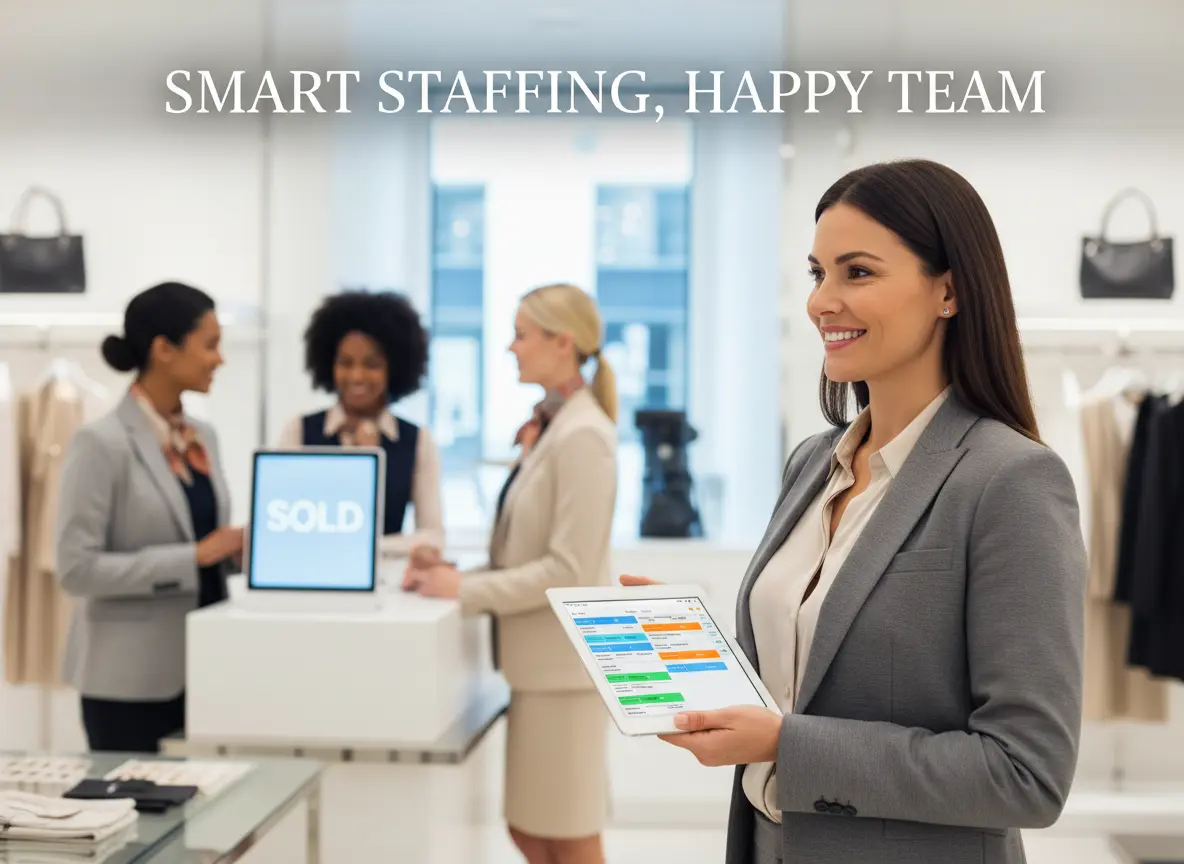
The key is to cross-train your employees. When your cashier can also manage inventory receiving and your sales expert can also handle visual merchandising, you create a flexible, resilient team. You can cover shifts without a panic, and employees feel more engaged and valuable. Use your foot traffic data to schedule smarter—staff up for the Saturday rush and run leaner during the Tuesday morning lull. It’s not about cutting hours; it’s about aligning them with opportunity.
The Customer Experience: Making Every Interaction Count
You can’t slash your way to success. A lean operation must be paired with an unforgettable customer experience. When shoppers feel valued, they come back. And repeat customers spend, on average, 67% more than new ones. The good news? Creating 'wow' moments doesn't have to cost a fortune. The bad news? It requires consistency, which is hard to maintain when your team is stretched thin.
The Consistent Welcome: Where Tech Meets Hospitality
What's the first thing that should happen when a customer walks in? They should be acknowledged. A simple "Hello, welcome in!" makes a world of difference. But your only employee on the floor is in the back looking for a size medium, or they're processing a complicated return, or maybe they’re just human and got distracted for a second. Suddenly, your shopper feels invisible.
This is where smart, lean technology can be a game-changer. Imagine having a dedicated team member at the entrance whose only job is to greet every single person, mention the 2-for-1 sale on denim, and answer basic questions. Now imagine that team member works 24/7, never calls in sick, and costs less than a part-time hire. That’s Stella. She’s your in-store robotic assistant who ensures no customer ever walks in unnoticed. She provides a perfect, professional welcome every time, freeing up your human staff to do what they do best: build relationships, offer expert advice, and close sales.
By having Stella handle the initial greeting and promotion highlights, you’re creating a consistent, high-quality experience from the second someone steps inside. She can even point shoppers in the right direction or answer questions about store hours, all while your team focuses on higher-value interactions. It’s the ultimate lean tool: maximum impact for a minimal, predictable cost.
Guerilla Marketing and Scrappy Sales Tactics
You've optimized your inventory and your team. Now you need to get people in the door without spending a fortune on a billboard. Lean marketing is about being clever, targeted, and resourceful.
Marketing That Doesn't Cost an Arm and a Leg
Forget expensive print ads. Your most powerful marketing tools are likely free or very low-cost. Your first and most important step? Completely and utterly optimize your Google Business Profile. It's free, and it's how local customers find you. Post updates, add high-quality photos, and obsessively collect positive reviews. Next, build an email list. Offer a small discount for signing up. An email list is a direct line to your most loyal customers—a channel you own, unlike social media where algorithms rule.
Get involved in your community. Sponsor a local Little League team, host a workshop, or partner with the non-competing coffee shop next door for a cross-promotion. These activities build goodwill and generate authentic word-of-mouth that no amount of advertising can buy.
Turn Your Physical Space into a Selling Machine
Your store's layout is a silent salesperson. Are you using it effectively? The "power wall" to the right of your entrance is where customers' eyes naturally land—is it showcasing your most exciting, high-margin products? Use lighting to draw attention to key displays. Create clear pathways that guide shoppers through the entire store, not just in and out.
A simple but effective tactic is to place impulse-buy items near the checkout counter. We all know this, but are you optimizing it? Test different products. Group related items together throughout the store—a concept known as "cross-merchandising." If you're selling pasta, put the fancy sauce and artisan cheese right next to it. You’re not just selling products; you’re selling a solution, making the customer’s life easier and increasing your average transaction value in the process.
A Quick Reminder About Stella
As you embrace the lean retail model, remember that strategic automation is your best friend. A tool like Stella automates customer greetings and promotions, providing a consistent, professional experience that boosts sales and frees up your human staff—all on an affordable, predictable subscription. She's the epitome of working smarter, not harder.
Conclusion: Get Lean, Not Mean
Running a profitable store on a shoestring budget isn't about cutting corners or sacrificing quality. It’s about being incredibly intentional with your resources. It's a mindset shift from "how can we spend less?" to "how can we get more from what we already have?"
Your action plan starts now:
- Audit Your Inventory: Identify your slowest-moving stock and make a plan to clear it. Review your ordering process and see where you can be more agile.
- Analyze Your Staffing: Look at your weekly schedule against your sales data. Are you staffed for maximum opportunity? Is your team cross-trained for flexibility?
- Evaluate Your Customer Experience: Walk into your own store. Are you greeted? Is it easy to find what you need? What’s one low-cost change you could make this week to improve the experience?
By focusing on efficiency, maximizing your existing assets, and leveraging smart technology, you can build a resilient, profitable business that's ready for anything. Now go on, make that shoestring look good.