Is Your Cash Register a Sales Tool or a Glorified Calculator?
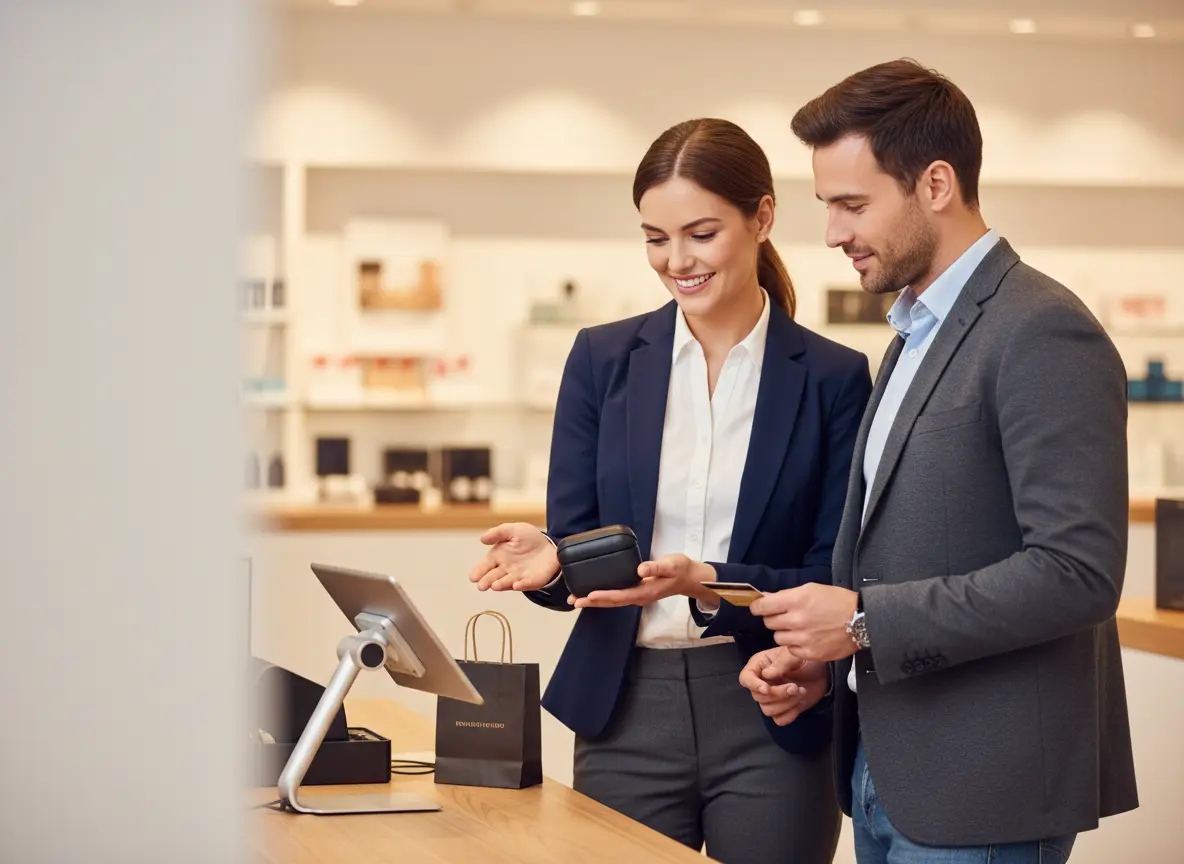
Ah, the checkout counter. The final frontier. It’s the place where a customer’s journey culminates in that sweet, sweet sound of a completed transaction. For many retailers, this is the finish line. The customer found what they wanted, they’re paying for it, and your work is done. You might even get a perfunctory, "Find everything okay today?" in there for good measure.
If that sounds familiar, I have some news for you: you’re using your most valuable piece of real estate as a glorified calculator. The checkout is not the end of the sale; it’s your single greatest opportunity to increase it. We’re talking about upselling—a word that makes many retailers cringe, picturing a slick, pushy salesperson cornering a helpless customer. But let’s be real. Upselling isn't about trickery. It’s about service. It’s about using your expertise to make the customer’s purchase even better.
Forget the hard sell. We’re going to arm you with five simple, non-sleazy, and shockingly effective phrases that your cashiers can use to boost every transaction. These are so natural, they almost feel like cheating. Almost.
The Art of the 'Accidental' Upsell
The best upsell doesn't feel like an upsell at all. It feels like a helpful suggestion from a knowledgeable friend. It’s about reframing the conversation from "Do you want to spend more money?" to "Can I make your experience even better?" This subtle shift is where the magic happens, turning a transactional moment into a relational one. Here’s how you master this dark art.
The "Are You All Set For...?" Question
This phrase is brilliant because it moves the focus away from the product and onto the experience the product enables. No one wants to be "sold to," but everyone wants to be prepared.
Imagine a customer buying a new tent for a camping trip. The default cashier question is, "Anything else?" The answer is almost always, "Nope." Now, try this instead: "This is a great tent! Are you all set for your trip with waterproof matches and extra tent stakes?"
See the difference? You're not just selling more stuff; you're helping them avoid the misery of a soggy campsite or a collapsed tent. You’re the hero. This approach works for almost any product:
- For a new dress: "Are you all set for your event with the right no-show undergarments?"
- For a gourmet pasta sauce: "Are you all set for dinner with some authentic, slow-dried pasta to go with this?"
- For a gallon of paint: "Are you all set for your project with painter's tape and some good brushes? The cheap ones shed and will ruin the finish."
Train your team to think one step ahead of the customer's purchase. What’s the next logical need? Fill that need, and you’ll fill your cash drawer.
The "Most People Grab One of These, Too" Nudge
Ah, social proof. It’s the reason you check Yelp reviews before trying a new restaurant and the reason you’ll buy the headphones your techy friend recommended. We are fundamentally wired to trust the wisdom of the crowd. According to Nielsen, 92% of people trust recommendations from peers over advertising. You can leverage this powerful psychological trigger with one simple phrase.
When a customer is buying a French press, instead of letting the transaction end there, your cashier can casually mention, "You know, most people who buy this grab a bag of our coarsely ground espresso blend, too. It’s specifically ground for this type of coffee maker."
This isn't you being pushy. This is you sharing a helpful tip based on what other, savvy customers have already figured out. It removes the pressure and creates a sense of, "Oh, if everyone else is doing it, it must be a good idea." It triggers a bit of FOMO (Fear Of Missing Out), and it works like a charm. The key is authenticity. Make sure the recommended product is genuinely a popular and logical pairing.
The "This Is Actually Our Best Deal Right Now" Reveal
Nobody wants to miss out on a good deal. The problem is, your customers are swimming in a sea of promotional noise. They’ve likely walked past a dozen signs and missed the one that could have saved them money—and made you more.
This phrase positions your cashier as an insider, a helpful advocate who is looking out for the customer’s best interest. When a customer brings a single pair of socks to the counter, your cashier can pause, lean in slightly, and say, "Hey, before I scan this, I have to let you know this is actually our best deal right now—all our socks are buy-three-get-one-free."
What just happened? You didn't just try to sell them more socks. You offered them a better value. The customer feels smart and taken care of. You, in turn, have potentially quadrupled the value of that line item. This is most effective when it’s delivered with a genuine sense of sharing a secret. It turns a mundane transaction into a moment of pleasant surprise and transforms your cashier from a button-pusher into a value-provider.
Planting the Upsell Seed Before the Checkout
Here’s a little secret: the most effective upsell doesn't happen at the register. It’s initiated long before the customer even thinks about paying. The checkout is for closing the deal, but the consideration phase happens on the sales floor. The challenge? Your staff is busy stocking shelves, helping other customers, and, you know, taking their legally mandated breaks. It's impossible for them to pitch every promotion to every shopper. Or is it?
Let Your Robot Do the Talking
This is where technology can do the heavy lifting for you, priming customers for the upsell before they even reach the counter. Imagine a friendly, professional assistant near your entrance that greets every single person and expertly mentions your key offers. That's where an in-store robotic assistant like Stella becomes your unfair advantage. She’s your perfect employee: she never calls in sick, never forgets the daily specials, and has a knack for engaging customers without being intrusive.
While your human team provides incredible, nuanced service, Stella can be programmed to be your lead promotions expert. As a customer walks in, she can say, "Welcome! Just so you know, all of our premium leather handbags are 20% off today, and they pair beautifully with our new silk scarves." By the time that customer arrives at the checkout with a handbag, the cashier's job is infinitely easier. The seed has been planted. The upsell is no longer a cold pitch but a warm follow-up: "Did Stella mention the matching scarves? They're right here if you'd like to see how they look with your new bag." It’s a seamless, sophisticated sales strategy that runs on its own.
Advanced Techniques for the Fearless Retailer
Once your team has mastered the subtle arts of upselling, you can introduce a few more direct—but still incredibly effective—techniques. These phrases require a bit more confidence and product knowledge, but the payoff can be significant. They shift the focus from adding more items to increasing the value of the primary item itself.
The "Would You Like to Upgrade to the..." Offer
This is the classic upsell, and it’s a classic for a reason: it works. The key to making it successful is to focus entirely on the value of the upgrade, not the price. You’re not trying to squeeze more money out of the customer; you’re offering them a measurably better solution to their problem.
Let’s say a customer is buying a basic blender. Your cashier can say, "For just $20 more, you can upgrade to the pro model. It has a motor that’s twice as powerful—so it can handle ice and frozen fruit without burning out—and it comes with a three-year warranty instead of one. Would you be interested in that?"
You’ve clearly articulated the benefits: more power, more durability, and more peace of mind (the warranty). You’ve justified the extra cost with tangible advantages. The customer can now make an informed decision based on value, and very often, they will choose the better option. This turns a standard sale into a premium one and builds trust by showing you want them to have the best product for their needs.
The "Have You Tried the..." Cross-Sell
This phrase is less about a direct upsell and more about a strategic cross-sell. It’s perfect for introducing customers to new arrivals, best-sellers, or complementary products they might not have noticed. It feels personal and conversational, like a genuine recommendation.
When a customer buys your store’s most popular face cream, your cashier can ask, "This is our number one seller for a reason! Have you tried the new overnight renewal serum from the same line? Our staff is obsessed with it."
This approach does a few things beautifully. It validates their current choice ("number one seller"), introduces a new product with an exciting endorsement ("staff is obsessed"), and opens a dialogue. Even if they say no today, you’ve just planted a seed for their next visit. To make this even more effective, keep a small, curated selection of these "Have you tried?" items right at the checkout. Make it easy for them to see, touch, and add to their purchase with zero friction.
A Quick Reminder About Stella
While training your cashiers on these phrases is a fantastic start, consistency is the key to truly moving the needle on your store's revenue. An AI retail assistant like Stella ensures that every single customer who walks through your door hears about your most important offers and upsell opportunities. She guarantees a perfect, professional pitch every time, freeing up your human staff to close sales and build lasting customer relationships.
Stop Leaving Money on the Counter
Your checkout counter can be so much more than a place for payment processing. It’s your final, and best, chance to increase basket size, improve the customer experience, and boost your bottom line. By ditching the tired, "Did you find everything okay?" and adopting a more strategic, service-oriented approach, you can transform every transaction.
So, here’s your action plan:
- Pick one—just one!—of these phrases to start.
- Train your team on why it works and how to say it naturally.
- Challenge them to use it for one week and track the results.
You’ll be amazed at how a few simple words can make a huge difference. Go ahead, give it a try. It’s time to stop leaving money on the counter—unless, of course, it's a generous tip for your team's outstanding service.