Introduction: When the Grass Stops Growing, So Does Your Revenue (Unless You're Smart About It)
Every landscaper knows the feeling. The leaves have fallen, the mowing season is winding down, and your crew is starting to look at you with that particular mix of loyalty and concern that translates to: "So… are we still getting paid?" Winter is the season that separates landscaping businesses that merely survive from those that actually thrive — and the secret weapon that savvy operators have discovered is right above your head: holiday lighting.
Holiday lighting installation has quietly become one of the most lucrative seasonal add-on services in the green industry. According to the American Holiday Lighting industry estimates, the professional holiday lighting market generates over $1 billion annually in the United States, and homeowners and businesses are increasingly willing to pay premium prices to avoid the ladder-climbing, light-untangling nightmare themselves. That's your opportunity knocking — loudly, in blinking LED colors.
The good news? You already have the equipment, the crew, the trucks, and most importantly, the customer relationships. Building a holiday lighting service doesn't require starting from scratch. It requires a smart, structured approach to packaging, selling, and delivering a premium experience that keeps your team busy and your bank account from going into hibernation. Let's dig in.
Building Your Holiday Lighting Service From the Ground Up
Choosing the Right Equipment and Inventory Model
Before you quote a single job, you need to make a foundational business decision: will you sell the lights to customers, or lease them? This is not a minor detail — it defines your entire revenue model. Many successful holiday lighting companies use a lease model, where the customer pays for installation, the season's display, takedown, and storage, and the lights remain your property. This creates recurring annual revenue because clients essentially re-book every year, and you maintain control over quality and consistency.
The lease model does require upfront capital investment in quality commercial-grade LED lighting, but the long-term returns are compelling. Commercial LED lights last significantly longer than consumer-grade products, project a more polished look, and justify the premium pricing customers expect from a professional service. Start with a manageable inventory — roofline packages, tree wrapping kits, and wreaths with lighting — and expand as your client base grows. Resist the urge to offer every possible configuration in year one. Simplicity scales; chaos doesn't.
Pricing Your Services for Profitability (Not Just to Win Bids)
One of the biggest mistakes new holiday lighting operators make is pricing too low out of fear. You are not competing with a homeowner buying a box of lights at a big-box store. You are selling convenience, safety, expertise, and a beautiful result — and that has real value. A residential roofline job on a modest home can reasonably run between $500 and $1,500, while larger custom commercial installations can reach $5,000 to $20,000 or more.
Your pricing should account for labor (typically the largest cost), materials or equipment depreciation if using the lease model, storage, fuel, insurance, and a healthy profit margin. Use a per-linear-foot or tiered package pricing structure to make quoting efficient and consistent. Create three tiers — a good/better/best package — so clients have clear options and your team isn't fielding endless custom negotiations. Price the middle tier to be your sweet spot, and watch how many customers naturally gravitate toward it.
Training Your Crew for a New Kind of Job
Your landscaping crew is skilled, hardworking, and comfortable outdoors — which means they're actually well-suited for holiday lighting work with the right training. The learning curve is manageable, but don't underestimate it. Working on ladders near rooflines, using clips and attachment hardware correctly, and creating visually consistent displays requires specific technique and an eye for detail that mowing grass does not necessarily develop.
Invest in a brief but structured training program before the season begins. Run a practice installation on your own property or a willing neighbor's home. Emphasize safety protocols rigorously — falls are the obvious risk, but electrical safety and working in cold, wet conditions also need attention. A crew that feels confident and well-prepared will work faster, make fewer mistakes, and represent your brand professionally. Happy crews also tend to stay employed with you through the off-season, which solves the perpetual landscaping headache of spring rehiring.
Streamlining Customer Communication During Your Busiest Season
Why Your Phone Might Be Your Biggest Bottleneck
Here's a scenario that will sound familiar to every service business owner: it's the first week of November, your holiday lighting inquiries are pouring in, your crew is still finishing fall cleanups, and your phone will not stop ringing. Every missed call is a potential job — and during holiday lighting season, the window to capture customers is genuinely short. People book early or they find someone else.
This is exactly where Stella, the AI robot employee and phone receptionist, can be a game-changer for a growing landscaping business. Stella answers every call, 24/7, with accurate information about your services, pricing packages, availability, and seasonal promotions — while your team is on ladders doing actual work. She can collect customer intake information conversationally over the phone, so by the time you or your office manager follows up, you already have the address, the type of installation they're interested in, and their preferred contact time. No more playing phone tag with half-filled sticky notes. During a season where every week matters, that kind of responsiveness can be the difference between a full schedule and an empty one.
Marketing Your New Service to the Customers You Already Have
Mining Your Existing Customer Base First
Before spending a dollar on advertising to strangers, turn to the customers who already trust you. Your existing landscaping clients are your absolute best prospects for holiday lighting services. They know your work quality, they already have a relationship with your brand, and the conversion cost is a fraction of what it takes to acquire a new customer from scratch.
Send a direct, personal communication — an email, a text, or even a handwritten postcard for your best accounts — introducing your new service in late September or early October. Frame it as an exclusive early-bird offer for your loyal customers before you open up availability to the general public. Not only does this drive early bookings that let you plan your season, it also makes existing clients feel valued, which is never a bad investment. A simple message that says "As one of our valued landscaping clients, we wanted to give you first access to our new professional holiday lighting service" goes a long way.
Expanding Your Reach With Targeted Local Marketing
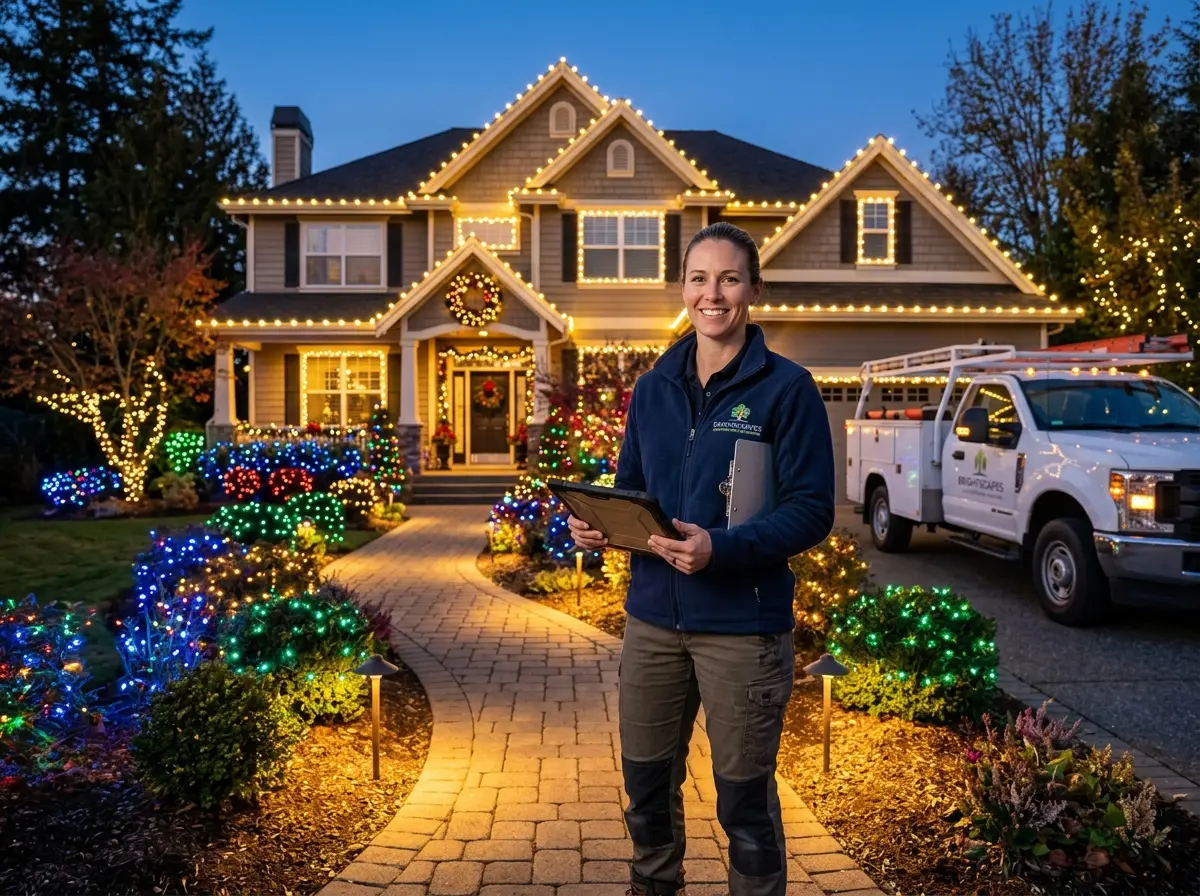
Once you've activated your existing base, it's time to attract new customers. Holiday lighting is a wonderfully visual service, which means your marketing strategy should lean heavily on imagery. Before-and-after photos, short video walkthroughs of completed installations, and neighborhood-specific social media posts showing local homes you've decorated are all highly effective. Neighborhood platforms and local Facebook groups are particularly powerful for home services — people in the same area see the post, recognize the street, and want that same result for their own home.
Don't overlook commercial accounts. Office parks, retail centers, restaurants, and HOA common areas often have larger budgets, more complex needs, and — crucially — they make decisions early. Landing even two or three solid commercial accounts can anchor your season financially and provide referrals into their networks. A direct outreach campaign targeting local business owners in October, paired with a professional-looking proposal template, can open doors that residential marketing alone won't reach.
Quick Reminder About Stella
Stella is an AI robot employee and phone receptionist that helps businesses like yours stay responsive and professional without adding headcount. She answers calls around the clock, promotes your services, collects customer information, and keeps things running smoothly — all for just $99/month with no upfront hardware costs. For a seasonal service business where timing is everything, having a reliable front-line presence that never misses a call is the kind of operational advantage that pays for itself quickly.
Conclusion: Stop Letting Winter Win
The landscaping businesses that build lasting success are the ones that refuse to accept seasonal revenue as a fixed reality. Holiday lighting is not a distraction from your core business — it's a natural extension of it, served to customers who already trust you, executed with equipment and skills you're already developing, and timed to fill exactly the gap that winter creates in your cash flow.
Here are your actionable next steps to get started:
- Make the lease-vs-sell decision and build your initial inventory accordingly before September ends.
- Create three tiered packages with clear, confident pricing and simple names.
- Train your crew with a practice installation before the first client job.
- Send your existing client announcement in late September or early October as an exclusive early-bird offer.
- Set up systems to capture every inbound inquiry — whether that's a dedicated phone line, a booking form, or an AI receptionist — so no lead slips through during the rush.
- Document everything photographically from day one to build a marketing library for next year.
Winter is coming regardless. The only question is whether your business is going to sit in the cold or be the one making everything look brilliantly lit. This year, be the lights.