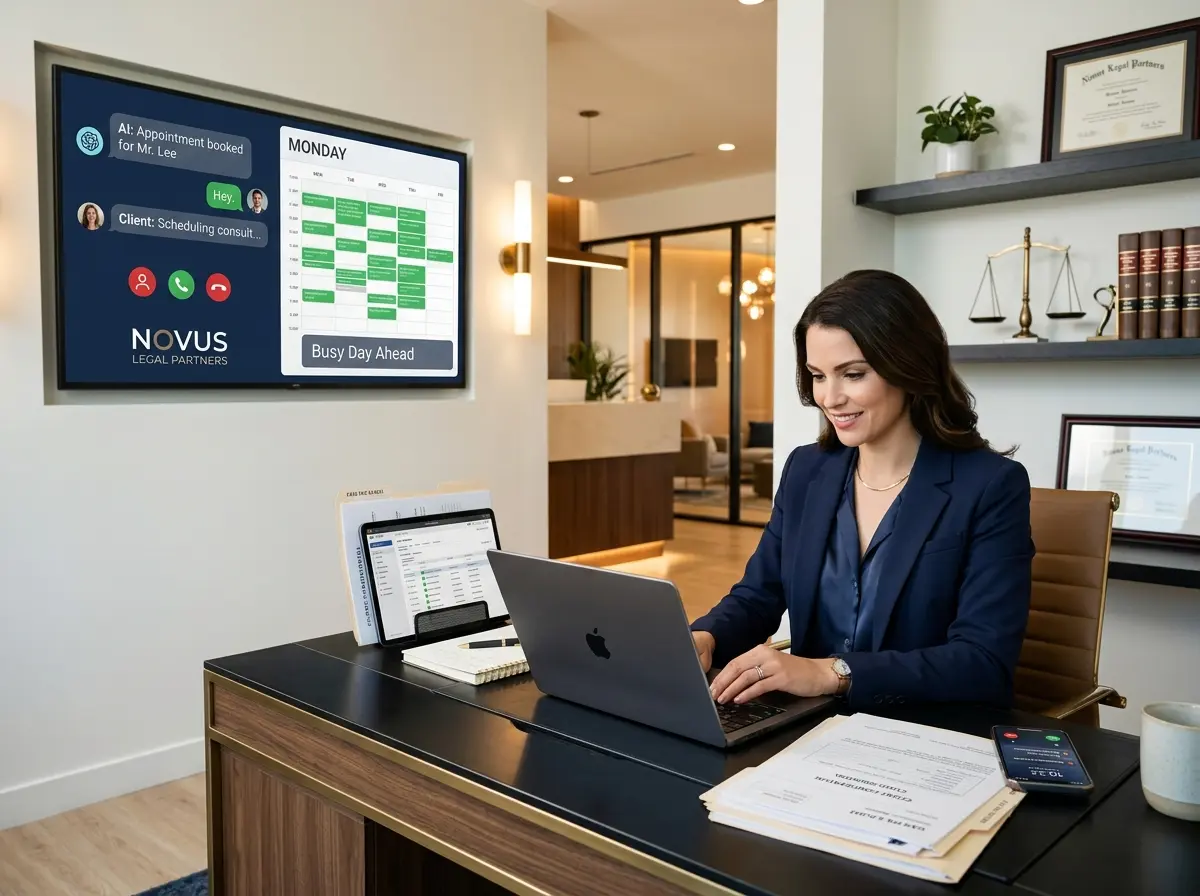
The Monday Morning Chaos No Lawyer Wants to Face
Picture this: It's 8:03 AM Monday. Your receptionist hasn't even taken off her coat yet. The phone is already ringing. Your inbox has fourteen new messages. And somewhere in that pile is the person who called at 11:30 PM on Saturday with an urgent legal question — who, having received no response, has already booked a consultation with your competitor down the street.
Welcome to the weekend inquiry problem. It's not glamorous, it's not new, and for small law firms, it's quietly costing a fortune in lost business every single week.
Here's the uncomfortable truth: legal consumers don't wait. Research from the Legal Trends Report consistently shows that the majority of people seeking legal help contact more than one firm before making a decision — and responsiveness is one of the top factors in who gets hired. If your phones go dark Friday at 5 PM, you're essentially handing your competition a gift basket every weekend.
But what if you didn't have to? What if your phones never actually went dark? One small law firm asked exactly that question — and the results were hard to argue with.
The Weekend Black Hole: Why Law Firms Lose Clients While They Sleep
The Psychology of the After-Hours Inquiry
People don't schedule their legal crises around your office hours. Car accidents happen on Sunday afternoons. Employers hand out termination letters on Friday evenings. Landlords change locks on Saturday mornings. When someone is stressed, scared, and reaching for their phone to find legal help, they are emotionally primed to make a decision — right now.
This is exactly the worst moment for them to hear a generic voicemail greeting that promises a callback "during normal business hours." That message doesn't say "we'll help you." It says "try someone else." And many of them do.
The Numbers Don't Lie
Studies on lead response time across professional services industries have found that the odds of successfully contacting a lead drop by over 10 times if you wait longer than an hour to follow up. For law firms, where trust and urgency are both sky-high, that window can be even shorter. A prospective client who reaches a live (or live-feeling) response at 10 PM on a Friday is not just impressed — they feel taken care of. That emotional experience is the foundation of the attorney-client relationship, and it starts before anyone signs a retainer.
The Small Firm Disadvantage — Or Is It an Advantage?
Large firms often have after-hours answering services or dedicated intake teams. Small firms typically have neither the budget nor the staffing to compete on that front. But here's the irony: small firms are actually better positioned to benefit from intelligent after-hours coverage, because the relative gain is enormous. Booking even two or three additional consultations per week from weekend inquiries can meaningfully move the revenue needle for a boutique practice. The playing field is more level than it looks — if you're willing to use the right tools.
How One Small Law Firm Changed Its Monday Morning Entirely
The Setup: A Two-Attorney Firm With a Weekend Problem
A small personal injury firm — two attorneys, one full-time receptionist, and a part-time paralegal — was doing solid work but struggling with a familiar pattern. Mondays were chaotic, consultations were unevenly distributed through the week, and the attorneys had a nagging suspicion that a lot of weekend callers were slipping away unanswered. After tracking their missed calls and voicemails over a four-week period, the suspicion became a certainty: nearly 40% of their weekly inbound inquiries came in outside of office hours, and their callback rate on those leads was inconsistent at best.
They needed coverage. But they didn't need to hire a weekend receptionist — they needed something smarter.
Enter AI Phone Answering: Intake That Never Clocks Out
The firm implemented Stella, an AI phone receptionist, to handle all after-hours calls. The configuration took less time than a typical staff onboarding — Stella was briefed on the firm's practice areas, common caller questions, consultation scheduling process, and intake requirements. From that point forward, every call that came in after hours was answered professionally, conversationally, and immediately.
Callers weren't dumped into a voicemail box. They were greeted, asked about their situation, walked through a conversational intake process, and given a clear next step — typically a confirmed consultation slot for the following week. Stella's built-in CRM logged each caller's information automatically, generated AI-summarized profiles of each inquiry, and pushed instant notifications to the managing attorney so nothing fell through the cracks. By the time Monday morning arrived, the attorneys didn't have a pile of vague voicemails to sort through — they had a structured list of pre-qualified prospects ready to be contacted.
The Result: Tripled Monday Bookings in Six Weeks
Within six weeks of going live, the firm's Monday consultation bookings had tripled. Not because more people were suddenly calling — the call volume was consistent. What changed was the conversion rate on those calls. Prospects who previously reached voicemail and moved on were now completing an intake conversation, getting a callback confirmation, and showing up on Monday morning already engaged with the firm. The receptionist's Monday workload shifted from frantic catch-up to organized follow-through. The attorneys started the week with momentum instead of mayhem.
Practical Steps to Replicate This for Your Law Firm
Audit Your Current After-Hours Black Hole
Before you can fix the problem, you need to see it clearly. Pull your call logs from the past 30 days and categorize every inbound call by time of day and day of week. Note which calls resulted in consultations versus which went to voicemail with no follow-up. If you don't have the data to do this, that's already a sign your intake system needs work. Most firms who do this exercise are genuinely surprised by how much business is quietly leaking out the back door every weekend.
Design an Intake Process That Works Without You
The key insight from the case above isn't just "answer the phone after hours." It's that the intake process itself was automated intelligently. Think about what information you actually need from a new prospect before a consultation: the nature of their legal issue, relevant dates, contact information, how they found you, and their availability. A well-configured AI receptionist can collect all of this conversationally, without the caller feeling like they're filling out a form. Map out your ideal intake flow and build it into your after-hours solution — don't just redirect calls to a generic voicemail.
Close the Loop on Monday Morning
After-hours coverage only delivers ROI if your Monday morning process is equally tight. Make sure your team has a clear protocol for reviewing weekend intake summaries, prioritizing callbacks, and confirming consultations. The leads are warm — your job is not to let them cool down. A structured Monday morning review process (even 15 minutes) can be the difference between converting those weekend inquiries and losing them to Monday-morning procrastination.
A Quick Reminder About Stella
Stella is an AI robot employee and phone receptionist built for businesses of all sizes — including law firms, medical offices, retail shops, and service providers. She answers calls 24/7, handles conversational intake, manages a built-in CRM with AI-generated contact profiles, and keeps business owners in the loop with real-time notifications. For firms with a physical location, she's also available as a human-sized in-store kiosk that greets and engages clients in person. At $99/month with no upfront hardware costs, she's one of the more practical business decisions you'll make this year.
Your Phones Shouldn't Have an Off Switch
The law firm in this story didn't invent a new marketing strategy or reinvent their practice. They simply stopped letting good leads evaporate over the weekend by ensuring that every caller — regardless of when they called — received a prompt, professional, and useful response. The triple boost in Monday bookings wasn't magic. It was the entirely predictable result of closing a gap that should have been closed years earlier.
If you're a small firm owner reading this, here's your actionable next step: spend 30 minutes this week auditing your after-hours call handling. Check your voicemails from the last two weekends. Count how many of those callers booked a consultation. Be honest about the number. Then ask yourself what it would be worth — in actual revenue — to convert even half of those missed opportunities going forward.
The good news is that solving this problem has never been more affordable or more accessible. You don't need a weekend staff, an expensive answering service, or a complicated enterprise software rollout. You need a receptionist who never sleeps, never calls in sick, and genuinely doesn't mind picking up the phone at 11:30 on a Saturday night.
Your competition is probably still letting those calls go to voicemail. That's your opportunity — if you decide to take it.