The Stockroom Struggle Is Real (But It Doesn't Have to Be)
Picture this: a customer asks your retail associate where a specific product is. Your associate smiles confidently, disappears into the stockroom, and returns approximately fourteen minutes later — empty-handed, slightly flustered, and holding a random box that has nothing to do with anything. Sound familiar?
A disorganized stockroom isn't just an eyesore reserved for the staff who suffer through it daily. It's a silent killer of productivity, customer satisfaction, and your retail team's will to live (okay, slight exaggeration — but only slight). According to the National Retail Federation, inventory distortion — including misplaced, miscounted, or inaccessible stock — costs retailers globally over $1.77 trillion annually. That's trillion, with a T.
The good news? Creating an efficient stockroom doesn't require a massive renovation budget or a miracle. It requires smart systems, consistent habits, and a willingness to finally deal with that corner where products go to be forgotten forever. This guide will walk you through practical, proven strategies to transform your stockroom into a space your staff will actually appreciate — and maybe even brag about.
Building the Foundation of a Functional Stockroom
Start With a Full Audit (Yes, All of It)
Before you can build a better system, you need to know what you're working with. Block out time — ideally during a slow period — to conduct a complete stockroom audit. Pull everything out, categorize it, and make honest decisions about what belongs, what's expired or damaged, and what somehow ended up in your stockroom when it was never supposed to be there in the first place (looking at you, holiday decorations from three years ago).
During your audit, document your findings. Note which product categories take up the most space, which items move fastest, and where your current layout creates friction for staff. This baseline data is invaluable when redesigning your layout and will save you from making changes that look good on paper but fail miserably in practice.
Design Your Layout Around Product Velocity
Not all products are created equal, and your stockroom layout shouldn't treat them as if they are. The guiding principle here is simple: the faster a product moves, the closer it should be to the sales floor.
Organize your inventory into three tiers based on how frequently items are accessed:
- High-velocity items — bestsellers, seasonal staples, and replenishment stock. Keep these near the stockroom entrance, at eye level, and clearly labeled.
- Medium-velocity items — products that sell steadily but don't require constant restocking. Position these in the middle sections of your stockroom.
- Low-velocity items — specialty products, bulk reserves, and slow-movers. These can live on higher shelves or in less accessible areas without causing daily friction.
This tiered approach reduces the time your staff spends searching and walking, which adds up to significant time savings across a busy retail week. Studies show that retail associates spend up to 30% of their shift on non-selling activities — a well-organized stockroom chips away at that number meaningfully.
Label Everything Like Your Staff's Sanity Depends on It
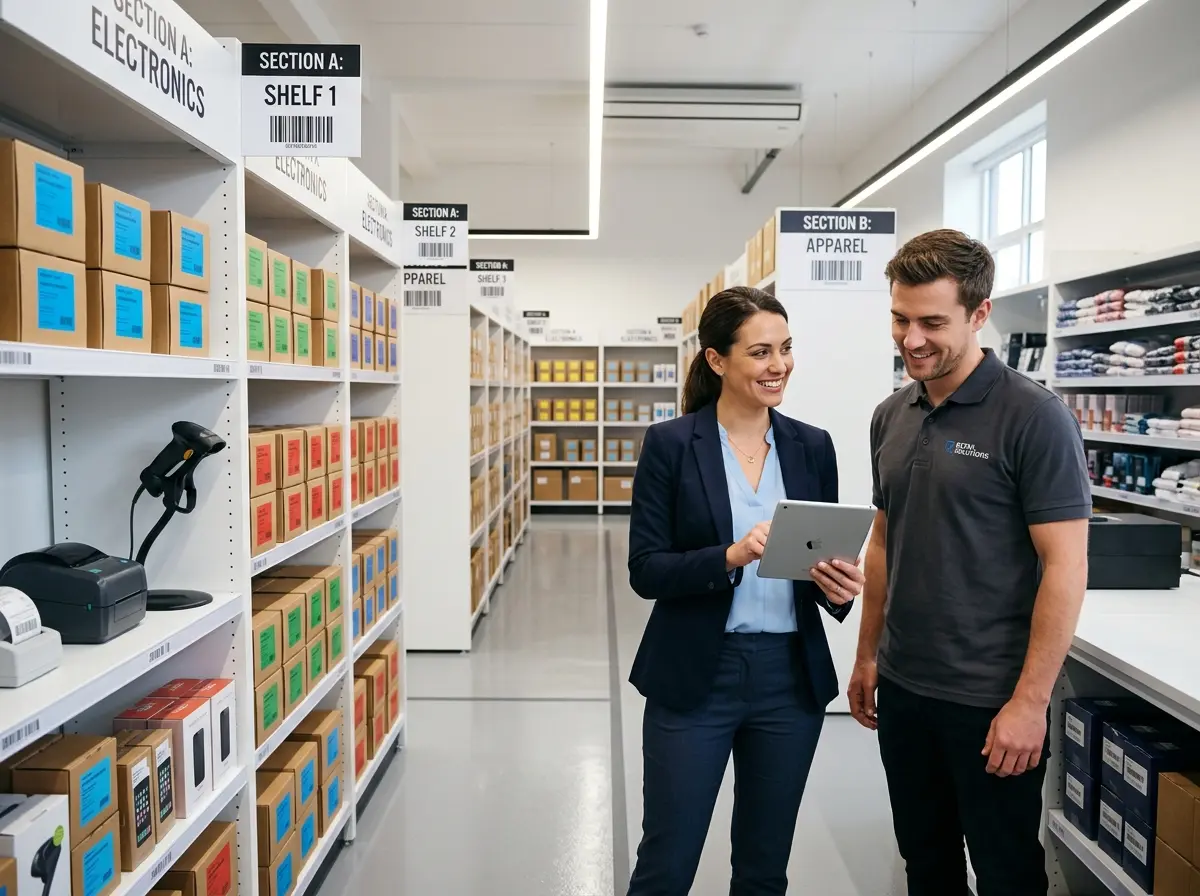
It does. Clear, consistent, and durable labeling is the unsung hero of stockroom efficiency. Every shelf, bin, and section should be labeled at eye level with both the product name and a location code that corresponds to your inventory system. Color-coded labels by category are an easy upgrade that pays dividends immediately, especially during busy seasons when temporary staff are added to the mix.
Invest in a proper label printer and laminated shelf tags rather than handwritten sticky notes that fade, fall off, and generally make your stockroom look like a crime scene. Create a master map of your stockroom layout and post it near the entrance — new team members will thank you, and so will your onboarding process.
How Technology Can Take the Pressure Off Your Team
Inventory Management Tools That Actually Work
Manual inventory tracking in a spreadsheet is the retail equivalent of using a paper map while everyone else has GPS. Modern inventory management software — integrated with your point-of-sale system — gives you real-time visibility into stock levels, low-inventory alerts, and sales trend data that informs smarter reordering decisions. Platforms like Lightspeed, Square for Retail, and Shopify POS all offer solid inventory tracking features that reduce the guesswork and the expensive over-ordering that clogs up stockrooms in the first place.
When your team knows exactly what's in stock and where it lives, they spend less time searching and more time selling. That's the kind of math every business owner can appreciate.
Let Stella Handle the Front While Your Team Handles the Back
Here's a scenario worth considering: your stock associate is mid-restock when a customer flags down every available staff member with product questions. Suddenly, nobody is finishing the job in the stockroom, the shelves aren't getting filled, and everyone is stretched thin. This is where Stella steps in.
Stella is an AI robot employee and phone receptionist that greets customers, answers product questions, highlights current promotions, and handles inquiries — all without pulling your human staff away from critical tasks like restocking and inventory management. She stands in-store and engages customers proactively, so your team can stay focused on the back-of-house operations that keep the floor running smoothly. She also answers phone calls 24/7, so no one needs to abandon a restock job to pick up the phone. Fewer interruptions mean faster restocking, fuller shelves, and a better experience for everyone.
Maintaining the System (Because a Great Stockroom Is a Habit, Not a One-Time Event)
Establish Daily and Weekly Maintenance Routines
Even the most beautifully organized stockroom will devolve into chaos without consistent maintenance habits. Build a simple daily checklist for your team that includes tasks like returning misplaced items to their correct locations, checking that labels are intact and visible, and flagging low-stock items for reordering. This doesn't need to take more than 10–15 minutes at the end of each shift, but it prevents the slow creep of disorder that eventually turns into a full-scale reorganization project.
Weekly, assign a slightly more thorough tidying session — straightening shelves, reconciling inventory counts, and ensuring the stockroom map still reflects actual layout. Monthly, do a mini-audit of your slow-moving inventory to identify items that may need to be relocated, discounted, or returned to your supplier.
Train Your Team and Make Them Stakeholders
The most efficient stockroom system in the world fails if your staff doesn't follow it — or worse, doesn't understand why it matters. Invest time in proper training that explains not just what to do but why the system exists and how it benefits them directly. When staff understand that a well-organized stockroom means less time scrambling and more time doing their actual job, buy-in improves dramatically.
Consider assigning a "stockroom lead" — a team member who takes ownership of organization standards, conducts brief weekly walkthroughs, and serves as the point of contact for any layout questions. Giving someone a sense of ownership over the space tends to produce noticeably better results than treating stockroom maintenance as everyone's vague responsibility and therefore nobody's actual responsibility.
Adapt the System as Your Business Grows
A stockroom setup that works perfectly for your current product range and sales volume may become inadequate as your business scales. Schedule a quarterly review of your stockroom layout to assess whether your velocity tiers still reflect reality, whether seasonal shifts require temporary reorganization, and whether your shelving and storage infrastructure needs an upgrade. Retail is not static, and your stockroom systems shouldn't be either. Treat your stockroom like a living part of your business — because that's exactly what it is.
A Quick Reminder About Stella
Stella is an AI robot employee and phone receptionist built for businesses like yours. She greets in-store customers, answers their questions, promotes your deals, and handles phone calls around the clock — all for just $99/month with no upfront hardware costs. While your team focuses on keeping your newly organized stockroom running like a well-oiled machine, Stella keeps the front of your business covered without missing a beat.
Your Next Steps Toward Stockroom Greatness
Transforming your stockroom isn't a weekend project you'll tackle someday — it's an investment in your team's efficiency, your customers' experience, and your bottom line. The path forward is clear: start with a thorough audit, design a layout based on product velocity, label everything consistently, and build daily habits that protect the system you've created.
Here's a simple action plan to get started this week:
- Schedule your audit. Block two to three hours and commit to it. Bring coffee.
- Map your current layout and identify your top friction points — where does your team lose the most time?
- Invest in proper labeling materials and create a master stockroom map to post at the entrance.
- Review your inventory management software — if you're still tracking stock manually, it's time to upgrade.
- Assign a stockroom lead and build maintenance routines into your team's daily schedule.
A great stockroom won't solve every challenge your retail business faces, but it will eliminate a surprising number of daily frustrations for your staff — and a team that isn't spending half its shift searching for products is a team that has more time and energy for the things that actually grow your business. That's a trade worth making.