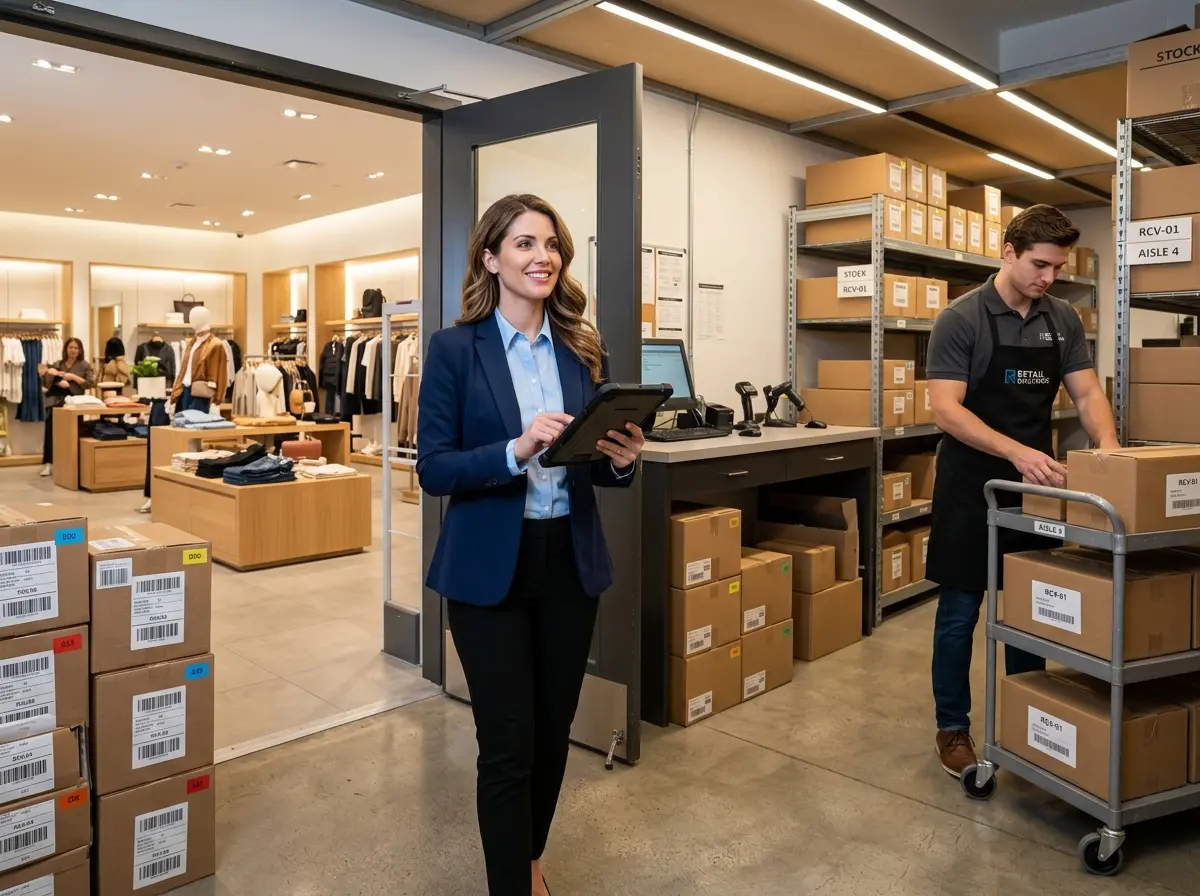
Introduction: The Journey Your Inventory Takes Before It Earns You a Dime
Let's paint a picture. A shipment arrives at your receiving dock. Boxes are stacked, labels are scanned (or not — we've all been there), and somewhere between the back room and the sales floor, products go on a little adventure. Some make it to shelves quickly. Others mysteriously vanish into the stockroom abyss for weeks, only to resurface during a clearance event when they've already missed their prime selling window. Sound familiar?
The gap between receiving inventory and actually selling it is where retail businesses quietly hemorrhage money. Slow stocking, poor organization, and inconsistent processes don't just create operational headaches — they directly impact your revenue, your customer experience, and your staff's sanity. The good news? Optimizing your retail stocking process is absolutely achievable, and the payoff is significant. A well-oiled receiving-to-floor pipeline means fresher inventory, faster turnover, fewer stockouts, and happier customers who find what they came for.
This guide breaks down how to tighten up every step of the process — from the moment a pallet hits your dock to the moment a customer picks a product off your shelf. Let's get into it.
Getting the Receiving Process Right
The stocking process doesn't begin at the shelf — it begins the moment inventory arrives. A sloppy receiving process creates a domino effect that haunts you for weeks. Mis-received items lead to phantom inventory, inaccurate stock counts, and the dreaded "we should have it somewhere" response to customer inquiries.
Build a Consistent Receiving Protocol
Every shipment should be processed the same way, every time — regardless of who's working the dock that day. This means having a documented receiving checklist that covers verifying purchase orders against delivery manifests, inspecting for damage before signing off on shipments, logging quantities accurately into your inventory system, and labeling items immediately upon receipt.
Consistency is everything here. When your team knows exactly what steps to follow, errors drop dramatically and accountability becomes much easier to enforce. If you're still relying on memory or informal habits, that's your first fix.
Designate a Staging Area and Stick to It
One of the most underrated improvements a retailer can make is creating a clearly defined staging area between the receiving dock and the sales floor. This is the zone where items are checked, counted, labeled, and organized before they move anywhere else. Without it, products get shuffled around chaotically, staff trips over half-opened boxes, and the back room becomes a retail Bermuda Triangle.
Your staging area should be organized by category or department, well-lit, and large enough to handle your typical shipment volume. Think of it as quality control for your inventory — nothing moves to the floor until it's been properly processed in the staging zone.
Invest in the Right Technology
Barcode scanners, inventory management software, and point-of-sale integrations aren't luxuries — they're necessities for any retailer serious about accuracy. According to the National Retail Federation, inventory distortion (including shrinkage and out-of-stocks) costs retailers globally over $1.7 trillion annually. A significant portion of that stems from receiving errors and inaccurate stock records. Real-time inventory tracking tools dramatically reduce these errors and give you a clear picture of what you have, where it is, and when you need to reorder.
Organizing the Back Room for Maximum Efficiency
If your stockroom looks like a yard sale gone wrong, you're not alone — but you are losing money. The back room is the engine of your retail operation, and a disorganized engine runs poorly.
Implement a Logical Storage System
Products in the back room should mirror how they're organized on the sales floor. Group items by category, department, or SKU range so that any team member can locate stock quickly without a 10-minute search mission. Use clear bin labels, shelf markers, and floor designations. If a new hire can find what they're looking for on their first day, your system is working. If they can't, it's not.
Rotate stock using the FIFO (First In, First Out) method — older inventory moves to the floor first. This is especially critical for products with expiration dates or seasonal relevance, but it's good practice across the board. Nothing hurts your margins quite like discovering a shelf full of last season's stock that's been sitting behind this season's delivery.
Set Replenishment Triggers and Schedules
Replenishment shouldn't be reactive — it should be systematic. Rather than waiting for a sales associate to notice an empty shelf mid-shift, establish par levels for your highest-velocity items and build replenishment checks into your daily or shift routines. Many inventory systems allow you to set automatic low-stock alerts, which takes the guesswork entirely out of the equation. Pair those alerts with scheduled floor-walking checks and you'll dramatically reduce the chance of a customer reaching for an empty shelf.
Keeping the Customer Experience Smooth While the Back Room Catches Up
Here's a reality check: no matter how efficient your stocking process becomes, there will always be moments when your team is tied up in the back room, processing a large shipment, or simply spread thin. That's exactly when your front-of-store customer experience tends to suffer — and when a tool like Stella quietly earns her keep.
Let Technology Handle the Floor While Your Team Handles the Stock
Stella is an AI robot employee and phone receptionist that stands inside your store and engages customers naturally — answering questions about products, services, promotions, and policies without pulling a single team member away from the stockroom. When your staff is heads-down processing a shipment, Stella is on the floor greeting customers, answering "do you carry this in blue?" and even upselling related items. She also handles inbound phone calls 24/7, so no inquiry goes unanswered just because everyone's busy unboxing pallets. For a flat $99/month with no upfront hardware costs, she's the kind of reliable presence that doesn't call in sick on delivery day.
Training Your Team for a Faster Floor-to-Shelf Pipeline
Even the best systems fall apart without people who know how to use them. Staff training is the often-overlooked link between a great stocking strategy and one that actually gets executed consistently.
Create Role-Specific Stocking Standards
Not everyone on your team needs to know everything about the receiving process, but everyone should understand their piece of it. Create clear, role-specific guidelines — what a stock associate is responsible for versus what a shift supervisor should be verifying. Document these standards, train to them explicitly, and revisit them during onboarding and performance reviews. Ambiguity breeds inconsistency, and inconsistency is the enemy of a smooth stocking operation.
Use Data to Identify Bottlenecks and Coach Accordingly
Your inventory system likely generates more useful data than you're currently using. Track how long it takes from receiving to floor placement for different product categories. Monitor shrinkage rates, stockout frequency, and replenishment lag times. When you spot a consistent delay — say, certain departments consistently take twice as long to stock — that's your signal to dig in, identify the cause, and address it through retraining, process changes, or better tooling.
Retailers that use performance data to coach their teams aren't micromanaging — they're managing smart. There's a difference, and your team will feel it.
Build a Culture of Ownership Around Inventory Accuracy
This is the soft-skills part of stocking optimization, and it matters more than most business owners acknowledge. When employees understand why inventory accuracy matters — not just that they're supposed to count things correctly, but how errors directly affect sales, customer satisfaction, and ultimately their own job security — they tend to take it more seriously. Hold brief team huddles around inventory performance. Celebrate wins when stockout rates drop. Make accuracy a shared value, not just a manager's problem.
Quick Reminder About Stella
Stella is a friendly, human-sized AI robot kiosk and phone receptionist built for businesses of all sizes — retail stores, restaurants, gyms, medical offices, and more. She greets customers in-store, promotes your current deals, answers product and policy questions, and handles phone calls around the clock, all for $99/month with no upfront hardware costs. Whether your team is in the back stocking shelves or you're a solopreneur who simply can't be everywhere at once, Stella keeps your customer-facing presence professional and consistent.
Conclusion: Stop Losing Money Between the Dock and the Display
The path from receiving dock to sales floor is shorter than it seems — but only if your processes make it that way. Every hour a product spends in limbo in your back room is an hour it's not generating revenue. Every stockout is a potential sale lost, possibly to a competitor. And every customer who can't find help on your floor because your staff is buried in a shipment is a customer who might not come back.
Here are your actionable next steps to get started:
- Audit your current receiving process — document what's actually happening versus what's supposed to happen.
- Create or refine your receiving checklist and make sure every team member is trained on it.
- Designate and organize a staging area in your back room if you don't already have one.
- Review your inventory technology — are you using it to its full potential, or just scratching the surface?
- Set replenishment par levels for your top-selling items and automate alerts where possible.
- Train your team with role-specific standards and use inventory data to coach performance.
- Explore tools like Stella to keep your customer experience intact even when your team is deep in operational mode.
Retail is competitive enough without your own back-room processes working against you. Tighten up the pipeline, empower your team with the right training and tools, and watch how much smoother — and more profitable — your operation becomes. The products are already paid for. Now let's get them selling.