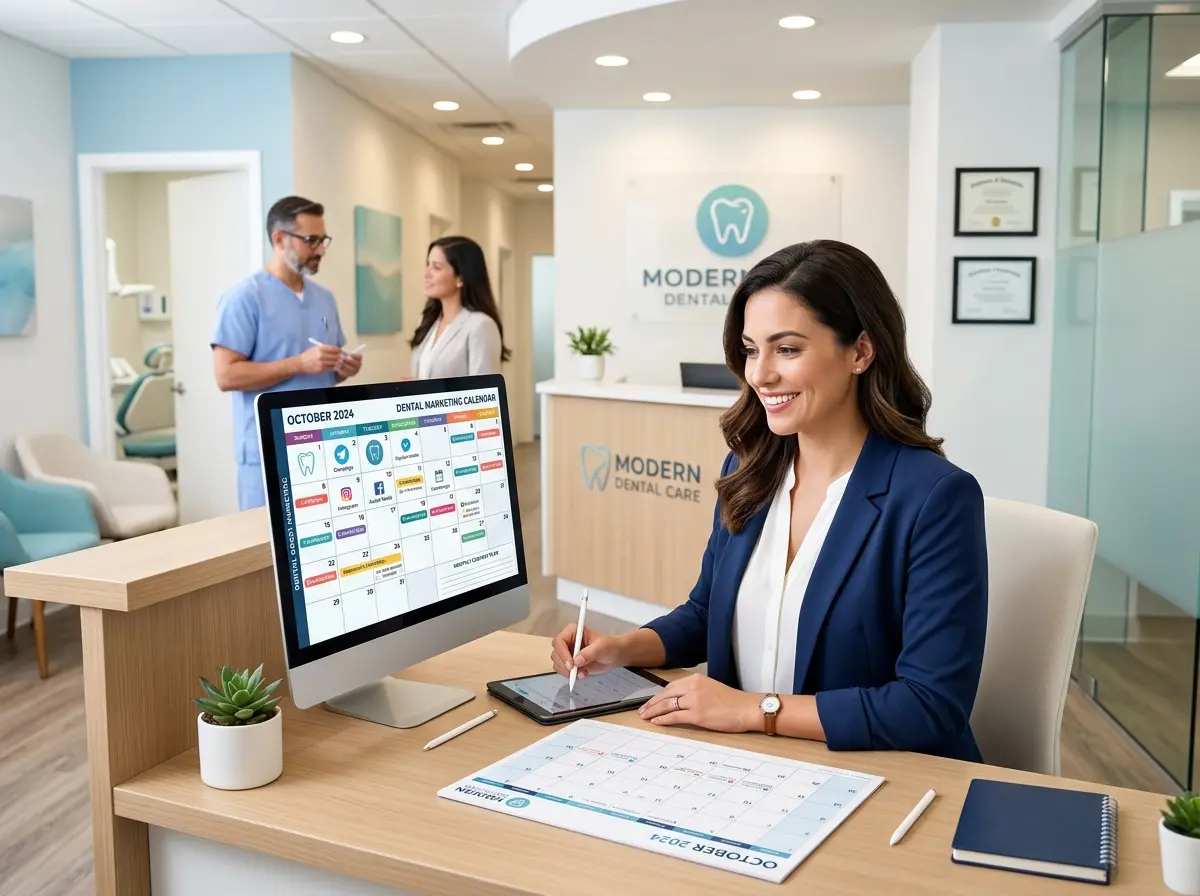
Why Your Dental Practice's Marketing Is Probably an Afterthought (And How to Fix It)
Let's be honest. You went to dental school to fix teeth, not to plan Instagram campaigns around National Flossing Day. And yet, here we are — in an era where a dental practice without a solid marketing calendar is basically invisible to the very patients who desperately need their wisdom teeth looked at. If your current marketing strategy is "post something when we remember to," congratulations, you're in good company. You're also leaving a significant amount of revenue on the table.
The good news? Dental marketing doesn't have to be complicated, chaotic, or cringe-worthy. It just needs to be consistent. A well-planned marketing calendar keeps your practice top of mind, fills appointment slots during slow seasons, and turns one-time patients into loyal, referral-sending regulars. This guide breaks down exactly what that calendar should look like — month by month, theme by theme — so you can stop winging it and start growing.
Building the Foundation of Your Dental Marketing Calendar
Start with the Seasons and Holidays That Actually Matter to Dentistry
Not every holiday deserves a dental pun (though some absolutely do). The key is identifying the moments throughout the year when patient behavior naturally aligns with dental decisions. January is prime time for new year, new smile campaigns — people are in resolution mode and their insurance benefits have just reset. Back-to-school season in late July and August is a goldmine for pediatric dental checkup promotions. October's Halloween candy bonanza? An absolute gift for cavity prevention content. And don't sleep on the end-of-year insurance push in November and December, when patients scramble to use benefits before they expire.
Build your calendar around these anchor points first, then fill in the gaps with awareness months and consistent engagement content. February is Children's Dental Health Month. April is Oral Cancer Awareness Month. These aren't just marketing opportunities — they're chances to genuinely educate your community while positioning your practice as the local expert.
Map Out Your Promotional Offers in Advance
One of the biggest mistakes dental practices make is creating promotions reactively — a slow Tuesday rolls around and suddenly someone's typing up a last-minute Facebook post about a discount on whitening. That's not a strategy; that's panic. Instead, plan your promotions at least 90 days out.
Think about what services you want to grow. New patient specials, teeth whitening packages, Invisalign consultations, and family plan bundles are perennial favorites. Assign each one to a season or campaign window, set a start and end date, define the offer clearly, and build all your supporting content around it — social posts, email newsletters, in-office signage, and phone scripts. When your entire team knows what's being promoted and when, the message becomes consistent, professional, and actually persuasive.
Don't Forget Recurring Monthly Content
Beyond the big campaigns, your calendar should include recurring content that keeps your practice visible even when nothing special is happening. A monthly patient spotlight or before-and-after (with consent, of course) builds social proof. A weekly tip about oral hygiene keeps your social feed active without requiring a full photoshoot. A monthly email newsletter with practice updates, staff highlights, and a helpful tip takes less than an hour to put together and keeps your patient list warm. Consistency beats brilliance every time in marketing — show up regularly, and the algorithm gods (and Google) will reward you.
Let Technology Do Some of the Heavy Lifting
Automate the Repetitive Stuff So Your Team Can Focus on Patients
Here's a not-so-secret secret: most of the marketing tasks that feel overwhelming are actually quite automatable. Email sequences, appointment reminder campaigns, review request texts — these can all be set up once and run on autopilot. Free up your front desk staff from the hamster wheel of repetitive communication so they can focus on delivering an exceptional in-person experience. The same logic applies to patient intake, answering FAQs, and handling after-hours inquiries. Every minute your team spends answering "do you accept Delta Dental?" over the phone is a minute not spent on something more valuable.
This is where Stella, the AI robot employee and phone receptionist, can make a genuine difference for your practice. As a friendly, knowledgeable presence both in your waiting room as a physical kiosk and on the phone 24/7, Stella handles the routine questions — insurance, hours, services, promotions — so your front desk isn't buried. She can even promote your current seasonal offers to patients as they walk in or call, essentially turning every touchpoint into a low-pressure marketing moment. When a patient calls after hours asking about your teeth whitening special, Stella answers professionally, captures their information through a conversational intake form, and logs it directly in her built-in CRM so your team has a warm lead waiting for them in the morning.
Executing Your Calendar Without Losing Your Mind
Create Content in Batches, Not in Bursts of Desperation
Content batching is the single most underutilized productivity strategy in small business marketing. Instead of scrambling to post something every Monday morning, block out two to three hours once a month to create all your social content at once. Write the captions, source the images, record any short videos, and schedule everything through a tool like Buffer, Later, or Meta Business Suite. Done. You've just bought yourself an entire month of "we're active on social media" without the daily stress.
Apply the same principle to email. Draft your next four monthly newsletters in one sitting while your brain is already in writing mode. Templatize your layout so you're not redesigning from scratch each time. The creative energy you save by batching is real — and it shows in the quality of the output.
Track What's Working and Adjust Quarterly
A marketing calendar is only as good as the feedback loop attached to it. Every quarter, review your metrics: Which email had the highest open rate? Which promotion drove the most new patient calls? Which social posts got actual engagement versus digital tumbleweeds? You don't need a data science degree — even a simple spreadsheet tracking basic performance per campaign will reveal patterns quickly.
The goal is to double down on what works and quietly retire what doesn't. Maybe your Halloween cavity content crushes every year, but your Valentine's Day smile campaign lands with a thud. That's useful information. Let the data guide your next calendar build so you're not just repeating the same efforts and hoping for different results — which is, technically, the definition of a different word entirely.
Get Your Whole Team Bought In
The best marketing calendar in the world fails if only the owner knows about it. Your front desk staff, dental hygienists, and even your dental assistants are all potential brand ambassadors — or accidental saboteurs, if they're unaware of what's being promoted. Hold a brief monthly team huddle to walk everyone through upcoming campaigns, remind them of current offers, and give them language to naturally mention promotions in patient conversations. When a hygienist casually mentions "we're actually running a whitening special this month" during a cleaning, that's word-of-mouth marketing at its most authentic and effective.
Quick Reminder About Stella
Stella is an AI robot employee and phone receptionist that works in your practice 24/7 — greeting patients at the kiosk, answering calls after hours, promoting your current specials, and collecting patient info through smart intake forms. At just $99 per month with no upfront hardware costs, she's the team member who never calls in sick, never forgets to mention the whitening promo, and never puts a patient on hold to go find someone who knows the answer.
Your Next Steps Start This Week
Building a marketing calendar sounds like a big project, but it doesn't have to be. Start small: open a blank spreadsheet, label the months, and drop in the five or six anchor events mentioned above — January insurance reset, back-to-school, Halloween, end-of-year benefits. Then assign one promotion or campaign to each. That's your first draft. It's ugly and incomplete, and it's still infinitely better than no calendar at all.
From there, layer in your recurring monthly content, batch your first round of social posts, and set up at least one automated email sequence for new patients. Review performance quarterly, adjust, and repeat. Within six months, you'll have a machine that consistently brings in new patients, re-engages lapsed ones, and keeps your schedule full — even during the months that used to feel painfully slow.
Your patients' teeth aren't going to market themselves. But with the right calendar in place, your practice practically will.