Introduction: Your Pipes Are Fine, But What About the Water in Them?
You've built a solid plumbing business. You unclog drains, replace water heaters, fix burst pipes, and generally save homeowners from watery disasters at inconvenient hours. Business is good. But here's a question worth sitting with for a moment: when was the last time a customer called you specifically to test their water quality? If your answer is "never" or "what does that have to do with plumbing," you might be leaving a surprisingly lucrative revenue stream sitting right there in the tap.
Water quality testing is a natural extension of what plumbing companies already do. Homeowners are increasingly concerned about what's coming out of their faucets — and for good reason. According to the Environmental Protection Agency, there are over 90 regulated contaminants that can appear in drinking water, and millions of homes still have lead service lines or aging copper pipes that affect water quality daily. Customers want answers, and right now, most of them are buying a $30 kit from a big-box store and hoping for the best.
That's where you come in. Adding a water quality testing service to your menu isn't complicated, it's not wildly expensive to launch, and it gives you a repeatable, relationship-building service that keeps customers coming back long after the emergency call. Let's break down exactly how to build this add-on the right way — and actually make money from it.
Building the Foundation: What Your Water Quality Testing Service Needs to Look Like
Choosing the Right Testing Packages
Not all water is created equal, and not all customers need the same level of testing. The smartest way to structure your service is to offer tiered packages that address different concerns and price points. A basic package might cover pH levels, hardness, chlorine, and nitrates — the fundamentals that most homeowners are curious about. A mid-tier package expands into heavy metals like lead and copper, bacteria, and common pesticides. A premium package goes comprehensive, covering everything from volatile organic compounds (VOCs) to PFAS chemicals, which have become a significant concern in recent years.
Tiered pricing does two things exceptionally well: it gives budget-conscious customers an easy entry point, and it gives you a natural upsell conversation. Once a basic test reveals elevated hardness or borderline lead levels, the conversation about a whole-home filtration system — which you can also install — practically writes itself.
Partnering with a Certified Lab vs. In-House Testing
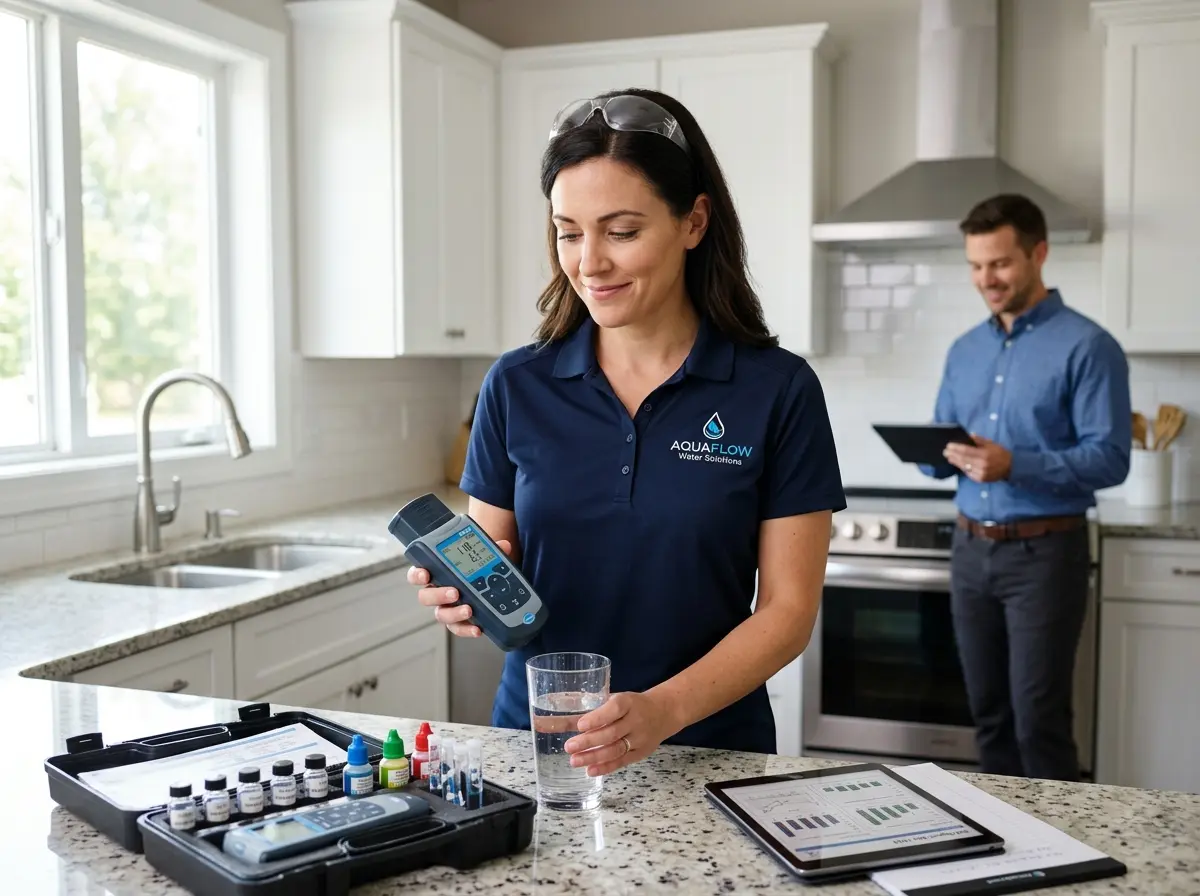
Here's a decision you'll need to make early: do you invest in in-house testing equipment, or do you collect samples and send them to a certified third-party laboratory? Both have merit. In-house testing kits and basic meters allow you to deliver immediate results during a service visit, which customers love. However, for anything involving regulated contaminants or legally defensible results (useful for real estate transactions or rental properties), a certified lab partnership is the way to go.
Many plumbing companies find success with a hybrid model — basic on-site testing for a quick read during any service call, combined with a lab-certified option for customers who need comprehensive documentation. Several national labs offer professional partnerships with turnaround times of three to five business days and co-branded reporting options that make your company look very polished for a minimal per-test cost.
Integrating Testing Into Every Service Call
The real magic happens when water quality testing stops being a separate offering and becomes part of your standard workflow. Train your technicians to mention it on every relevant call — water heater replacements, kitchen or bathroom remodels, new homeowner service calls, or any home over 20 years old. A simple line like, "While I'm here, would you like us to run a quick water quality check? We include a basic test for just $X," adds revenue without adding much time. Industry data suggests that service add-on prompts, when delivered conversationally by technicians, convert at rates between 20–35%. That's real money sitting in your existing customer base.
Streamlining Customer Intake and Follow-Up Without Losing Your Mind
How Stella Can Help Plumbing Companies Promote and Manage This New Service
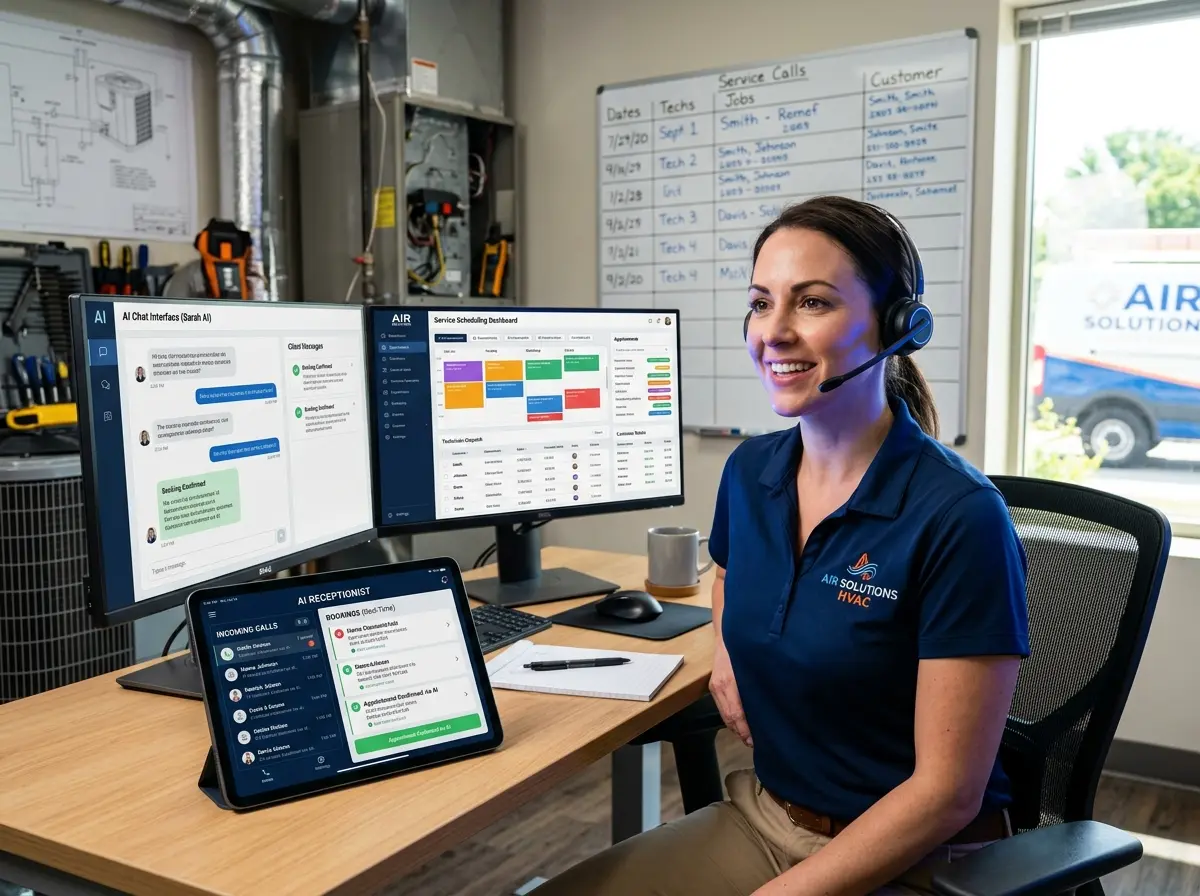
Adding a new service is exciting until you realize it means more phone calls, more questions, and more administrative chaos landing on whoever happens to be nearest the front desk. This is exactly the kind of problem that Stella — the AI robot employee and phone receptionist — was built to absorb. For plumbing companies with a physical office or showroom, Stella stands on-site as a kiosk, greeting walk-in customers and proactively explaining your water quality testing packages, pricing, and what to expect from the process. She doesn't wait to be asked — she engages.
On the phone side, Stella answers every call 24/7, which matters because homeowners often research and book services outside of business hours. She can walk callers through your testing tiers, collect their contact information using conversational intake forms, and even flag high-interest leads for follow-up — all without your office staff lifting a finger. Her built-in CRM stores customer profiles, tags them by service interest, and keeps notes on previous interactions, so when your team does follow up, they're doing it with context rather than starting from scratch. For a new revenue line that depends on education and consistent promotion, that kind of infrastructure makes a real difference.
Turning Test Results Into Long-Term Revenue
Selling Solutions, Not Just Reports
A water test that reveals a problem and then leaves the homeowner with a PDF and a shrug is a missed opportunity of almost comedic proportions. Every test result should be paired with a clear, written recommendation for remediation — and that recommendation should include services and products you offer. High hardness? Here's your whole-home water softener quote. Elevated lead? Let's talk about a reverse osmosis system under the kitchen sink and potentially a pipe inspection. Bacteria presence? That's a UV filtration conversation.
The key is to frame recommendations helpfully, not alarmingly. Homeowners respond well to plumbers who present themselves as trusted advisors rather than people who just found a reason to upsell. Invest in simple, well-designed results sheets that explain findings in plain English, include a severity rating, and clearly outline your recommended solutions with transparent pricing. Customers who feel informed make decisions; customers who feel pressured cancel appointments.
Building a Recurring Testing Program
Water quality isn't a one-time concern — it changes seasonally, it shifts when municipal sources change, and it evolves as your customer's plumbing ages. This makes annual or semi-annual testing subscriptions a genuinely compelling offer. A subscription model might include one comprehensive lab test per year, a mid-year basic on-site check, priority scheduling, and a small discount on any recommended equipment. You lock in predictable revenue, customers feel taken care of, and your technician shows up every year to a warm welcome rather than a cold call.
Targeting High-Value Customer Segments
Not every homeowner is equally likely to invest in water quality testing, and your marketing energy is finite. Focus your early efforts on new homeowners (especially those purchasing homes built before 1986, when lead pipes were still standard), families with young children or pregnant women, well-water households, and customers who have recently had any pipe work done. Real estate agents are another powerful referral channel — many buyers now request water quality tests as part of their due diligence, and being the plumber who provides certified results quickly can turn one referral into a steady stream of them.
Quick Reminder About Stella
Stella is an AI robot employee and phone receptionist that greets customers in-store, answers phone calls around the clock, promotes your services, and manages customer information — all for just $99 per month with no upfront hardware costs. She's essentially the world's most patient receptionist who never takes a lunch break, never forgets to mention the new water testing special, and never accidentally puts a customer on hold for nine minutes. For plumbing companies building out a new service line, she's worth a serious look.
Conclusion: Stop Leaving Money in the Pipes
Water quality testing is one of the cleanest — pun absolutely intended — service expansions available to plumbing companies today. The demand is real, the competition from other plumbers is still surprisingly low in most markets, and the natural connection to your existing services makes every conversation feel logical rather than like a hard sell. You already have the customer relationships and the technical credibility. Adding this service is mostly a matter of structure, training, and consistent promotion.
Here's your action plan to get started:
- Define your testing tiers — basic, mid-level, and comprehensive — with clear pricing and turnaround expectations.
- Identify a certified lab partner and order a small inventory of basic in-house testing supplies for on-site use.
- Train your technicians to mention water quality testing on every relevant service call using a natural, low-pressure script.
- Create results templates that link findings directly to solutions you offer, with transparent pricing included.
- Launch a subscription option and promote it to your existing customer list via email or postcard.
- Identify referral partners — real estate agents, home inspectors, and pediatricians are great starting points.
The homeowners in your service area are drinking tap water right now and wondering, in the back of their minds, whether it's actually safe. You have the tools, the access, and now the roadmap to be the business that answers that question — and profits appropriately for doing so. Get moving.