Introduction: The Never-Ending Battle Against Food Costs
Let's be honest — running a restaurant is basically a masterclass in controlled chaos. You're juggling staff schedules, health inspections, customer expectations, and somewhere in the middle of all that, you're watching your food costs quietly devour your profit margins like a busboy who forgot to take a break. If you've ever stared at your end-of-month numbers and thought, "Where did all the money go?" — odds are, a big chunk of it walked out the back door in the form of waste, over-ordering, or shrinkage.
Here's the reality check: the average restaurant food cost percentage sits between 28% and 35% of revenue. For many independent operators, it creeps even higher. The good news? Bringing that number down by even a few percentage points can mean thousands of dollars back in your pocket every year — without raising prices, shrinking portions, or serving your customers something they'd describe as "inspired by food."
This guide is for the restaurant owner who's serious about tightening up food costs without turning their menu into a sad parade of frozen shortcuts. Let's dig in.
Master Your Inventory Before It Masters You
Most food cost problems don't start at the stove — they start in the stockroom. Poor inventory management is the silent killer of restaurant profitability, and the fix isn't glamorous, but it works.
Count Everything, Every Time
Yes, physically counting your inventory is tedious. Yes, your staff will give you the look when you tell them it's inventory night. Do it anyway. Restaurants that conduct weekly inventory counts consistently outperform those that wing it with monthly checks or — brace yourself — just "eyeballing it." A weekly count gives you real data on what's moving, what's sitting, and what's mysteriously disappearing between Friday night service and Monday morning. Set a non-negotiable schedule, assign ownership to a reliable team member, and use a digital tool to track it. Spreadsheets work, but dedicated inventory software like MarketMan, BlueCart, or even a well-structured POS system can save hours and surface patterns you'd never catch manually.
Implement FIFO Like Your Margins Depend on It (They Do)
First In, First Out — FIFO — is one of those concepts that everyone nods at during training and then completely ignores when the walk-in gets busy. New stock goes to the back, older stock gets used first. Simple in theory, apparently rocket science in practice. Label everything with receiving dates, train your team until it becomes muscle memory, and do spot checks. A single spoiled case of produce or protein can swing your food cost percentage in ways that ruin an otherwise solid week.
Know Your Actual vs. Theoretical Food Cost
Your theoretical food cost is what you should be spending based on your recipes and sales. Your actual food cost is what you're actually spending. The gap between those two numbers tells a story — and it's usually a story involving over-portioning, theft, waste, or all three. Calculate both regularly and investigate any variance over 2-3%. That variance is where your profit lives, and right now, something else is eating it.
Engineer Your Menu to Work Smarter
Run a Menu Profitability Analysis
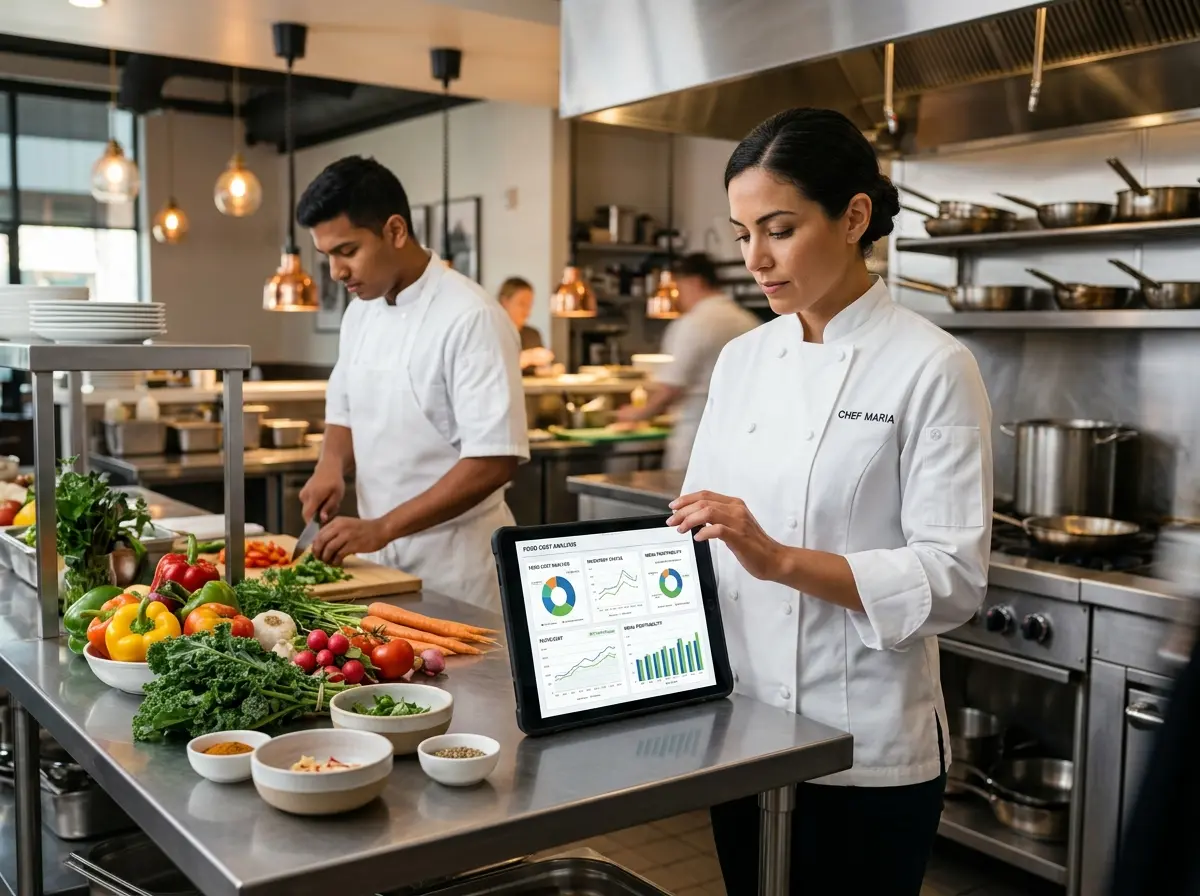
Not every menu item deserves a spot on your menu. Menu engineering is the practice of analyzing each dish based on two factors: how profitable it is and how popular it is. Items that are both popular and profitable are your stars — protect them, feature them, and make sure your staff is selling them. Items that are popular but low-margin (your plowhorses) need a recipe review or a price adjustment. Items that are high-margin but rarely ordered (your puzzles) need better placement or promotion. And items that are neither profitable nor popular? It's time for a respectful retirement. A leaner, more intentional menu also reduces ingredient complexity, which directly lowers your ordering costs and waste.
Standardize Your Recipes — For Real This Time
Recipe standardization is one of the highest-ROI things a restaurant owner can do, and it's almost criminally underused. When every cook portions a chicken breast by feel, you don't have a recipe — you have a suggestion. Standardized recipes with exact weights, measurements, and plating specs give you consistent food costs and consistent guest experiences. Use a kitchen scale. Print laminated recipe cards. Make it non-negotiable. The initial investment in time pays back every single week in predictable food costs and less rework.
Let Technology Handle What It's Good At
Here's where we take a brief detour from the kitchen to talk about something that affects your bottom line just as much as your food cost — your front-of-house efficiency and customer communication. Because even the most perfectly engineered menu won't help if your staff is buried in phone calls, missing upsell opportunities, or losing track of customer preferences.
Stella Can Handle the Front While You Handle the Food
This is where Stella, the AI robot employee and phone receptionist, becomes quietly useful for restaurant owners. While you're focused on tightening up your kitchen operations, Stella handles your lobby and your phone line without complaint, sick days, or distraction. She greets walk-in customers, promotes your current specials and limited-time offers, and answers common questions about hours, reservations, and menu options — freeing your front-of-house staff to focus on actual service.
Stella also answers calls 24/7, which means you're never missing a potential reservation or catering inquiry at 9pm because nobody picked up. She can upsell and cross-sell by recommending add-ons or featured items, and she collects insights on what customers are asking about most — which, by the way, is genuinely useful data when you're deciding which specials to promote or which menu items to feature. At $99/month, she costs less than a part-time host and doesn't call out on Saturday nights.
Reduce Waste Without Reducing Quality
Waste is one of the most emotionally complicated parts of food cost management, because reducing it requires changing human behavior — which, as any restaurant owner knows, is the hardest ingredient to control.
Build a Trim and Repurposing Culture
Great kitchens waste almost nothing. Vegetable trimmings become stock. Day-old bread becomes croutons or bread pudding. Protein trim goes into staff meals, tacos, or a featured appetizer. This isn't about being cheap — it's about respecting your ingredients and your margins at the same time. Build a culture in your kitchen where repurposing is standard practice, not an afterthought. Run a daily "use it today" list for items approaching the end of their shelf life and build a featured special around them. Your customers get something fresh and seasonal, your kitchen wastes less, and your food cost thanks you.
Right-Size Your Ordering Based on Real Data
Over-ordering is the most common and most preventable source of food waste in restaurants. The fix is deceptively simple: order based on actual sales data, not gut feeling. Pull your POS reports, understand your covers by day and daypart, factor in seasonality, and build an ordering par system that reflects your actual needs with a reasonable buffer — not a panic buffer. Vendor relationships matter here too. Work with suppliers who can accommodate more frequent, smaller deliveries if your volume doesn't justify large weekly orders. Fresher product, less waste, better food cost. Everyone wins except the garbage bin.
Train Your Team on the Real Cost of Waste
Most kitchen staff have no idea what ingredients actually cost. When a line cook over-portions shrimp by two pieces per plate across 80 covers, they're not thinking about what that costs at the end of the month — because nobody's told them. Make food costs visible and real. Share the numbers in a way that's relevant to their work. Some operators post the cost per portion of key ingredients in the kitchen, not to create anxiety, but to build awareness. When your team understands the economics of what they're working with, they make better decisions. It turns out people are more careful with things they know are valuable.
Quick Reminder About Stella
Stella is an AI robot employee and phone receptionist built for business owners who want reliable, always-on customer engagement without the overhead. She works as an in-store kiosk that greets and assists walk-in customers, and she answers phone calls 24/7 with the same knowledge and professionalism — all for $99/month with no upfront hardware costs. For restaurant owners juggling a dozen priorities, having one less gap to fill is worth a lot.
Conclusion: Small Fixes, Real Money
Reducing food costs isn't about one dramatic overhaul — it's about stacking small, consistent improvements until they add up to something that actually moves the needle. Count your inventory religiously. Standardize your recipes. Engineer your menu with intention. Build a kitchen culture that treats waste like the profit leak it is. And use every tool available to you — including technology — to run a tighter, smarter operation.
Here's your action plan to get started this week:
- Calculate your current actual vs. theoretical food cost and identify your variance.
- Run a quick menu profitability analysis — pick your top 10 items and categorize them by margin and popularity.
- Audit your last two weeks of inventory counts — or start doing them if you haven't been.
- Talk to your team about one specific waste category you want to improve this month.
- Review your front-of-house efficiency — are your people spending time on tasks that technology could handle?
Your food costs will never be zero, and your kitchen will never be perfect — but "significantly better than last quarter" is a completely achievable goal. Start with one area, measure it, improve it, and move to the next. That's how profitable restaurants are built, one controlled variable at a time.