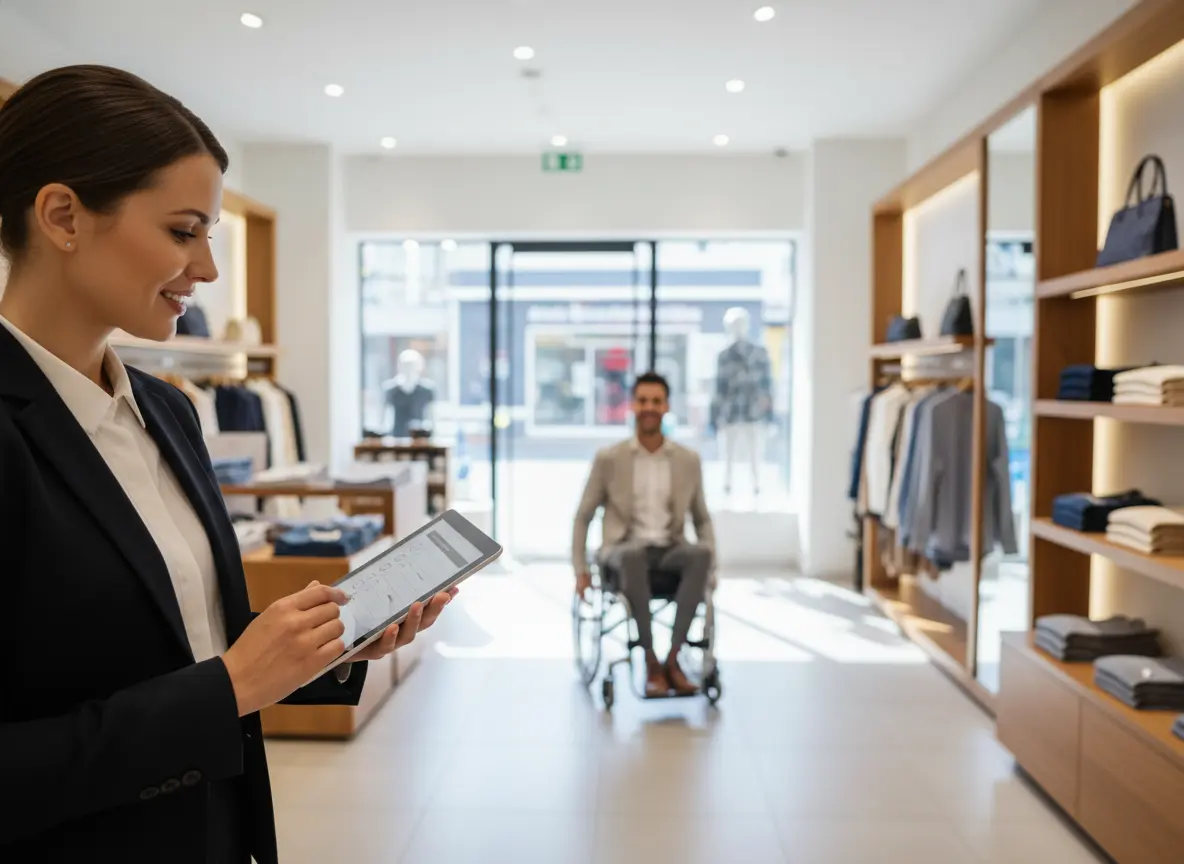
So, You Think Your Store is "Welcoming"? Let's Talk.
You’ve got a killer product line, your merchandising is on point, and you just installed that adorable neon sign that gets all the love on Instagram. Your store is the epitome of "welcoming," right? You smile at everyone who comes in. You’ve got a bowl of stale mints by the register. You’re golden.
But hold on. What about the parent navigating a double-wide stroller? Or the senior customer using a walker? Or the person with a visual impairment who can’t read your exquisitely designed, but tragically low-contrast, price tags? Suddenly, "welcoming" feels a little... subjective.
An accessibility audit sounds like something that requires a clipboard, a grim-faced inspector, and a hefty invoice. But it doesn't have to be. Think of it less as a dreaded exam and more as a treasure hunt for hidden revenue. Because let's be blunt: making your store accessible to everyone isn't just the right thing to do—it's insanely good for business. The disability community represents a market of over $490 billion in disposable income. Ignoring them is like leaving a big, beautiful pile of cash on the sidewalk. So, let’s go treasure hunting. Here’s a 10-point checklist to see how truly welcoming your store is.
The Nitty-Gritty: Auditing Your Physical Space
This is where the rubber meets the road—or, more accurately, where the wheelchair meets the doorway. Your physical layout is the first handshake your store offers a customer. Make sure it's a firm one, not a limp, awkward fish.
1. The Grand Entrance (and Exit)
First impressions are everything. If a customer can't even get through your door without a team of Sherpas and a grappling hook, you've already lost. Take a hard look at your entrance.
- The Threshold: Is there a step or a high lip? A half-inch bump can feel like Mount Everest to someone in a wheelchair. A simple, inexpensive ramp can solve this instantly.
- Doorway Width: The ADA recommends a clear width of at least 32 inches. Go measure it. Right now. We'll wait. Is it wide enough for a wheelchair, scooter, or a deluxe "we're having twins" stroller?
- The "Heave-Ho" Door: Is your door so heavy it requires the strength of a Viking warrior to open? Consider installing a push-button automatic opener. It’s a game-changer not just for people with disabilities, but for anyone juggling shopping bags, kids, or a coffee.
2. Aisle Invaders and Merchandising Mayhem
You've lured them inside. Congratulations. Now, can they actually move? Your beautifully curated aisles can quickly become an episode of a shopping-themed obstacle course if you’re not careful.
The magic number here is 36 inches. That’s the minimum recommended clear width for aisles. This isn't just a suggestion; it’s a lifeline for mobility. That quirky, "temporarily" placed floor display of artisanal pickle jars? It's now a roadblock. That rack of scarves you pulled out for a "pop of color"? It’s a bottleneck. Walk your own aisles. Better yet, borrow a friend’s stroller and try to navigate your store during peak hours. If you find yourself uttering phrases like "ope, just gonna squeeze past ya there," you have a problem. Keep pathways clear, predictable, and wide enough for two-way traffic.
3. Reaching for the Stars (or Just the Cereal)
Having the perfect product is useless if your customer can't reach it. Merchandising isn’t just about making things look pretty; it's about making them attainable.
- Shelf Height: Are your must-have, high-margin items exclusively on the top shelf, accessible only to professional basketball players? Ensure a good mix of products are within reach for someone in a seated position (roughly 15 to 48 inches from the floor).
- The Checkout Counter: Is your checkout counter built for giants? Having a section of the counter that is at a lower height (around 36 inches) makes the payment process smoother for customers in wheelchairs and is also more comfortable for your shorter employees. It's a win-win.
Beyond the Blueprint: The Human Element
A perfectly compliant physical space can still feel as cold as a walk-in freezer if the human element is missing. Your staff is the heart of the customer experience, and their training (or lack thereof) can make or break an inclusive environment.
4. Is Your Team Ready to Welcome Everyone?
True accessibility is about dignity and respect. Does your team know how to offer assistance without being patronizing? Do they speak directly to the customer with a disability, not to their companion? Training your staff in basic disability etiquette is not "extra"—it's fundamental. Teach them to ask, "How can I help?" instead of assuming what a person needs. This proactive, respectful approach turns a transaction into a relationship and a one-time shopper into a loyal customer.
5. The Unblinking, Unflappable Welcome
Let's be honest: your staff gets busy. They get distracted by stocking, a complex customer question, or the sheer chaos of a Saturday rush. It's easy for a new customer to walk in, feel unseen, and walk right back out. An immediate, friendly greeting is one of the most powerful tools in retail, and it's a cornerstone of an accessible experience for someone who might need immediate guidance.
This is where a friendly robot can be your secret weapon. An in-store assistant like Stella stands sentinel at your entrance, ensuring every single person is greeted warmly and consistently. Stella doesn't get tired, distracted, or have a bad day. She can immediately offer to help, point out where the accessible fitting rooms are, or highlight the day's promotions, all while your human team focuses on providing deeper, more personalized service. It guarantees no one is left feeling invisible.
Don't Forget the Senses (and the Screens!)
Accessibility goes far beyond physical mobility. A store can be a sensory minefield for many people. Creating a comfortable environment for all five senses is the next level of retail excellence.
6. Let There Be Light (But, You Know, the Right Kind)
Lighting sets the mood, but it can also create barriers. Are your lights so bright they feel like an interrogation room? Or so dim that reading a label requires a headlamp? Harsh spotlights and glare can be painful for people with light sensitivity or migraines. Ensure your space is well-lit with even, diffused light. Use high-contrast signage—think dark text on a light background—to make it easily readable for those with low vision.
7. The Sound of Shopping
That high-energy EDM playlist might be your barista's favorite, but it can be an absolute nightmare for a customer with autism, anxiety, or hearing sensitivity. An overwhelming auditory environment can cause people to leave before they even start shopping. Keep background music at a reasonable volume. If you have in-store announcements, make sure they are clear, concise, and not overly frequent. Some stores even offer "sensory-friendly" shopping hours with dimmed lights and no music, a simple gesture that earns massive loyalty from the communities that need it.
8. Your Digital Front Door
Your store's accessibility starts before a customer even leaves their house. Your website, social media, and online store are extensions of your brand. Is your website navigable with a screen reader? Do your images have descriptive alt text? Can a customer easily find your store hours, location, and accessibility information online? Ensuring your digital presence is as welcoming as your physical one is non-negotiable in the modern retail world.
A Quick Reminder About Our Favorite Robot
While you’re busy widening aisles and perfecting your lighting, don't forget the power of that perfect first impression. An AI retail assistant like Stella is your guarantee that every shopper, regardless of ability or need, receives a consistent, helpful, and immediate welcome, setting a positive and inclusive tone from the moment they enter.
Conclusion: From Audit to Action
Alright, that's the list. It might seem like a lot, but tackling even a few of these points can have a massive impact. Accessibility isn't about achieving a perfect score on a legal checklist. It’s an ongoing commitment to creating a space where everyone feels seen, valued, and comfortable spending their money.
So here's your homework. Grab a notepad and walk through your own store. Don't just walk it—experience it. Sit in a chair and see what you can reach. Try to read your signs from a distance. Listen to the noise level. See your space through the eyes of a customer who might have a different set of needs than your own. The small changes you make today will not only open your doors to a wider community but will also build a more resilient, reputable, and profitable business for tomorrow. Your future customers—and your bottom line—will thank you for it.