So, You Have a Point-of-Sale System. Are You Actually Using It?
Let’s be honest. For many retail store owners, the Point-of-Sale (POS) system is basically a glorified cash register. It goes “cha-ching,” it spits out receipts, and it tells you how much money you made at the end of a long, caffeine-fueled day. You stare at the final number, give a weary nod, and do it all again tomorrow. Sound familiar?
If you’re relying on gut feelings, anecdotal evidence from your chatty Aunt Carol, or the alignment of the planets to make crucial business decisions, you’re leaving an absurd amount of money on the table. Your POS system is sitting on a veritable treasure chest of data—a detailed, minute-by-minute account of your business’s heartbeat. It’s a crystal ball that can tell you what your customers really want, not just what you think they want.
Ignoring this data is like having a map to buried treasure and using it as a placemat. It’s time to stop flying blind. In this post, we’re going to dust off that map, demystify the numbers, and show you how to turn that stream of raw data into cold, hard, actionable business intelligence. (Don’t worry, it’s less boring than it sounds.)
Unlocking the Treasure Chest: What Your POS Data is *Really* Telling You
Your daily sales total is just the cover of the book. The real story—the juicy, plot-twist-filled narrative of your retail business—is hidden in the pages of your reports. You just need to know which ones to open.
Beyond the Bottom Line: Identifying Your Best (and Worst) Sellers
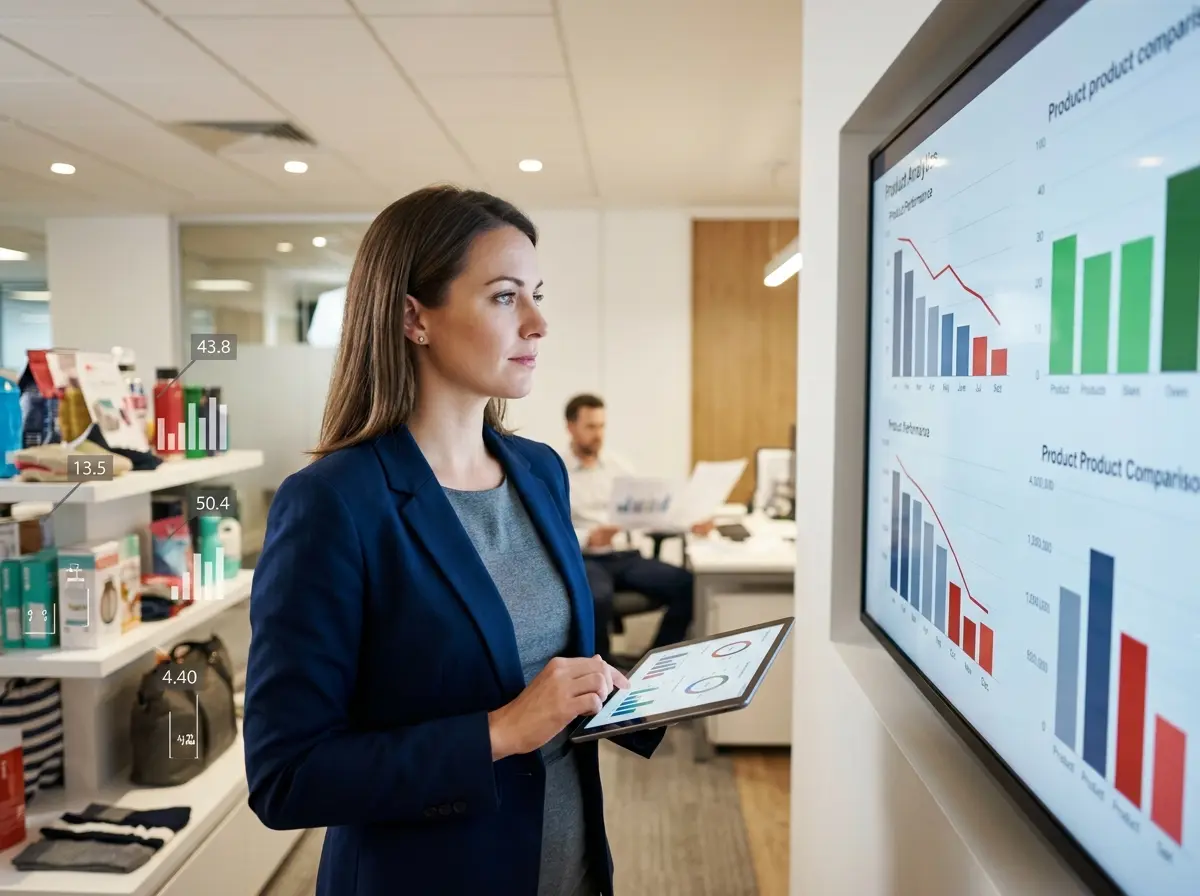
Sure, you know that one quirky brand of socks flies off the shelves. But is it actually making you money? The first, most crucial report to pull is your Product Performance Report. But here's the pro-tip: don't just sort by "units sold." Sort by profit margin.
You might discover that your best-selling item has a razor-thin margin, while a slower-moving product is quietly a profit powerhouse. This is your "silent hero." On the flip side, you have the "shelf warmers"—those products that have been collecting more dust than a forgotten treadmill. These items are tying up your cash and your space. Your data gives you permission to be ruthless. Run a clearance sale, bundle them with a popular item, or just say a tearful goodbye and never order them again. Stop letting inventory freeloaders live in your store rent-free.
The Rhythms of Your Retail Day: Understanding Sales Trends
Is your store a ghost town on Tuesday mornings and a mosh pit on Saturday afternoons? Your POS data can prove it. By analyzing sales by hour, day, and season, you can uncover the natural rhythm of your business. Why is this important? Two words: Operational Efficiency.
- Smarter Staffing: Stop scheduling three employees for a shift that generates $50 in sales. Align your staffing with your peak traffic hours to maximize customer service when it matters most and save on labor costs when it’s quiet.
- Targeted Promotions: If Wednesdays are consistently your slowest day, it’s time to invent "Wacky Wednesday Deals." A small, data-informed promotion can turn a sales trough into a profitable peak.
- Seasonal Savvy: Don't guess when to stock up for the holidays. Look at last year's data. It will tell you exactly when the rush started, what items were hot, and how to prepare your inventory and staff accordingly.
Getting to Know Your Regulars: Customer Data Insights
If your POS system supports customer profiles or a loyalty program, you're sitting on a goldmine of relationship-building data. You can see who your VIPs are, how often they shop, and what their favorite products are. This isn't creepy; it's just good business.
Instead of blasting your entire email list with the same generic offer, you can get personal. For example, you could create a segment of customers who haven't visited in 90 days and send them a "We Miss You!" offer. Or, you could reward your top 10% of spenders with an exclusive early-access event. This is how you build a loyal community that can weather any economic storm and fend off the soulless convenience of e-commerce giants.
Turning Insights into In-Store Action
Data is fantastic, but it's utterly useless if it just lives in a spreadsheet. The real magic happens when you use these insights to change what happens on your sales floor. This is where analysis meets action, and where a little help can go a long way.
Using Data to Drive In-Store Promotions and Merchandising
Okay, so your data has spoken. You've identified a high-margin product that's tragically underperforming. What now? You could tell your staff to push it, but they’re busy helping customers, restocking shelves, and trying to remember where they put the pricing gun. Consistency is a challenge.
This is the perfect moment to deploy a tool built for exactly this purpose. Imagine having a friendly, tireless ambassador at your front door, programmed with your latest data-driven insight. That’s where an in-store robotic assistant like Stella comes in. Once you’ve identified that slow-moving product, you can program her to greet every single shopper with a message like, "Welcome in! Just so you know, our hand-poured lavender candles are 20% off this week—they’re one of our hidden gems!"
The data tells you what to promote, and a tool like Stella provides the flawless execution, ensuring your most important message is delivered to every customer, every time, without fail. It's the perfect bridge between your back-office strategy and your front-of-house reality.
Advanced Tactics for the Data-Savvy Retailer
Ready to graduate from data apprentice to data wizard? Once you’ve mastered the basics, you can start using your POS to perform some truly impressive retail magic. These advanced tactics will help you optimize every corner of your business.
The Power of Pairs: Mastering Market Basket Analysis
Market basket analysis is a fancy term for a simple concept: finding out which products are frequently bought together. Your POS can tell you that customers who buy premium dog food also tend to buy a specific brand of dental treats. This is the retail equivalent of "Do you want fries with that?"
Actionable Tip: Once you identify these power pairings, you can strategically place them next to each other in your store to encourage impulse buys. You can also create pre-made bundles or kits—like a "New Puppy Starter Pack"—to increase the average transaction value. It's a simple way to cross-sell that feels helpful to the customer, not pushy.
Forecasting the Future: Using Historical Data for Inventory Management
Inventory is a delicate dance between having enough and having way, way too much. One leads to missed sales and unhappy customers; the other leads to cash flow problems and clearance bins of despair. Your historical sales data is your crystal ball for inventory forecasting.
By analyzing sales trends from previous months and years, you can make much more accurate predictions about future demand. A 2021 study showed that inventory distortion (a combination of overstocks and stockouts) costs retailers an estimated $1.8 trillion globally. Don't be a statistic. Use your data to order smarter, reduce carrying costs, and minimize the profit-killing markdowns on unsold goods.
Testing, Testing... Is This Promotion On?
Stop throwing promotional spaghetti at the wall to see what sticks. Your POS system is the perfect laboratory for running A/B tests on your marketing efforts. Wondering if a "25% Off" sale is more effective than a "Buy One, Get One Free" offer?
Try running one promotion for two weeks, then the other for the next two weeks on a similar set of products. When you're done, dive into your POS reports. Compare the results based on total revenue, units sold, customer traffic, and overall profit margin. The data will declare a clear winner, allowing you to refine your promotional strategy based on hard evidence, not guesswork.
A Quick Reminder About Stella
Remember, having the most brilliant, data-driven strategy in the world is only half the battle. An AI retail assistant like Stella ensures your strategies are executed perfectly on the sales floor, greeting every customer and communicating your key promotions so your human staff can focus on closing sales and providing amazing service.
Conclusion: Your POS is Your Co-Pilot
Your Point-of-Sale system is so much more than a digital till. It's your business co-pilot, constantly feeding you the information you need to navigate the tricky skies of retail. By digging into your product performance, sales trends, and customer behavior, you can move from making reactive guesses to proactive, data-driven decisions that will directly impact your bottom line.
Feeling overwhelmed? Don't be. You don't need to become a data scientist overnight. Here’s your homework: this week, log into your POS dashboard and run just one report. Find your top 5 best-selling products by profit margin. Now, think of one single thing you can do to sell more of them. Move them to a more prominent display? Mention them in your next newsletter? The journey of a thousand miles begins with a single report.
Stop running your business on vibes and start running it on data. Your future self—and your bank account—will thank you for it.