The Rebooking Conversation Is Happening at the Wrong Moment
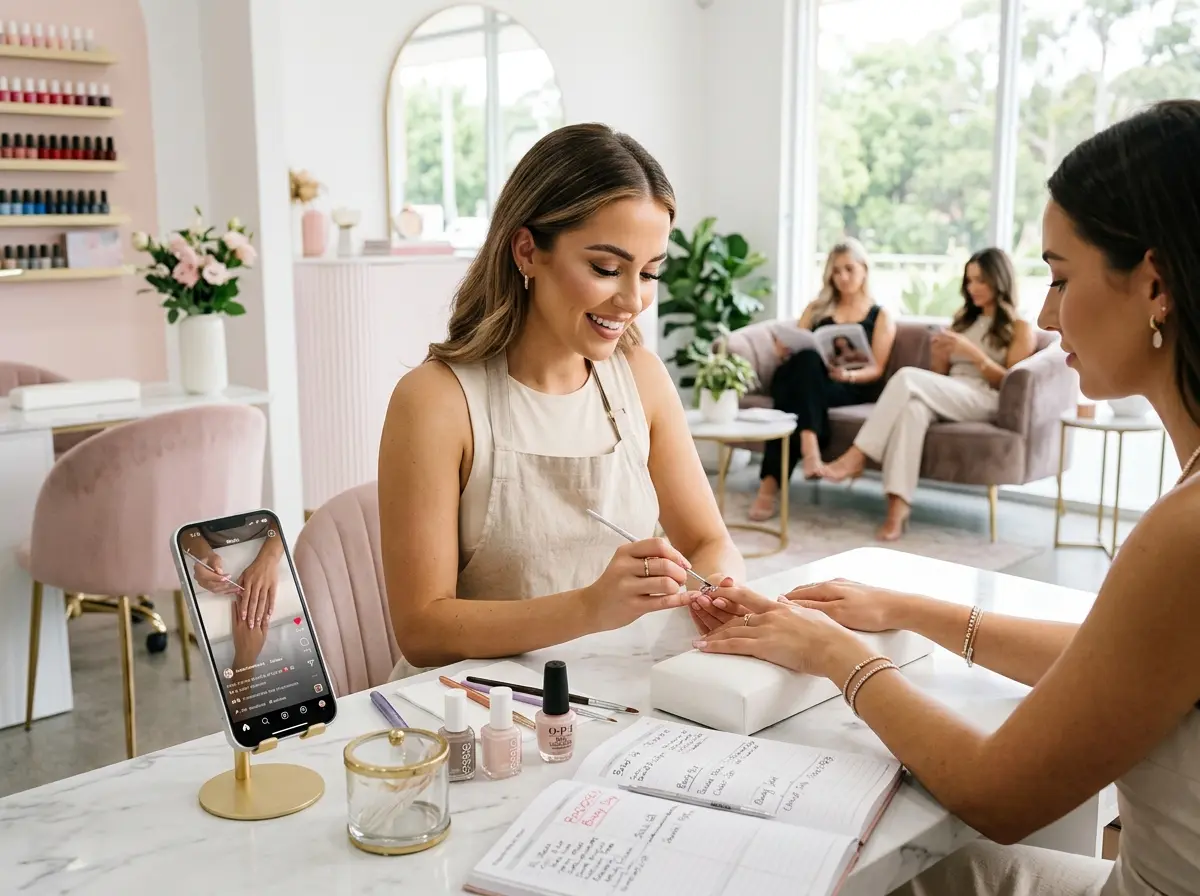
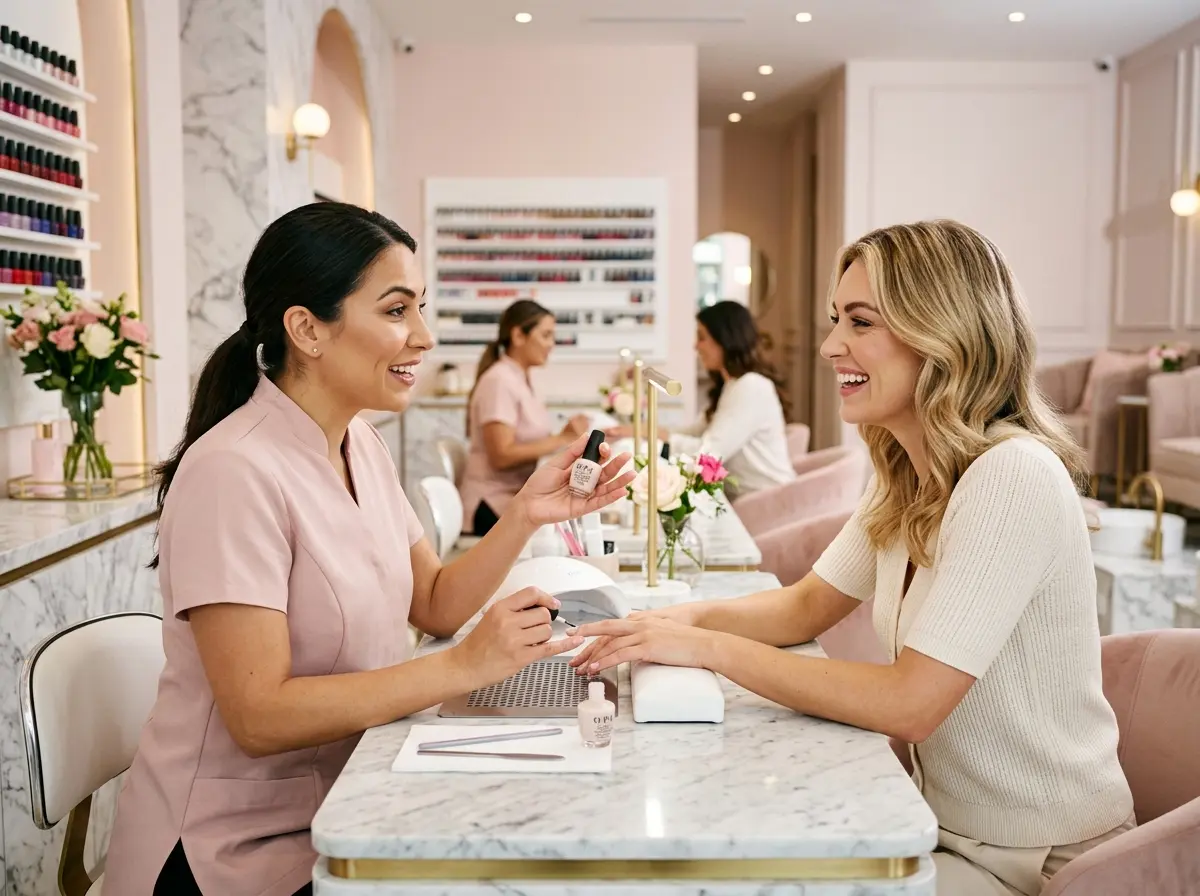
Picture this: your client is sitting in the chair, freshly polished, admiring her nails under the light, mentally already halfway out the door to her next errand. Your technician, wiping down the station, casually asks, "So, want to book your next appointment?" The client smiles, says "I'll just call," and then... never calls. Surprise.
This is one of the most preventable revenue leaks in the nail salon industry, and it's happening in salons everywhere — not because the staff doesn't care, but because the rebooking conversation is being had at entirely the wrong moment in the visit. By the time a client is reaching for her purse, her decision-making energy is basically at zero. She's done. She's mentally moved on. Asking her to commit to a future date at that moment is like asking someone to pick a restaurant after they've already eaten.
The good news? Timing is a fixable problem. And once you fix it, you'll notice rebooking rates climb without any awkward pressure tactics or overhauling your entire client experience.
Understanding Why Timing Is Everything in Rebooking
The Psychology of the "Peak Moment"
Behavioral psychology gives us a useful concept here: people make their most enthusiastic decisions when they're at peak emotional engagement. In a nail salon, that peak moment isn't at checkout. It's somewhere in the middle of the service — when the client is relaxed, being pampered, and genuinely happy with how things are going. That's when she's thinking, "I love this place. I need to come back." That's your window.
Research on customer satisfaction consistently shows that decisions made during a positive emotional high are more likely to stick. If you wait until a client is standing at the front desk calculating how much to tip, you've already lost most of that goodwill momentum. She's in logistics mode, not commitment mode.
The Real Cost of "I'll Just Call"
Every "I'll just call" that doesn't result in an actual call is a lost appointment — and lost revenue. Consider that the average nail salon client visits every 3–4 weeks for a full set or gel fill. If even a fraction of your clients who intend to rebook simply forget or go somewhere more convenient, the cumulative revenue loss over a year is significant.
Industry estimates suggest that salons with strong rebooking systems retain clients at rates 30–40% higher than those without. That's not a small margin. That's the difference between a packed schedule and scrambling to fill Tuesday afternoon slots with last-minute discount posts on Instagram.
The "I'll Call" Client Isn't Being Dishonest
To be fair to your clients — they're not lying when they say they'll call. They genuinely mean it in the moment. Life just gets in the way. Work gets busy. Kids get sick. Three weeks pass and suddenly they're Googling "nail salon near me" because they can't remember your phone number. You're not being ghosted; you're being forgotten. And that's a systems problem, not a loyalty problem.
How Technology Can Take the Pressure Off Your Staff
Let Your Environment Do More of the Work
One underrated strategy is letting your physical salon environment prompt the rebooking conversation before your staff has to. Signage near the service stations, table cards, or even a friendly in-salon kiosk presence can plant the seed early — while the client is still in that peak emotional window and before the checkout scramble begins.
This is exactly where Stella, an AI robot employee and phone receptionist, fits naturally into a salon's workflow. Standing inside your salon as a human-sized kiosk, Stella can greet clients when they arrive, engage them during wait times, and proactively mention rebooking, promotions, or seasonal services — all without pulling your technicians away from their actual job. She's essentially a knowledgeable, always-on team member who never forgets to mention the gel add-on special or the fact that appointment slots for the holiday season fill up fast.
And when clients do want to call later? Stella handles phone calls 24/7, answering questions, collecting client information, and keeping your front desk from becoming a bottleneck during busy hours. She even manages client profiles through a built-in CRM, so returning callers aren't starting from scratch every time.
Practical Strategies to Move the Rebooking Conversation Earlier
Train Staff to Bring It Up Mid-Service
The simplest and most effective shift you can make costs nothing: coach your technicians to mention rebooking while the service is still in progress. A natural, low-pressure way to do this is to tie it to something happening in the moment. For example, while doing a gel fill, a technician might say, "Your nails grow so fast — you'll probably want to come back in about three weeks. Want me to grab you a card to book before you leave, or I can have the front desk set something up while we're finishing?"
It doesn't feel pushy when it's framed as helpful observation rather than a sales ask. It's coming from a place of genuine service knowledge. Clients respond well to that framing. They feel like their technician knows them and is looking out for them — which, ideally, she is.
Make Rebooking Frictionless at the Right Moment
Even if you move the conversation earlier, you need to back it up with a process that's easy to complete. A few tactics that work well:
- Pre-checkout booking station: A tablet or kiosk near the nail drying area where clients can book while their nails dry — arguably the most captive and relaxed moment in the entire visit.
- Text-to-book prompts: A small card at the station with a QR code or text number that lets clients book immediately from their phone while they're still in the chair.
- Front desk hand-off: A warm, explicit hand-off from the technician to the front desk — "Hey, Maria's going to help you grab your next appointment" — rather than a vague suggestion to "check with the front."
The goal is to reduce the number of steps between "I should rebook" and "I've rebooked." Every extra step is an opportunity for the moment to pass and the intention to evaporate.
Use Follow-Up Strategically — But Don't Rely on It Alone
Follow-up reminders via text or email are valuable, but they should be a safety net, not your primary rebooking strategy. If your entire retention system depends on a client responding to a "We miss you!" text three weeks after her visit, you're working much harder than you need to. Follow-up works best when it's reinforcing a booking conversation that already happened — a reminder for an appointment that's already scheduled, or a gentle nudge within a few days of a visit where rebooking didn't happen in person.
Relying solely on follow-up also puts you in a reactive position. By the time you're reaching out, clients may have already booked somewhere else. Getting ahead of that with an in-visit conversation keeps you in control of the schedule.
Quick Reminder About Stella
Stella is an AI robot employee and phone receptionist designed to help businesses like yours run more smoothly — both in person and over the phone. For nail salons, she's a natural fit at the front of the salon to engage walk-ins, handle common questions, and promote your current services, all at an affordable $99/month subscription with no upfront hardware costs. Whether clients are stopping in or calling after hours, Stella makes sure no opportunity slips through the cracks.
Stop Leaving Rebooks on the Table
The rebooking problem isn't a motivation problem — your clients like your salon, and your staff wants to keep them. It's a timing and systems problem, and those are among the easiest problems to solve once you name them clearly.
Here's what you can do this week to start shifting the pattern:
- Audit your current rebooking moment. When exactly does the conversation happen? At checkout? After checkout? Not at all? Get honest about where the gap is.
- Brief your team on mid-service rebooking language. Give them one or two natural phrases they can use while the client is still in the chair. Role-play it if it helps.
- Add a physical booking prompt near your drying stations. A simple QR code card costs almost nothing and can dramatically reduce checkout friction.
- Evaluate your follow-up system. Is it doing too much heavy lifting? Make sure it's a reinforcement tool, not your first line of retention.
Your schedule is one of your most valuable assets. Protecting it doesn't require aggressive sales tactics or expensive software — it requires meeting your clients with the right conversation at the right moment. Move the rebooking conversation earlier, make it easy to say yes, and watch your books fill themselves.