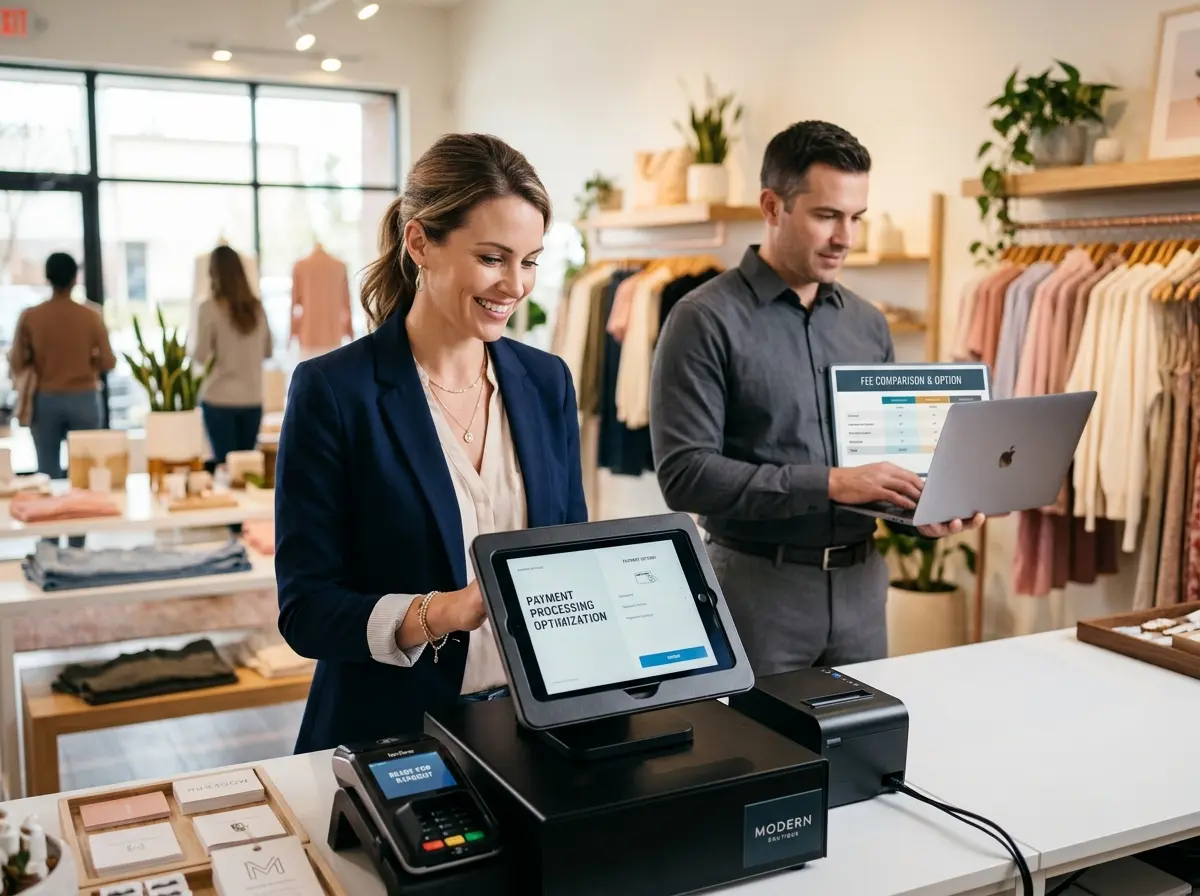
So You Need a Payment Processor — Welcome to the Jungle
Congratulations! You've built a business, found customers who actually want to give you money, and now you're faced with the surprisingly complicated task of... accepting that money. You'd think the hard part was over, but here you are, drowning in a sea of interchange fees, PCI compliance jargon, and payment processors all promising they're the cheapest, fastest, and most reliable option. Spoiler alert: they can't all be right.
Choosing the wrong payment processor can quietly drain thousands of dollars from your bottom line every year through hidden fees, unfavorable rate structures, and clunky hardware that frustrates your staff and your customers. According to the Federal Reserve, U.S. businesses processed over $9.4 trillion in card payments in a single recent year — and a meaningful slice of that goes straight to processors in fees. The difference between a good and bad processor choice isn't trivial.
This guide is designed to cut through the noise, explain what you're actually paying for, and help you make a smart, informed decision — without needing a finance degree or a tolerance for fine print.
Understanding Payment Processor Fees (The Part Nobody Warns You About)
Payment processing fees look simple on the surface. They are not. What appears to be a straightforward percentage per transaction is often a layered structure of base rates, markups, monthly minimums, and miscellaneous charges that add up faster than you'd expect. Before you sign anything, you need to understand what's actually on your bill.
The Three Main Pricing Models
Payment processors typically use one of three pricing structures, and understanding the difference can save you serious money depending on your sales volume and average transaction size.
Flat-rate pricing is the simplest model — you pay a fixed percentage (and sometimes a small per-transaction fee) on every sale, regardless of card type. Square and Stripe are classic examples, charging around 2.6%–2.9% plus a few cents per transaction. This is great for small businesses and those just starting out because it's predictable and easy to understand. The downside? At higher volumes, you're likely overpaying compared to what negotiated rates could get you.
Interchange-plus pricing is what larger or more established retailers should be looking at. Here, you pay the actual interchange rate set by Visa or Mastercard (which varies by card type) plus a fixed markup from your processor. It's less predictable month to month, but far more transparent — and typically cheaper at scale. If your processor won't offer you this model, that's worth noting.
Tiered pricing is the one to approach with the most skepticism. Processors bundle transactions into "qualified," "mid-qualified," and "non-qualified" tiers, each with different rates. The problem is that processors get to define which tier a transaction falls into, and your nicely advertised "qualified" rate often applies to fewer transactions than you'd expect. Many industry veterans consider tiered pricing the least transparent option of the three.
Hidden Fees That Love to Hide
Beyond the headline rate, watch for fees that processors bury in the fine print. Monthly statement fees, PCI compliance fees (sometimes charged even when you are compliant), batch processing fees, chargeback fees, early termination fees, and minimum monthly processing fees are all common. One retailer switching processors discovered they'd been paying a $35/month "regulatory fee" for three years that wasn't disclosed upfront. Always request a full fee schedule before committing, and ask specifically: "Are there any fees not listed here?" — then watch the sales rep's face carefully.
Features That Actually Matter for Retailers
Fees get all the attention, but the features your payment processor offers can meaningfully affect your daily operations, customer experience, and long-term growth. Here's where it's worth slowing down and thinking about what your business actually needs — not just today, but in the next two to three years.
Hardware, Software, and Integration
For brick-and-mortar retailers, your payment terminal is a piece of your customer experience. A slow, clunky reader that requires three taps and a prayer to process a contactless payment is not the impression you want to leave. Look for modern terminals that support EMV chip, NFC/contactless, and mobile wallet payments like Apple Pay and Google Pay — these aren't optional extras anymore, they're table stakes.
On the software side, think about your point-of-sale (POS) ecosystem. Does the processor integrate with your existing inventory management, accounting software, or eCommerce platform? Forcing your team to manually reconcile sales data across disconnected systems is a great way to guarantee errors and employee frustration. Processors like Clover, Toast (for restaurants), and Square offer robust built-in POS ecosystems, while processors like Stripe play better with custom tech stacks and online-first businesses.
How Smart Business Tools Can Complement Your Setup
While your payment processor handles the transaction itself, the rest of your customer experience is fair game for improvement. Stella, the AI robot employee and phone receptionist, is one tool worth knowing about here. In a retail setting, Stella greets customers as they walk in, answers their questions about products and promotions, and helps move them toward a purchase — before they ever reach the register. On the phone side, she handles calls 24/7, so your staff aren't constantly interrupted mid-transaction to answer "what are your hours?" for the fifteenth time that day. A smoother pre-checkout experience means more confident, engaged customers by the time payment actually happens.
Choosing the Right Processor for Your Specific Business
There's no universally "best" payment processor — the right choice depends on your sales volume, industry, average transaction size, and how you sell. A boutique clothing store has different needs than a high-volume grocery, a mobile food truck, or a service-based business invoicing clients remotely.
Matching Your Volume and Average Transaction
If you're processing under $10,000/month, flat-rate processors like Square or PayPal offer simplicity without the hassle of negotiating rates or managing complex fee schedules. As you scale past $20,000–$30,000/month, the math starts to shift in favor of interchange-plus providers. At that level, even a 0.3% reduction in effective rate can mean thousands of dollars annually. Businesses processing over $100,000/month should be actively negotiating with processors and potentially working with a payments consultant to benchmark their current rates.
Industry-Specific Considerations
Some industries face additional complexity when choosing a processor. High-risk industries — including firearms dealers, CBD retailers, subscription businesses, and certain travel companies — may find themselves declined by mainstream processors entirely and need to work with specialized high-risk providers, which typically charge higher rates in exchange for accepting the elevated chargeback risk. Restaurants benefit from processors with tip adjustment features and integrated kitchen display systems. Medical offices need processors that are HIPAA-aware. Service businesses that invoice clients need strong recurring billing and ACH transfer support. Know your category before you shop.
Contract Terms and Exit Strategies
This one gets businesses into trouble more than almost anything else. A processor that looks great on paper can become a headache if you're locked into a three-year contract with a $500 early termination fee — or worse, a liquidated damages clause that charges you based on projected future revenue. Month-to-month contracts are worth paying a slightly higher rate for, especially when you're newer and still learning your actual processing patterns. Always read the merchant agreement, not just the sales sheet. If the salesperson discourages you from reading the contract before signing, that tells you everything you need to know.
Quick Reminder About Stella
Stella is an AI robot employee and phone receptionist built for businesses of all kinds — retail stores, restaurants, service businesses, and more. She greets customers in person at her kiosk, answers phones around the clock, promotes deals, and handles the kinds of routine questions that eat up your staff's time. At $99/month with no upfront hardware costs, she's a low-friction addition to any business looking to improve its customer experience and operational efficiency.
Making the Decision: Your Next Steps
Here's the practical roadmap. Start by pulling three months of your current processing statements and calculating your effective rate — total fees divided by total sales volume. This single number tells you more than any advertised rate ever will, and it gives you a real benchmark for comparison shopping.
Next, get quotes from at least three processors using interchange-plus pricing, and ask each one to quote you based on your actual volume. Request the full fee schedule in writing, ask about contract length and termination terms, and find out what hardware costs look like upfront versus on a monthly rental. If you're currently on a tiered pricing model, there's a reasonable chance you're overpaying — ask a competing processor to analyze your statements and tell you what they'd charge instead. Many will do this for free as part of their sales process, and the exercise is genuinely useful regardless of whether you switch.
Finally, don't evaluate your payment processor in isolation. It's one piece of a larger operational picture that includes how customers are greeted, how calls are answered, how your team spends their time, and how your brand feels at every touchpoint. Getting the payment piece right matters — but so does everything that happens before the customer pulls out their card.
Choose wisely, read the fine print, and maybe reward yourself for getting through all of this with a business expense you'll actually appreciate.