Your Restaurant Is Losing Reservations While You're Busy Making Risotto
Picture this: It's a Friday evening. Your dining room is packed, your kitchen is in full chaos mode, and your phone is ringing off the hook. Someone wants to make a reservation for 12 people next Saturday. Someone else is asking whether you do gluten-free catering. And a third caller just wants to know if you're open on Labor Day. Meanwhile, your one front-of-house staff member is seating a table, your manager is putting out a metaphorical (and possibly literal) fire, and the phone just keeps ringing.
Nobody picks up. The callers hang up. And just like that, you've lost a large-party reservation, a catering inquiry, and who knows how much revenue — all before the appetizers hit the table.
This is the everyday reality for most independent restaurants, and it's not for lack of effort. It's a capacity problem. Your team is excellent at hospitality in person, but managing the volume of inbound inquiries — especially during peak hours — is a different beast entirely. The good news? Artificial intelligence has entered the chat, and it's ready to answer the phone.
The Hidden Cost of Missed Calls and Clunky Reservation Processes
What a Missed Call Actually Costs You
It's easy to shrug off a missed call or two. But the math gets uncomfortable fast. Studies suggest that 85% of callers who can't reach a business on the first try will not call back. They'll just move on to the restaurant down the street — the one with an actual answer on the other end. For a restaurant with an average party spend of $80–$150, a single missed reservation call could mean $400 to $900 in lost revenue for a table of six. Miss a few of those per week, and you're looking at a very expensive silence.
Catering inquiries are even higher stakes. A corporate lunch for 50 people or a wedding rehearsal dinner can represent thousands of dollars in a single booking. If someone calls to ask about your catering menu and gets voicemail, they're already Googling your competitor before the beep sounds.
The Reservation Juggling Act Nobody Asked For
Even when calls do get answered, managing reservations manually is a logistical headache. Staff have to collect the right details — date, time, party size, dietary restrictions, special requests, contact information — while simultaneously managing whatever else is happening around them. Information gets written down incorrectly, lost on a Post-it note, or never entered into any system at all.
And then there's the back-and-forth. A customer calls to reserve a table, gets put on hold, gets transferred, gets a callback — and by the time everything is confirmed, three other things have gone sideways. There's a better way, and it doesn't require hiring another person to sit by the phone.
Takeout and Catering Inquiries Deserve Better Than a Busy Signal
Takeout orders and catering inquiries often come in at the worst possible times — right when your lunch rush hits or during the Saturday dinner sprint. These aren't casual questions; they're revenue opportunities with legs. A customer who starts with a takeout order and gets a great experience may become a catering client. A catering client can become a recurring corporate account. Fumbling these touchpoints at the first step is leaving serious money on the table — quite literally.
How AI Can Take the Pressure Off Your Front-of-House Team
Meet the Employee Who Never Takes a Break
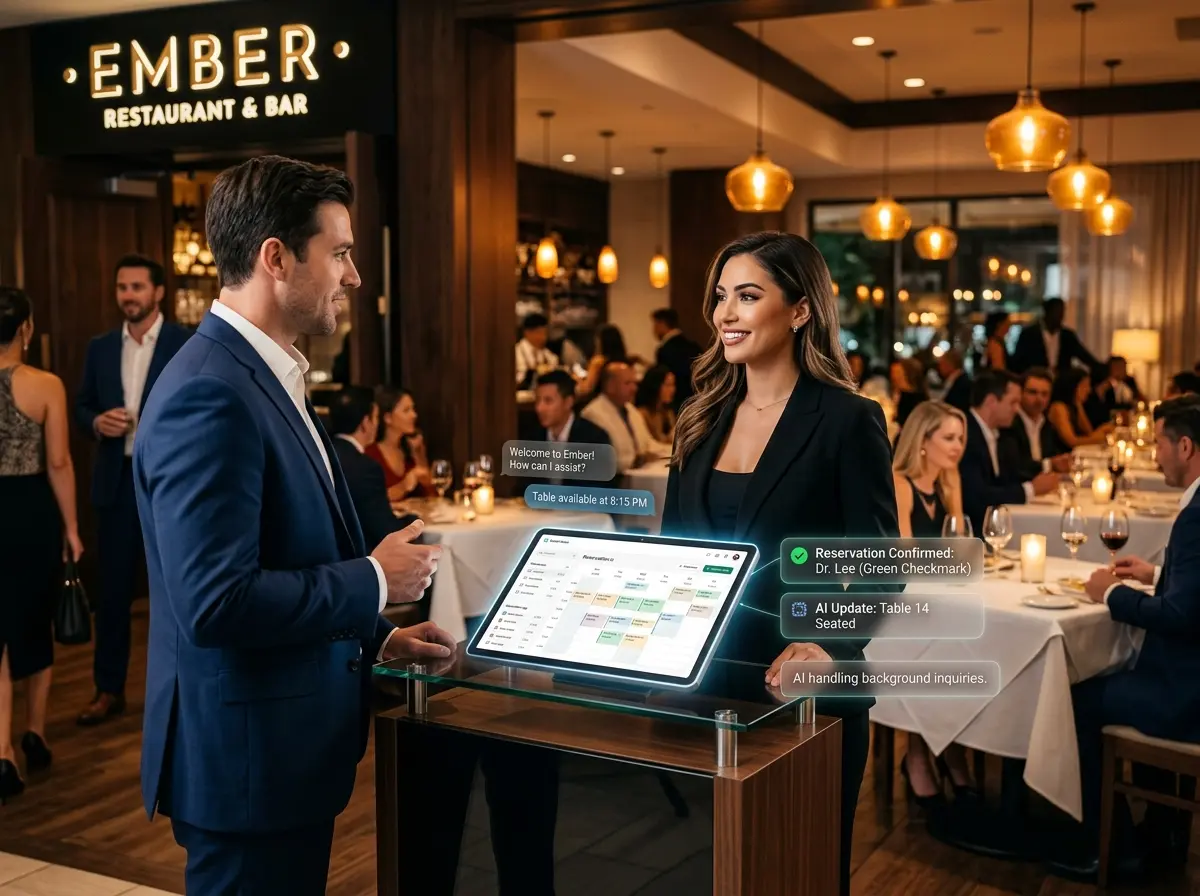
This is where technology can actually make a meaningful difference. Stella is an AI robot employee and phone receptionist designed to handle exactly the kind of high-volume, repetitive-but-important interactions that tie up your staff. For restaurants, she can answer inbound calls around the clock, walk callers through reservation details, collect all the necessary information through a natural conversational intake process, and make sure nothing falls through the cracks — even at 11 PM on a Sunday when your team has long since clocked out.
For restaurants with a physical location, Stella also operates as a human-sized in-store kiosk, greeting guests as they walk in, sharing daily specials, answering questions about the menu, and promoting catering services to dine-in customers who might never have thought to ask. Her built-in CRM captures customer information and builds profiles automatically, so your team always has context — and you can follow up with catering leads without digging through a stack of handwritten notes.
Building a Smarter Reservation and Inquiry System
Standardize the Information You Collect Every Time
One of the biggest operational improvements any restaurant can make is standardizing what information gets collected during a reservation or catering inquiry — and making sure it actually happens every single time. At minimum, a reservation should capture the guest's name, contact number, party size, date and time preference, and any dietary or accessibility needs. A catering inquiry should go further: event type, expected headcount, date, location, budget range, and preferred cuisine style.
When this information is collected consistently, your team can prepare properly, your kitchen can plan accordingly, and your manager isn't chasing down details at the last minute. Build a simple intake checklist if you're handling this manually, or use a system that collects it automatically through conversation.
Create a Dedicated Catering Inquiry Path
Catering is not the same as a reservation, and it shouldn't be treated like one. Consider setting up a dedicated process for catering inquiries — whether that's a specific phone option, a separate contact form, or a defined script your staff follows. Catering clients often need follow-up, quotes, tastings, and contracts. Treating a catering inquiry with the same casual handling as a two-top reservation is a missed opportunity to convert a curious caller into a significant client.
Map out the customer journey: inquiry → qualification → proposal → confirmation → follow-up. Each step should have a clear owner and a clear next action. If you're using an AI receptionist, configure it to flag catering inquiries as high-priority and route them to the right person immediately, rather than letting them sit in a general voicemail queue.
Use Off-Hours to Your Advantage
Here's something most restaurants overlook entirely: a significant portion of reservation and catering inquiries come in outside of business hours. People plan dinner reservations on their lunch break or late at night when they're browsing Instagram. Catering inquiries often come from office managers or event planners during business hours — which, depending on your restaurant's schedule, might be before you even open.
If your phone goes unanswered during these windows, you're not just missing calls — you're missing the customers who were most ready to commit. An AI system that operates 24/7 captures these inquiries and makes sure they're waiting for your team in an organized, actionable format when the doors open in the morning. No voicemail archaeology required.
Quick Reminder About Stella
Stella is an AI robot employee and phone receptionist built for businesses like yours — available as both an in-store kiosk and a 24/7 phone receptionist. She handles reservations, takeout inquiries, catering questions, and upselling opportunities without breaking a sweat, and she runs on an affordable $99/month subscription with no upfront hardware costs. She's the team member who's always on time, always professional, and never asks to leave early on a Friday.
It's Time to Stop Letting Opportunity Ring Out
The restaurant industry is competitive enough without handing customers a reason to walk away before they've even walked in. Missed calls, clunky reservation processes, and dropped catering leads are entirely solvable problems — and solving them doesn't require a massive investment or a complete operational overhaul.
Here's what you can do starting this week:
- Audit your missed calls. Check your phone records for the last 30 days and count how many calls went unanswered. Put a conservative revenue estimate on each one. That number will make the case for you.
- Standardize your intake process. Whether it's a checklist for your staff or an automated system, make sure every reservation and catering inquiry captures the same core information every time.
- Create a dedicated catering pipeline. Treat catering inquiries like the high-value leads they are, with a clear follow-up process and a defined owner.
- Cover your off-hours. Implement a solution — AI or otherwise — that ensures inquiries coming in outside your open hours don't disappear into the void.
Your food deserves to be tasted. Your dining room deserves to be full. And your catering calendar deserves to be booked. None of that happens if the phone just keeps ringing. The tools exist to fix this — and the restaurants that figure it out sooner will be the ones your competitors are enviously watching from across the street.