Introduction: The Shop That Runs Without You (Yes, Really)
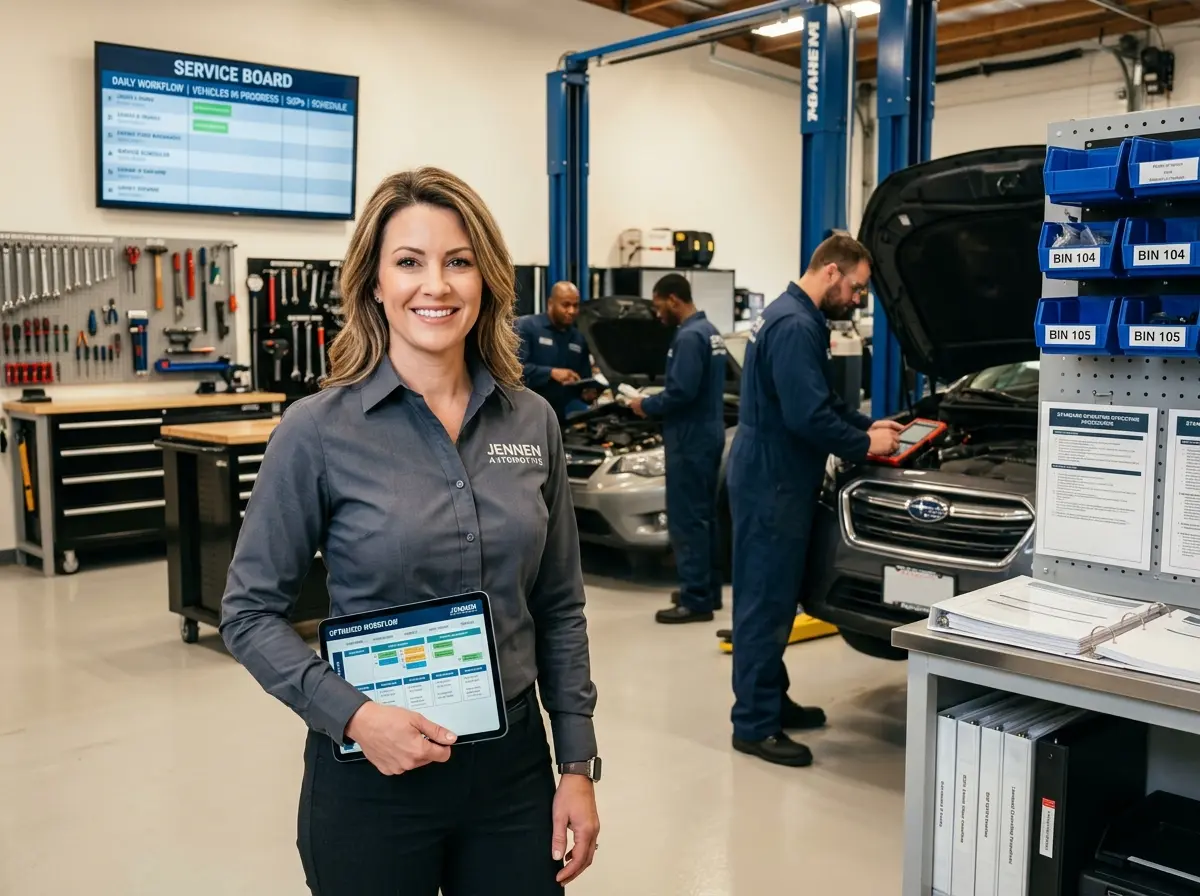
Here's a scenario that might sound familiar: You own an auto shop. You have technicians, a service advisor (maybe), and a front desk person who calls out sick at least twice a month. Your phone rings while a car is mid-lift, a customer walks in wanting a quote, and your best tech is asking you — the owner — where the shop towels are. You went into business to build something, not to spend every Tuesday explaining where the shop towels are.
The good news? This is entirely fixable. The tool that separates the shop owner who works in the business from the one who works on the business is deceptively simple: Standard Operating Procedures, or SOPs. According to a study by E-Myth Worldwide, businesses with documented processes grow significantly faster and experience dramatically lower staff turnover than those without them. Yet the majority of small auto shop owners operate entirely from tribal knowledge — information that lives in their heads and disappears the moment a key employee walks out the door.
This post is your practical guide to building SOPs that actually get used, freeing you from the daily chaos so you can focus on growing your shop — or, you know, taking an actual vacation.
Building Your SOP Foundation: What to Document and How
Start With What Breaks Most Often
The biggest mistake shop owners make when starting SOPs is trying to document everything at once. They buy a binder, get overwhelmed by day two, and the binder becomes a very expensive doorstop. Instead, start with the processes that cause the most pain when they go wrong. Think about your last three operational headaches. Missed customer callbacks? Inconsistent vehicle check-in? Invoices going out late? Those are your first SOPs.
Common high-priority areas for auto shops include customer vehicle check-in and write-up, technician workflow and bay assignment, parts ordering and receiving, quality control before vehicle return, and customer communication touchpoints. Document these first. Get them working. Then expand.
The Anatomy of an Actually Useful SOP
A good SOP isn't a 12-page novel. It's a clear, step-by-step document that a new hire could follow on their first week without calling you six times. Each SOP should include the purpose of the process, who is responsible, the step-by-step procedure, the tools or systems needed, what "done correctly" looks like, and what to do when something goes wrong.
For example, a vehicle check-in SOP might specify that the service advisor greets the customer within 60 seconds of arrival, performs a walk-around noting pre-existing damage with photos taken in a specific app, records mileage and fuel level, and reviews the work order with the customer before signing. That's not rocket science — but without it written down and trained on, every advisor does it differently, and your shop's reputation suffers for it.
Format for Humans, Not Robots
Use checklists, short numbered steps, and photos or videos where possible. A laminated one-page checklist hung in the service bay is infinitely more useful than a 20-page Word document buried in a shared folder. Tools like Google Docs, Notion, or even a simple shared drive work well for storing SOPs. The format matters less than the consistency — pick one and stick with it so your team knows exactly where to look.
Using Technology to Reinforce Your SOPs at the Front Desk
Let Automation Handle the Repetitive Stuff
Once your SOPs are documented, the next step is identifying which parts of them can be handled by technology rather than people. The front desk is typically the highest-traffic, most error-prone area in any auto shop. Phones ring, customers walk in, staff get pulled in multiple directions, and important details slip through the cracks. This is exactly where automation earns its keep.
Stella is an AI robot employee and phone receptionist built for businesses like yours. Her in-store kiosk presence means she can greet walk-in customers the moment they arrive, answer common questions about services, pricing, and hours, and collect intake information — all without your service advisor needing to stop mid-conversation to look up. On the phone side, Stella answers calls 24/7 with the same knowledge she uses in person, meaning a customer calling at 7pm on a Saturday to ask about an oil change special gets an actual answer instead of a voicemail they'll never leave. She can forward calls to your staff based on conditions you set, or handle everything herself. For auto shops where phones are a constant distraction, that's a meaningful operational improvement — and it becomes part of your SOP: Stella handles initial customer contact; staff handles escalations.
Training Your Team on SOPs That Actually Stick
Train Once, Reinforce Always
Writing an SOP and handing it to someone is not training. Studies on workplace learning suggest that people retain only about 10% of what they read but significantly more of what they practice and teach to others. Build training into your onboarding process: new hires shadow an experienced team member, then perform the process themselves while being observed, then sign off that they understand the procedure. Simple, effective, and it gives you documentation that training occurred — which matters if there's ever a dispute.
Hold brief weekly huddles where a different SOP is reviewed for five minutes. Not because your team forgot — but because repetition creates habit, and habit is what happens when you're not in the room watching. Rotate who leads the review. When a technician explains a process back to the team, they internalize it at a much deeper level than they ever would reading a checklist alone.
Build in Accountability Without Micromanaging
The point of SOPs is that you shouldn't need to be the accountability mechanism. Build quality checkpoints into the procedures themselves. For example, your vehicle return SOP might require a technician sign-off and a service advisor review before a car is marked ready. No manager needed — the process enforces itself.
Use your shop management software to track completion of key steps, flag missed items, and generate reports on process adherence. If your system shows that a particular technician consistently skips the quality check step, that's a coaching conversation — not a fire drill because a customer got their car back with the same problem it came in with.
Update SOPs Like You Update Your Alignment Machine
Outdated SOPs are almost worse than no SOPs at all, because they create false confidence. Designate a quarterly SOP review — put it on the calendar, assign a responsible person, and treat it like any other maintenance task. When a process breaks down, update the SOP immediately, not six months later. Your procedures should reflect how your best people actually do the work today, not how someone imagined they'd do it three years ago.
Quick Reminder About Stella
Stella is an AI robot employee and phone receptionist available for just $99/month with no upfront hardware costs. She greets customers in your shop, answers your phones around the clock, promotes your current deals, and reduces the constant interruptions that pull your team away from billable work. For auto shop owners building a business that runs without them, she's a natural extension of the operational systems you're putting in place.
Conclusion: The Shop That Runs Without You Is Built, Not Found
Nobody hands you a self-running business. You build it — deliberately, process by process — until the day you realize your phone didn't ring once about something you should have never been called about in the first place. That's the goal. And it's more achievable than most shop owners think.
Here's where to start this week:
- Identify your top three recurring operational headaches and commit to writing an SOP for each one before the end of the month.
- Audit your front desk workflow — specifically your phone handling and customer check-in process — and identify where human error is most likely to occur.
- Implement one technology tool to handle a repeatable task your team currently handles inconsistently.
- Schedule your first SOP training session with your team and make it a recurring event, not a one-time announcement.
Your auto shop has the potential to run like a well-maintained engine: smooth, efficient, and requiring far less of your personal intervention than it does today. The difference between a shop that demands everything from its owner and one that operates independently isn't luck or size — it's process. Build the process, train the team, use the right tools, and get out of your own way. The shop towels will find themselves.