Introduction: The Renewal Call That Never Got Answered
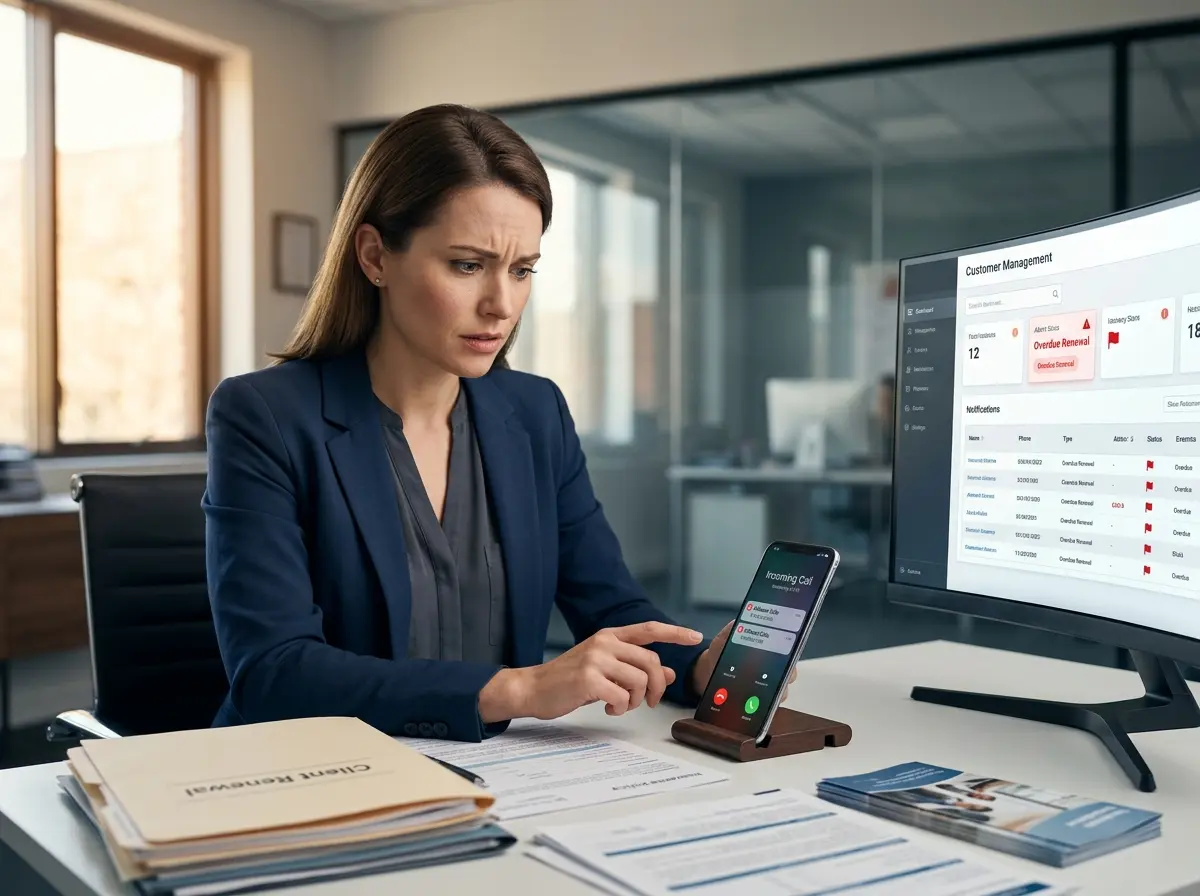
Picture this: A loyal client's auto policy is coming up for renewal. They have a question about their coverage — maybe a competitor just mailed them a shiny quote and they're on the fence. So they do what any reasonable person does. They call their insurance agency. And they get... nothing. Voicemail. Hold music. A callback promise that arrives four hours too late.
By the time your agent calls back, the client has already signed with the other guy.
This isn't a rare horror story. It's happening at insurance agencies across the country, every single day. According to a study by Velocify, calling a lead within the first minute increases conversions by 391%. And while that stat is about new leads, the psychology applies equally to renewals — clients who feel ignored don't stick around. They shop. And when they shop, they leave.
The good news? The fix isn't complicated. It doesn't require hiring three more front-desk staff or performing miracles with your current team's schedule. It starts with understanding why slow phone response is silently draining your renewal rate — and what a smarter approach looks like.
The Hidden Cost of Missed and Delayed Calls
Renewals Are Won (and Lost) in Moments of Doubt
Here's something the big carriers understand that smaller independent agencies sometimes underestimate: renewal season is also shopping season. When a client gets their renewal notice and sees a premium increase — even a modest one — doubt creeps in. That doubt has a short lifespan. If they can reach you quickly and you reassure them, explain the value, and remind them why they chose you in the first place, they stay. If they hit a wall trying to reach you, that doubt has time to grow. And grow it does, usually in the direction of a competitor's website.
The window to retain a wavering client is often measured in hours, not days. A phone response time that stretches into the afternoon for a morning call is, in many cases, a renewal lost before it ever had a chance.
Your Staff Can't Be Everywhere — But Clients Expect Them to Be
Let's be honest about what's happening inside most insurance agencies. Your licensed agents are handling claims questions, processing endorsements, chasing down documentation, and trying to squeeze in lunch somewhere between 12 and 1. The front desk — if you even have one — is fielding walk-ins, transferring calls, and managing the general beautiful chaos that is a busy agency.
Meanwhile, the phone rings. And rings. And gets forwarded to voicemail. Not because your team is bad at their jobs — they're probably excellent — but because there are simply too many touchpoints and not enough hands. This is a structural problem, not a performance problem. And structural problems require structural solutions, not just motivational speeches at the next team meeting.
The Voicemail Trap
Voicemail feels like a safety net. It isn't. Research consistently shows that a significant portion of callers — especially younger clients — will not leave a voicemail. They hang up, assume you're busy, and Google your competitors. Even among clients who do leave messages, expectations around callback time have shortened dramatically in the era of instant communication. A callback after two or three hours feels neglectful in 2024, even if your team is genuinely working hard.
The voicemail trap also creates an internal problem: your team now has a growing pile of messages to return, which means they're playing catch-up instead of proactively managing relationships. It's a cycle that compounds quietly until one day you look at your renewal retention rate and wonder where it went.
How Smarter Phone Handling Can Protect Your Book of Business
Meet the First Line of Defense Your Agency Might Be Missing
This is where technology can genuinely move the needle without replacing the human relationships that make insurance agencies work. Stella is an AI receptionist and robot employee that answers phone calls 24/7 — not with a clunky phone tree, but with natural, conversational AI that can answer questions about your agency's services, hours, policies, and offerings. For agencies with a physical office, she also operates as an in-store kiosk, greeting walk-in clients proactively and engaging them before they even reach the front desk.
For insurance agencies specifically, Stella can handle the initial call, collect client information through conversational intake forms, and either route the call to a licensed agent based on configurable conditions or take a detailed message with an AI-generated summary pushed directly to the right person's phone. No more digging through a voicemail queue at 4:45 PM. And because Stella's built-in CRM logs caller information, tags, notes, and interaction history, your team has context before they ever pick up the phone to return a call. That's the difference between a cold callback and a warm, informed conversation — the kind that keeps clients from shopping elsewhere.
Building a Phone Response Strategy That Actually Retains Clients
Set Clear Response Time Standards — Then Enforce Them
If your agency doesn't have a documented phone response standard, you effectively have a "whenever we get to it" policy. That's not a policy — that's a hope. Start by establishing a clear internal benchmark: for example, all client calls should receive a live response or a direct callback within 30 minutes during business hours, with no call going unacknowledged after close of business.
Once the standard exists, measure it. Use call logs, your CRM, or even simple manual tracking to identify where calls are falling through the cracks. You may find that the problem is concentrated during specific time windows — lunch hours, Monday mornings, or late afternoons — which makes the fix much more targeted and manageable.
Segment Your Callers and Prioritize Accordingly
Not every call has the same urgency, and your response strategy should reflect that. A client calling about a claim needs to reach a human, fast. A prospect calling for a quote can be handled with a brief, professional AI interaction followed by a scheduled callback. A renewal client with a question about their coverage falls somewhere in between — they need to feel heard immediately, even if a full conversation comes shortly after.
Building a tiered response system — whether through call routing rules, AI handling, or a combination of both — means your licensed agents spend their limited time on the calls where their expertise and relationship skills matter most. The result is better client experiences and a less frantic team. Everyone wins, including your renewal numbers.
Use the Off-Hours Window as a Competitive Advantage
Most of your competitors go dark after 5 PM. Their phones go to voicemail, their inboxes sit unread, and any client who develops a coverage question on a Tuesday evening is left to stew in uncertainty — or worse, browse competitor sites. You can flip this dynamic entirely by ensuring your agency has a reliable, knowledgeable presence available around the clock.
This doesn't mean scheduling agents to work overnight shifts. It means deploying technology that can hold down the fort intelligently: answering common questions, capturing caller information, setting expectations for when a human will follow up, and making sure no one who reaches out after hours walks away feeling ignored. In the insurance world, where trust is the product, that consistent availability sends a powerful message.
Quick Reminder About Stella
Stella is an AI robot employee and phone receptionist available for just $99/month with no upfront hardware costs — built for businesses that want professional, reliable coverage without the overhead of additional staff. She answers calls 24/7, engages walk-in clients at her in-store kiosk, collects client information through intake forms, and keeps your team informed with AI-generated summaries and push notifications. Setup is easy, and she's always ready to work — no breaks, no turnover, no bad days.
Conclusion: Your Renewal Rate Is Telling You Something
If your insurance agency is seeing renewals slip, it's worth asking an uncomfortable question: how many of those clients tried to reach you before they left, and didn't get through fast enough? The answer may be more than you'd like to admit — but it's also one of the most actionable problems you can solve.
Here's where to start:
- Audit your current call response data. Look at average callback times, missed calls, and voicemail volume. The numbers will tell you where the gaps are.
- Establish a written response time policy and share it with your team. Make it real, not aspirational.
- Address after-hours and overflow coverage with technology that can handle initial contact intelligently — collecting information, answering questions, and keeping clients engaged until a human can follow up.
- Train your agents on the warm handoff. When a callback happens, it should feel personal and informed — not like the client is starting from scratch.
Retention in the insurance industry is built on trust, and trust is built on responsiveness. Your clients don't expect perfection — they expect to feel like they matter. A phone that gets answered, a question that gets addressed, a callback that arrives before they've had time to Google your competitors: these are the moments that keep a book of business healthy and growing.
The agencies that figure this out aren't doing anything magical. They're just making sure that when a client reaches out, something — or someone — is always there to answer.