Why Your Store Looks Like a Warehouse (And How to Fix It)
Let's be honest — walking into a home goods store that's arranged like a storage unit is not exactly an inspiring experience. Shelves stacked to the ceiling, items grouped purely by category, and not a single candle lit or throw pillow fluffed in sight. If your store layout is currently screaming "efficiency over ambiance," you're leaving serious money on the table. Studies show that well-designed retail displays can increase sales by up to 30%, and yet so many home goods retailers treat merchandising as an afterthought rather than a strategy.
Enter the shoppable vignette — the retail equivalent of staging a home for sale, except you're actually trying to sell everything in it. A vignette is a small, styled scene that shows customers how products look and feel in a real living space. Done well, a vignette doesn't just display products; it sells a lifestyle, sparks imagination, and — most importantly — gets people to add multiple items to their cart instead of just one. This guide will walk you through exactly how to create vignettes that convert browsers into buyers, and how to keep the momentum going once those customers are in your store.
The Art and Science of Building a Shoppable Vignette
Start With a Story, Not a Product List
The biggest mistake home goods retailers make when building vignettes is starting with inventory. "We have too many of these lanterns — let's put them in a display." That's not merchandising; that's just moving the problem closer to the front door. Instead, start with a concept. What feeling are you trying to evoke? A cozy Sunday morning? A breezy coastal retreat? A sleek, minimalist home office? Once you have a story, the products will fall into place naturally — and you'll find that customers aren't just buying the lantern, they're buying the whole scene.
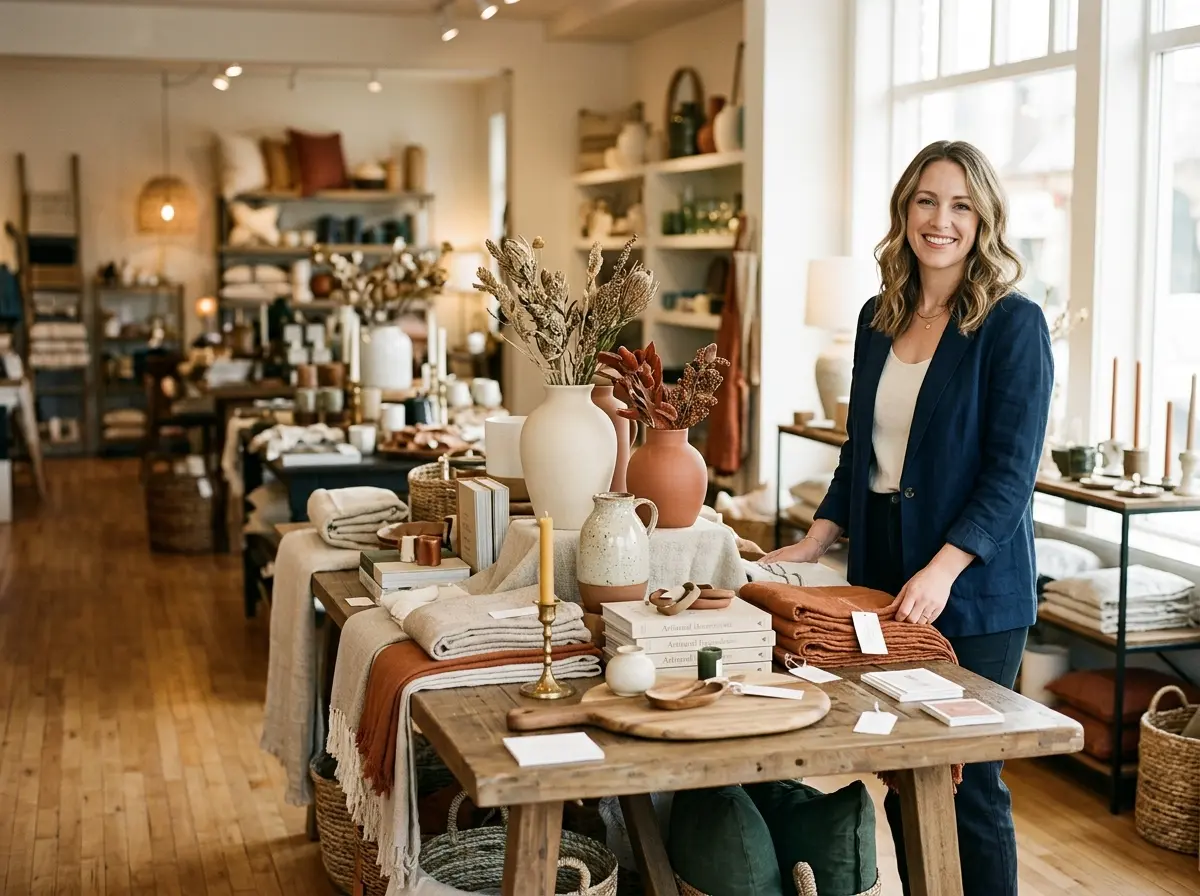
Think in layers: a foundation (rug, surface, or furniture piece), a focal point (a lamp, artwork, or statement vase), and accent pieces (books, small décor, textiles). Each element should feel intentional, like it belongs there. The magic of a great vignette is that customers stop and think, "I want my living room to look exactly like this" — and then they buy everything in front of them to make it happen.
The Rule of Odds and Other Visual Tricks That Actually Work
If you haven't heard of the Rule of Odds, prepare to have your mind mildly blown: groupings of odd numbers (3, 5, 7) are more visually appealing to the human brain than even numbers. Three candles on a tray look styled. Four candles look like you ran out of space. It's a small detail, but these small details are what separate a display that gets photographed for Instagram from one that gets walked past without a second glance.
Beyond odd numbers, vary your heights. A flat display is a boring display. Use risers, stacked books, pedestals, or even overturned bowls hidden under fabric to create visual elevation. Mix textures deliberately — rough linen next to smooth ceramic next to warm wood creates a tactile story that invites customers to reach out and touch things. And once they're touching things, they're already halfway to buying them.
Pricing, Signage, and the "Shoppable" Part of Shoppable Vignettes
A beautifully styled vignette that customers can't easily shop is just a pretty museum exhibit. Every item in your vignette should be clearly tagged or accompanied by a small sign that makes it effortless for a customer to know what's available and what it costs. Consider using a numbered diagram or a small "shop this look" card that lists each item in the scene — it removes friction and subtly tells the customer that yes, you can buy all of this.
Don't forget the power of a "complete the look" approach. If someone picks up the throw pillow from a vignette, your staff (or a well-placed sign) should be nudging them toward the coordinating blanket and tray. This cross-selling approach, when built into the vignette design itself, can significantly increase average transaction value without feeling pushy.
Keeping Your Vignettes Fresh Without Losing Your Mind
Rotating Displays With the Seasons (and Your Sanity)
Seasonal refreshes are non-negotiable in home goods retail. A summer coastal vignette in November is not charming — it's confusing. Plan your vignette rotations around at least four seasonal shifts per year, with additional updates for major holidays and promotions. Keep a simple calendar and a photo archive of past displays so you're not starting from scratch every time. Regulars who visit your store frequently will notice fresh displays and feel rewarded for coming back, which turns casual shoppers into loyal repeat customers.
The good news is that you don't need to overhaul everything at once. Swapping out a few key accent pieces — changing warm autumn tones to cool winter whites, for example — can completely transform a display in under an hour. Work smarter, not harder, and your vignettes will stay relevant without consuming your entire weekend.
How Stella Can Help Your Store Sell More While You Focus on Styling
While you're busy creating gorgeous vignettes that make customers want to move in, Stella — the AI robot employee and phone receptionist — can handle the customer-facing work that pulls your staff away from the floor. Standing right inside your store, Stella greets every customer who walks by, answers questions about products and pricing, and proactively highlights current promotions and featured displays. She's essentially a tireless team member who never gets distracted, never goes on break, and never forgets to mention the sale going on in the back corner.
Beyond the in-store experience, Stella also answers your phone calls 24/7 — so when a customer calls to ask whether that ceramic vase from your fall vignette is still in stock, they get a helpful, knowledgeable answer even if your staff is busy with in-store customers. For a home goods store where your team's attention is best spent on styling, restocking, and building customer relationships, having Stella handle routine inquiries is a genuinely smart use of a $99/month subscription.
Training Your Team to Sell the Vignette Experience
Teaching Staff to "Storytell" Instead of Just Describe
Your vignettes set the stage, but your team closes the curtain. Train staff to talk about displays using the same narrative language you used to build them. Instead of "That's a soy wax candle, twelve dollars," try "That candle is from our cozy evening collection — it's what pulls the whole scene together and it smells incredible." One sentence sells a product. The other sells an experience — and experiences have higher margins.
Role-play is your friend here. Run quick five-minute training exercises where staff practice describing each current vignette to each other as if talking to a first-time customer. It feels awkward at first, but it builds the kind of natural, confident product knowledge that translates directly to higher sales. Customers can tell the difference between a staff member who knows your store and one who is reading the tag for the first time.
Leveraging Customer Reactions to Improve Future Displays
Pay attention to where customers stop, what they pick up, and what questions they ask most frequently. This behavioral data is gold. If customers keep gravitating toward one corner of a vignette but ignoring the rest, that tells you something about what's resonating. If the same question comes up over and over — "Is this tablecloth sold separately?" — that's a signal to adjust your signage or display layout.
Make it a habit to debrief with your team weekly about what they're observing on the floor. The people interacting with customers daily have insights that no analytics dashboard can replicate. Create a simple feedback loop — even just a shared notes app — where staff can log observations about display performance. Over time, this creates an incredibly useful record that informs every future vignette you build.
Photography and Social Proof: Turning Vignettes Into Marketing Assets
Every well-styled vignette in your store is also a content opportunity. Before a display goes live, photograph it properly — natural light, clean angles, no stray price tags in frame. These images become the backbone of your social media presence, email newsletters, and even paid ads. Customers who see a stunning styled scene on Instagram and then walk into your store to find it in person experience a powerful moment of brand consistency that builds trust fast.
Encourage customers to photograph and share your displays by making them genuinely Instagram-worthy. A small "Tag us in your photos!" sign near a particularly beautiful vignette costs nothing and can generate authentic user content that reaches audiences you'd never find through paid advertising alone.
Quick Reminder About Stella
Stella is a friendly, human-sized AI robot kiosk and phone receptionist that works inside your store and answers your phone calls 24/7 — all for just $99/month with no upfront hardware costs. She greets customers, promotes your current deals, answers product questions, and upsells related items, giving your team more time to focus on the work that requires a human touch. Whether you have a bustling retail floor or a one-person operation, Stella shows up every single day ready to work.
Your Next Steps: From Concept to Conversion
Building shoppable vignettes isn't a one-time project — it's an ongoing retail strategy that compounds in value over time. The more intentional you are about storytelling, visual design, and staff training, the more your displays become genuine revenue drivers rather than just decoration. Start small if you need to: pick one corner of your store, choose a concept, and build it out with purpose. Then photograph it, share it, study the customer response, and iterate.
Here's a practical checklist to get you started:
- Choose a seasonal or lifestyle concept before selecting products
- Apply the Rule of Odds and vary heights within every display
- Ensure every item is clearly tagged and easy to purchase
- Add "complete the look" signage to encourage multi-item purchases
- Train staff to describe vignettes using story-driven language
- Photograph every display for use across your marketing channels
- Schedule seasonal rotations at least four times per year
- Collect staff observations about customer behavior to inform future displays
The stores that win in home goods retail aren't necessarily the ones with the most inventory or the lowest prices. They're the ones that make customers feel something — and then make it effortlessly easy to take that feeling home. That's exactly what a great shoppable vignette does. Now go fluff some pillows.