From Empty Waiting Rooms to Word-of-Mouth Machines
Let's be honest — most physical therapy clinics aren't exactly known for their marketing savvy. Between managing patient care, insurance paperwork, and the eternal struggle of getting people to actually do their home exercises, "building a referral engine" tends to fall somewhere below "reorganize the resistance bands drawer" on the priority list.
But here's the thing: referrals are the lifeblood of a physical therapy practice. According to industry research, over 70% of new PT patients come from referrals — either from physicians or from satisfied patients talking to their friends and family. So when one clinic owner decided to stop leaving those referrals to chance and start actively nurturing them through a monthly patient newsletter, the results were, to put it mildly, worth paying attention to.
This is the story of how a modest email newsletter turned a small physical therapy clinic into a community staple — and what you can steal from their playbook starting today.
The Newsletter Strategy That Actually Worked
Why Most Clinics Ignore Newsletters (And Why That's a Mistake)
The word "newsletter" tends to make people's eyes glaze over. It conjures images of clip-art-heavy emails from 2004 that somehow still haunt your spam folder. Fair enough. But the clinics that have cracked the newsletter code aren't sending glorified flyers — they're sending genuinely useful, relationship-building content that keeps their practice top of mind long after the patient has been discharged.
Consider the typical patient journey: someone comes in with a knee injury, attends 8–12 sessions, gets better, and moves on with their life. The clinic essentially loses contact with them entirely. No check-in, no follow-up, no reminder that the clinic exists when their neighbor mentions their shoulder has been bothering them for weeks. A newsletter fixes this quietly and consistently.
The clinic in our story — a mid-sized outpatient PT practice with two therapists and a front desk coordinator — started their newsletter not because they had a massive marketing budget, but because they had a list of past patients and a willingness to show up for them beyond discharge day.
What They Included (and What They Left Out)
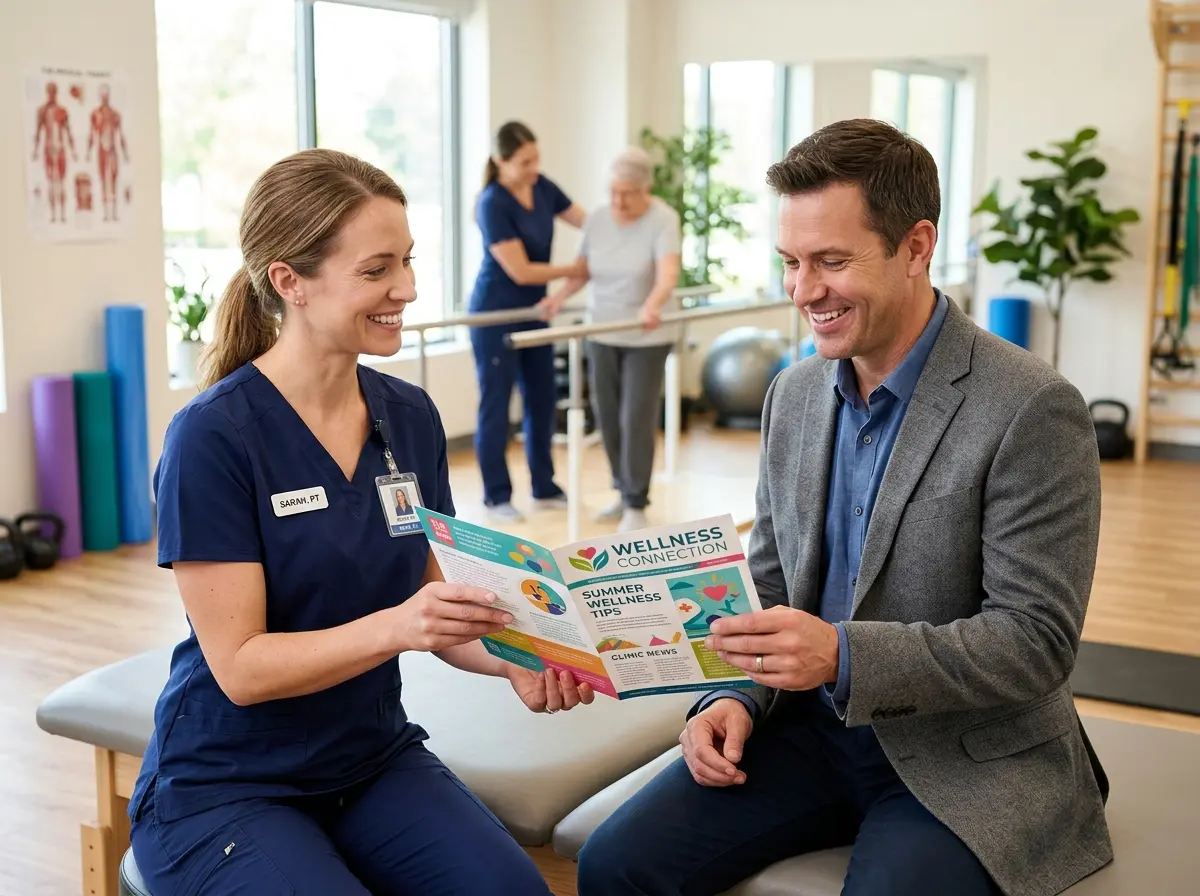
The newsletter went out monthly, was kept to a digestible length, and followed a simple, repeatable format. Here's what consistently made the cut:
- A brief educational article — Think "3 Stretches for Morning Back Stiffness" or "Why Your Posture Probably Isn't the Problem You Think It Is." Helpful, not salesy.
- A patient spotlight — With permission, they featured a short success story from a real patient. Nothing builds trust like a neighbor saying, "Yes, that place fixed me."
- A seasonal tip or reminder — Gardening season? Here's how to protect your lower back. Winter coming? Let's talk about fall prevention.
- A soft call to action — Something like "Know someone dealing with chronic hip pain? We'd love to help. Send them our way." No pushy sales language, just a gentle nudge.
What they deliberately left out was equally important: aggressive promotions, walls of medical jargon, and anything that made the email feel like it was written by a legal department. The tone was warm, conversational, and occasionally funny — because physical therapists are human beings, not brochures.
The Numbers That Made Them Take Notice
After six months of consistent newsletters, the clinic tracked something interesting. When they asked new patients how they heard about the practice, "a friend or family member recommended you" went up by roughly 30% compared to the prior year. Digging deeper, several of those referrers were former patients who mentioned they'd been regularly reading the newsletter. One patient specifically said she forwarded an article about rotator cuff health to her husband — who then called to book an evaluation.
That's not magic. That's just staying in the room after you've left the room.
How Tools Like Stella Can Support Your Patient Outreach
Keeping Your Contact List Clean and Your Front Desk Sane
A newsletter is only as good as the list behind it. And building that list requires a consistent process for collecting patient contact information — which, in a busy clinic, often gets deprioritized the moment the waiting room fills up. This is where Stella, the AI robot employee and phone receptionist, can quietly do a lot of heavy lifting.
Stella can handle patient intake through conversational forms — whether someone calls in to schedule, walks up to her kiosk in the waiting area, or reaches out online. She collects the information your team needs, stores it in her built-in CRM with custom fields and tags, and generates AI-powered contact profiles so your staff always has context before picking up the phone. No more sticky notes. No more "I think they said their email was...". Just clean data, ready to use.
And because she answers calls 24/7, she's also ensuring that the new patient who heard about your clinic from a newsletter forward doesn't hit voicemail at 7pm and give up.
Building a Referral Culture, Not Just a Referral Campaign
Training Your Team to Think Like Referral Partners
The newsletter did a lot of work, but it didn't work alone. The clinic owner was deliberate about reinforcing a referral mindset across the entire team. Every therapist was encouraged to mention — naturally, without script — that the practice takes new patients and that referrals from friends and family are always welcome. Not in a pushy, pyramid-scheme kind of way. Just in the way that any professional who genuinely loves their work might mention they have availability.
They also made it easy for patients to refer. Business cards were available at the front desk with a simple line: "Sharing is caring — give these to someone who needs us." Digital versions were included at the bottom of every newsletter. The friction was almost zero.
Engaging Physician Referral Sources Without Being Annoying
Patient-to-patient referrals were the big win, but the clinic also used the newsletter — in a modified, more clinical format — to stay connected with the physicians and orthopedic specialists who sent them patients. This version included brief summaries of outcome data, a highlight of a complex case they'd managed successfully, and updates on any new specialties or equipment the clinic had added.
Physicians are busy people with crowded inboxes. Keeping the content tight, relevant, and genuinely informative made all the difference. One orthopedic surgeon's office manager told them directly: "You're the only PT clinic that actually keeps us updated. That means something."
Turning Discharged Patients Into Long-Term Advocates
One of the most underutilized assets in any healthcare practice is the discharged patient who had a great experience and then completely forgot the clinic's name six months later. It's not disloyalty — it's just how human memory works, especially when nothing reinforces the connection.
The newsletter solved this with elegant simplicity. By showing up monthly in the inbox with something actually worth reading, the clinic stayed part of patients' lives in a low-pressure, high-value way. Former patients became the clinic's most credible marketing channel — not because they were asked to sell anything, but because they were continuously reminded that this was a place that cared about their health beyond the billing cycle.
The takeaway here is replicable across nearly any service-based business: don't let the relationship end when the transaction does. A consistent, valuable touchpoint — whether that's a newsletter, a social media presence, or a follow-up check-in — keeps you in the consideration set when someone in a patient's life needs exactly what you offer.
Quick Reminder About Stella
Stella is an AI robot employee and phone receptionist built for businesses across virtually every industry — including healthcare, retail, hospitality, and professional services. She greets customers in person at her kiosk, answers phones around the clock, collects contact information, manages your CRM, and promotes your services with zero days off and zero complaints. At $99/month with no upfront hardware costs, she's the easiest hire you'll make all year.
Your Action Plan Starts Today
The clinic in this story didn't have a marketing team, a big budget, or a complicated strategy. They had a list of past patients, a genuine desire to stay connected, and the discipline to show up consistently. That's it. And it moved the needle in a meaningful, measurable way.
Here's how to get started with your own version of this strategy:
- Build your list. Audit your existing patient or customer records and identify everyone who has consented to receive email communications. If your data is scattered or incomplete, put a system in place — like intake forms or a CRM — to capture it going forward.
- Choose a simple format and stick to it. One educational piece, one human story, one soft call to action. Don't overthink it. Consistency beats perfection every time.
- Set a realistic cadence. Monthly is sustainable for most small practices. Bi-weekly if you have the content bandwidth. The goal is to show up reliably, not to overwhelm anyone's inbox.
- Track referral sources. Ask every new patient how they heard about you. Keep a simple log. Over time, you'll see whether the newsletter is moving the needle — and you'll have a satisfying story to tell when it does.
- Make it easy to share. Include a "forward to a friend" link, add a referral line at the bottom, and give patients an effortless way to spread the word.
Referrals don't happen by accident. They happen because you stayed in the room, kept showing up, and made it easy for happy patients to become your loudest advocates. A well-crafted newsletter is one of the simplest and most effective ways to do exactly that — and the best time to start one was six months ago. The second best time is right now.