When "Good Enough" Forms Are Quietly Killing Your Practice
Picture this: a potential therapy client finally works up the courage to reach out. It's taken them weeks — maybe months — to get to this point. They find your website, click "Get Started," and are immediately greeted by a wall of clinical, impersonal intake questions that feel more like a tax audit than a first step toward healing. They close the tab. You never hear from them again. And your conversion rate has no idea what just happened.
Client intake is one of those things that therapy practice owners set up once and then completely forget about — right up until they notice that a surprisingly large number of inquiries are simply... disappearing. The truth is, your intake process is often the first real experience a prospective client has with your practice, and if it feels cold, confusing, or overly burdensome, you're essentially turning people away at the door before you've even said hello.
This post walks through how one therapy practice completely rethought their client intake process, what changed, and — most importantly — what you can learn and apply to your own practice, whether you're a solo practitioner or managing a multi-therapist operation.
Where Most Therapy Intake Processes Go Wrong
The Form-Dump Problem
Most intake processes in mental health practices were designed with the practice in mind, not the client. The logic goes something like: "We need this information, so let's ask for it all upfront." The result? A 47-field intake form that would intimidate a first-year law associate, let alone someone in emotional distress who just wants to know if you accept their insurance.
Research consistently shows that form abandonment rates skyrocket when users are asked for too much information too early. According to Formstack's data, forms with more than three fields see significantly higher abandonment rates — and in the healthcare space, where emotional stakes are high, this effect is even more pronounced. The fix isn't to collect less information; it's to collect it progressively, asking for what you need at each stage of the relationship rather than demanding everything before the first handshake.
The Response Time Trap
Here's an uncomfortable statistic: 78% of customers buy from the first business that responds to their inquiry. In therapy, where potential clients are often in a vulnerable state and may be comparing multiple providers, response time is everything. A practice that responds within five minutes is exponentially more likely to convert that lead than one that responds the next business day — even if the slower practice is objectively more qualified.
Many small and mid-sized therapy practices are still relying on voicemail, email callbacks during business hours, and manual follow-up processes. These aren't just inconvenient; they're actively costing you clients who needed a human (or at least human-feeling) response and moved on when they didn't get one.
The Mismatched Tone Problem
Therapy is intimate. People are reaching out because they're struggling, scared, or stuck. An intake process that reads like a corporate HR onboarding checklist creates cognitive dissonance — it signals that your practice may not actually be the warm, person-centered environment your website claims it is. Every touchpoint in your intake process, from the first phone call to the final form confirmation email, should feel consistent with the therapeutic relationship you're promising to provide.
How Technology Can Modernize Your Intake Without Losing the Human Touch
Conversational Intake Changes Everything
One of the most effective shifts a therapy practice can make is moving from static intake forms to conversational intake — a process where information is gathered through natural dialogue rather than a form that feels like it was designed in 2004. This can happen over the phone, via a chat-style web interface, or even at a front-desk kiosk in a multi-therapist clinic setting.
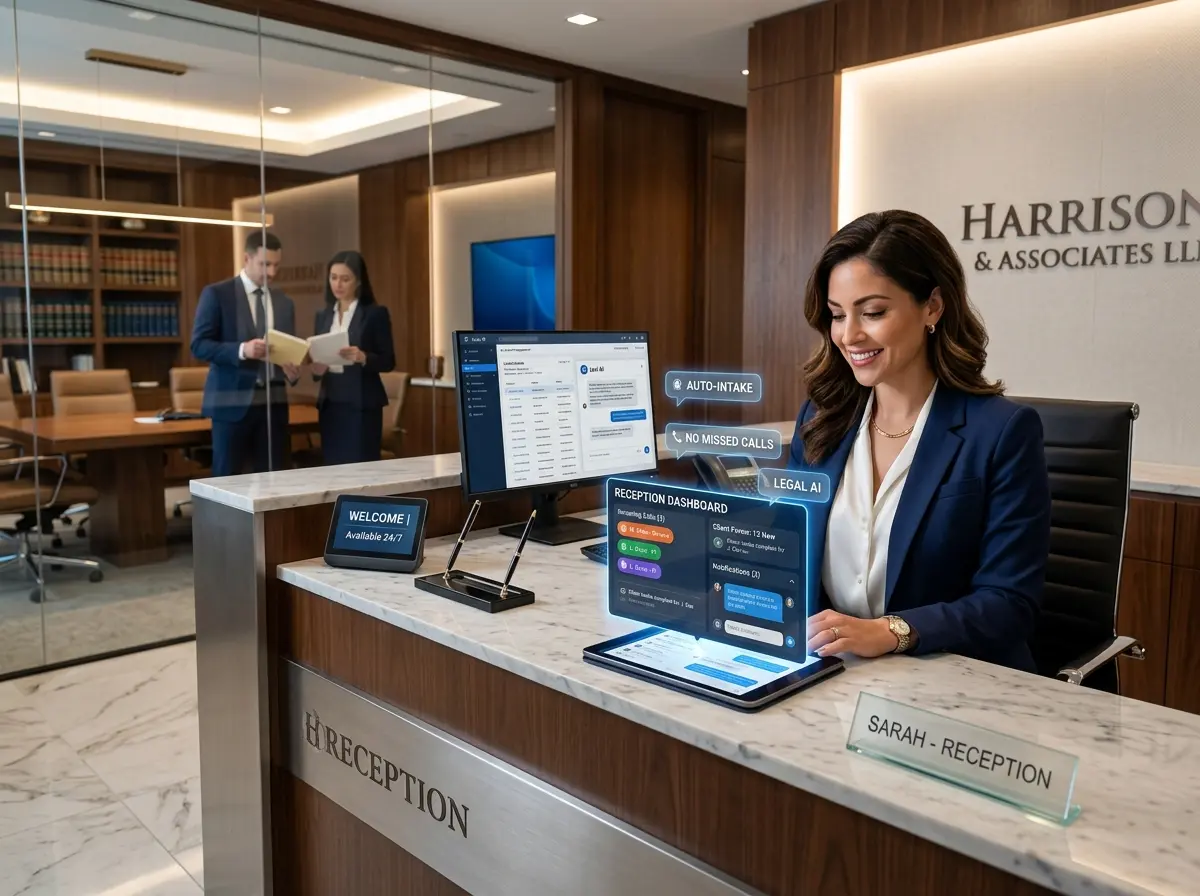
When Stella, the AI robot employee and phone receptionist, handles intake calls for a therapy practice, something interesting happens: clients report feeling like they've already started the process of being heard. Stella collects client information through guided conversational intake during phone calls and can store everything directly in her built-in CRM — complete with custom fields, tags, notes, and AI-generated contact profiles. For a practice that was previously losing leads to voicemail and slow callbacks, having Stella answer every call around the clock and walk callers through a warm, natural intake conversation is a meaningful operational upgrade. She can also handle the in-office side of things, greeting clients as they arrive and helping front-desk staff manage the flow of new client check-ins.
The point isn't to replace your therapists' clinical expertise — it's to make sure a potential client's very first interaction with your practice feels as thoughtful and professional as everything that follows.
The Redesign That Actually Moved the Needle
Stage One: Audit What You're Actually Asking (And Why)
The therapy practice in question — a group practice with four therapists and a part-time admin — started their redesign by doing something deceptively simple: they listed every question in their intake process and asked, "Does the client need to answer this before their first session, or are we just collecting it out of habit?"
The results were eye-opening. Roughly 40% of their intake questions could be deferred to post-booking or gathered during the first session. By stripping the pre-booking intake down to the essentials — name, contact info, insurance details, and a brief reason for seeking services — they cut their form completion time from an average of 22 minutes to under six. Completion rates improved almost immediately.
Stage Two: Fix the Phone Problem
The practice's second big issue was phone coverage. Their part-time admin worked three days a week, calls went to voicemail on evenings and weekends, and callback turnaround was often 24 to 48 hours. When they tracked their inbound inquiry data over a 90-day period, they discovered that nearly 30% of their voicemails were from people who had already booked with another practice by the time anyone called them back.
After implementing 24/7 phone coverage with an AI receptionist that could answer questions, collect initial intake information, and confirm next steps immediately, their new client conversion rate from first inquiry to booked appointment increased by over 40% within the first two months. The calls that needed a human were forwarded appropriately; everything else was handled in real time.
Stage Three: Build a Follow-Up Sequence That Actually Follows Up
Even with a faster intake and better phone coverage, some prospective clients go quiet after their initial inquiry. Life happens. The practice built a simple three-touch follow-up sequence: a same-day confirmation message, a check-in at 48 hours if no appointment had been booked, and a gentle final nudge at the one-week mark. Nothing aggressive, nothing pushy — just a practice demonstrating that it actually wants to hear from you.
Combined with the intake overhaul and phone improvements, this sequence alone recovered an estimated 15–20% of leads that would previously have been lost. Over a year, for a practice charging $150 per session with an average client engagement of 12 sessions, that's a significant number of dollars attached to what had previously been "invisible" missed revenue.
Quick Reminder About Stella
Stella is an AI robot employee and phone receptionist designed for businesses of all kinds — including therapy practices and healthcare providers. She answers calls 24/7, collects intake information conversationally, manages contacts through a built-in CRM, and greets clients in person at your front desk. At just $99/month with no upfront hardware costs, she's the front-of-house team member who never calls in sick and never puts a nervous new client on hold.
What to Do With All of This
If you're a therapy practice owner reading this and quietly recognizing your own intake process in some of the problems described above, here's your actionable roadmap:
- Audit your current intake — Time how long it takes to complete. Ask a friend who isn't in healthcare to go through it and tell you how it feels. You may be surprised.
- Cut the pre-booking form to the essentials — Name, contact, insurance, and a brief presenting concern. Everything else can wait.
- Fix your phone coverage — If calls are going to voicemail during business hours or after hours, you are losing clients. Full stop. Whether you hire additional admin support or implement an AI phone solution, this needs to be addressed.
- Build a follow-up sequence — Even two or three touchpoints can meaningfully recover leads that would otherwise evaporate.
- Align tone across every touchpoint — Read your confirmation emails, your form instructions, and your voicemail greeting as if you're a nervous new client hearing them for the first time. Does it sound like your practice? Does it sound like someone who cares?
The good news is that none of this requires a complete overhaul of your clinical operations. Your intake process lives largely in the administrative layer of your practice — and that means it's fixable without touching anything that actually happens in the therapy room. The even better news is that the practices making these changes are seeing real, measurable results. A better intake experience doesn't just convert more leads; it sets the tone for a therapeutic relationship that clients feel good about from day one.
That's not a bad return on a few hours of process redesign.