Why Your Auto Body Shop's Best Marketing Tool Is Already in Your Parking Lot
Let's be honest — auto body work is not exactly the easiest thing to explain to someone who has never thought about it before. Most customers walk in with a dented bumper and glazed-over eyes the moment you start talking about paint matching, panel realignment, or clear coat application. They don't know what any of that means. What they do understand, however, is the difference between a crumpled rear quarter panel and a car that looks like it just rolled off the showroom floor.
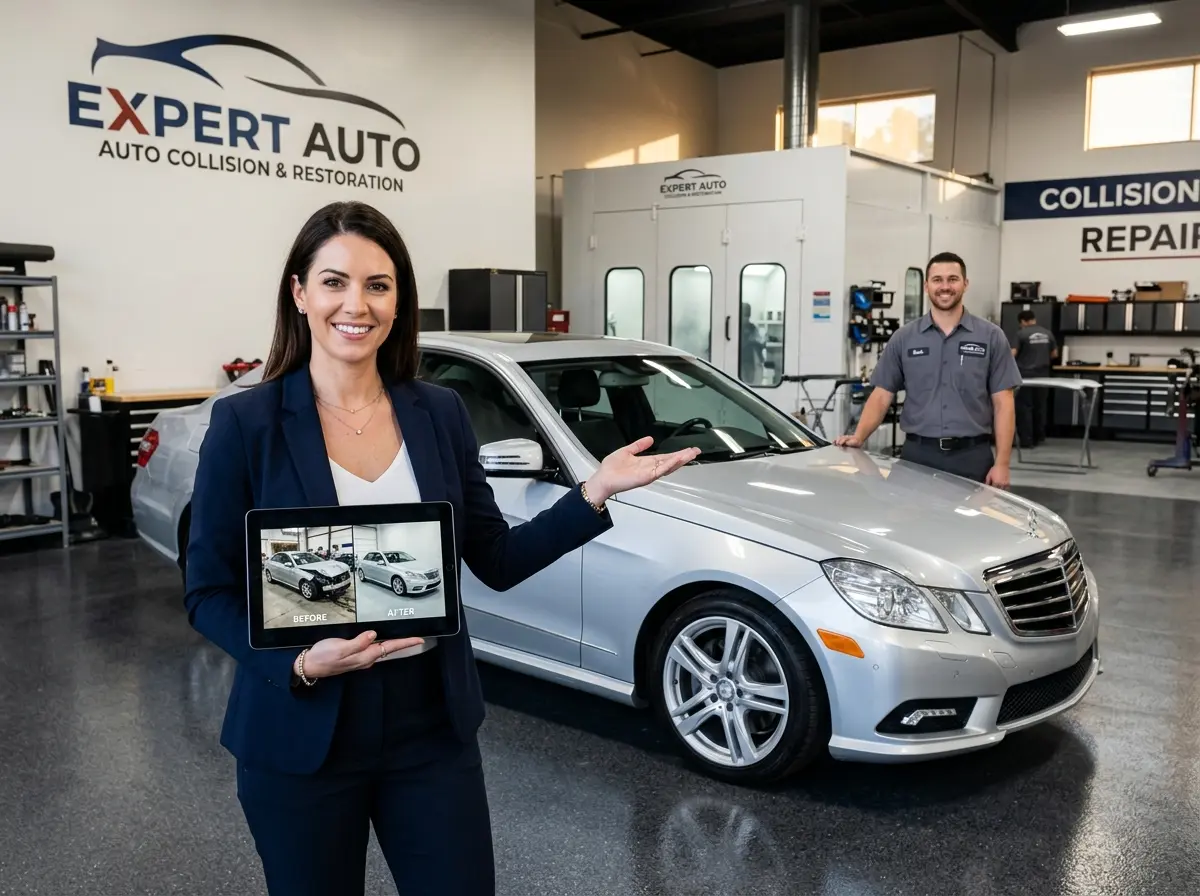
That's the magic of before-and-after content — and if your auto body shop isn't using it consistently as a marketing strategy, you are leaving money, credibility, and customer trust sitting right there on the repair bay floor. Before-and-after posts are among the highest-performing content types on social media for service businesses, with some studies showing engagement rates two to three times higher than standard promotional posts. The reason is simple: they tell a story, they show proof, and they make your craftsmanship undeniable.
This guide will walk you through how to create compelling before-and-after content, where to share it, and how to build a system that keeps it coming without burning out your team.
Creating Before-and-After Content That Actually Gets Results
The Art of the Before Photo (Yes, It Matters)
Most shop owners make the same mistake: they remember to take the "after" photo and completely forget the "before." We get it — when a banged-up car rolls in, photography is the last thing on your mind. But without that before shot, you have no story, just a nice picture of a clean car. Make it a non-negotiable part of your intake process. Before the car moves an inch, someone takes photos. Period.
When shooting the "before," don't be shy about the damage. Get close. Show the scratches, the crumple, the rust, the paint transfer. Natural lighting works best, so if you can roll the car outside briefly, do it. Take multiple angles — straight on, 45 degrees, and a close-up detail shot of the worst damage. These aren't glamour shots; they're evidence, and the more clearly they show the problem, the more dramatic and satisfying your "after" will look by comparison.
Nailing the After Shot to Showcase Your Craftsmanship
The "after" photo is your portfolio moment. Match the exact same angles you used for the "before" — same distance, same position, same lighting conditions if possible. Consistency between the two shots is what makes the transformation pop. A well-lit, carefully composed after shot tells potential customers that your shop pays attention to detail, even in how you present your work.
Consider investing a few hours in learning basic photography composition — the rule of thirds, how to use natural light, and how to avoid unflattering shadows on a car's surface. You don't need a professional camera; a modern smartphone does the job beautifully. What you do need is intention. A blurry, crooked, half-lit photo of a beautifully repaired car still looks unprofessional, and that reflects on your shop whether you like it or not.
Writing Captions That Convert Browsers Into Customers
A great photo pair deserves a caption that does more than say "Check out this repair!" Tell the story. What happened to the car? A parking lot fender bender? Hail damage? A run-in with a concrete pillar that shall not be named? Customers connect with relatable scenarios, and a short, conversational description of the situation makes the content feel human and authentic rather than like an advertisement.
End your caption with a clear call to action. Something like, "Got damage that looks similar? Give us a call or stop by for a free estimate." Don't assume people will figure out the next step on their own — tell them exactly what to do, and make it easy.
Letting Technology Handle What You Shouldn't Have To
Freeing Up Your Team to Focus on the Work
Here's a reality check: your technicians are there to fix cars, not to manage a content calendar or answer the same five questions over the phone eight times a day. One of the quiet killers of small shop productivity is the constant interruption — someone needs to answer the phone, greet a walk-in, explain your services for the hundredth time — and suddenly your best painter has been standing at the front desk for twenty minutes.
This is exactly where Stella becomes genuinely useful. Stella is an AI robot receptionist and in-store kiosk that greets customers the moment they walk through your door and answers your phones around the clock — even on weekends, even after hours, even while your team is neck-deep in a full repaint. She can answer questions about your services, collect customer information, promote your current specials, and handle intake — all without pulling a single technician away from the bay. For a shop trying to generate buzz with before-and-after content, having Stella handle the inbound inquiries that content generates means your marketing actually converts, instead of going to voicemail.
Where and How to Distribute Your Before-and-After Content
Social Media Platforms Worth Your Attention
Not all platforms are created equal for auto body content, and trying to be everywhere at once is a fast track to burnout. Focus your energy where your audience actually is. Facebook remains the dominant platform for local service discovery, particularly among homeowners and drivers aged 30 and up — exactly the demographic likely to need body work. Instagram is a close second for visual content and is excellent for reaching a slightly younger audience. TikTok has become surprisingly powerful for auto content; short transformation videos regularly rack up tens of thousands of organic views with zero ad spend.
Post consistently rather than perfectly. Two to three times per week with solid content beats daily posting of mediocre material. Use local hashtags, tag your city or region, and always include your shop name and a contact method in your bio so that curious viewers can find you without any friction.
Don't Overlook Google Business Profile and Your Website
Your Google Business Profile is arguably your most important piece of digital real estate, and yet most auto body shops treat it like an afterthought. You can post before-and-after photos directly to your profile, where they appear in local search results when someone types "auto body shop near me." This is free advertising to people actively looking for your services right now — that's about as targeted as it gets.
Similarly, build a gallery or portfolio section on your website that features your best transformations. Organize it by damage type — collision repair, paint correction, hail damage, rust repair — so potential customers can find examples that match their specific situation. This also improves your website's SEO, since image-rich, regularly updated pages tend to rank better in local search results over time.
Turning Customer Stories Into Shareable Testimonials
A before-and-after photo becomes exponentially more powerful when paired with a customer quote. After delivering a completed job, ask your customer if they'd be willing to share a quick sentence or two about their experience. Most happy customers are glad to oblige, especially when you show them the side-by-side of their car. Combine their words with your photos and you have a piece of content that is part testimonial, part portfolio, and completely compelling.
You can even take this a step further by asking satisfied customers to post their own before-and-after if they took photos, or to leave a review mentioning the specific type of repair. User-generated content and genuine reviews carry far more weight with prospective customers than anything you could write about yourself, and they cost you nothing but a simple, sincere ask at the right moment.
Quick Reminder About Stella
Stella is an AI robot employee and phone receptionist designed to help businesses like yours stay professional, responsive, and efficient without adding to your payroll headaches. She greets walk-ins at your front desk, answers calls 24/7, promotes your services, and collects customer information — all for just $99 a month with no upfront hardware costs. When your before-and-after content starts driving real traffic to your shop, Stella makes sure none of those leads slip through the cracks.
Start Shooting, Start Posting, Start Growing
Before-and-after content is one of the most effective, lowest-cost marketing strategies available to an auto body shop, and the barrier to entry is genuinely just remembering to take the photo before you start the repair. That's it. From there, a little consistency, a little storytelling, and a strategic approach to where you share your work can meaningfully grow your shop's visibility and reputation over time.
Here's your action plan to get started this week:
- Make before photos part of every intake process — assign it to one person and make it non-negotiable.
- Set up or refresh your Google Business Profile and start uploading photo pairs there immediately.
- Pick two social platforms — probably Facebook and Instagram or TikTok — and commit to posting three times per week.
- Ask your next happy customer for a quote to pair with their transformation photos.
- Build a portfolio page on your website organized by repair type.
Your craftsmanship speaks for itself — but only if people can see it. Start showing them what you can do, and watch what happens.