Introduction: The Invisible Bottleneck Costing You Sales
Picture this: a customer walks into your store, eyes lighting up as they search for the item they've been wanting all week — only to find an empty shelf, a misplaced tag, and a frazzled employee who hasn't slept enough to answer a single coherent question. The product is there, somewhere — probably sitting in a box in the back room, waiting patiently for someone to notice it exists. Sound familiar?
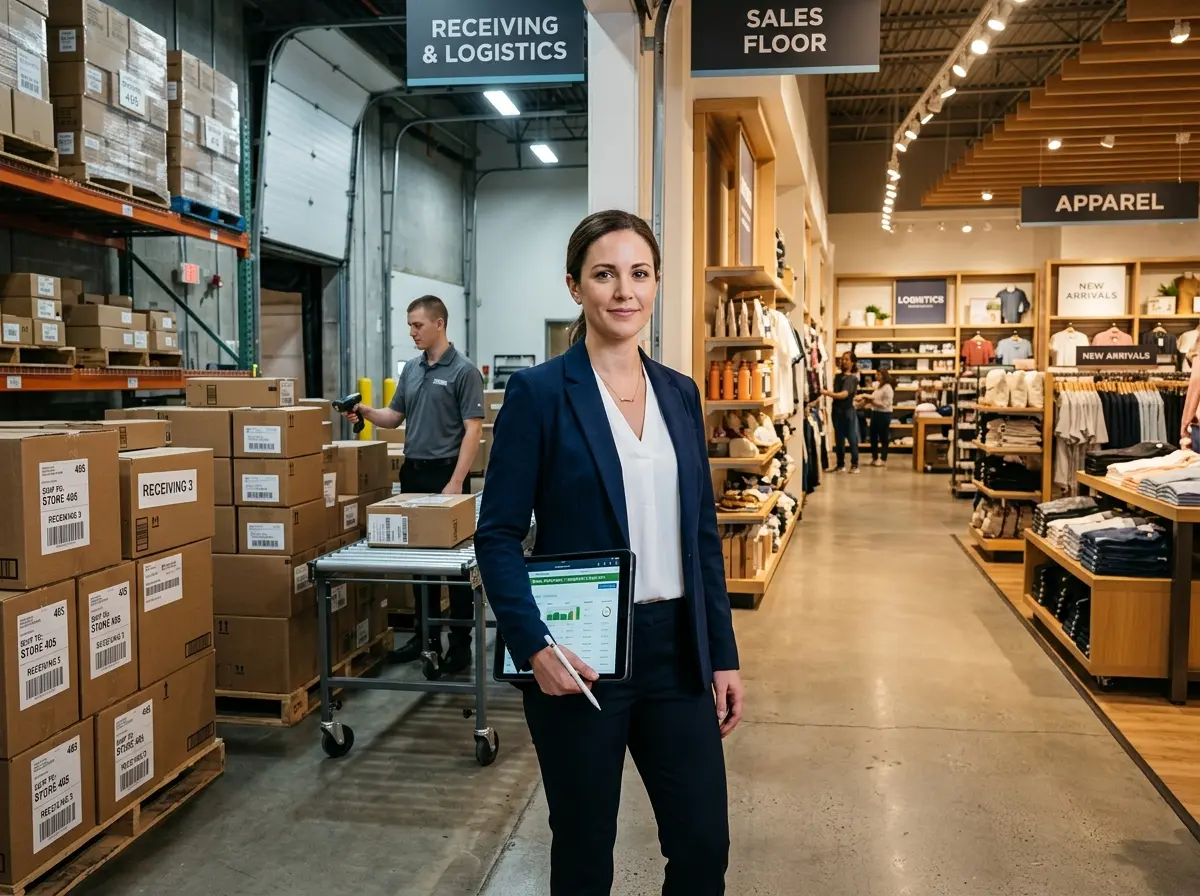
The journey from your receiving dock to your sales floor is shorter than it looks on a map, but for many retailers, it might as well be a cross-country expedition. Inefficient stocking processes quietly drain revenue, frustrate customers, and burn out your team — all while you're busy wondering why sales aren't hitting their potential. The good news? This is one of the most fixable problems in retail, and you don't need a logistics degree or a fortune in technology to solve it. You just need a smarter process, a sharper eye, and maybe a few tools you haven't considered yet.
In this post, we'll walk through how to streamline your stocking process from the moment inventory arrives at your door to the moment it lands in a customer's hands — profitably and efficiently.
Building a Better Receiving Process
Everything downstream depends on what happens the moment a shipment arrives. If your receiving process is chaotic, nothing that follows will be clean. Think of the receiving dock as the foundation of your retail operation — cracks here show up everywhere else.
Standardize Your Receiving Workflow
One of the most impactful changes a retailer can make costs almost nothing: writing down exactly how receiving should work, and then actually following it. That means defining who is responsible for unboxing, who verifies quantities against purchase orders, who logs discrepancies, and who moves product to the staging area. Without defined roles, the default is chaos — and chaos loves company.
A standardized receiving checklist should include verification of item counts, inspection for damage, immediate flagging of shortages or overages, and proper labeling before anything moves deeper into the store. According to the National Retail Federation, inventory shrinkage costs U.S. retailers over $112 billion annually — and a meaningful chunk of that starts at the receiving stage with errors that go unchecked.
Use a Staging Area Strategically
Your staging area is not a permanent storage solution — it's a pit stop. Far too many retailers let product pile up in the back room for days (or weeks) because the staging area quietly becomes a graveyard for "we'll get to it later." Establish a clear rule: product that has been received, verified, and labeled should move to the floor within a defined window — ideally 24 hours for fast-moving items.
Organizing your staging area by department or product category speeds up the shelving process dramatically. When stockers can grab a clearly labeled cart of, say, household goods and head straight to the correct aisle without a scavenger hunt, you recover hours of labor per week. Small investment, big return.
Leverage Technology at the Point of Receiving
Barcode scanners, inventory management software, and even simple spreadsheet systems integrated with your point-of-sale platform can transform your receiving accuracy. When every item is scanned into your system upon arrival, your inventory counts stay current — which means your team can trust what the system tells them about stock levels instead of walking to the back "just to check." Real-time inventory visibility is the difference between a confident sales team and one that apologizes to customers all day.
From Back Room to Sales Floor: Smarter Shelving Strategies
Getting product received correctly is only half the battle. Now it has to actually make it onto the shelf — in the right place, in the right quantity, with the right signage — before a customer comes looking for it. This is where many retailers stumble, and it's worth thinking carefully about how your shelving process is structured.
Prioritize High-Velocity and High-Margin Items
Not all products are created equal, and your stocking schedule shouldn't treat them as if they are. Identify your top-selling items and your highest-margin products, and make sure those are the first things stocked when shipments arrive. An empty shelf on a bestseller is a direct revenue leak — every hour that product sits in the back is an hour a customer might leave empty-handed or, worse, visit a competitor. Build your stocking priority list around velocity and margin data, and revisit it monthly as trends shift.
Implement a Regular Cycle Count Routine
Full physical inventory counts are exhausting and disruptive. Cycle counts — where you count a rotating subset of inventory on a regular schedule — give you accuracy without the all-hands-on-deck misery of a full count. When you know your inventory is accurate, you can make smarter reordering decisions, reduce overstock, and eliminate the embarrassing moment when a customer buys something online for in-store pickup that you haven't had in stock for two weeks.
Let Technology Handle the Customer Side While You Focus on Operations
Here's a thought: while your team is heads-down optimizing the back room and the sales floor, who's handling the customers walking in the door and calling the phone? If the honest answer is "whoever gets there first," you might be losing sales faster than your stocking process can recover them.
Free Up Your Staff With Smarter Customer Support
This is where Stella enters the picture. Stella is an AI robot employee and phone receptionist that greets customers as they walk in, answers their product questions, promotes current deals, and handles common inquiries — all without pulling a single team member away from stocking shelves or managing inventory. She stands inside your store as a friendly, human-sized kiosk and engages customers proactively, so your staff can stay focused on the operational work that keeps shelves full and the store running smoothly.
Stella also answers your phones 24/7, which means customers calling to ask whether something is in stock, what your hours are, or whether you carry a specific brand get an immediate, accurate answer — even after closing time. For a retail operation trying to tighten its processes, removing the constant interruption of routine customer questions from your team's day is not a small thing. It's hours of recovered productivity, every single week.
Training Your Team for a Culture of Operational Excellence
Systems and checklists are powerful, but they only work if your team actually uses them. Retail stocking efficiency ultimately comes down to people — their habits, their training, and how much they understand the why behind the process.
Make Stocking Part of the Job Description, Not an Afterthought
In many retail environments, stocking is treated as something that happens when there's "nothing else to do." This mindset is the enemy of a clean, fully stocked floor. When stocking is baked into daily schedules, assigned to specific team members during specific shifts, and measured with accountability, it gets done consistently. Create shift checklists that include stocking tasks as non-negotiable items alongside opening and closing duties. What gets scheduled gets done.
Cross-Train for Coverage and Consistency
If only one person on your team knows how the receiving process works, you have a single point of failure that will absolutely betray you the moment that person calls in sick. Cross-training employees across stocking, receiving, and floor merchandising creates resilience. It also tends to improve quality — employees who understand the full product journey from dock to shelf are better equipped to catch errors, identify placement issues, and take ownership of the result.
Use Data to Drive Continuous Improvement
Track metrics that matter: time from receiving to shelf, frequency of stockouts, shrinkage rates, and labor hours spent on stocking. If you don't measure it, you can't improve it — a cliché that remains stubbornly true. Even a simple weekly review of stockout incidents and their causes can surface patterns that lead to meaningful process improvements over time. Hold brief team huddles to share what's working and what isn't, and give your team the space to suggest improvements. The people doing the work usually know exactly where the friction is.
Quick Reminder About Stella
Stella is an AI robot employee and phone receptionist designed to support businesses like yours — greeting in-store customers, answering calls around the clock, promoting deals, and handling routine questions so your team stays focused on what matters. She's available for just $99/month with no upfront hardware costs and is easy to set up. Whether your floor is fully stocked or you're still catching up from the last shipment, Stella keeps the customer experience smooth and professional in the meantime.
Conclusion: Small Process Wins Add Up to Big Results
Retail success isn't usually built on one dramatic breakthrough — it's built on dozens of small processes that work reliably, day after day. Tightening your receiving workflow, keeping your staging area moving, prioritizing high-value products, training your team with accountability, and using technology to remove unnecessary friction are all within reach for any retailer willing to invest the attention they deserve.
Here's where to start: audit your current receiving process this week. Time how long it takes from a shipment's arrival to product landing on the shelf. Count how many steps involve manual effort that could be systematized. Identify the top three products most frequently out of stock and trace back why. You'll likely find the same handful of bottlenecks that most retailers find — and now you'll know exactly where to focus.
Your receiving dock and your sales floor are more connected than they might seem. When the process between them runs smoothly, your customers notice — even if they can't quite articulate why the shopping experience just feels better. And in retail, that feeling translates directly to sales, loyalty, and growth. Fix the back room, win the floor.