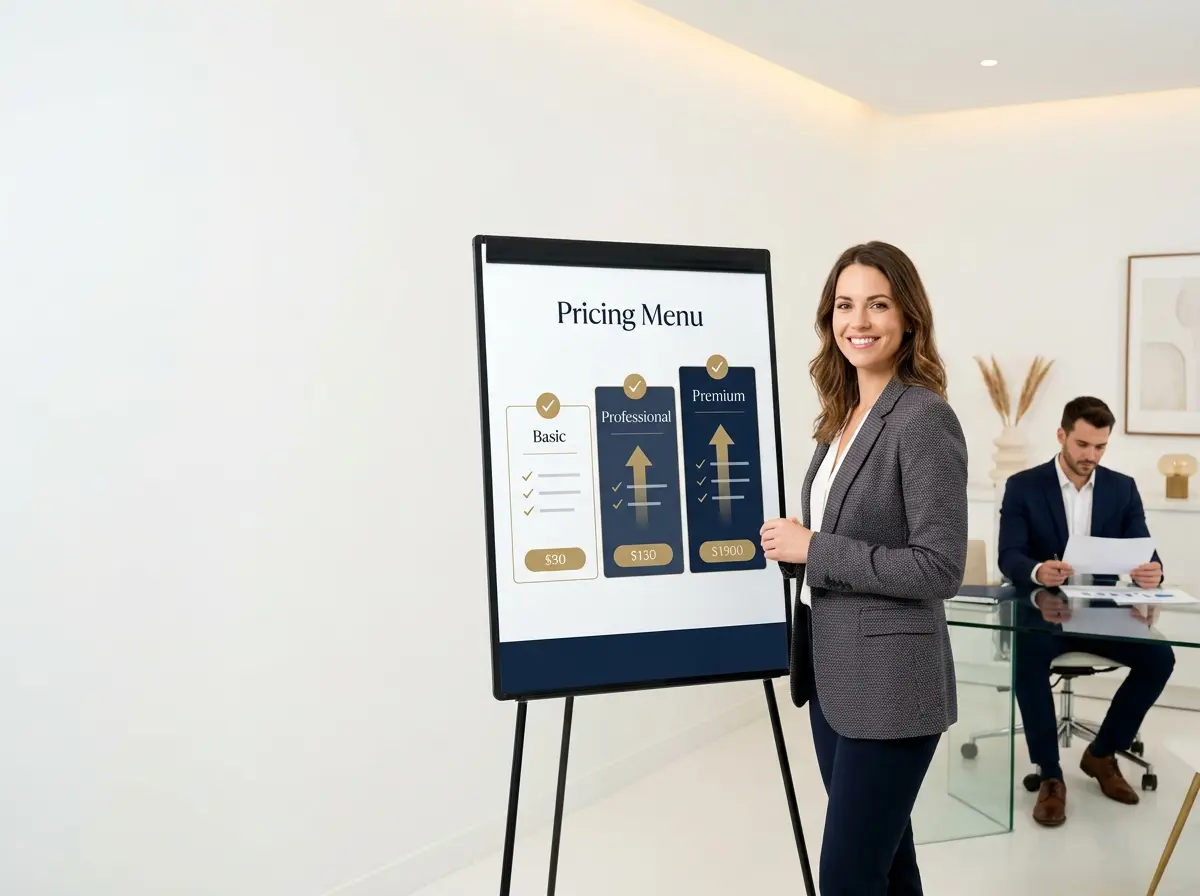
Why Your Menu of Services Might Be Leaving Money on the Table
Let's be honest — most business owners spend a tremendous amount of time perfecting what they do, and surprisingly little time thinking about how they present what they do. You've got great services. You've got happy customers. And yet, at the end of every month, you look at your revenue and think, "There has to be more." There is. And it's probably sitting right inside your existing service menu, waiting to be structured properly.
Building a tiered menu of service packages isn't just a pricing strategy — it's a psychology play. When done right, it guides customers toward higher-value options naturally, without anyone feeling pressured or sold to. Think of it as the difference between handing someone a phone book and handing them a curated restaurant menu. One overwhelms; the other sells. In this post, we'll break down exactly how to build a service package menu that does the heavy lifting of upselling for you — and a few tools that can help deliver that pitch consistently every single time.
The Art and Science of Tiered Pricing
Tiered pricing is one of the oldest tricks in the book — and it works precisely because humans are predictably irrational. We anchor to the first price we see, we avoid extremes, and we love feeling like we're getting a deal. Understanding these tendencies lets you design a menu that subtly guides customers to exactly where you want them.
The Classic Three-Tier Structure (Good, Better, Best)
If you've ever noticed that most software subscriptions offer three plans — Basic, Pro, and Enterprise — it's not a coincidence. The three-tier model exploits what behavioral economists call the compromise effect: most people will choose the middle option because it feels safe and reasonable. Studies suggest that the middle tier captures the majority of purchases in most structured pricing scenarios.
Here's how it works in practice. Say you run a car detailing shop. Instead of listing 12 à la carte services with prices that make customers' eyes glaze over, you offer:
- The Quick Shine — exterior wash, window clean, tire shine. Fast, affordable, no fuss.
- The Full Detail — everything above plus interior vacuum, leather conditioning, and odor treatment.
- The VIP Treatment — the full detail plus paint correction, ceramic coating, and a complimentary air freshener that actually smells like something pleasant.
Your goal is to make the middle tier feel like an obvious win. Price the entry tier just low enough to attract, price the top tier just high enough to make the middle look like a steal. Most customers will land in the middle — and that's exactly where you want them.
Naming Your Tiers Like a Marketer, Not an Accountant
Please, for the love of your bottom line, do not name your packages "Plan A," "Plan B," and "Plan C." Names carry meaning, and meaning drives decisions. A spa calling its top package the Renewal Experience will outsell one calling it Premium Package every single time. Names create identity. Customers don't just buy a service — they buy a version of themselves.
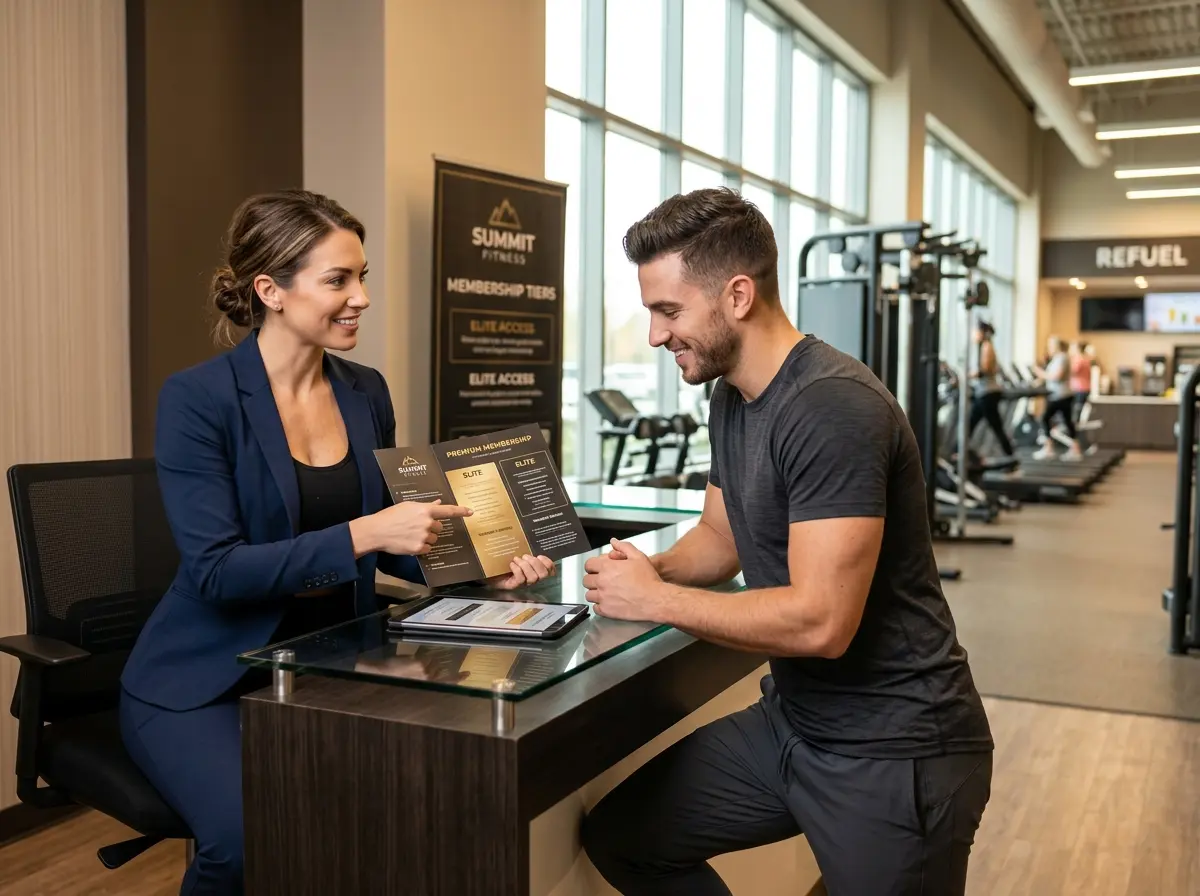
Think about what outcome or feeling each tier delivers, and name it accordingly. A law firm might use Essential Consultation, Full Representation, and Priority Partnership. A gym might offer Starter, Committed, and Elite. The words do psychological work before the customer even reads the description. Don't leave that work undone.
Anchoring with Your Premium Tier
Here's a counterintuitive tip: your top-tier package isn't necessarily meant to be your biggest seller — it's meant to make everything else look affordable. This is called price anchoring, and it's devastatingly effective. When a customer sees a $500 premium package first, your $250 mid-tier suddenly feels like a reasonable, even modest investment. Present them in reverse order, and the $250 option might feel expensive.
Always lead with your premium tier in your marketing materials and in-person presentations. It resets the customer's internal price reference point and makes the upsell feel like they're doing themselves a favor — which, frankly, they probably are.
Letting Technology Do the Upselling for You
Here's the part where we address the elephant in the room: your staff is inconsistent. Not because they're bad people — they're probably lovely — but because humans have off days, get busy, forget to mention the upgrade, or feel awkward pushing the premium option. The result? Upsell opportunities slip through the cracks constantly.
A Consistent Pitch, Every Single Time
This is where Stella, the AI robot employee and phone receptionist, becomes genuinely useful for businesses running tiered service menus. Positioned as a kiosk inside your physical location, Stella proactively engages every customer who walks by — explaining your service packages, highlighting current promotions, and naturally steering conversations toward higher-value offerings. She doesn't have bad days. She doesn't forget to mention the VIP tier. She doesn't get distracted by a text message.
On the phone side, Stella answers every call 24/7 with the same polished, informed pitch she delivers in person — describing your packages, answering questions about what's included, and recommending upgrades based on what callers are looking for. When a customer calls asking about your basic service, Stella doesn't just answer the question — she mentions what they'd get if they stepped up to the next tier. That's a quiet, consistent upsell machine running around the clock.
Designing Your Packages to Naturally Invite Upgrades
A well-structured service menu doesn't just present options — it creates a natural gravitational pull toward the upgrade. The goal is to make each tier feel genuinely valuable on its own, while making the step up feel almost obvious.
The "One Irresistible Add" Principle
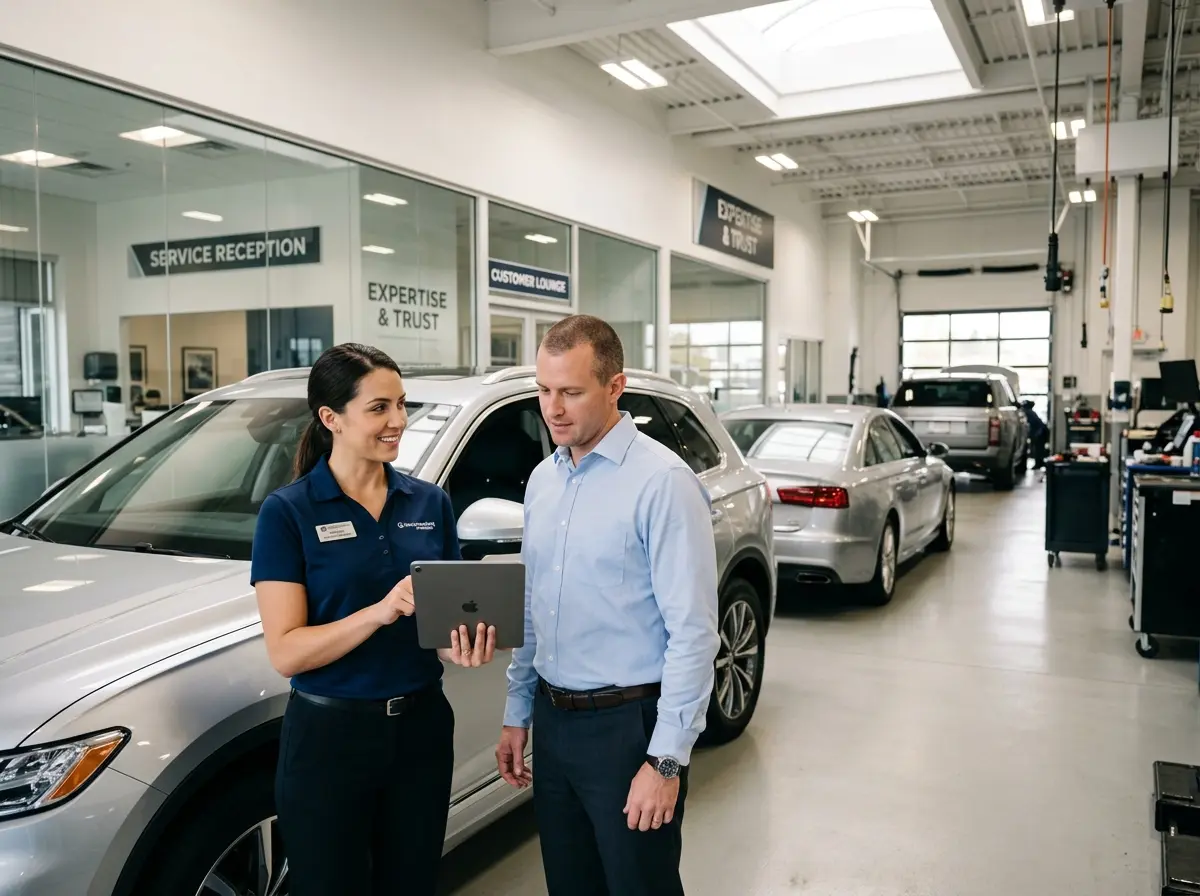
Each tier above the entry level should include at least one feature that customers genuinely want but wouldn't necessarily think to ask for separately. This is the item that makes someone pause mid-comparison and think, "Oh, I actually do want that." For a salon, it might be a complimentary deep conditioning treatment included in the mid-tier. For a medical spa, it might be a follow-up consultation included in the premium package. For an auto shop, it might be a free multi-point inspection bundled into the higher service tier.
The key is that the add-on should feel like a bonus, not padding. If customers perceive filler, they won't value it. If they perceive genuine usefulness, they'll upgrade to get it — and feel good about the decision.
Presenting Packages Visually and Verbally
How your packages are presented matters as much as what's in them. A side-by-side comparison — whether on a printed menu, a website, or a digital display — makes it easy for customers to see what they're gaining as they move up. Use checkmarks generously. Highlight the mid-tier with a subtle "Most Popular" badge. Bold the key differentiators. The goal is to reduce cognitive load: the easier it is to understand the difference, the faster the decision gets made.
Verbal presentation matters too. Train your team (and program your AI tools) to present packages in order from premium to basic, briefly describe what each includes, and then ask a guiding question: "Most of our clients go with the Full Detail — are you looking for something more quick and casual, or would you like to take care of everything in one visit?" That framing does quiet, effective selling without anyone feeling manipulated.
Building in Natural Upsell Moments During the Sale
Even after a customer selects a package, the conversation isn't over. Smart businesses identify two or three natural moments to introduce a small add-on or upgrade — not as a hard sell, but as a genuine "by the way." A gym completing a membership signup might mention personal training sessions. A spa finishing a booking might note that an aromatherapy upgrade is available for an additional $15. A law firm wrapping up an intake call might mention their priority response retainer.
The trick is timing and framing. Present the add-on when the customer is already in a "yes" mindset — right after they've committed to a purchase — and position it as something that enhances what they've already chosen. Research consistently shows that post-purchase upsells convert at significantly higher rates than pre-purchase attempts, simply because the buying decision has already been made and the customer is receptive.
Quick Reminder About Stella
Stella is an AI robot employee and phone receptionist built for businesses of all sizes — from brick-and-mortar shops to solopreneurs who need a professional presence on the phone. She stands inside your store as a friendly, knowledgeable kiosk, and answers your business phone calls 24/7 with the same expertise. At just $99/month with no upfront hardware costs, she's one of the most affordable ways to ensure your service packages are presented — and upsold — consistently to every single customer.
Build the Menu, Then Let It Work for You
If you've read this far, you already know more about service package psychology than most of your competitors. Now it's time to put it into practice. Here's a simple action plan to get started:
- Audit your current services and identify natural groupings that could form a three-tier structure.
- Name your tiers based on outcomes and identity, not generic labels.
- Identify one irresistible add for each tier above entry level — something customers genuinely want.
- Redesign your presentation — whether in-store, on your website, or over the phone — to lead with the premium tier and use visual comparison.
- Script two or three natural upsell moments in your customer interaction flow, and make sure every touchpoint (human or AI) delivers them consistently.
The goal isn't to squeeze more money out of customers who don't want to spend it — it's to make sure the customers who would happily pay more actually get the chance to do so. A well-designed service menu is a gift to your customers as much as it is to your revenue. It clarifies their options, helps them make confident decisions, and ensures they leave feeling like they got exactly what they came for — maybe even a little more.
And if you want a reliable way to present that menu consistently across every customer interaction without relying entirely on human memory and mood, well — you know where to look.