Introduction: The Phone Call That Never Gets Answered
Picture this: A potential patient has been putting off scheduling that follow-up appointment for three weeks. They finally work up the motivation, pick up the phone, and call your office. It rings. And rings. And rings some more. Then voicemail. They hang up — because nobody leaves voicemails anymore — and Google the next clinic on the list. You just lost a patient before they ever walked through your door.
In the medical world, phone management isn't just a customer service issue — it's a revenue issue, a retention issue, and frankly, a reputation issue. Studies suggest that nearly 67% of patients who can't reach a medical office on the first try will not call back. They'll find someone who answers. And in a competitive healthcare landscape where patient acquisition costs are rising and reviews are everything, that missed call is a lot more expensive than it looks.
The good news? This is a solvable problem. The even better news? You don't have to hire a small army of receptionists to solve it. This guide walks you through why medical offices bleed patients through phone mismanagement, what best practices actually look like, and how modern tools can plug the leaks — without breaking your budget or your sanity.
Why Medical Offices Struggle with Phone Management
The Front Desk Is Already Doing Five Jobs
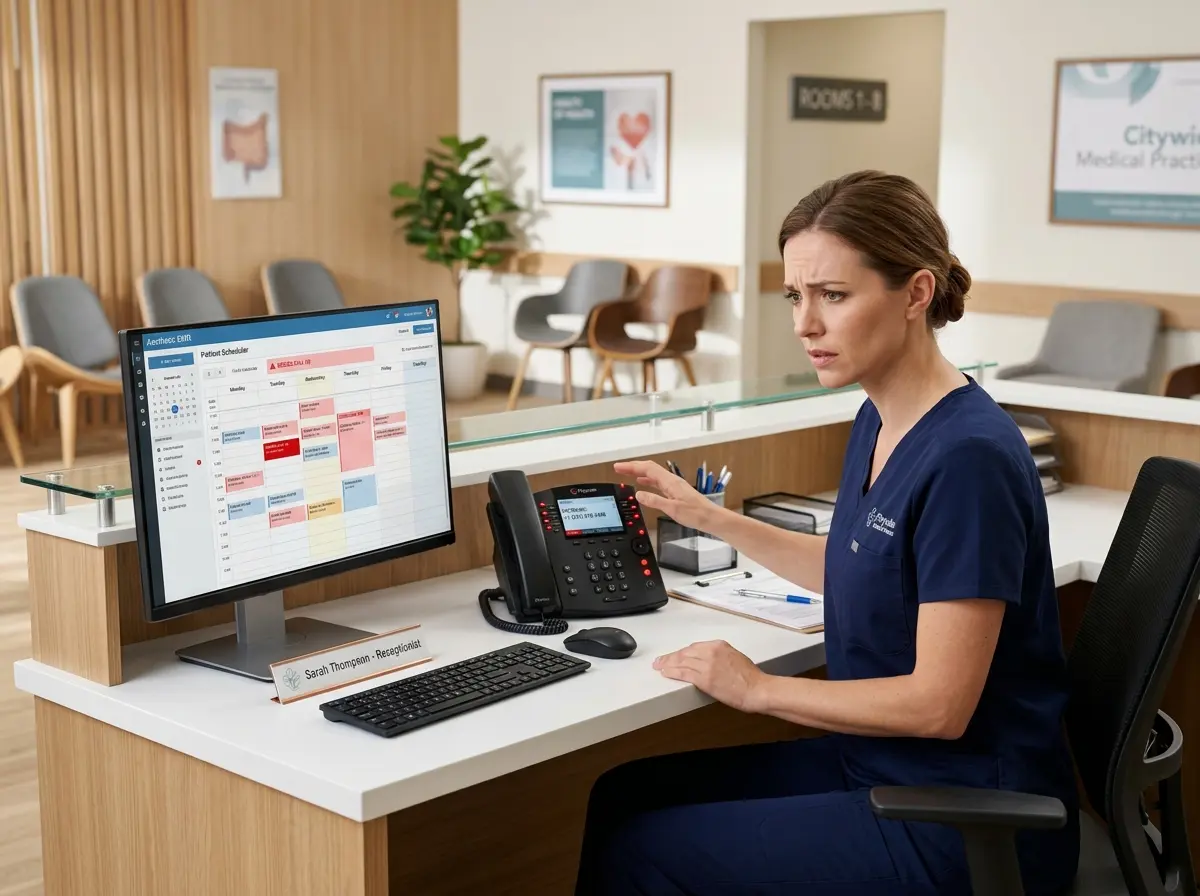
Let's be honest about what your front desk staff is juggling at any given moment: checking in patients, verifying insurance, answering questions from the person standing right in front of them, managing a scheduling system, handling billing inquiries, and — oh right — answering the phone. Expecting one or two people to do all of this flawlessly during peak hours is less of a staffing strategy and more of a workplace stress experiment.
The result is predictable: calls go unanswered, callers are put on hold for uncomfortable stretches of time, and the quality of information relayed over the phone becomes inconsistent at best. A patient who calls to ask about accepted insurance plans might get three different answers on three different days, depending on who picks up. That's not your staff's fault — it's a systems problem dressed up as a people problem.
After-Hours Calls Are a Black Hole
Medical offices don't close, but most front desks do. Patients — especially working adults — are most likely to think about scheduling appointments in the evenings or on weekends, which is exactly when no one is available to help them. Most offices rely on voicemail for after-hours calls, but as we've established, the modern patient has a complicated relationship with voicemail. Specifically, they don't leave them.
Even when patients do leave messages, the follow-up process is inconsistent. Messages get missed, callbacks happen too late, and by the time someone from your office reaches out, the patient has already scheduled elsewhere. Your after-hours phone experience is, for many potential patients, their first impression of your practice — and an unanswered ring or a generic voicemail greeting doesn't exactly scream "compassionate, organized care."
Hold Times and Call Quality Erode Patient Trust
There is a special kind of frustration reserved for being put on hold by a medical office. Patients calling about test results, medication questions, or appointment concerns are often already anxious. Sitting on hold for five minutes while a looping music track plays is not a calming experience. Research from the healthcare industry indicates that patients who experience long hold times are significantly more likely to leave negative reviews, even if their actual care was excellent. The phone call is part of the patient experience whether you treat it that way or not.
Modern Solutions That Actually Work
How AI Receptionists Are Changing the Game for Medical Offices
This is where technology steps in — not to replace your staff, but to handle the volume they simply can't. Stella, an AI robot employee and phone receptionist, answers calls 24/7 with consistent, accurate information about your practice. She can handle appointment inquiries, share information about services, collect patient intake information conversationally over the phone, and forward calls to human staff when the situation genuinely warrants it. No hold music. No missed calls. No "I'll have to check on that and call you back."
For medical offices with a physical location, Stella also operates as an in-person kiosk, greeting patients as they arrive and answering common questions so your front desk can focus on tasks that require a human touch. Her built-in CRM automatically logs patient interactions, generates AI-powered profiles, and stores intake form data — so when a patient does connect with your human staff, the groundwork is already done. At $99/month with no hardware costs upfront, she's significantly more affordable than hiring even part-time reception help.
Phone Management Best Practices for Medical Offices
Set Clear Call Routing Protocols
Not every call requires your most experienced staff member, and not every call should go to voicemail. Establishing a tiered call routing system ensures that routine inquiries — hours, directions, general service questions, appointment availability — are handled quickly and efficiently, while urgent clinical matters get escalated appropriately. Map out the categories of calls your office receives and assign a clear path for each. This alone can dramatically reduce the burden on your front desk and improve response times.
Train all staff on these protocols consistently and revisit them regularly. As your practice grows or your services change, your call routing logic should evolve with it. What worked for a two-provider practice doesn't necessarily scale to eight providers without intentional adjustment.
Collect Information Before the Call Ends
One of the biggest inefficiencies in medical office phone management is the callback cycle — where a patient calls, leaves partial information, someone calls back, the patient doesn't answer, and the cycle continues for days. Breaking this cycle requires capturing complete, structured information during the initial contact. This means using intake forms, whether during a phone call, on your website, or at an in-office kiosk, to collect name, date of birth, reason for visit, insurance information, and preferred appointment times before the conversation ends.
When your staff receives a complete intake record before they ever speak to a patient, scheduling becomes faster, billing preparation improves, and the patient feels like a known individual rather than a stranger starting from scratch every time they interact with your office.
Monitor, Measure, and Improve
You cannot manage what you don't measure. Most medical offices have no idea how many calls they miss each week, what the average hold time is, or which hours are peak call volume. This isn't a criticism — it's an opportunity. Implementing even basic call tracking gives you actionable data: when to staff up, which questions come up repeatedly (and could be answered proactively on your website or by an AI), and where patients are falling through the cracks.
Use this data to make informed staffing decisions, refine your call scripts, and identify training opportunities. A monthly review of phone performance should be as routine as reviewing appointment fill rates or billing cycles. Your phones are a direct line to your revenue — treat them accordingly.
Quick Reminder About Stella
Stella is a friendly AI robot employee and phone receptionist designed for businesses of all sizes, including medical offices. She answers calls around the clock, greets patients at the kiosk in your waiting area, collects intake information, manages a built-in CRM, and keeps your team informed with AI-generated summaries and push notifications — all for $99/month with no upfront hardware costs. She doesn't call in sick, she doesn't put people on hold indefinitely, and she never has an off day.
Conclusion: Stop Losing Patients to a Ringing Phone
The path forward for medical offices isn't complicated, but it does require intentionality. Start by auditing your current phone situation honestly: How many calls are you missing? What happens to after-hours inquiries? How long do patients wait on hold, and what information are they getting when they do reach someone? The answers to these questions will tell you exactly where to focus first.
From there, implement structured call routing, invest in intake systems that capture complete information upfront, and seriously consider how AI-powered tools can extend your capacity without expanding your payroll. Patients today have options, and they will exercise them without hesitation if your phone experience fails them. The practices that thrive are the ones that treat every call — answered or missed — as a data point worth caring about.
Your front desk staff is talented, but they're not superhuman. Give them the systems and support they need, plug the after-hours gap with technology that actually works, and watch how quickly a frustrating operational problem becomes a competitive advantage. The phone is ringing. Make sure someone — or something — answers it.