The Dusty Corner That Could Actually Make You Money
Every furniture store has one. That sad little corner in the back — past the sectionals and the dining sets — where the scratched floor model lives, the returned ottoman with a mysterious stain, and the discontinued accent chair that nobody wanted at full price. You know the one. Maybe you call it the "clearance section." Maybe you call it the "as-is area." Maybe you just call it a problem.
Here's the thing: it doesn't have to be a problem. A well-run as-is section can generate meaningful revenue from inventory you've essentially written off, move product that's taking up valuable floor space, and — believe it or not — become one of the most trafficked areas of your store. Bargain hunters are a loyal, vocal, and surprisingly large segment of furniture shoppers. Give them a reason to come in, and they'll bring their friends.
Running a profitable as-is section isn't about dumping damaged goods in a corner and hoping for the best. It's about strategy, presentation, pricing, and a little bit of retail psychology. Let's break it down.
Setting Up Your As-Is Section for Success
The difference between an as-is section that moves merchandise and one that just collects dust often comes down to one thing: intentionality. Customers can tell the difference between a section that's been curated with care and a pile of stuff the store owner couldn't be bothered to deal with. Aim for the former.
Location, Signage, and Presentation
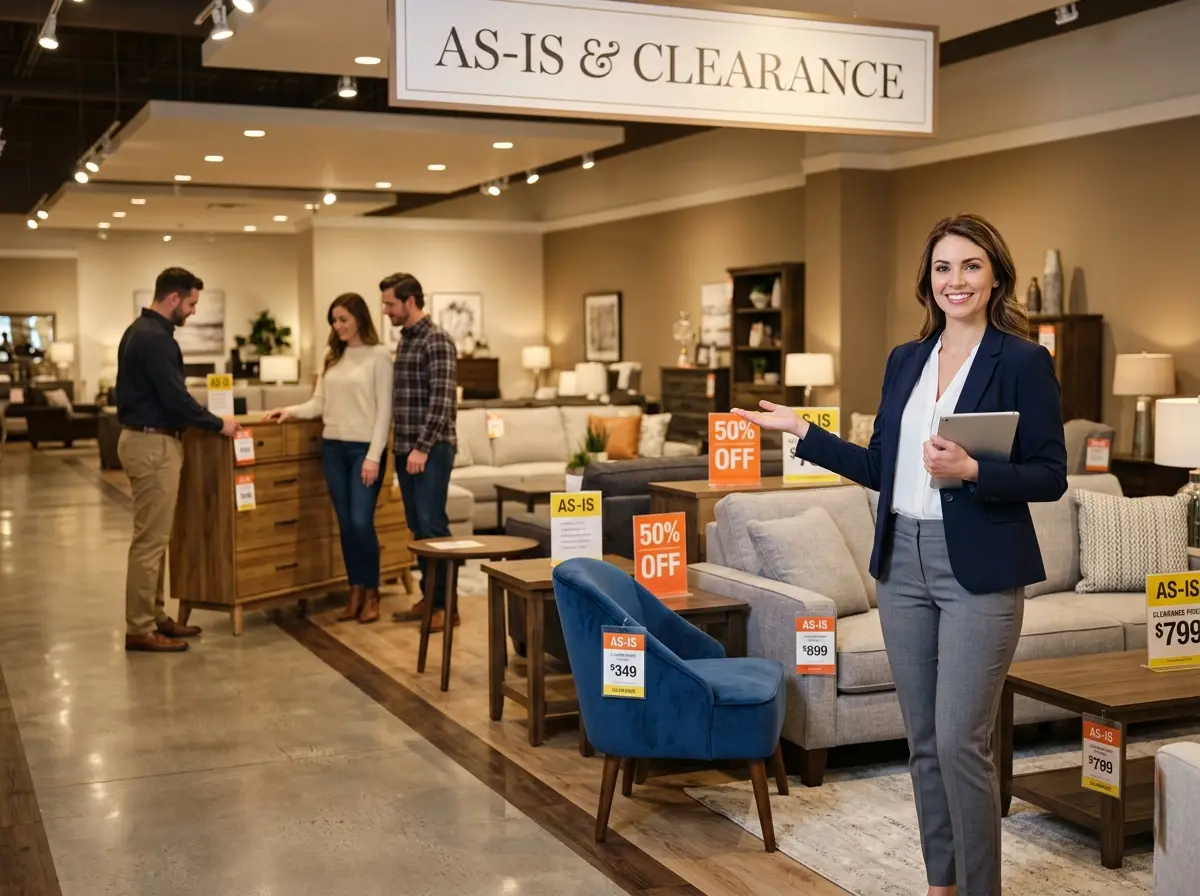
Don't banish your as-is section to the dark back corner like it's in timeout. Position it in a high-traffic area — ideally somewhere customers naturally walk through on their way to or from the main showroom floor. Visibility drives sales. If customers don't know it exists, it doesn't exist.
Invest in clear, bold signage. Something like "As-Is: Final Sale — Real Deals, Real Savings" sets expectations immediately and creates excitement. Customers walking in already know what they're getting into, which dramatically reduces buyer hesitation and post-purchase complaints. Tag each piece individually with a brief, honest description of any flaws — a small scratch on the left leg, minor fabric pilling, discontinued color — along with the original price crossed out and the as-is price displayed prominently. Transparency here is your best friend.
Treat the section like a real part of your store. Keep it clean, organized, and merchandised. If you're selling a scuffed coffee table, style it with a small plant or a stack of books anyway. Shoppers buy with their emotions first and their logic second. Help them visualize the piece in their home, flaws and all.
What Belongs in the As-Is Section (and What Doesn't)
Not everything damaged belongs in as-is, and not everything in as-is needs to be damaged. Good candidates for the section include floor models being rotated out, customer returns in resellable condition, discontinued SKUs with limited quantities, items with minor cosmetic defects, and delivery refusals that came back in decent shape.
What doesn't belong: anything structurally unsafe, anything so damaged it's embarrassing to display, and anything that would require a customer to make a significant repair investment to use. That stuff should be donated, recycled, or written off entirely. Putting unsellable inventory in your as-is section doesn't generate revenue — it just makes the section look bad and undermines customer trust in everything else.
Set an internal standard. A simple rule like "if it's 70% of its original condition or better, it goes to as-is" gives your team a clear framework and keeps quality consistent.
Pricing Strategy That Actually Moves Product
Pricing as-is inventory is part science, part gut feeling. The goal is to create a genuine value perception — customers should feel like they're getting a deal, because they actually are. A common mistake is pricing as-is items too close to full retail. If a floor model sofa retails for $1,200 and you're offering it at $1,050, nobody's excited. Price it at $699 and suddenly there's urgency.
A solid starting point is 40–60% off retail for items with visible cosmetic damage, and 20–35% off for discontinued or lightly used items with no significant flaws. You can also create time-based markdown schedules — if an as-is item hasn't sold within 30 days, drop it another 10%. This keeps the section fresh and gives regular visitors a reason to come back and check for new markdowns.
Driving Traffic to Your As-Is Section
Even the most beautifully organized, perfectly priced as-is section won't perform if nobody knows about it. This is where marketing and customer engagement come in — and where a little technological help goes a long way.
Promote It Like It Deserves to Be Promoted
Your as-is section is a legitimate selling point, so treat it like one. Feature new additions on social media — a quick photo of a barely-scratched sectional at 50% off will get engagement. Send email blasts to your subscriber list when you stock the section with fresh items. Run occasional "As-Is Weekend" events where you add new pieces and offer an extra discount for a limited time. Bargain hunters are loyal — if they know you consistently offer real deals, they'll check in regularly and refer others.
In-store, train your sales staff to mention the as-is section proactively. If a customer is browsing a sofa that's outside their budget, a well-timed "we actually have a floor model of something similar in our as-is section at nearly half the price" can save a sale that otherwise walks out the door.
Let Technology Do Some of the Talking
Here's where smart tools can make a real difference. Stella, the AI robot employee and phone receptionist, is a surprisingly effective asset for a furniture retailer running an active as-is section. Stationed as a kiosk in your store, Stella greets customers who walk by, proactively mentions current deals and promotions — including whatever's new in your as-is section — and answers questions about products, pricing, and policies without pulling your sales staff away from active customers.
On the phone side, Stella answers calls 24/7 with the same knowledge she uses in-store, which means a customer calling after hours to ask "do you have any as-is dining sets right now?" gets a real, helpful answer instead of a voicemail. For a section that thrives on urgency and deal-seekers, that kind of around-the-clock engagement matters more than most store owners realize.
Policies, Staff Training, and Keeping It Legal
A profitable as-is section runs on clarity. Vague policies create disputes, disputes create refunds, and refunds defeat the entire purpose of moving discounted inventory. Get this part right from the start.
Write a Clear, Enforced Final Sale Policy
As-is means as-is. Every piece in the section should be clearly marked as final sale — no returns, no exchanges. This needs to be on the price tag, on the receipt, and communicated verbally by your staff at the point of sale. Consider having customers sign a brief acknowledgment form for larger purchases confirming they understand the item's condition and that the sale is final.
This isn't about being difficult — it's about protecting your business and setting honest expectations. Most customers shopping an as-is section already understand the deal. The ones who don't are the ones who cause headaches, and clear upfront communication eliminates most of those situations before they start.
Train Your Team to Sell Imperfection Confidently
There's an art to selling flawed merchandise without being apologetic about it. Train your staff to describe defects matter-of-factly and then pivot to value. "This dresser has a small chip on the back corner — it's barely noticeable once it's against a wall, and you're saving $400 compared to the new version" is a far more effective pitch than "it's damaged but it's cheap." Confidence sells. Framing matters. A team that's uncomfortable selling as-is product will quietly avoid the section, and that's revenue walking out the door.
Stay Compliant with Consumer Protection Laws
Final sale policies are generally enforceable, but they have limits. Depending on your state or country, there may be regulations around disclosing known defects, implied warranties, or consumer rights for certain types of goods. This is especially relevant if you're selling items that could have safety implications. Consult with a local attorney or your industry association to make sure your as-is policies are airtight and compliant. A profitable section is only profitable if you're not paying it back in legal fees down the road.
Quick Reminder About Stella
Stella is an AI robot employee and phone receptionist built for businesses like yours — she works in-store as a friendly kiosk that engages customers and promotes your deals, and she answers phone calls 24/7 so you never miss a lead. At $99/month with no hardware costs, she's one of the lowest-effort, highest-availability team members you'll ever hire. She doesn't take breaks, doesn't call in sick, and never forgets to mention the as-is section.
Turn That Dusty Corner Into a Revenue Driver
The as-is section isn't a consolation prize — it's an opportunity. Approached with the right strategy, it clears your floor of stagnant inventory, attracts deal-seeking customers who often buy more than just the discounted item, and contributes meaningfully to your bottom line without requiring a single new product purchase.
Here's your action plan to get started or level up what you already have:
- Audit your current inventory and identify everything that qualifies for as-is based on a clear internal condition standard.
- Designate and design the space — visible location, professional signage, individual item tags with honest condition notes and pricing.
- Set your pricing strategy with real markdowns and a scheduled markdown cadence for items that don't sell within 30 days.
- Build your promotion plan — social media posts, email campaigns, in-store staff prompts, and occasional events to drive traffic.
- Nail down your policy — final sale language on every tag, receipt, and conversation, with legal compliance confirmed.
- Train your team to talk about as-is inventory with confidence, not apology.
The furniture store owners who treat their as-is section as an afterthought leave real money on the table every single month. The ones who treat it as a curated, promoted, customer-friendly destination? They're turning damaged goods into steady, predictable revenue — and building a loyal base of repeat shoppers who come back just to see what's new in the back corner. That's a pretty good return on a section that used to just collect dust.