Introduction: Herding Technicians Is Basically a Full-Time Job
Running an HVAC company means you're always juggling — dispatch schedules, service calls, equipment orders, customer complaints, and the ever-present mystery of why one of your technicians hasn't checked in since 10 a.m. Managing a field service team is one of the most operationally complex challenges in the trades, and yet somehow, most HVAC business owners are expected to figure it out on the fly between answering phones and writing invoices.
Here's the reality: field service management is where HVAC companies either scale or stall. A disorganized team leads to missed appointments, frustrated customers, and technicians burning out because no one gave them the right information before the job. On the other hand, a well-managed team means faster jobs, happier customers, and a business that can grow without the owner losing their mind.
According to a ServiceTitan industry report, HVAC companies that implement structured field service management processes see up to a 30% increase in technician productivity and significantly lower customer churn. So yes — this stuff matters. This guide breaks down exactly how to build, manage, and optimize your field service team without turning yourself into a full-time air traffic controller.
Building the Foundation: Scheduling, Dispatching, and Communication
Before you can manage a team effectively, you need to get the basics running like a well-maintained HVAC unit — quietly, efficiently, and without anyone noticing until it stops working. Scheduling and dispatching are the backbone of field service operations, and doing them poorly creates a domino effect of problems that shows up in your reviews, your revenue, and your technicians' morale.
Smart Scheduling That Accounts for Reality
One of the most common mistakes HVAC owners make is scheduling jobs back-to-back with zero buffer time. On paper, it looks efficient. In practice, it means your technician is perpetually running late, customers are annoyed before the work even starts, and your team feels like they're always failing to keep up. Build in realistic travel time using route optimization tools — software like ServiceTitan, Jobber, or Housecall Pro can map technician locations and assign jobs based on proximity, dramatically reducing drive time and improving on-time arrival rates.
Also, not all jobs are created equal. A simple filter replacement and a full system installation are not "one hour" and "three hours" respectively — they're estimates that vary wildly based on equipment age, access, and whatever surprises are hiding inside that attic. Train your dispatch team to ask better intake questions so jobs are allocated the right amount of time from the start.
Dispatching Based on Skill, Not Just Availability
Sending the nearest available technician sounds efficient until that technician has never touched a commercial refrigeration unit and the customer is a restaurant waiting on a walk-in cooler repair. Skill-based dispatching means assigning jobs based on technician certifications, experience level, and specialty — not just who's closest or who hasn't been assigned yet.
Maintain a clear internal profile for each technician that includes their certifications (EPA 608, NATE, etc.), equipment specialties, and job performance history. Your dispatching software should reflect this so your dispatcher isn't relying on memory or sticky notes to make these calls.
Communication Protocols That Actually Get Followed
Every HVAC company has a communication system. Half of them look like a group text thread with 47 unread messages. Establish clear, consistent communication protocols — a dedicated channel for dispatch updates, a separate one for urgent issues, and a check-in requirement at job start and job completion. When your technicians know exactly what's expected and when, compliance goes up dramatically and you spend less time chasing updates.
Keeping the Office Running While Your Team Is in the Field
Here's something HVAC business owners often underestimate: while your technicians are out doing the actual work, the phones are ringing, customers are asking questions, and your front-of-house operation either supports your team or undermines them. A missed call during a busy season isn't just lost revenue — it can be a lost customer who called your competitor next.
How Stella Can Support Your HVAC Business
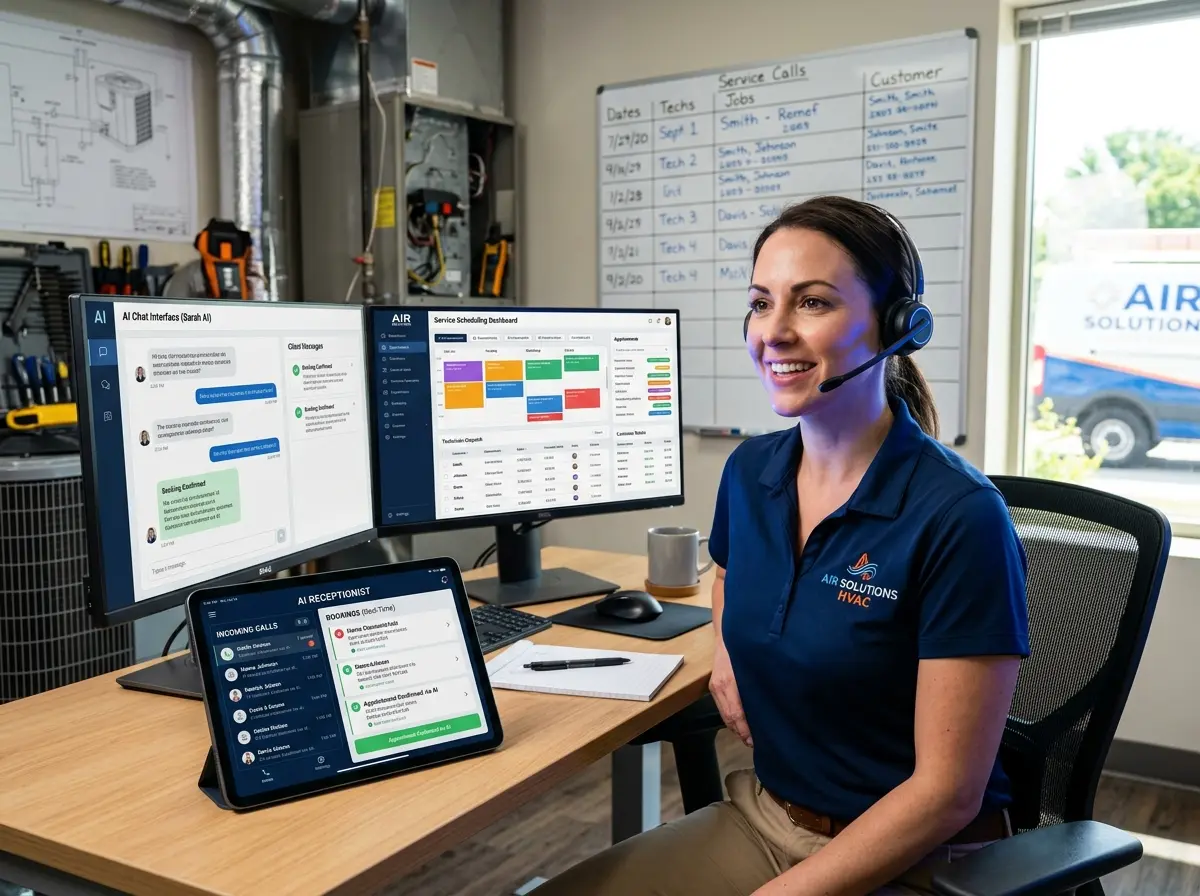
This is where Stella becomes genuinely useful for HVAC companies. Stella is an AI robot employee and phone receptionist that answers calls 24/7, collects customer information through conversational intake forms, and routes calls to the right staff member based on conditions you configure. For an HVAC company, that means after-hours emergency calls get handled professionally, customer intake (address, unit type, issue description) gets captured automatically before it ever reaches your dispatcher, and no lead falls through the cracks because everyone was on the job site.
Stella also includes a built-in CRM with custom fields, tags, notes, and AI-generated customer profiles — so the information collected during that intake call is already organized and ready for your dispatcher by the time they start their morning. For HVAC companies managing dozens of customer relationships and repeat service accounts, that kind of automatic organization saves hours every week.
Performance Management: Getting the Most from Your Technicians
Managing field technicians is different from managing office staff — you can't tap someone on the shoulder when something's off. Performance management in the field requires clear metrics, regular feedback loops, and a culture where technicians feel supported rather than surveilled. Done right, it drives accountability without resentment.
Metrics That Actually Tell You Something
Track the numbers that reflect real performance, not just output volume. Key metrics for HVAC field teams include:
- First-time fix rate: The percentage of jobs resolved on the first visit. Industry benchmark is around 75–80%. If yours is lower, you likely have a parts inventory or diagnostic training problem.
- Average job duration vs. estimated duration: Consistently running long may indicate skill gaps or poor job scoping at intake.
- Customer satisfaction scores: Post-service surveys via text or email are easy to automate and give you direct feedback on individual technicians.
- Upsell conversion rate: If your technicians are trained to recommend maintenance agreements or equipment upgrades, track how often those conversations convert.
Review these metrics monthly with your team leads, and make them visible. Technicians respond well to data when it's framed as a tool for improvement rather than a scorecard for punishment.
Training as an Ongoing Investment, Not a One-Time Event
The HVAC industry evolves — new refrigerants, new smart thermostat integrations, new energy efficiency standards. A technician who was fully trained three years ago may have significant gaps today. Build a regular training calendar that includes both technical skills and soft skills like customer communication, upselling service agreements, and professionalism on the job.
Consider pairing newer technicians with senior team members for a defined mentorship period. This not only accelerates skill development but also builds team cohesion — which matters more than most managers realize. Technicians who feel connected to their team are far less likely to take their certifications to your competitor across town.
Retention: Because Replacing a Good Technician Is Expensive and Annoying
Technician turnover in the HVAC industry is notoriously high, and replacing a skilled tech costs anywhere from 50% to 200% of their annual salary when you factor in recruiting, onboarding, and lost productivity. Retention isn't just about pay — though competitive pay absolutely matters. It's about clear career paths, recognition, schedule predictability, and feeling like the company has their back.
Simple wins: thank technicians publicly for great customer feedback, give advance notice on schedule changes, invest in quality tools and vehicles, and actually listen when they flag operational problems. The technicians in the field often know exactly what's broken about your processes — ask them.
Quick Reminder About Stella
Stella is an AI robot employee and phone receptionist available for just $99/month with no upfront hardware costs. She answers calls around the clock, collects customer intake information, manages your CRM, and keeps your front-of-house running smoothly while your technicians focus on the actual work. For HVAC companies that can't afford to miss a call during peak season — or any season — she's worth a look.
Conclusion: A Well-Run Field Team Is a Competitive Advantage
Managing a field service team well is not glamorous work. It's process documentation, smart dispatching, consistent communication, and ongoing performance conversations — none of which show up on a highlight reel. But the HVAC companies that get this right don't just survive busy seasons; they build reputations that generate referrals, retain customers year over year, and attract better technicians because word gets around.
Here's where to start if you want to tighten things up:
- Audit your scheduling process. Are jobs allocated realistically? Is dispatch skill-based? Fix this first — it affects everything downstream.
- Establish communication protocols and enforce them consistently. Chaos in communication is a management problem, not a technician problem.
- Start tracking three to five performance metrics for your team and review them monthly. You can't improve what you're not measuring.
- Have an honest retention conversation. When did you last ask your best technician what would make their job better?
- Shore up your phone and intake process so no lead or service call falls through the cracks while your team is in the field.
The field service management game isn't won with one big move — it's won with a hundred small operational decisions made consistently over time. Start with the basics, build the systems, and give your team what they need to do their best work. Your customers will notice, your technicians will stick around, and you might — just might — get to take a Saturday off without your phone exploding.