Why Your Auto Shop Might Be Losing Half Its Potential Customers (And How to Fix It)
Here's a fun statistic to ruin your morning coffee: women influence over 85% of all consumer purchasing decisions and account for roughly 65% of auto service customers. Yet somehow, a significant chunk of auto shops still manage to make women feel about as welcome as a flat tire on a Monday morning. If your shop is one of them — even unintentionally — you're leaving a substantial amount of revenue on the table every single month.
The good news? Creating a female-friendly auto shop environment isn't about hanging a few potted plants in the waiting room and calling it a day. It's about building genuine trust, communicating with respect, and delivering an experience so consistently excellent that your female customers don't just come back — they tell everyone they know. This guide will walk you through exactly how to make that happen, from the first phone call to the final invoice.
Building a Foundation of Trust and Transparency
Trust is the currency of the auto repair industry, and historically, it's been in short supply where female customers are concerned. Studies have shown that over 40% of women feel they've been talked down to or overcharged at an auto shop. That's not a small problem — that's a reputation crisis waiting to happen. But shops that take transparency seriously consistently outperform their competitors in customer retention across all demographics, not just women.
Speak Like a Human, Not a Manual
When a customer comes in asking why her car is making "that weird clunking sound," launching into a ten-minute monologue about suspension geometry and CV axle tolerances is not helpful — it's alienating. Train your staff to explain issues in plain language, use analogies where appropriate, and always check in with the customer to make sure they actually understand what's being communicated. A simple "Does that make sense?" goes a long way. And no, explaining something slowly and loudly doesn't count as plain language.
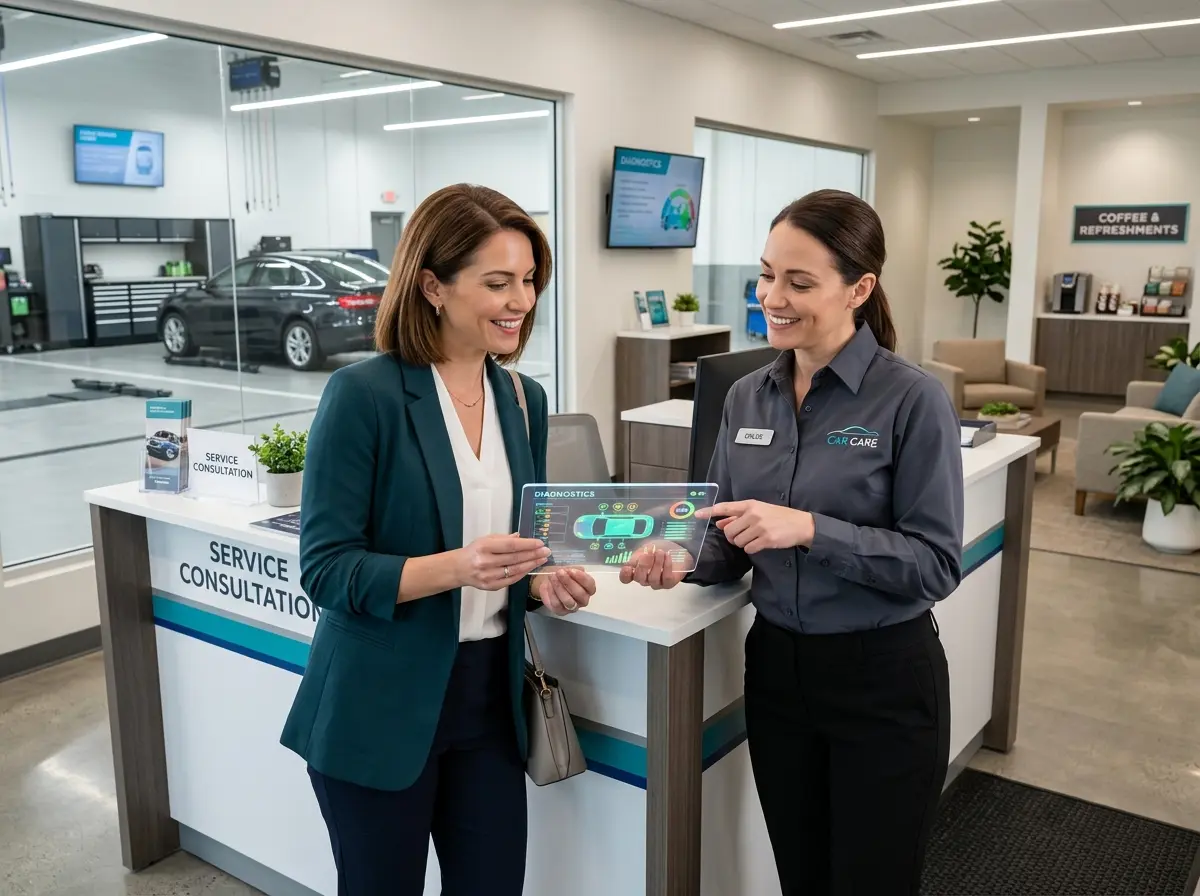
Consider creating laminated visual aids or a simple tablet-based presentation that shows what a worn brake pad looks like versus a healthy one, or what "metal on metal" actually means for a rotor. When customers can see the problem, they trust the diagnosis far more readily — and they're more likely to approve the repair.
Itemized Estimates and No-Surprise Invoices
Nothing destroys trust faster than an invoice that looks completely different from the estimate. Adopt a policy of detailed, itemized written estimates before any work begins, and make it standard practice to call the customer if anything unexpected comes up mid-repair. Not only does this protect you legally, it signals that you respect your customer's time, intelligence, and budget. Women — and frankly, all customers — respond extraordinarily well to businesses that proactively communicate rather than forcing them to chase down information.
Empower Your Team to Take Concerns Seriously
There is no faster way to lose a female customer for life than having a service advisor subtly dismiss her concerns or redirect the conversation to her husband. Train every single person on your customer-facing team to listen actively, take every concern at face value, and never make assumptions about a customer's knowledge level or decision-making authority. Role-play difficult scenarios during staff training. Make it part of your shop culture — not just a box to check on an onboarding form.
Using Technology to Set the Right Tone from the First Interaction
First impressions in the auto industry are often made before a customer ever sets foot in your shop. That means your phone line and your waiting area need to be working just as hard as your technicians. This is where Stella, the AI robot employee and phone receptionist, can make a meaningful difference for your shop.
A Welcoming, Consistent Presence In-Store and On the Phone
When a woman calls your shop to ask about a service — especially if it's her first time — the tone and quality of that interaction will largely determine whether she books the appointment or calls your competitor down the street. Stella answers calls 24/7 with warmth, professionalism, and complete knowledge of your services, pricing, and current promotions. She never sounds rushed, never sighs audibly, and never puts anyone on hold to go find the answer to a basic question. For a demographic that values being taken seriously from the very first "hello," that consistency is genuinely powerful.
Inside the shop, Stella's in-store kiosk presence greets every person who walks through the door — proactively, without hovering — and can answer common questions, promote current specials, and help customers feel informed and in control of their experience before a service advisor even approaches. That kind of low-pressure, informative welcome sets exactly the right tone.
Designing a Waiting Experience That Doesn't Feel Like a Punishment
Let's be honest: auto shop waiting rooms have not historically been paragons of comfort and thoughtful design. Plastic chairs bolted to the floor, a 2019 calendar, and a TV playing sports highlights at full volume is not the experience that builds a loyal customer base. The waiting area is your opportunity to demonstrate — physically and tangibly — what kind of business you are.
Comfort, Cleanliness, and Practical Amenities
Start with the basics: clean bathrooms (this one is non-negotiable), comfortable seating, good lighting, and a space that doesn't smell like a garage. Beyond that, consider offering reliable Wi-Fi, a charging station, decent coffee, and a quiet corner where someone can take a work call. These aren't extravagant luxuries — they're table stakes for any business that wants to attract and retain professionals who have a hundred better things to do than sit and wait for their car.
Small touches matter enormously. A well-organized magazine selection that includes topics beyond just automotive. A clearly labeled, genuinely clean restroom. A friendly face that checks in on waiting customers without being pushy. None of these things cost a fortune, but together they communicate something important: we thought about you when we designed this space.
Transparency at Every Stage of the Wait
Few things are more anxiety-inducing than dropping your car off and then hearing absolutely nothing for three hours. Implement a system — whether it's text message updates, a service tracking board in the waiting area, or a simple policy of proactive check-in calls — that keeps customers informed about where their vehicle is in the service process. When customers feel informed, they feel respected. When they feel respected, they come back. It really is that straightforward.
Create a Safe Space to Ask Questions
Post a sign — seriously, just a sign — that says something like: "Not sure what something on your estimate means? Ask us. We're happy to explain." Pair that with service advisors trained to welcome questions without condescension, and you've created something remarkably rare in this industry: a shop where customers feel genuinely comfortable advocating for themselves. That comfort translates directly into loyalty, referrals, and five-star reviews.
Quick Reminder About Stella
Stella is an AI robot employee and phone receptionist that works 24/7 — greeting customers at your in-store kiosk, answering calls with full knowledge of your services and promotions, and ensuring every interaction starts on the right foot. At just $99/month with no upfront hardware costs, she's one of the most straightforward upgrades an auto shop can make to its front-of-house experience. If the first impression matters — and it absolutely does — Stella makes sure yours is consistently excellent.
Turning First-Time Visitors into Lifelong Regulars
Getting a female customer through the door once is a win. Getting her to come back — and to bring her friends, her family, and her coworkers — is where the real business growth happens. Loyalty in the auto industry doesn't come from loyalty punch cards. It comes from delivering an experience so reliably positive that choosing anyone else feels like a step backward.
Follow up after every service with a brief, personal message — not a generic marketing blast, but a quick note confirming the work completed, any recommendations for future service, and a genuine invitation to reach out with questions. Track your customer history carefully so that when she calls back six months later, your team knows her name, knows her vehicle, and knows she prefers text updates over phone calls. That level of personalization isn't magic; it's just good business practice that most shops are too complacent to implement.
Finally, ask for feedback and actually act on it. A short follow-up survey, a review request, or even a direct question at the time of pickup — "Is there anything we could have done better today?" — signals humility and a genuine commitment to improvement. Women talk. When they find a shop they trust, they become some of the most powerful word-of-mouth advocates in your market. Earn that trust, and your marketing budget will thank you.