When Patients Ghost You (And What One Chiropractic Practice Did About It)
Let's be honest — patient drop-off is the quiet killer of chiropractic practices everywhere. Someone comes in with a stiff neck, you fix the stiff neck, they feel great, and then... silence. No follow-up appointment. No call. Just a ghost in your CRM wearing a "Thanks, I feel better!" smile on their way out the door.
The average chiropractic practice loses 40–60% of its patient base every year to simple inactivity — not because patients are unhappy, but because life gets busy and nobody reminded them to come back. That's not a clinical problem. That's a communication problem. And communication problems, thankfully, are solvable.
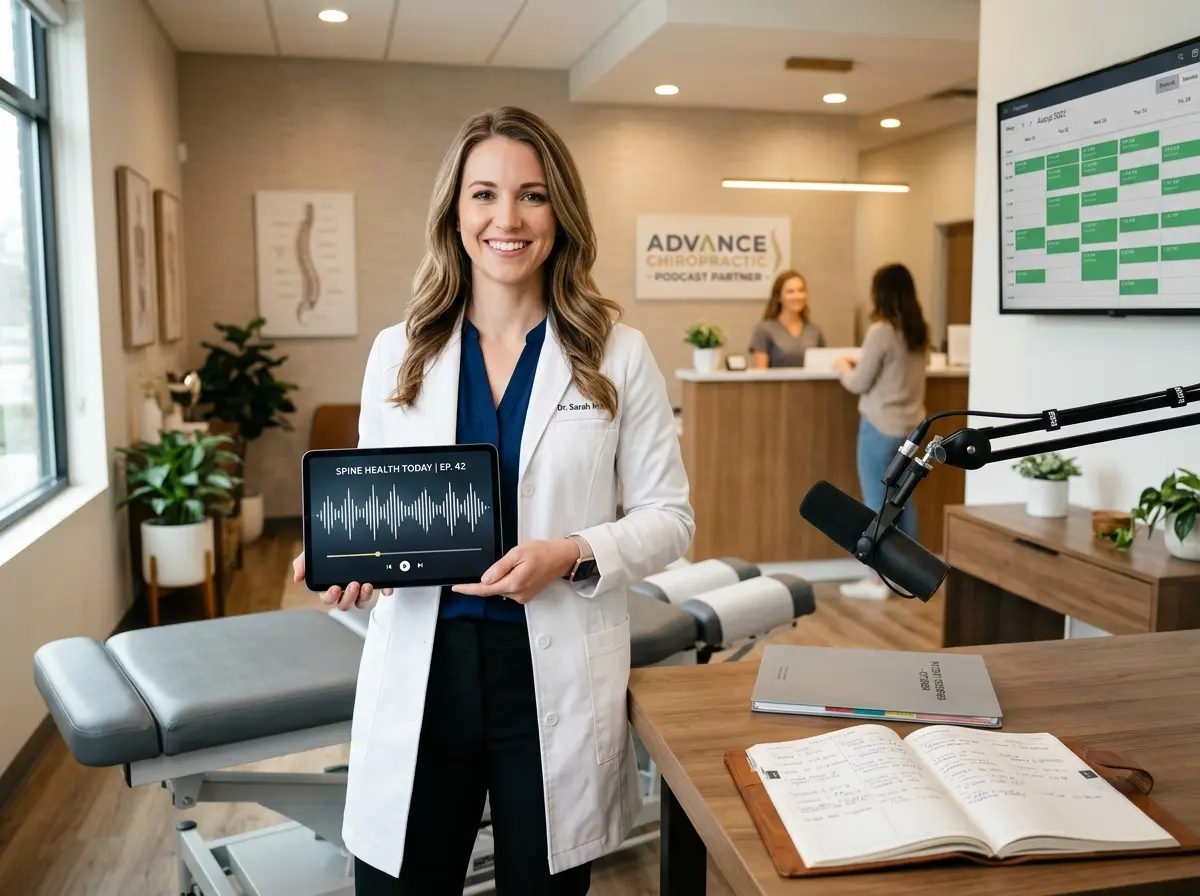
This is the story of how one chiropractic practice tackled patient reactivation head-on — not with a flashy ad campaign or a discounting frenzy — but with a single, well-crafted podcast episode that drove 40 booked appointments from patients who hadn't walked through the door in months. Here's how they did it, why it worked, and how you can replicate it in your own practice.
The Strategy: Using a Podcast Episode as a Reactivation Tool
Why Podcasting Works for Healthcare Practices
Podcasting might seem like an odd choice for a chiropractic office — this isn't a tech startup or a media company, after all. But that's precisely what makes it so effective. When a local chiropractor shows up in someone's earbuds talking about back pain, posture, or the long-term effects of ignoring that nagging shoulder tension, it doesn't feel like marketing. It feels like a conversation. And conversations build trust in a way that a Facebook ad simply cannot.
Healthcare consumers are increasingly turning to audio content for health education. According to Edison Research, over 100 million Americans listen to podcasts monthly, and "health and wellness" consistently ranks among the top content categories. More importantly, podcast listeners are engaged — they're not scrolling past your message in two seconds. They're listening for 20, 30, sometimes 45 minutes at a time.
The Episode That Changed Everything
The practice in question recorded a single podcast episode titled something along the lines of "Why Your Back Pain Came Back (And What To Do Before It Gets Worse)" — a title perfectly engineered to make any lapsed patient think, "Wait... that's me."
The episode itself was 22 minutes long and covered three things: the science of why musculoskeletal issues tend to recur without maintenance care, a handful of real patient stories (with permission and anonymized details), and a clear, low-pressure call to action inviting listeners to book a "Welcome Back" appointment at a special rate. The episode was posted to Spotify and Apple Podcasts, but — and this is the key — it was also personally sent via email and text message to every lapsed patient in their database who hadn't visited in over 90 days.
That targeted distribution is what separated this campaign from a generic content marketing play. It wasn't broadcast to strangers. It was sent directly to people who already knew and trusted the practice. The podcast episode was the medium; the existing patient relationship was the engine.
The Numbers Behind the Campaign
The practice emailed and texted approximately 310 lapsed patients. Of those, roughly 28% opened the email or clicked the link — not bad at all for a reactivation list that had gone cold. The podcast episode itself received 180 listens in the first two weeks. And from that audience, 40 patients booked appointments — a conversion rate of about 22% from listeners to bookings, which would make most marketing agencies weep with envy.
Total cost of the campaign? A few hours of recording time, a free podcast hosting account, and whatever the practice was already paying for email and SMS tools. The revenue generated from 40 appointments — many of whom went on to book follow-up visits — ran well into the thousands.
How the Right Tools Made Follow-Through Effortless
Managing Reactivated Patients Without Drowning Your Front Desk
Here's the part that doesn't get enough attention in these success stories: what happens after the phone starts ringing? Forty appointment requests sounds like a win — and it is — but if your front desk is already stretched thin, a sudden spike in inbound calls and booking requests can turn a marketing success into an operational headache.
This is exactly where Stella becomes a genuine game-changer for practices like this one. Stella is an AI robot employee and phone receptionist that handles inbound calls 24/7, answers patient questions, and can collect intake information through conversational forms — all without putting a single extra task on your human staff. When a reactivation campaign sends a wave of patients calling to book, Stella answers every call, gathers the necessary details, and keeps things moving smoothly whether it's Tuesday afternoon or Saturday night.
For chiropractic practices with a physical location, Stella also operates as an in-store kiosk — greeting patients when they arrive, answering questions about services and promotions, and reinforcing the warm, professional experience patients expect when they return after a long absence. Her built-in CRM with custom fields, tags, and AI-generated patient profiles also makes it easy to track which reactivated patients came in from the campaign, so you can measure your results and refine your approach next time.
Building a Reactivation Campaign That Actually Works
Step 1 — Segment Your Lapsed Patient List Thoughtfully
Not all lapsed patients are the same, and treating them as a single undifferentiated mass is a fast way to annoy people and get unsubscribes. A patient who hasn't been in for four months is very different from someone who visited once three years ago and never returned. Start by segmenting your list into meaningful buckets — perhaps 90 to 180 days inactive, 6 to 12 months inactive, and over a year — and tailor your messaging accordingly. The 90-day group just needs a gentle nudge. The one-year group needs a reason to believe the practice still understands their specific needs.
Your podcast episode doesn't need to be different for each segment, but your accompanying email or text message absolutely should be. A short, personalized subject line like "It's been a few months, [First Name] — we recorded something for you" will dramatically outperform any generic newsletter blast.
Step 2 — Create Content That Earns Attention, Not Just Clicks
The podcast episode that drove 40 appointments worked because it was genuinely useful. It didn't spend 20 minutes selling. It spent 20 minutes educating — explaining why the problem matters, what happens if it goes unaddressed, and what options exist. The call to action at the end landed softly because the listener had already received real value and trusted the voice delivering it.
When crafting your own episode, avoid the temptation to turn it into a commercial. Think about the one or two questions your patients ask most frequently, or the concern that brings people back to your office after a long absence. Answer those questions thoroughly and honestly. That's your episode. Keep it under 25 minutes if possible — respect your listener's time, and they'll respect your expertise in return.
Step 3 — Make Booking Frictionless
Every point of friction between a patient hearing your call to action and actually booking an appointment costs you conversions. Make sure your booking link is prominent in every email, text, and podcast show note. If you're using a phone call as the primary booking method, ensure someone — or something — is available to answer promptly at any hour. Follow up with anyone who clicked the link but didn't complete a booking. A single reminder message sent 48 hours later can recover a meaningful percentage of nearly-converted patients.
The practices that execute reactivation campaigns best aren't necessarily the ones with the most creative content. They're the ones who make it stupidly easy to say yes and take action.
Quick Reminder About Stella
Stella is an AI robot employee and phone receptionist that works 24/7 — answering calls, greeting patients at your front door, managing intake forms, and keeping your CRM organized without any extra effort from your team. She runs on a straightforward $99/month subscription with no upfront hardware costs, and she's ready to go from day one. For a chiropractic practice running a reactivation campaign — or any campaign that drives a sudden surge in patient interest — she's the kind of reinforcement your front desk didn't know it needed.
Start Your Own Reactivation Campaign This Month
Patient reactivation doesn't require a big budget, a marketing agency, or a miracle. It requires a clear understanding of who your lapsed patients are, a piece of content that earns their attention and trust, and a seamless path back through your door. One podcast episode, distributed thoughtfully to the right audience, turned into 40 booked appointments for a chiropractic practice that simply decided to show up in a new format and speak directly to the people who already believed in them.
Here's what you can do starting today:
- Pull your lapsed patient list and segment it by time since last visit.
- Identify the one topic most likely to resonate with patients who've drifted away — usually a pain point they originally came in for.
- Record a 15–25 minute podcast episode that educates first and sells second. You don't need fancy equipment. A quiet room and your smartphone will do.
- Draft personalized outreach — email and text — that delivers the episode directly to your segmented lists.
- Make booking effortless and ensure you have the capacity — whether human or AI-assisted — to handle the response.
Your lapsed patients haven't forgotten you. They're just waiting for a good reason to come back. Give them one.