The Waiting Room: Where Anxiety Goes to Grow
Let's be honest — nobody walks into a physical therapy office thinking, "Oh good, I get to sit in this beige room with outdated magazines and a TV playing the Weather Channel for the next 20 minutes." Waiting rooms, by their very nature, are anxiety incubators. And for physical therapy patients specifically, that anxiety is often already running high before they even sign in. They're in pain, they're uncertain about their recovery, and they're about to let someone move their body in ways that probably don't feel great. The last thing they need is an environment that makes them feel like they're waiting for a verdict.
Here's the good news: one physical therapist's office decided to do something about it. And the results — both in patient satisfaction and actual business outcomes — were remarkable enough to share. Whether you run a PT clinic, a medical office, or frankly any business where customers spend time waiting, there's something here for you.
What the Research Tells Us About Waiting Rooms and Patient Anxiety
The Psychology of the Wait
Research consistently shows that perceived wait time is often more damaging than actual wait time. A 2019 study published in the Journal of Patient Experience found that patients who were actively engaged during their wait — whether through informative displays, conversational check-ins, or environmental design — reported significantly higher satisfaction scores than those who simply sat idle, even when the actual wait duration was identical. In other words, how your waiting room feels matters just as much as how long patients are actually in it.
For physical therapy patients in particular, anticipatory anxiety is a very real concern. Many patients are post-surgery, managing chronic pain, or returning from injury — and the uncertainty about what a session will involve can send their stress levels through the roof before the appointment even begins.
What Makes a Waiting Room Anxiety-Inducing
Before you can fix something, you have to understand what's breaking it. The most common waiting room design mistakes that contribute to patient anxiety include:
- Poor lighting — harsh fluorescent lighting signals "hospital," which triggers clinical anxiety in many patients
- Uncomfortable seating — ironic in a physical therapy office, yes
- Information vacuums — patients who don't know what to expect become anxious patients
- No sense of progress — waiting without any acknowledgment that your appointment is on track is its own special kind of torture
- Sterile, impersonal décor — environments that feel cold make people feel like a number, not a patient
Understanding these friction points is the first step. The clinic in our case study mapped each one before touching a single piece of furniture.
The Redesign: What One PT Clinic Actually Did
Sensory Adjustments That Made a Real Difference
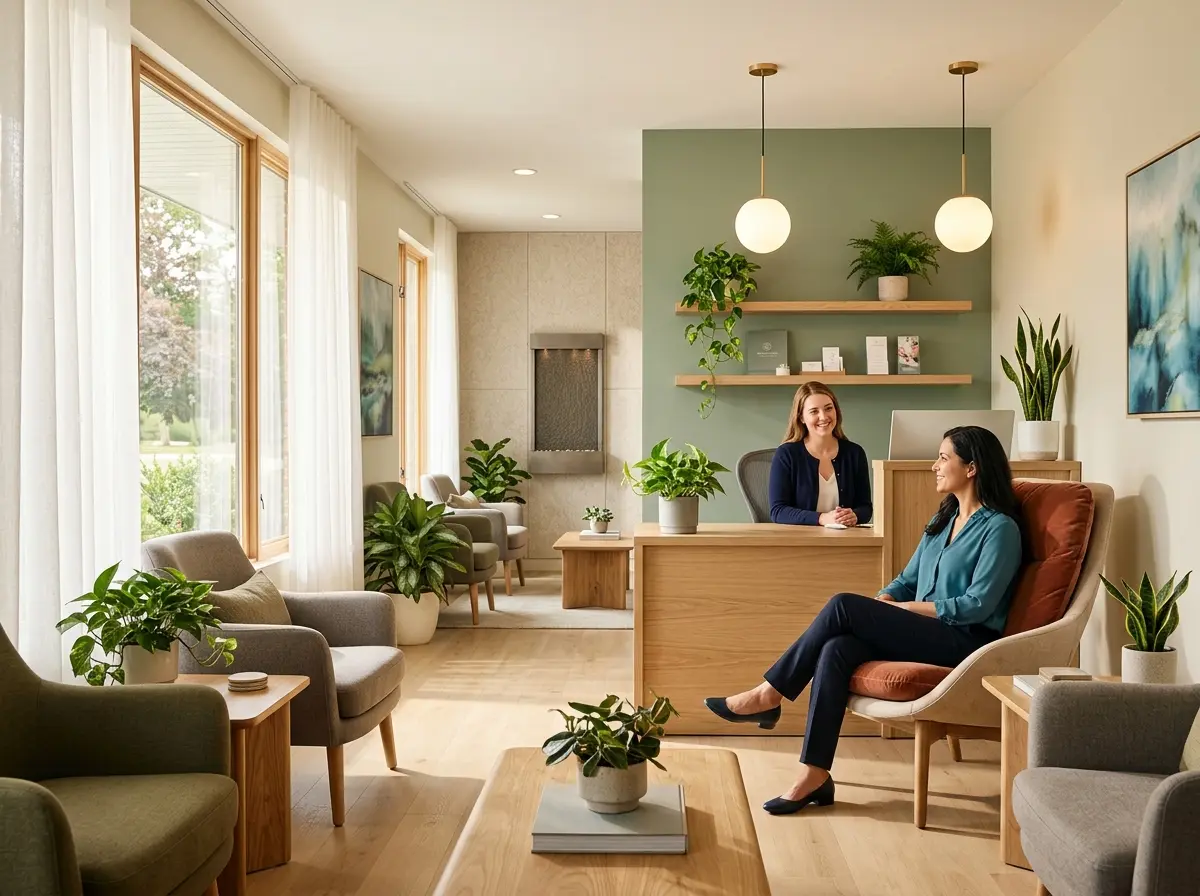
The clinic — a mid-sized physical therapy practice with three therapists and a steady patient volume — started with the obvious but underestimated: the senses. They swapped fluorescent overhead lighting for warm LED fixtures and added a small sound system playing soft instrumental music at a low volume. They introduced two potted plants and replaced their industrial chairs with cushioned seating that actually supported the kinds of bodies that walk through a physical therapy door. Sounds simple, right? It was. And it worked. Patient satisfaction scores on their post-visit surveys improved by 18% within the first 90 days — before they'd even touched their intake process.
They also added a small display near the entrance that rotated through educational content: what to expect during a first appointment, common questions about recovery timelines, stretches patients could do at home. Giving patients something useful to read transformed idle wait time into something that actually served them.
Streamlining the Check-In Experience
The clinic's second major move was overhauling check-in. Previously, patients arrived, stood at a front desk, filled out paper forms while balancing a clipboard on their knees, and then sat down to wait — often unsure if their paperwork was complete or whether someone had actually noted their arrival. It was chaotic, impersonal, and left too many patients staring at the ceiling wondering if they'd been forgotten.
They replaced this with a digital check-in process that greeted patients by name (based on their appointment), walked them through any outstanding intake questions conversationally, and gave them a clear confirmation that their therapist had been notified of their arrival. The front desk staff, now freed from the repetitive check-in shuffle, could actually spend time with patients who had real questions. Appointment no-shows dropped, front desk complaints dropped, and — perhaps most importantly — patients felt seen rather than processed.
How Technology Like Stella Can Support This Kind of Experience
From the Waiting Room to the Phone Line
Here's where things get interesting for business owners thinking about scalability. The physical improvements the clinic made were meaningful, but the tech layer is what made it sustainable. Stella, the AI robot employee and phone receptionist, is exactly the kind of tool that fits naturally into this kind of redesign. Her in-person kiosk presence can serve as that welcoming, informative touchpoint the moment a patient walks in — greeting them by name if integrated with appointment data, answering common questions about what to bring or what to expect, and collecting intake information conversationally rather than through a cold clipboard handoff. Meanwhile, her 24/7 phone answering capability means that patients calling to ask nervous pre-appointment questions after hours aren't met with a voicemail box — they're met with an actual, helpful conversation.
For clinics managing a high volume of new patients, Stella's built-in CRM and conversational intake forms are particularly valuable. Patient information gathered during a phone call or at the kiosk flows directly into organized, AI-generated profiles — no manual data entry, no lost paper forms, no "we'll have you fill this out again when you arrive." It's the kind of seamless experience that makes patients feel like the practice actually has its act together. Which, of course, it now does.
Sustaining the Improvement: Keeping Anxiety Low Long-Term
Training Staff to Match the Environment
A beautiful waiting room means nothing if the person behind the front desk is visibly stressed, distracted, or short with patients. The clinic invested in a half-day training session for their administrative staff focused specifically on communication tone — how to acknowledge a patient's arrival warmly, how to proactively communicate wait time updates, and how to handle the occasional frustrated patient without escalating the situation. Staff were also encouraged to make brief, friendly contact with patients during longer waits — not to discuss clinical matters, but simply to acknowledge them as people. This small behavioral shift had an outsized impact on how patients described the practice in online reviews.
Gathering Feedback and Iterating
The clinic didn't treat the redesign as a one-time project. They built a short post-visit survey into their follow-up communications asking patients specifically about their waiting room experience, their check-in process, and their overall comfort level before their appointment began. They reviewed results quarterly and made adjustments — swapping out the educational display content seasonally, trying different music styles, experimenting with the seating arrangement. Continuous improvement doesn't have to be complicated. It just has to be intentional.
Measuring What Actually Matters
Six months after the redesign, the clinic tracked the following changes compared to the same period the prior year: a 22% improvement in new patient retention (patients who booked a second appointment after their first), a 31% increase in five-star Google reviews mentioning "comfortable" or "welcoming," and a 14% reduction in front-desk-related patient complaints. These aren't vanity metrics. They're the direct business result of deciding that the waiting room experience deserves the same attention as the clinical one.
A Quick Reminder About Stella
Stella is an AI robot employee and phone receptionist designed for businesses of all sizes — including medical and wellness practices like physical therapy clinics. She greets patients in person via her kiosk, answers phones around the clock, handles intake and check-in conversationally, and keeps your staff focused on the work that actually requires a human. At $99/month with no upfront hardware costs, she's one of the more practical investments a growing practice can make.
Your Waiting Room Is Saying Something — Make Sure It's the Right Thing
If you've read this far, you're probably already thinking about your own waiting area with slightly fresh (and slightly uncomfortable) eyes. Good. That's the point. The waiting room isn't dead space — it's the first impression your practice makes on every single patient before any clinical care begins. It sets the emotional tone for the entire visit. And for patients who are already anxious, already hurting, or already skeptical about whether physical therapy will actually help them, that tone matters enormously.
Here's where to start:
- Audit your current waiting room with fresh eyes — sit in the chairs, look at the lighting, time a mock check-in process. What do you notice?
- Prioritize sensory comfort first — lighting, seating, and sound are low-cost, high-impact starting points
- Fix the information vacuum — give patients useful, relevant content to engage with while they wait
- Modernize check-in — reduce friction, increase personalization, and free up your staff
- Build a feedback loop — ask patients about their experience and actually do something with the answers
You don't have to overhaul everything at once. Start with one change, measure it, and build from there. The practices that earn loyal patients and glowing reviews aren't necessarily the ones with the fanciest equipment — they're the ones that make people feel cared for from the moment they walk in the door. And sometimes, that starts with a better chair and a warm greeting.