When "Just Ask Your Server" Isn't Good Enough Anymore
Picture this: A guest sits down at your restaurant, excited for a lovely dinner. They mention a nut allergy. Their server says, "Oh, I think that dish is fine." Two hours later, you're not thinking about your five-star reviews — you're thinking about your legal exposure. Fun evening for everyone.
Food allergies are not a trend. They are not a niche concern for "difficult customers." According to Food Allergy Research & Education (FARE), approximately 33 million Americans have food allergies, and roughly 200,000 people require emergency medical care due to allergic reactions every year. That's not a statistic you want your restaurant contributing to — and it's certainly not one your reputation can afford.
Yet, despite the stakes, a staggering number of restaurants still rely on informal, staff-dependent, word-of-mouth allergen communication. A new hire learns what they learn. A busy Friday night means corners get cut. A guest asks a question and gets an answer that's half-confident at best. This is how incidents happen — and how restaurants end up in the news for all the wrong reasons.
The good news? Building a formal allergen communication protocol isn't as complicated as it sounds, and the payoff — in guest safety, staff confidence, and hard-earned trust — is enormous. Let's break it down.
Building the Foundation: What a Real Allergen Protocol Looks Like
A "protocol" isn't a laminated sheet tucked behind the host stand that nobody reads. It's a living, enforced system that touches every layer of your operation — from menu creation to guest interaction to kitchen execution. Here's what that actually means in practice.
Document Every Ingredient, Not Just the Obvious Ones
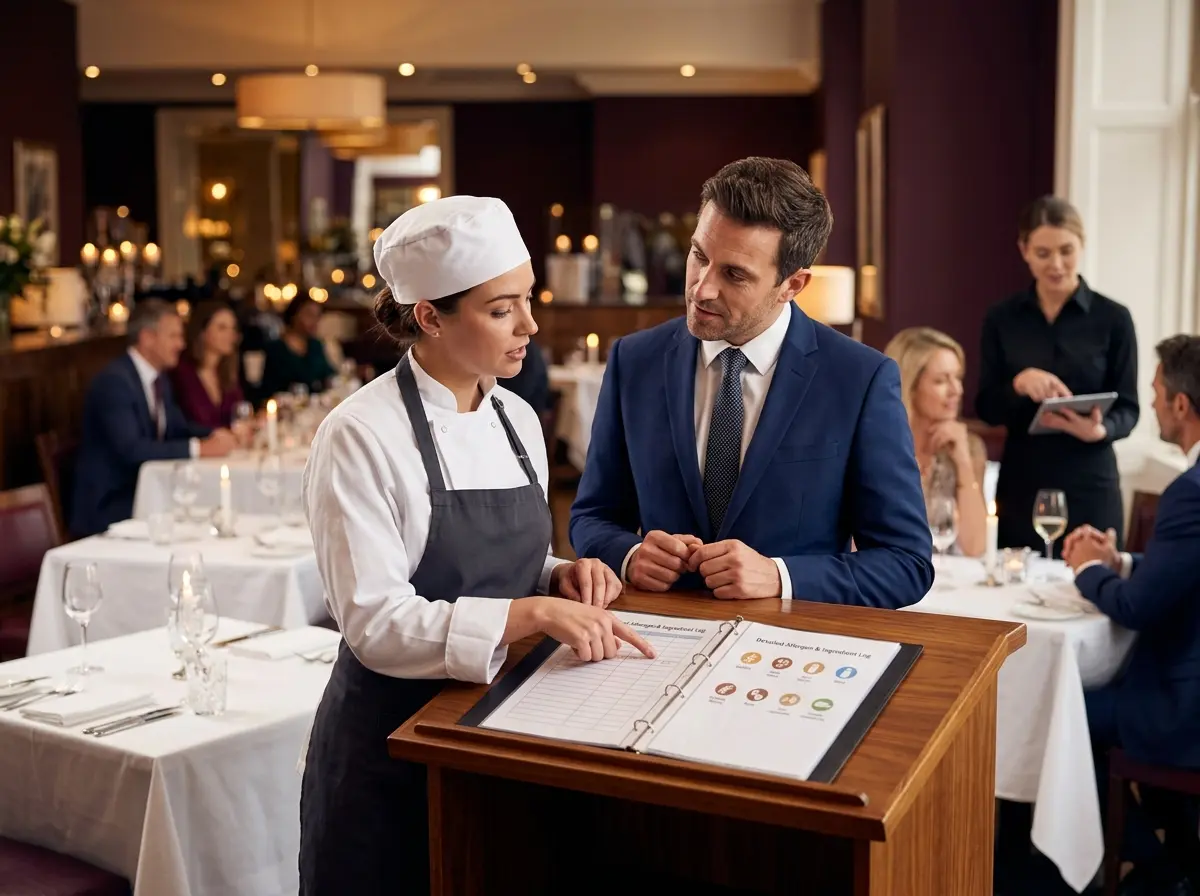
The first and most critical step is creating a comprehensive ingredient matrix for every item on your menu — including sauces, dressings, marinades, and garnishes. Yes, even the little sprig of something decorative. Hidden allergens are called "hidden" for a reason. Common culprits include soy in sauces, dairy in bread, and gluten in unexpected places like soup bases or seasoning blends.
Your matrix should clearly flag the Big 9 allergens recognized by the FDA: milk, eggs, fish, shellfish, tree nuts, peanuts, wheat, soybeans, and sesame. Every dish. Every component. No exceptions. This document needs to be accessible to your kitchen staff, your front-of-house team, and ideally, your guests — whether on your menu, your website, or both.
Train Your Staff Like Lives Depend on It — Because They Do
Allergen training cannot be a one-time onboarding checkbox. It needs to be ongoing, consistent, and taken seriously from the top down. Your servers should know which questions to ask, how to communicate with the kitchen, and — critically — when to say "I'm not sure, let me check" instead of guessing. That last one requires a culture of psychological safety where staff feel empowered to slow down and verify without fear of looking uninformed.
Role-playing allergen scenarios during staff meetings, posting quick-reference allergen guides in the kitchen, and running quarterly refresher training are all practical, low-cost investments. Consider designating an allergen-aware lead on each shift — someone whose job it is to handle allergy-related questions and communicate directly with the chef when needed.
Create a Clear Kitchen Communication Chain
When a guest flags an allergy, that information needs to travel seamlessly from the front of house to the back — without getting lost in the chaos of a dinner rush. Many restaurants use written allergy tickets or color-coded order systems to ensure nothing gets missed. Verbal communication alone is simply not reliable enough in a loud, fast-paced kitchen environment.
Define exactly what happens when an allergy is flagged: Who is notified? What modifications are made? How is cross-contamination prevented? What is the protocol if the kitchen cannot safely accommodate the request? Document it, post it, and enforce it. Consistency is the goal — not occasional good luck.
How Technology Can Support Your Allergen Communication Efforts
Let's be honest: your front-of-house staff have a lot on their plates (pun absolutely intended). Between greeting guests, managing reservations, running orders, and handling the general controlled chaos of a busy service, it's easy for nuanced conversations about allergens to fall through the cracks — especially over the phone, before a guest even walks through the door.
Letting Technology Handle First-Line Allergen Inquiries
This is one area where Stella, the AI robot employee and phone receptionist, can genuinely take some pressure off your team. As a physical kiosk inside your restaurant, Stella can greet incoming guests, proactively ask about dietary needs or restrictions as part of the welcome experience, and provide clear, consistent answers about your menu based on the information you've configured into her system. No guessing, no "I think so," no missing details because it was a hectic Saturday night.
On the phone side, Stella answers calls 24/7 and can field common allergen-related questions — informing callers about your allergen policy, flagging that a human team member is available for complex concerns, and forwarding calls accordingly. It won't replace the trained human judgment required in the kitchen, but it absolutely creates a more consistent, professional first touchpoint for guests with serious dietary needs. That consistency matters — it signals to guests that your restaurant takes these concerns seriously from the very first interaction.
Communicating Allergen Information to Guests: Before, During, and After the Meal
Allergen communication isn't a single moment in the guest experience — it's a thread that runs through the entire visit. Restaurants that handle this well don't just react to allergen questions; they proactively create an environment where guests feel safe asking, informed by default, and confident in their choices.
Before the Visit: Your Website and Menu Are Speaking for You
Your online presence is often where the allergen conversation begins. If your website menu lists no allergen information, guests with serious allergies will frequently call ahead, visit elsewhere, or simply take a risk — none of which are great outcomes for you. Publishing a clearly formatted allergen guide online, linking to it prominently from your menu, and including a note on your reservation or contact page about how to flag dietary needs all demonstrate that your restaurant is prepared and guest-focused.
Make sure your Google Business profile and third-party platforms reflect your allergen-awareness too. A single line like "We accommodate common food allergies — please notify us when booking" can meaningfully increase trust and reservations from guests who would otherwise hesitate.
During the Visit: Proactive Language Changes Everything
Train your staff to ask about allergies proactively — before the guest feels they need to bring it up themselves. A simple shift from "Can I take your order?" to "Before I take your order, do any of you have any food allergies or dietary restrictions I should know about?" creates an entirely different dynamic. It normalizes the conversation and removes the social awkwardness many guests feel about "being difficult."
When an allergy is disclosed, the response should follow a defined script: acknowledge the concern, confirm with the kitchen, and communicate back to the guest what can and cannot be safely prepared. If a dish cannot be guaranteed allergen-free due to shared cooking equipment or cross-contamination risk, say so clearly. Guests respect honesty. They do not forgive omissions that send them to the emergency room.
After the Visit: Feedback Loops and Continuous Improvement
Close the loop on your allergen protocol by actively collecting feedback. Whether through comment cards, follow-up emails, or online reviews, pay close attention to any mentions of how allergen concerns were handled. If a guest reports that your team was dismissive, uninformed, or inconsistent, treat that as a critical operational flag — not just a bad review to respond to. Build a review cadence into your operations where allergen incidents (near-misses included) are documented and discussed so your protocol can evolve with your menu and your team.
Quick Reminder About Stella
Stella is an AI robot employee and phone receptionist designed to help businesses — including restaurants — deliver consistent, professional guest experiences around the clock. She works as a physical kiosk inside your location and answers phone calls 24/7 with the same knowledge and personality, so your team can focus on what they do best. At just $99/month with no upfront hardware costs, she's an accessible addition to any restaurant looking to modernize their guest communication without breaking the budget.
Your Next Steps Toward a Safer, Stronger Restaurant
You don't need to overhaul your entire operation overnight. What you do need is to stop treating allergen communication as an informal, staff-dependent afterthought and start treating it as the serious operational and ethical responsibility it is. Here's where to start:
- Audit your current menu and build a complete ingredient matrix covering all Big 9 allergens across every dish and component.
- Document your allergen communication protocol in writing — from how guests disclose allergies, to how that information travels to the kitchen, to what happens when accommodation isn't possible.
- Train your team formally and regularly, and designate an allergen lead on each shift for accountability and consistency.
- Update your website and online listings to proactively communicate your allergen awareness and invite guests to disclose needs before they arrive.
- Review your technology tools to see where consistent, automated communication — like a kiosk or AI phone receptionist — can support your team during high-volume service periods.
A formal allergen protocol isn't about bureaucracy for its own sake. It's about building a restaurant where every guest — including the 33 million Americans managing food allergies — feels genuinely safe and genuinely welcomed. That's not just good ethics. That's good business. And in an industry where reputation travels fast, it's one of the best investments you can make.