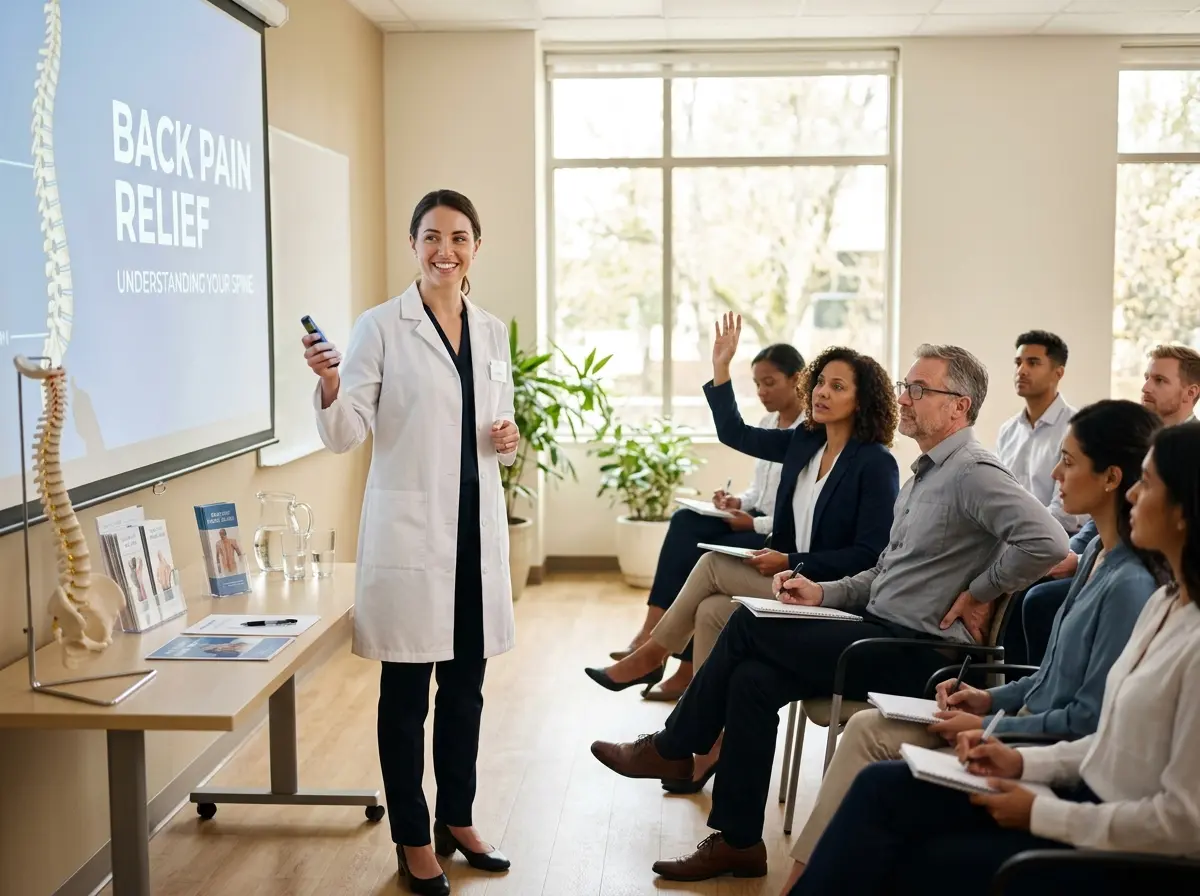
Introduction: Your Expertise Is Sitting in an Empty Room
You went to school for years. You've treated thousands of patients. You know exactly why half the adults in your community are walking around with lower back pain that could be significantly improved — or even resolved — with the right care. And yet, your waiting room isn't always full. Meanwhile, those same people are Googling "back pain remedies" at midnight and watching YouTube videos made by someone with a certification they got over a weekend.
Here's the good news: a free community back pain seminar is one of the most effective, time-tested strategies for physical therapists to fill their schedules with motivated, pre-educated patients. It positions you as the local expert, builds trust before the first appointment, and creates a room full of people who already want what you're offering. The even better news? You don't need a massive marketing budget or a fancy event venue. You need a plan — and that's exactly what this guide provides.
Whether you've hosted seminars before or the idea of public speaking makes you want to crawl under a treatment table, this guide will walk you through everything: planning, promotion, the event itself, and — critically — the follow-up that turns curious attendees into loyal long-term patients.
Planning and Promoting Your Seminar
Choose Your Format, Topic, and Venue
The most successful community seminars are specific. "Back Pain" is a topic. "Why Your Lower Back Hurts After Sitting All Day (And What to Do About It)" is a seminar people will actually show up for. Specificity signals relevance. Your audience needs to see themselves in the title before they'll commit to an evening out.
Keep your event to 60–75 minutes: about 40 minutes of content, 15 minutes of Q&A, and a few minutes at the end for a soft, low-pressure call to action. Any longer and you start losing people mentally, regardless of how compelling your content is. For venue, think local — your own clinic (if space allows), a library meeting room, a community center, or even a local gym or yoga studio that might welcome the collaboration. Aim for 20–40 attendees as a sweet spot: large enough to feel like an event, small enough to feel personal.
Promote Like You Mean It
Here's where many well-intentioned seminars go sideways: therapists spend weeks preparing the content and about three days on promotion. Don't do this. Begin promoting at least four weeks in advance across every channel you have — social media, email list, Google Business Profile, and your clinic's website. Create a simple registration page (free tools like Eventbrite work perfectly) so you can collect names and emails, which you'll need for follow-up.
Don't overlook offline promotion either. Flyers in local gyms, senior centers, chiropractors' offices, and even grocery store bulletin boards can be surprisingly effective. Partner with a local physician or urgent care clinic and ask if they'll share your event with patients — that kind of referral carries significant credibility. Studies consistently show that word-of-mouth and community trust are among the top drivers for healthcare decision-making, so lean into your local network early and often.
Build Your Registration Pipeline
Every person who registers for your seminar is a warm lead. Treat that list accordingly. Send a confirmation email immediately upon signup, a reminder three days before, and a final reminder the morning of the event. Include a brief "what to expect" paragraph in each email so attendees arrive knowing they're in for practical, useful information — not a sales pitch. That framing alone increases show-up rates significantly.
Letting Technology Handle the Logistics
Don't Let Registrations and Calls Fall Through the Cracks
Promoting a community event creates a spike in interest — which means a spike in phone calls, voicemails, and questions that your front desk may not be equipped to handle in real time. That's where Stella, the AI robot employee and phone receptionist, earns her keep. During your promotion window, Stella can answer incoming calls 24/7, provide seminar details, answer common questions about your clinic, and collect attendee information through conversational intake forms — all without pulling your staff away from patients currently in the building.
For clinics with a physical location, Stella's in-clinic kiosk presence means that existing patients checking in or waiting can also learn about the upcoming event, ask questions, and even register on the spot. She stores all that contact information directly in her built-in CRM with AI-generated profiles and custom tags, so your follow-up list after the seminar is already organized before the event even happens. At $99/month with no upfront hardware costs, it's the kind of operational support that used to require an additional staff member.
Delivering a Seminar That Actually Converts
Structure Your Content for Trust First, Conversion Second
Your seminar should be genuinely educational. That's not just good ethics — it's good strategy. The moment an audience senses they're being sold to rather than taught, the trust you've been building evaporates. Lead with value: explain the anatomy of the lower back in plain language, debunk common myths (no, lying in bed is not the answer), and walk through the lifestyle factors that contribute to chronic pain. Use visuals, demonstrations, and relatable examples. If you can get a willing volunteer from the audience for a brief movement screen, even better — it makes the content tangible and personal.
Research from the Physical Therapy profession has consistently shown that patient education significantly improves outcomes and increases adherence to treatment. When you demonstrate that in a seminar setting — when people leave thinking "that actually explained what's been happening to me" — you've accomplished something far more powerful than any advertisement could.
The Soft Ask: Making Your Call to Action Feel Natural
At the end of your seminar, offer a clear, low-barrier next step. A free 20-minute discovery call or a discounted initial assessment works beautifully here — it lowers the risk for the attendee while still moving them toward your clinic. Have a sign-up sheet ready, or better yet, a QR code linked to your scheduling page. Mention it once, frame it as an opportunity rather than a pitch, and let the quality of your content do the convincing for you.
Avoid the common mistake of offering too many options. One clear next step — one offer — converts far better than a menu of choices. Decision fatigue is real, and your attendees just spent an hour absorbing new information. Make it easy for them to say yes.
Follow Up Like a Professional (Because You Are One)
The seminar is not the finish line — it's the starting gun. Follow up with all registrants within 24 hours, whether they attended or not. Send a brief email thanking attendees, recapping two or three key takeaways, and reiterating your offer for a free consultation. For no-shows, a gentler message acknowledging they missed the event and offering to share a resource or reschedule a one-on-one conversation can still convert a meaningful percentage of leads.
Segment your follow-up list: people who booked an appointment get a confirmation and prep instructions; people who expressed interest but didn't book get a nurture sequence over the following two weeks; everyone else gets added to your general email list for future events. This kind of systematic follow-up is what separates clinics that host one seminar and shrug from those that build a repeatable patient acquisition engine.
Quick Reminder About Stella
Stella is an AI robot employee and phone receptionist built for businesses exactly like yours — she greets patients at your clinic kiosk, answers phones around the clock, collects intake information, manages contacts through a built-in CRM, and promotes your services without ever calling in sick. She's available for $99/month with no upfront hardware costs and can be up and running faster than it takes to hire and onboard a human receptionist. If your seminar creates a rush of new inquiries, Stella handles it without breaking a sweat — mostly because she doesn't sweat.
Conclusion: Go Fill That Room
A free community seminar is not a complicated strategy, but it is a deliberate one. The physical therapists who consistently generate new patients from these events are not necessarily better clinicians or better speakers than everyone else — they're simply more organized, more consistent, and more willing to show up for their community before asking their community to show up for them.
Here's your action plan to get started:
- Pick a specific topic that speaks directly to a pain point your ideal patient experiences daily.
- Book a venue and set a date at least five weeks out to give yourself adequate promotion time.
- Create a registration page and start promoting across all channels immediately.
- Prepare your content with education as the priority and your call to action as the logical, natural conclusion.
- Set up your follow-up sequence before the event so it's ready to launch the moment the seminar ends.
- Leverage tools like Stella to ensure no inquiry goes unanswered during your promotion push and beyond.
Your community has back pain. You have the answers. The only thing left to do is introduce yourself.