Introduction: Because "Buy One Pet, Get the Second Half Off" Isn't Quite a Strategy
Let's be honest — most veterinary practices didn't get into the business of medicine to become loyalty program architects. And yet, here we are. In a competitive market where pet owners have more options than ever (including those suspiciously cheap online pharmacies and the vet down the street with the nicer waiting room chairs), retaining multi-pet households isn't just a nice-to-have. It's a revenue strategy.
Multi-pet households represent a disproportionately large share of veterinary revenue. According to the American Pet Products Association, approximately 67% of U.S. households own a pet, and a significant portion of those own more than one. These clients visit more frequently, spend more per year, and — if you treat them right — stay loyal for the long haul. The problem? Most veterinary practices either don't have a formal multi-pet discount program, or they have one that's so confusing even the front desk staff can't explain it without a flowchart.
This guide is here to change that. We're going to walk through how to build a multi-pet household discount program that actually retains clients, increases visit frequency, and doesn't require a PhD in mathematics to understand. And yes, we'll talk about some tools that can make the whole thing run a lot more smoothly.
Designing a Multi-Pet Discount Program That Makes Sense
Keep It Simple Enough to Explain in One Breath
The cardinal sin of loyalty and discount programs is complexity. If your receptionist needs to pull out a laminated reference card to explain your pricing structure, you've already lost. A great multi-pet discount program should be instantly understandable to a tired pet owner who just wrangled three cats into carriers on a Tuesday morning.
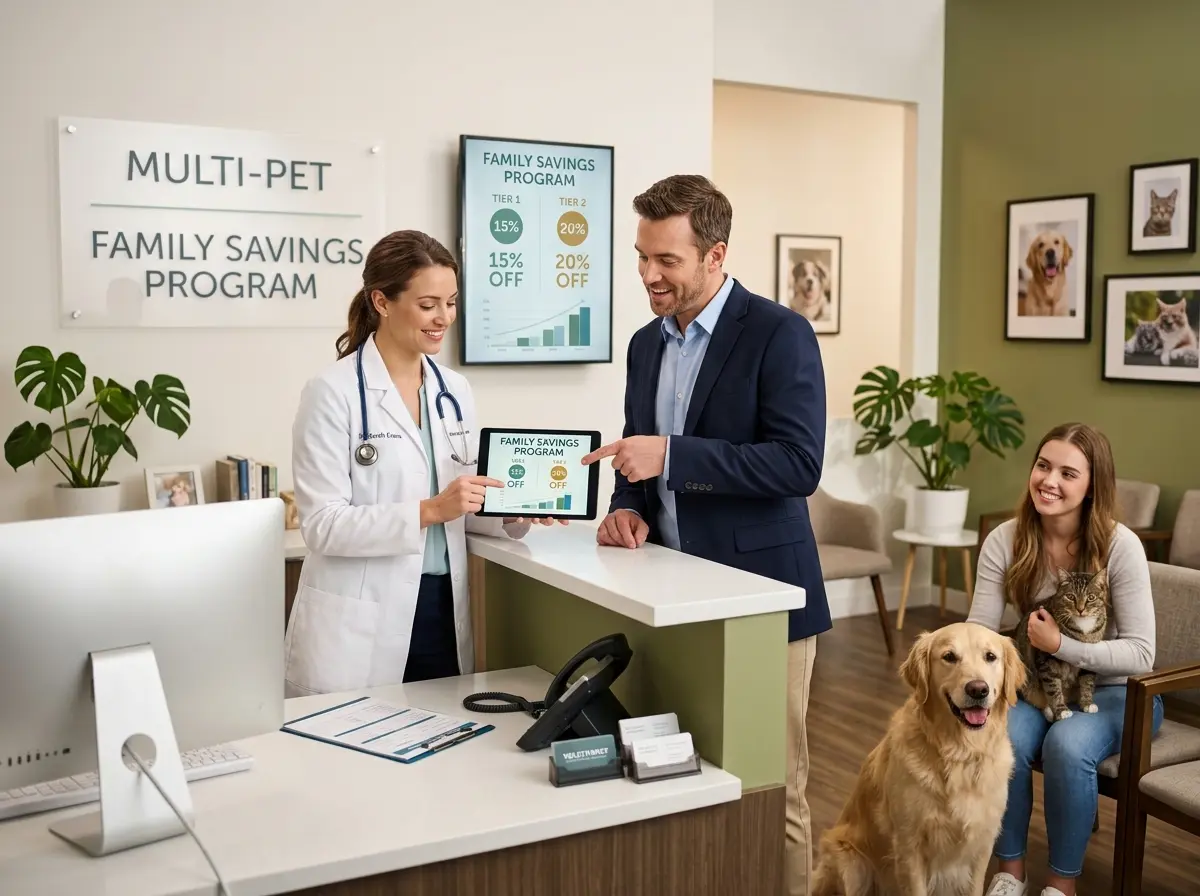
Consider a tiered structure based on the number of pets enrolled in your practice. For example: a 10% discount on wellness services for households with two pets, 15% for three pets, and 20% for four or more. Apply it consistently across annual exams, vaccines, and preventative care packages. Keep the eligibility criteria clear — same household, pets must be registered patients. Done. One breath.
Complexity kills participation. If clients have to remember which services qualify, which pets count, and whether the discount stacks with a promotional offer, they'll simply stop thinking about it — and stop taking advantage of it, which defeats the entire purpose of offering it.
Anchor the Program to Preventative Care
Smart discount programs aren't just about being generous — they're about shaping behavior. The goal isn't to discount your way out of profitability. It's to incentivize the kinds of visits that are good for the pets and good for your practice: annual wellness exams, dental cleanings, heartworm tests, and vaccine updates.
By anchoring your multi-pet discount to preventative care services, you accomplish two things simultaneously. First, you're rewarding clients for being responsible pet owners, which builds goodwill. Second, you're increasing the frequency of visits that allow your team to catch health issues early — the kind of visits that prevent expensive emergencies and build long-term trust with the client. It's a genuinely win-win arrangement, which is refreshing in a world that doesn't offer many of those.
Bundle Smarter, Not Harder
Take the program a step further by offering bundled wellness packages designed specifically for multi-pet households. A "Two-Pet Wellness Bundle" that includes exams, core vaccines, and a flea/tick consultation for two pets at a predictable flat rate gives clients the psychological comfort of knowing exactly what they're spending. Predictability is underrated as a loyalty driver — people return to places that don't surprise them with the bill.
You can also create add-on incentives within the bundle: a free nail trim for the third pet, a discounted dental screening, or a complimentary weight check visit. These low-cost extras feel valuable to the client while meaningfully increasing their engagement with your practice throughout the year.
Streamlining Program Management With the Right Tools
Let Technology Handle the Administrative Overhead
Running a multi-pet discount program manually is a great way to create chaos for your front desk staff and inconsistency for your clients. The moment your program depends on someone remembering to apply the discount, you're one busy Saturday morning away from a frustrated client who didn't get their 15% off and definitely isn't going to let it go quietly.
This is where Stella, the AI robot employee and phone receptionist, becomes genuinely useful for veterinary practices. At the front of your clinic, Stella greets arriving pet owners, answers questions about your multi-pet program, and can walk clients through enrollment details without pulling a technician away from an exam room. On the phone, she handles incoming calls 24/7 — explaining your discount tiers, confirming what's included in your wellness bundles, and collecting household and pet information through conversational intake forms that feed directly into her built-in CRM. That means by the time a new multi-pet family walks through your door, their household profile, pet count, and enrolled services are already documented and tagged. No clipboards. No chaos.
Marketing Your Program to Drive Enrollment and Referrals
Tell People the Program Exists (Revolutionary, We Know)
A surprising number of veterinary practices offer multi-pet discounts that fewer than a third of their eligible clients know about. This isn't a discount problem — it's a communication problem. Your program can't retain clients who don't know they're enrolled in anything.
Start with your existing client base. Send a direct email campaign to every household in your system that has more than one registered pet, letting them know they qualify and what their current discount tier is. Make it personal: "Hey, we noticed Biscuit and Mango are both patients here — here's what that means for you." Follow it up with a reminder at every checkout, a mention on your hold music or voicemail greeting, and a visible sign in your waiting room. Familiarity breeds engagement, not contempt — that's a different saying, but the principle applies here.
Turn Multi-Pet Clients Into Your Best Referral Source
Multi-pet households tend to know other multi-pet households. Dog owners talk to other dog owners. Cat people find their people. If you've created a program that genuinely feels valuable, these clients will mention it — but only if you make it easy and give them a reason to.
Consider adding a referral component to your multi-pet program: for every new household a client refers who enrolls with two or more pets, the referring client gets a bonus discount on their next visit or a credit toward a wellness service. Track referrals through your CRM so no one falls through the cracks and every reward is delivered on time. The math on this is straightforward — a referred client with three pets is worth significantly more in lifetime value than the cost of one discounted visit. Referral programs don't have to be elaborate to work. They just have to exist and be honored consistently.
Use Retention Data to Refine the Program Over Time
A discount program that never evolves is a discount program that eventually stops working. Use your client data to track which households are participating, how frequently they're visiting, which services they're using, and — critically — which multi-pet households aren't taking advantage of the program at all. Dormant multi-pet clients are low-hanging fruit for reactivation campaigns.
Look at your annual retention rate for multi-pet households versus single-pet households. If multi-pet clients are churning at similar or higher rates, your program isn't doing its job. Retention benchmarks vary, but many well-run veterinary practices see 70–80% annual client retention. A strong multi-pet program should push your household retention meaningfully above baseline — if it isn't, it's time to revisit the incentive structure or the communication strategy, not give up on the concept entirely.
Quick Reminder About Stella
Stella is an AI robot employee and phone receptionist built for businesses like yours — she greets clients in-person at your front desk, answers calls around the clock, and manages client data through a built-in CRM without ever calling in sick or forgetting to apply a discount. At just $99/month with no upfront hardware costs, she's an easy addition to any veterinary practice looking to run a tighter, more consistent operation.
Conclusion: Stop Leaving Multi-Pet Revenue on the Table
Building a multi-pet household discount program isn't about giving money away — it's about strategically investing in the clients most likely to stay with your practice for years, bring in their friends, and trust you with the animals they genuinely consider family. When designed well and communicated clearly, these programs pay for themselves many times over in improved retention, increased visit frequency, and referral-driven new client acquisition.
Here's where to start this week:
- Audit your current client database and identify every household with two or more registered pets. That's your enrolled base.
- Define your discount tiers — keep it to three levels maximum and anchor discounts to preventative care services.
- Communicate the program to existing eligible clients via email, at checkout, and through any automated phone or in-person interactions.
- Add a referral incentive for multi-pet clients who bring in new multi-pet households.
- Track retention and participation data quarterly and adjust the program based on what the numbers actually tell you.
Your multi-pet clients are already your best clients. It's time to give them a reason to stay — and to bring their friends.