Stop Leaving Money on the Table (Your Customers Are Ready to Spend It)
Let's be honest — most cleaning supply customers walk in (or log on) knowing exactly what they came for. A mop. Some degreaser. Maybe a bulk order of paper towels if they're feeling adventurous. They grab it, they pay, they leave. And you watch a perfectly good upsell opportunity walk out the door without so much as a polite goodbye.
Here's the thing: product bundling isn't just a cute retail trick — it's one of the most powerful and underutilized strategies in the cleaning supply industry. Studies show that bundling can increase average order values by 20–30%, and in a business where margins can be razor-thin and competition is fierce, that kind of lift is nothing to sneeze at (especially when you're surrounded by disinfectant).
The good news? You don't need a complete business overhaul to make it work. You just need a smarter approach to how you present your products — and maybe a little help keeping the conversation going with your customers. Let's dig in.
Building Bundles That Actually Make Sense
Before you start taping products together and slapping a "BUNDLE DEAL" sticker on everything in sight, it's worth taking a moment to think strategically. A great bundle feels intuitive to the customer — like you read their mind. A bad bundle feels like you're just trying to move dead inventory. (Spoiler: customers can tell the difference.)
Start With the "What Comes Next" Framework
The easiest place to start is by asking yourself a simple question: after a customer buys this product, what do they inevitably need next? A customer buying a floor scrubber almost certainly needs scrubbing pads and a concentrated floor cleaner. Someone stocking up on restroom supplies needs air fresheners, hand soap, and paper products. The logic is right there in the product itself — you just have to follow it.
Map out your top 10 best-selling products and brainstorm two to three natural companions for each one. These become your starter bundles. Price them at a slight discount compared to buying each item individually — somewhere between 5–15% off is typically the sweet spot that feels like a real deal without gutting your margins.
Think in Terms of Customer Scenarios, Not Just Products
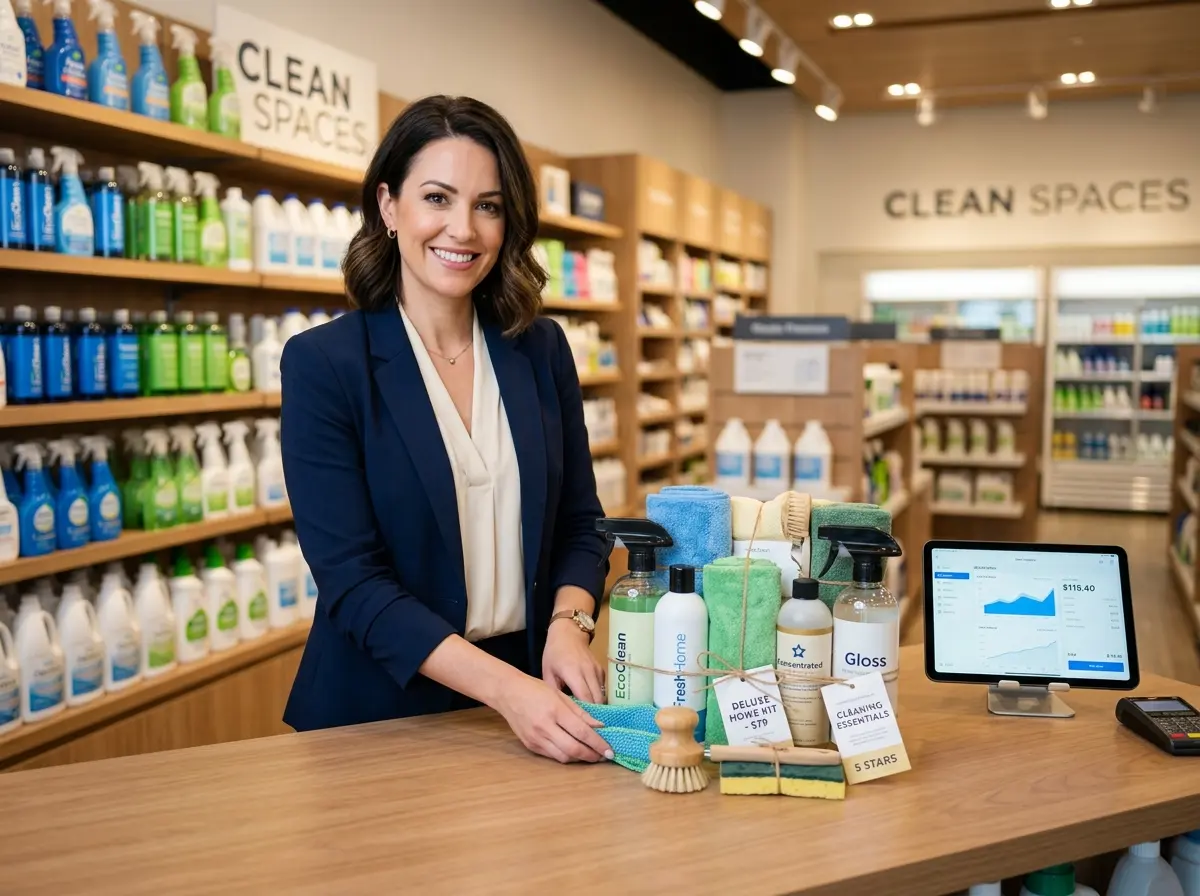
Another powerful bundling approach is to organize around specific use cases rather than product categories. Instead of "Cleaning Chemicals Bundle," think "Restaurant Kitchen Deep Clean Kit" or "Office Breakroom Refresh Pack." Suddenly, you're not just selling products — you're selling a solution to a problem your customer already has.
This approach works especially well for commercial cleaning buyers who are managing multiple types of spaces and don't have time to research every product individually. Give them a curated kit and you've just become their go-to vendor. Scenario-based bundles also give you a natural excuse to include higher-margin items that customers might not have discovered on their own.
Use Tiered Bundle Options to Capture More Customers
Not every customer has the same budget or the same scale of operation. A small yoga studio cleaning their one bathroom has very different needs than a commercial janitorial company servicing 40 office buildings. Consider offering bundles at multiple price points — a starter tier, a professional tier, and a commercial or bulk tier. This way, you're not leaving budget-conscious buyers behind, and you're not underselling your high-volume customers either.
How Technology Can Help You Sell Smarter (Not Harder)
Even the best bundle strategy in the world falls flat if no one's around to tell customers about it. This is where a little technology goes a long way — specifically, the kind that doesn't call in sick or forget to mention the floor cleaner promotion.
Let Stella Do the Talking
Stella, the AI robot employee and phone receptionist, is genuinely built for moments like this. In your physical store, she stands as a friendly, human-sized kiosk that proactively greets customers, answers product questions, and — here's the relevant part — recommends related products and current promotions as part of a natural conversation. When a customer picks up a commercial degreaser, Stella can mention that it pairs beautifully with your microfiber towel bundle and that there's a discount running this week. No awkward sales pitch. Just helpful information delivered at exactly the right moment.
Stella also answers your phone calls 24/7, which means when a facility manager calls after hours to ask about restroom supply pricing, she can walk them through your current bundle options rather than sending them to a voicemail they'll forget about by morning. For cleaning supply businesses that do a significant amount of business over the phone or online, this alone can be a meaningful revenue lever.
Pricing, Positioning, and Presentation
Creating the bundle is only half the battle. How you price it, name it, and display it has an enormous impact on whether customers actually add it to their cart — or ignore it entirely.
Name Your Bundles Like They Mean Something
Generic names kill excitement. "Bundle #4" tells a customer nothing and inspires less. "The Daily Sanitizing Starter Pack" or "The Commercial Restroom Essentials Kit" tells them exactly who it's for and what problem it solves. Invest a little time in naming your bundles thoughtfully — it costs nothing and can meaningfully improve conversion rates both in-store and online.
If you serve specific industries like restaurants, healthcare facilities, schools, or gyms, consider naming bundles with those industries in mind. A school facilities manager who sees a "Classroom and Hallway Clean-Up Bundle" immediately knows you understand their world. That kind of relevance builds trust and drives purchases.
Show the Savings Clearly and Prominently
Customers need to see the value at a glance. Don't bury the math in fine print — show the original combined price, the bundle price, and the savings amount front and center. Something as simple as "Normally $47.85 — Bundle Price: $41.00 — You Save $6.85" does the job effectively. People like knowing they made a smart decision. Give them the satisfaction of seeing it spelled out.
In-store signage matters here just as much as your online product pages. A well-placed display near your checkout or your best-selling products with clear bundle callouts can dramatically increase attachment rates without any additional staff effort required.
Test, Measure, and Iterate
The bundles you launch on day one probably won't be your best-performing bundles six months from now — and that's perfectly fine. The key is to track which bundles are selling, which ones are being ignored, and what feedback (if any) customers are volunteering. Rotate seasonal bundles around relevant demand cycles — spring cleaning kits in April, sanitization bundles during cold and flu season, back-to-school facility packs in late summer.
Pay attention to which items customers tend to buy together organically, even without a formal bundle. Your sales data is quietly telling you which pairings feel natural to buyers — listen to it. Over time, you'll develop a bundling strategy that's tuned specifically to your customer base rather than copied from a generic retail playbook.
A Quick Note About Stella
Stella is an AI robot employee and phone receptionist that works in-store as a friendly kiosk and answers calls around the clock for any type of business. At just $99/month with no upfront hardware costs, she's an affordable way to ensure your customers always get a helpful, knowledgeable interaction — whether they're standing in your aisle or calling from across town. For cleaning supply businesses looking to promote bundles consistently and capture more revenue from every customer touchpoint, she's worth a serious look.
Your Next Steps: Turn Bundles Into a Revenue Engine
Bundling isn't complicated, but it does require intention. The businesses that do it well aren't necessarily the ones with the biggest product catalogs or the fanciest storefronts — they're the ones who understand their customers well enough to anticipate what they need and make it easy to say yes.
Start small and start smart. Pick your five best-selling products, build one logical bundle around each, price them with a visible discount, and get them in front of customers both in-store and online. Write scenario-based names that speak directly to the industries you serve. Make the savings obvious. And use every available tool — including the technology standing right there in your store or answering your phones — to make sure customers actually hear about what you're offering.
The average cart value of your cleaning supply business doesn't have to stay where it is today. A few well-crafted bundles, a clear presentation strategy, and a consistent way to communicate your promotions can meaningfully move that number — without a single discount you'll regret. Now go bundle something.