Babies Don't Come With Appointment Reminders (But Your Practice Can Help)
Congratulations — a new baby has entered the world. The parents are sleep-deprived, overwhelmed, and approximately 47% sure they're doing everything wrong. They're not thinking about pediatric dental care yet. But here's the thing: you should be thinking about them.
Most pediatric dental practices wait for new patients to find them. They set up a website, maybe claim their Google Business Profile, and then sit back hoping that exhausted new parents somehow stumble across their practice between 2 AM feedings and their fourteenth viewing of the same cartoon. That's a strategy, technically. It's just not a very good one.
A proactive "New Baby" outreach campaign changes the game entirely. The American Academy of Pediatric Dentistry recommends a child's first dental visit occur within six months of the first tooth erupting — typically around their first birthday. That gives you a defined, predictable window to reach new parents before they're searching for a pediatric dentist. Get in front of them early, and you're not just getting a patient — you're building a relationship that could last fifteen or more years, across multiple children, with countless referrals along the way. That's not a new patient. That's a dynasty.
Let's walk through how to actually build this campaign from scratch.
Building Your New Baby Outreach Foundation
Identify Your Data Sources
Before you can reach new parents, you need to know who they are. There are several legitimate and effective ways to build this list. Many counties publish birth announcements through public vital records — check your local government's data availability, as this varies by state. You can also partner with local OB-GYN offices, pediatricians, birthing centers, and even postpartum doulas or lactation consultants who interact with new families constantly. A simple mutual referral arrangement — where you refer to them and they refer to you — can be extraordinarily productive.
Beyond direct partnerships, consider joining local parenting Facebook groups, sponsoring new parent events at hospitals, or connecting with Welcome Wagon-style services that deliver gift packages to new families in your area. The goal is to get your practice name in front of parents during the first few weeks of a baby's life, when they're actively building their village of trusted providers.
Craft a Welcome Package That Actually Gets Opened
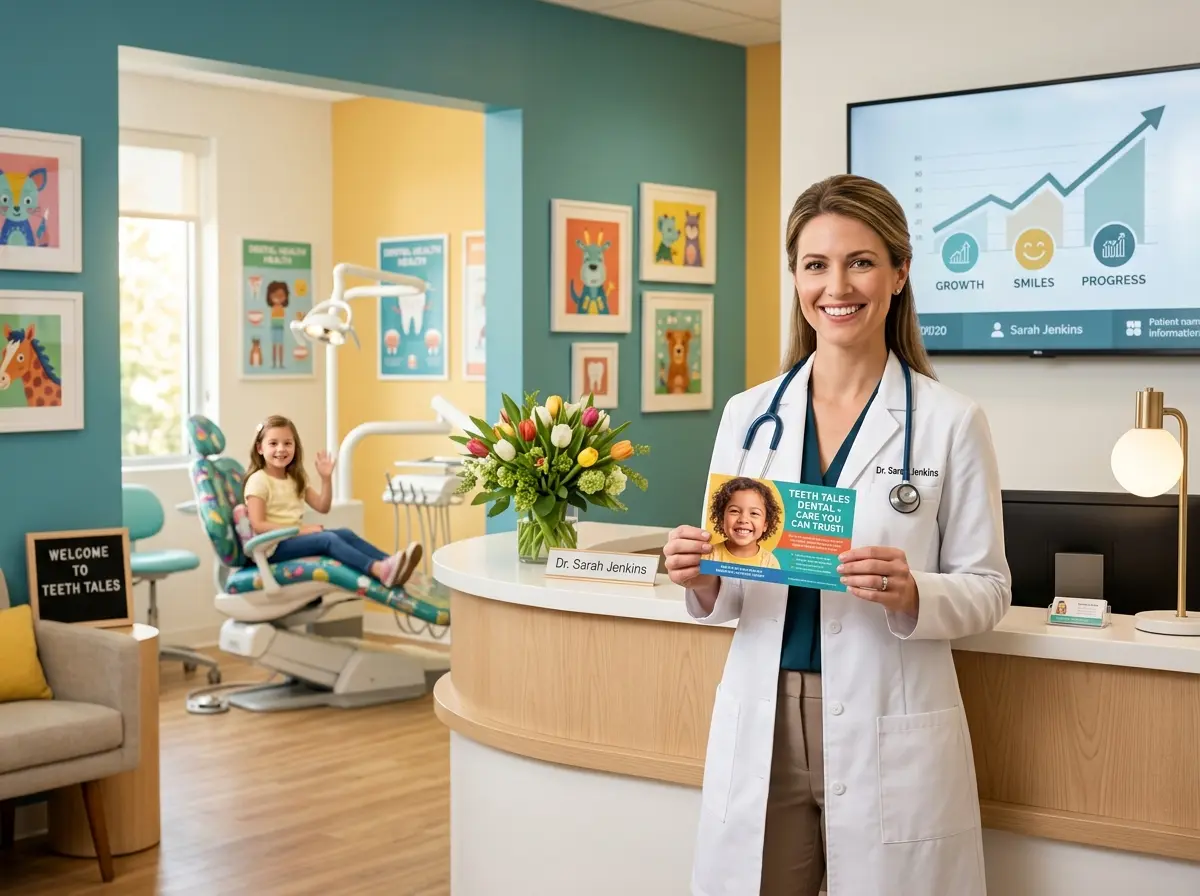
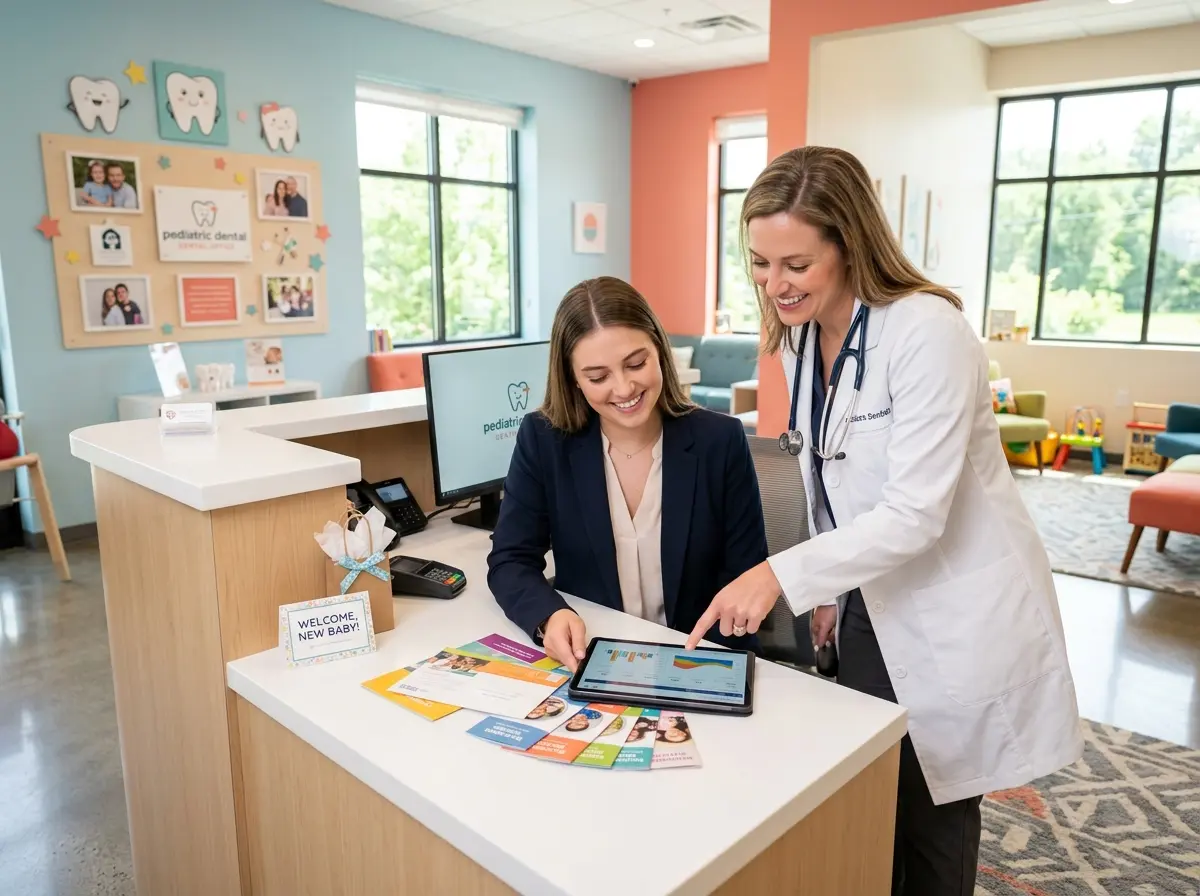
A postcard that says "We accept new patients!" is going to lose a battle against a pile of diapers every single time. Your outreach needs to offer genuine value. Consider putting together a physical or digital new parent welcome kit that includes something useful — a refrigerator magnet with baby milestone reminders and dental development notes, a small guide on teething symptoms and what's normal, or a "First Smile" checklist parents can follow in the first year.
Pair this with a warm, friendly letter that introduces your practice, your team, and your philosophy — without being salesy. Parents are protective of their babies and skeptical of anyone trying to make a buck. Lead with education and warmth. The appointment conversation comes later. Include a clear, simple call to action: a QR code linking to your new patient intake form, a phone number, or an invitation to schedule a free "meet the dentist" visit.
Set Up a Drip Campaign, Not a One-Time Touch
One postcard will not build a patient relationship. New parents are drowning in information and stimulation. A well-timed sequence of touchpoints over the first year is far more effective. Think about structuring your outreach like this:
- Week 2–4 after birth: Welcome mailer with your new parent guide and a warm introduction to your practice.
- Month 4–5: A friendly email or postcard reminding parents that teething is on the horizon and your team is ready to help.
- Month 9–10: A direct invitation to schedule the first dental visit, emphasizing the one-year recommendation from the AAPD.
- Month 12: A "Happy First Birthday!" card with a gentle reminder that now is the perfect time for that first appointment.
This sequence keeps your practice top of mind without being aggressive. You're positioned as a helpful resource, not a sales funnel with a toothbrush logo.
How Automation and Smart Tools Can Lighten Your Load
Let Technology Do the Heavy Lifting
Running a multi-touch outreach campaign manually is a recipe for burnout — especially when you're also, you know, running a dental practice. Email marketing platforms like Mailchimp or ActiveCampaign can automate your drip sequence once a contact is added to a list. Direct mail services like PostcardMania or Every Door Direct Mail can handle the physical mailings at scale. CRM software helps you track where each family is in your outreach journey and flag when someone is due for their next touchpoint.
This is also where Stella — an AI robot employee and phone receptionist — becomes quietly invaluable for a pediatric dental practice. When new parents call in after receiving your mailer (perhaps at 11 PM when no one is at the front desk), Stella answers the phone, answers their questions about your services, and collects new patient information through conversational intake forms — all without a single human being present. Her built-in CRM can store that intake data, tag the contact appropriately, and generate an AI-powered profile ready for your team in the morning. No missed calls, no lost leads, no frustrated parents who called once and moved on to the next practice on Google.
Converting Interest Into Lifelong Patients
Make the First Visit Exceptional
Your outreach campaign gets parents through the door. What happens after that determines whether they stay for the next fifteen years. The first visit for a one-year-old isn't really about the teeth — it's about setting the tone. Parents need to feel welcomed, respected, and confident they've made the right choice. Your team should be trained to speak to babies and parents simultaneously, explain everything in plain language, and make the whole experience feel calm and celebratory rather than clinical and rushed.
Consider offering a small "First Visit" gift — a rubber toothbrush, a personalized certificate, or even just a sticker and a genuinely enthusiastic high-five from the hygienist. These cost almost nothing but create a memorable experience that parents will talk about. Word-of-mouth referrals from happy new parents are among the highest-quality leads a pediatric practice can receive, and they come for free.
Build In a Referral Loop
Once a family has completed their first visit and had a great experience, ask for the referral — but do it thoughtfully. A follow-up email that says "We loved meeting little Emma! If you have friends with babies, we'd love to meet their families too" is warm and natural. You can even create a formal referral program: for every new patient a family refers, they receive a small gift card, a discount on a future service, or an entry into a quarterly prize drawing.
New parent social circles are goldmines. Parents talk to other parents constantly — at playgroups, on neighborhood apps, in parenting forums. One enthusiastic parent recommending your practice to their mommy-and-me group could easily result in five new patients. Build the referral ask into your post-visit workflow and watch it compound over time.
Track What's Actually Working
Any campaign worth running is worth measuring. Track how each new patient heard about you — whether it was your welcome mailer, a referral from a pediatrician, or a phone call generated by your drip email. Use UTM parameters on any digital links in your campaign. Ask at intake. Calculate your cost per acquired patient for each channel and double down on what's delivering results. A campaign that's generating patients for $30 each deserves more budget. One that's costing $400 per patient deserves a hard look.
Over time, you'll develop a clear picture of which outreach channels your local parent population actually responds to, and you can refine your campaign accordingly. Data isn't glamorous, but it's the difference between running a marketing strategy and running a marketing experiment with no end in sight.
Quick Reminder About Stella
Stella is an AI robot employee and phone receptionist that works 24/7 — greeting customers, answering questions, collecting intake information, and managing contacts through her built-in CRM, all for $99/month with no upfront hardware costs. For a pediatric dental practice running a new baby outreach campaign, she ensures that every parent who calls in response to your marketing actually reaches someone — even at midnight — and that no lead ever slips through the cracks while your front desk is busy or closed.
Your Next Steps Start Today
A "New Baby" outreach campaign isn't complicated, but it does require intentionality. The practices that win new patient families aren't necessarily the ones with the fanciest equipment or the biggest advertising budget — they're the ones that showed up consistently, offered genuine value, and made parents feel like they were already part of the family before they ever sat in your chair.
Here's where to start this week:
- Audit your current new patient sources. Do you know where your patients are coming from? If not, fix that first.
- Identify two or three local referral partners — a pediatrician, a birthing center, a postpartum doula — and reach out about a mutual referral arrangement.
- Draft your welcome mailer. Lead with education, warmth, and value. Save the sales pitch for someone who deserves it less than a new parent does.
- Set up your drip sequence in an email platform and map out your four-touchpoint timeline.
- Make sure your phones are covered. There's no point driving calls to your practice if those calls go unanswered.
The window between birth and that first dental visit is short, predictable, and full of opportunity. A well-built outreach campaign positions your practice as the obvious, trusted choice long before parents even know they need to make an appointment. Start building yours now — because somewhere in your community, a baby just arrived, and their parents have no idea who their pediatric dentist is going to be yet.
It might as well be you.