So, Someone Actually Called Your Medical Practice. Now What?
Let's paint a picture. A potential new patient — let's call her Karen (not that Karen, just a regular person with a sore knee) — decides she needs a new doctor. She does a quick Google search, finds your practice, and now she's on the verge of becoming your patient. Or she's about to call your competitor instead. The difference often comes down to one thing: the experience she has during those first few touchpoints with your practice.
This is the customer journey — or in medical speak, the patient journey — and for a new patient at a medical practice, it's a surprisingly complex series of steps that most practice owners have never fully mapped out. According to a study by Accenture, 41% of patients have switched providers due to poor digital experiences alone. That's not a rounding error. That's nearly half your potential new patients walking out the door before they ever walk through it.
So let's walk through the full journey, identify where the friction points live, and talk about how to actually fix them — without burning out your front desk staff in the process.
Before They Ever Dial Your Number: The Awareness and Consideration Phase
The Online First Impression (It's Everything)
Before a new patient calls, emails, or shows up at your front door, they've already been judging you. Hard. Your Google Business Profile, your website, your online reviews — these are the digital equivalent of your waiting room, and if they're outdated, confusing, or look like they were designed in 2009, potential patients are gone. Research from Software Advice found that 72% of patients use online reviews as their first step in finding a new doctor. Your star rating is essentially your first impression.
Actionable tip: Audit your online presence quarterly. Make sure your hours are accurate, your phone number works, your website loads quickly on mobile, and your reviews are being responded to — even the grumpy ones. Especially the grumpy ones.
The Decision Moment: Why They Choose You (or Don't)
Once Karen has narrowed it down to two or three practices, she's going to look for reassurance. She wants to know: Do you accept my insurance? Are you taking new patients? What's the wait time for a new patient appointment? These aren't complicated questions, but if the answers aren't easily findable online — or if she has to call and sit on hold to get them — there's a real chance she'll just pick whoever answers the phone first. And that might not be you.
This is why clarity in your online content and responsiveness in your communication channels aren't just "nice to haves." They're conversion tools. Make sure your website has a clear FAQ section, an easy-to-find phone number, and ideally some form of immediate response capability — whether that's a chatbot, a contact form with a fast response SLA, or an AI receptionist that picks up every single time.
The First Contact: Where Most Practices Accidentally Drop the Ball
How Stella Can Help Your Practice Answer the Call — Every Time
Here's where things get real. A new patient finally decides to call your practice. It's 7:15 PM on a Tuesday. Your front desk staff left at 5:00. The call goes to a generic voicemail. Karen hangs up and calls the next practice on her list. You just lost a patient — and you'll never even know it happened.
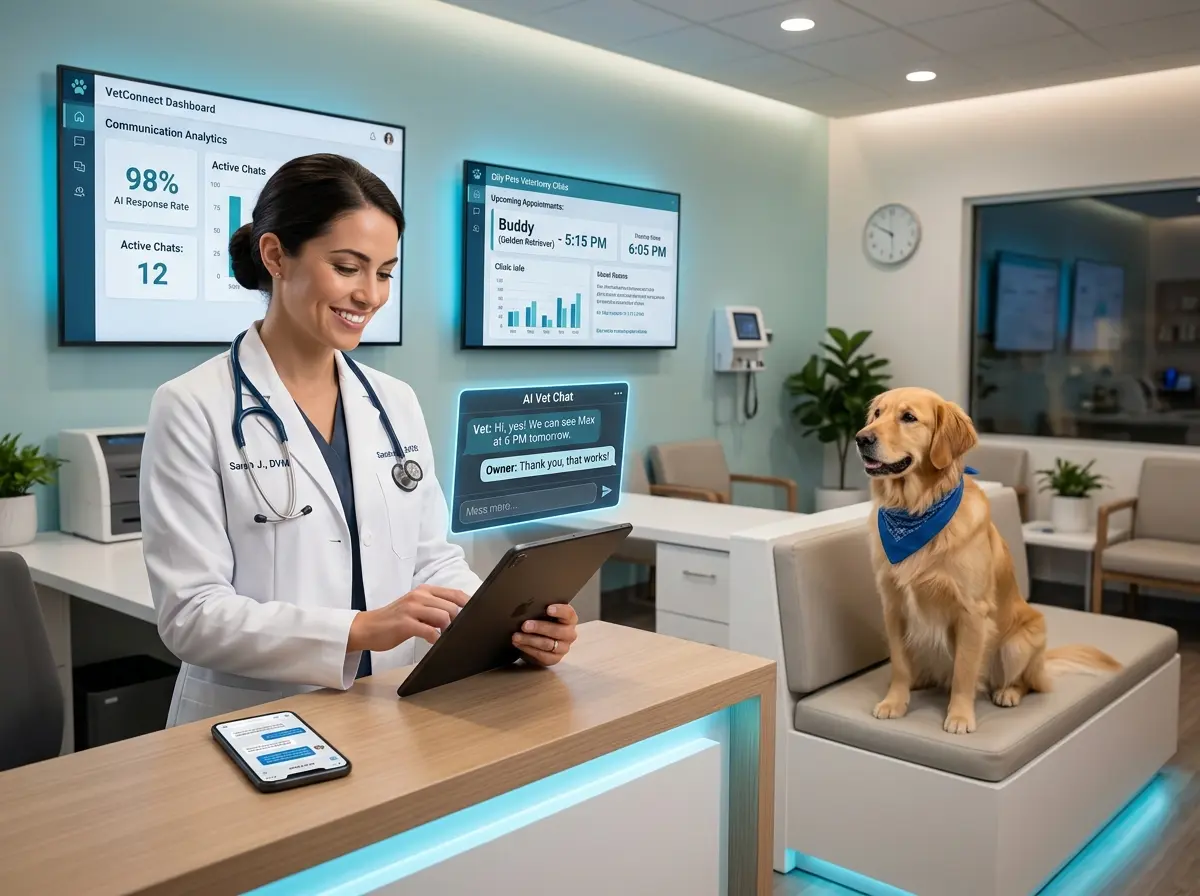
This is exactly the kind of gap that Stella, the AI robot employee and phone receptionist, is built to close. Stella answers calls 24/7 with the same knowledge your staff uses during business hours — insurance questions, new patient intake, hours, directions, services offered — and she never puts anyone on hold because she's helping someone else. For practices with a physical location, she also works as an in-person kiosk, greeting patients when they walk in and proactively engaging them before they even reach the front desk. Her built-in CRM and conversational intake forms mean that new patient information can be collected right there on the call — no paperwork backlog required.
For a medical practice trying to grow its patient base without adding headcount, that's a meaningful operational advantage.
From First Appointment to Loyal Patient: Making the In-Person Experience Count
The Check-In Experience: Smoother Than It Needs to Be
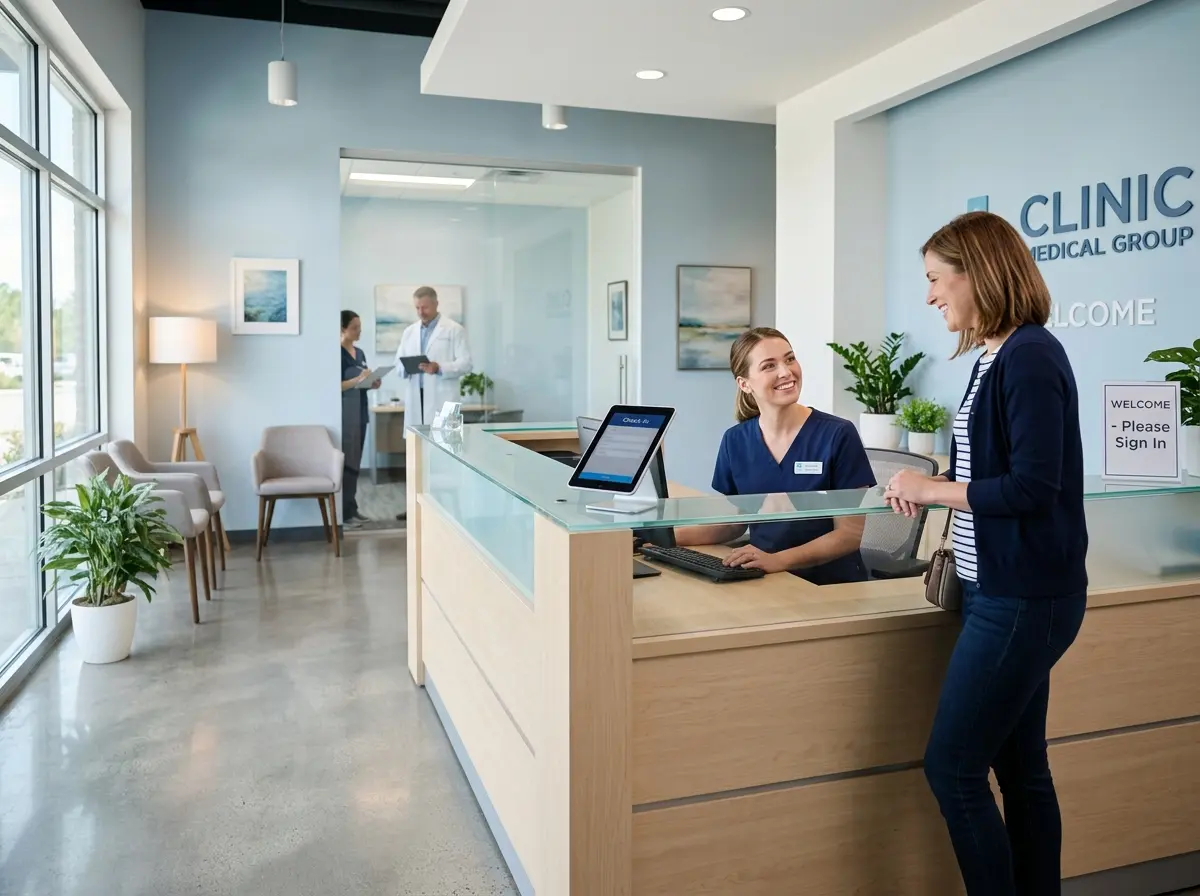
Karen has scheduled her appointment. She shows up five minutes early (a miracle). Now she's standing at your front desk, which is either a calm, welcoming experience — or a chaotic pile of clipboards, confused staff, and a waiting room that smells vaguely of anxiety. The check-in process is often where medical practices unknowingly signal to new patients that things might be a little... disorganized.
The fix isn't complicated, but it does require intentionality. Consider digital intake forms sent in advance via text or email. Greet new patients by name when they arrive — it costs nothing and means everything. Make sure whoever is at the front desk that day actually knows a new patient is coming in, rather than treating them like a walk-in surprise. These small details compound into a powerful first impression that says: we have our act together, and we're glad you're here.
The Clinical Experience: Where Trust Is Built
Once Karen is back in the exam room, the patient journey shifts into the hands of your clinical team. But don't make the mistake of thinking the "customer experience" job is done once the front desk has done its part. Studies from the Beryl Institute show that patients who feel emotionally supported during a clinical encounter are 2.6 times more likely to follow treatment plans and significantly more likely to return and refer others.
What does this mean practically? It means communication matters just as much as clinical skill. Physicians and nurses who explain things clearly, invite questions, and follow up as promised create loyal patients. It's not magic — it's just good communication dressed up in a white coat.
Post-Visit Follow-Up: The Step Everyone Forgets
The appointment is over. Karen leaves feeling pretty good. And then... nothing. No follow-up call. No summary of next steps. No reminder about her referral or her lab results. This is where the patient journey falls apart more often than any other stage, and it's one of the biggest drivers of patient churn.
Build a post-visit follow-up protocol into your workflow. This doesn't need to be elaborate — a simple text message or automated call 24–48 hours after a visit asking how the patient is feeling, reminding them of next steps, or prompting them to schedule their follow-up appointment can dramatically improve patient retention. According to the Harvard Business Review, acquiring a new customer costs 5 to 25 times more than retaining an existing one. In healthcare, that math hits even harder.
Quick Reminder About Stella
Stella is an AI robot employee and phone receptionist available for just $99/month — no upfront hardware costs, no complicated setup. She greets patients at your kiosk, answers calls around the clock, collects intake information, manages contacts in her built-in CRM, and never calls in sick. For a medical practice trying to deliver a seamless patient experience from first call to follow-up, she's worth a serious look.
Turning the Map Into Action
Here's the honest truth: most medical practices don't have a patient journey problem — they have a visibility problem. The friction points exist, but no one has taken the time to map them out and see where patients are quietly slipping away. Now you have the map.
Here's how to put it to work immediately:
- Audit your online presence today. Check your Google Business Profile, review your website on a mobile device, and read your most recent reviews. If anything is outdated or off-putting, fix it this week.
- Mystery-call your own practice. Call during off-hours and during your busiest time of day. What does a new patient actually experience? You might be surprised — and not in a good way.
- Map your check-in process from the patient's perspective. Time it. Note the friction. Ask a new staff member to go through it cold and report back.
- Create a simple post-visit follow-up sequence. Even one automated text or call can meaningfully improve retention and referrals.
- Close the after-hours gap. Whether through an AI receptionist, a clear voicemail strategy, or a callback protocol, make sure no new patient inquiry goes unanswered for more than 24 hours.
The practices that win aren't always the ones with the best physicians or the fanciest equipment. They're the ones that make every single step of the patient journey feel intentional, professional, and human. Karen came to you with a sore knee and a search engine. Give her a reason to stay — and to send everyone she knows your way.