Why Your Gym Packages Are Leaving Money on the Table
Let's be honest — if your gym's pricing structure is just "Basic," "Standard," and "Premium" with increasingly vague descriptions, you're not running a tiered package system. You're running a coin flip. Customers look at your options, shrug, and pick the cheapest one because nothing is compelling them to do otherwise. Meanwhile, you're watching revenue potential walk right out the door in their brand-new gym shoes.
Building a premium package tier that actually works — one that makes members feel genuinely excited to upgrade rather than reluctantly upsold — is both an art and a science. The good news is that gyms are uniquely positioned to do this well. You have recurring visits, personal relationships with members, tangible services people can experience firsthand, and a built-in emotional hook: people want to reach their fitness goals. Your job is to align your premium offerings with that desire so convincingly that upgrading feels like the obvious, even inevitable, choice.
This guide walks you through how to build a tiered package structure that drives upgrades at every visit — not through pressure tactics, but through genuine value, smart positioning, and a customer experience that makes the higher tier feel like the only sensible option.
Designing a Tier Structure That Sells Itself
The Psychology Behind Good Tiering
Before you build anything, understand this: people don't buy the best option, they buy the best option they can justify. This is why pricing psychology matters so much in tier design. The classic three-tier structure works because the middle option acts as an anchor — it makes the premium tier look reasonable by comparison while making the basic tier look, well, a little sad.
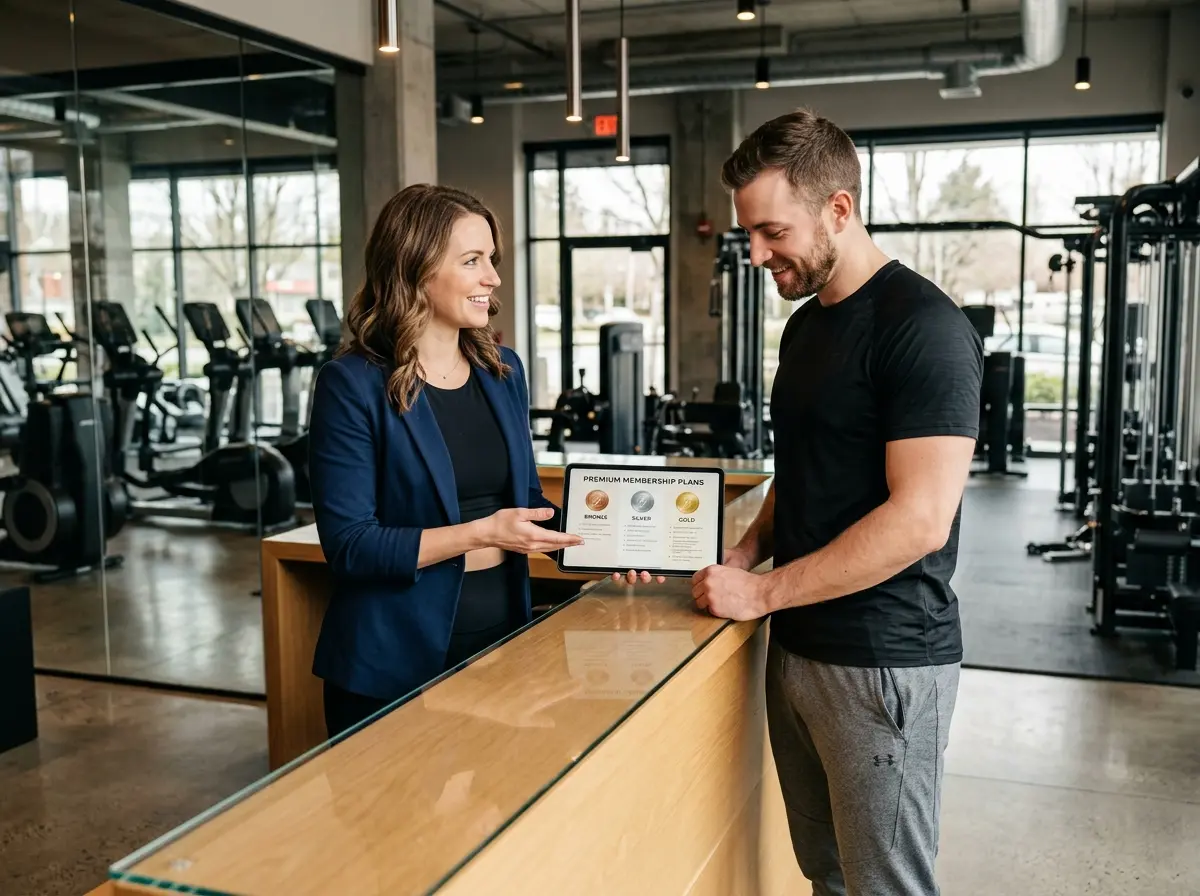
The key is to ensure each tier has a clear, emotionally resonant identity. Your basic tier should cover the essentials — facility access, maybe a class or two. Your mid tier adds convenience and community. Your premium tier? That's where transformation lives. Think personal training sessions, nutrition consultations, priority class booking, towel service, guest passes, or recovery amenities like sauna access. The premium tier shouldn't just have more — it should feel fundamentally different. Members who experience it should feel like they've unlocked a private club within your gym.
Naming Your Tiers Like You Mean It
Stop calling your tiers Basic, Standard, and Premium. Those words are forgettable at best and deflating at worst. Nobody dreams of being a "Basic" member. Instead, name your tiers around outcomes or identity. Consider names like Foundation, Momentum, and Elite — or align them with your gym's brand personality. A boutique fitness studio might use Core, Accelerate, and Transform. A CrossFit box might go with Recruit, Athlete, and Champion.
The name signals belonging. When a member tells their friend "I'm on the Elite plan," that's a social statement. That's identity. And identity is one of the most powerful drivers of purchase decisions in fitness, where people are quite literally investing in who they want to become.
Pricing the Gap Correctly
The jump between your mid tier and premium tier needs to feel like a bargain relative to the value being offered, but not so cheap that it undercuts your positioning. A general rule of thumb: if your mid tier is $60/month, your premium should sit around $95–$120/month. That's a meaningful difference — but when you stack the extras (two personal training sessions alone might retail at $100+), the premium tier suddenly looks like a steal. Price anchoring is your friend here. Always show the à la carte value of what's included so members can do the math themselves.
Turning Every Visit Into an Upgrade Opportunity
How Stella Can Help You Promote and Upsell at the Front Desk
Here's where things get interesting for gym owners. Most upgrade opportunities happen in person — when a member is already energized from a workout and in a positive, motivated mindset. That's exactly when they're most open to hearing about premium options. The problem? Your front desk staff is often too busy checking people in, answering the phone, handling complaints, or staring blankly into the middle distance after a long shift to proactively promote your premium tier to every single person who walks through the door.
Stella is a friendly AI robot kiosk that stands inside your gym and proactively engages members and visitors in natural conversation — talking about your services, current promotions, class schedules, and yes, your premium packages. She doesn't get tired, doesn't forget the pitch, and doesn't feel awkward bringing up an upgrade. She also answers your phone calls 24/7 with the same knowledge she uses in person, so potential members calling after hours get a full rundown of your tier options — not voicemail. For gym owners, having Stella at the front of house means upgrade conversations are happening constantly, consistently, and without adding a single task to your staff's plate.
Creating Irresistible In-Gym Upgrade Triggers
Give Members a Taste of the Premium Experience
One of the most effective upgrade strategies in the fitness industry is the "experience before commitment" approach. This means letting standard members sample premium perks on a limited basis. Offer a free guest pass to a premium-only class, a complimentary session in your recovery room, or a one-time nutrition consultation. When members experience the difference — and feel the quality — the upgrade sells itself.
Research consistently shows that trial experiences significantly outperform descriptive upselling. A member who uses your infrared sauna for the first time and loves it is far more likely to upgrade than a member who merely reads about it on a brochure. Design intentional "taste" moments into your member journey at the 30-day and 90-day marks, when engagement is naturally high and members are evaluating whether to continue or deepen their commitment.
Build Social Proof Into Your Physical Space
Your gym environment should do selling work even when your staff isn't actively pitching. This means posting transformation stories and testimonials from your premium members visibly throughout the space. Highlight the results — the marathon completed, the 50 pounds lost, the back pain eliminated — and subtly attribute those outcomes to the additional support that came with the premium tier. A simple wall display or digital screen showing "Elite Member Wins This Month" creates aspiration and belonging simultaneously.
You can also train your coaches and trainers to casually reference premium benefits during interactions: "Oh, you're working on your squat form? That's exactly the kind of thing we dig into deeply in our Elite coaching sessions." These soft, organic mentions plant seeds without feeling pushy. Authenticity is everything in fitness communities — members can smell a hard sell from across the weight room.
Use Milestone Moments to Trigger Upgrade Conversations
Timing matters enormously. The best moments to introduce an upgrade conversation are when a member hits a milestone — their 50th class, a personal record on a lift, or a goal they've been working toward. These are moments of genuine pride and momentum. Acknowledging the achievement and then connecting it to how a premium membership could help them reach their next goal is natural, motivating, and far more effective than a cold "would you like to upgrade?" during check-in.
Build a simple tracking system to flag these moments, whether that's through your gym management software or a manual process with your coaching staff. A handwritten congratulations card paired with a complimentary premium class trial is a low-cost, high-impact tactic that many larger gym chains overlook entirely — which means it's a genuine differentiator for independent gyms.
Quick Reminder About Stella
Stella is an AI robot employee and phone receptionist designed to help businesses like yours run smoother and sell smarter — available as an in-person kiosk and 24/7 phone receptionist for just $99/month with no upfront hardware costs. She greets members, promotes your packages, and handles calls around the clock so you never miss an opportunity to convert or upsell. For gym owners building out premium tiers, she's the consistent, tireless front-of-house presence that keeps your upgrade messaging working even on your busiest days.
Start Building Your Premium Tier the Right Way
Building a premium package tier that drives real upgrades isn't about fancy branding or aggressive sales tactics — it's about creating genuine value, communicating it clearly, and delivering it consistently every single time a member walks through your doors. When your premium tier feels like a logical, exciting next step rather than an upsell, members will move toward it on their own.
Here's where to start:
- Audit your current tier structure with fresh eyes. Ask yourself honestly: if you were a new member, would the premium tier feel worth it based on how it's described and priced?
- Redefine your premium benefits around outcomes and identity, not just access. Add at least one experiential element that can't be easily replicated outside your gym.
- Rename your tiers to reflect aspiration and belonging rather than generic hierarchy.
- Build in trial moments at key points in the member journey — 30 days, 90 days, and at major milestones.
- Train your team (and leverage tools like Stella) to make upgrade conversations organic, timely, and tied to individual member goals.
Your premium tier should be the destination that every member is quietly moving toward, even before they know it. Build it that way, and the upgrades will follow.