Introduction: Reading the Room Is a Skill, Not a Superpower
Picture this: A client walks into your spa, shoulders tense, jaw tight, eyes scanning the room like she's expecting someone to hand her a to-do list. You have approximately thirty seconds to either transform her experience into something restorative — or let her leave feeling like she just visited a slightly fancier waiting room. No pressure.
The truth is, emotional intelligence is one of the most underrated skills in the spa industry. We invest thousands in equipment, décor, and product lines, yet many spa owners spend remarkably little time training their staff to recognize and respond to the emotional states of the clients standing right in front of them. According to a study by PwC, 73% of consumers say a good experience is key in influencing their brand loyalties — and in a spa setting, "experience" is almost entirely emotional.
This isn't about turning your front desk staff into therapists. It's about giving your team the awareness and tools to meet clients where they are, respond with intention, and create the kind of experience that earns five-star reviews and repeat bookings. Let's break it down.
Recognizing Emotional Cues Before a Word Is Spoken
Most communication is nonverbal — and your staff is either reading it or missing it entirely. Training your team to pick up on body language, tone, and environmental context is the first step toward emotionally intelligent service.
Body Language Tells a Story
Before a client even opens their mouth, their body is giving you a full paragraph of information. Crossed arms, averted eye contact, and a stiff posture often signal anxiety, discomfort, or stress. Conversely, a relaxed stride and a warm smile indicate someone ready to be pampered and perhaps upsold on that hot stone upgrade.
Train your staff to observe clients from the moment they enter. Create a simple internal shorthand — not to label clients, but to calibrate the team's approach. A client who looks overwhelmed may need a slower, softer welcome. A client who seems rushed and distracted might appreciate efficiency and clarity over lengthy explanations. Teaching your team to observe before engaging is a small habit shift that pays significant dividends.
Vocal Tone and Pacing Are Just as Important
A client who speaks quickly, interrupts themselves, or gives clipped answers is signaling something. Maybe she's stressed. Maybe she's running late. Maybe she's been to three appointments today and is running on cold brew and determination. Whatever the reason, your staff should mirror and adapt — slowing their own speech slightly, using a calm and grounded tone, and avoiding the urge to bombard the client with questions or options all at once.
Role-playing exercises during training can be incredibly effective here. Have staff practice responding to "rushed client" versus "anxious first-timer" versus "regular who wants to vent" — because all three require a meaningfully different approach, even if the service being performed is identical.
Context Clues Matter Too
Time of day, booking notes, and even the weather can all offer useful context. A Monday morning client who booked a deep tissue massage might be carrying a week's worth of anticipatory stress. A Friday afternoon client booked for a facial may simply want to decompress and not be asked how her week was eleven times. Encourage staff to review booking notes before each appointment, flag any known preferences or sensitivities, and approach each interaction as informed, not generic.
Using Technology to Free Your Staff for the Human Moments That Matter
Here's where things get a little ironic in the best way possible: one of the most effective ways to improve the human emotional experience at your spa is to let technology handle the stuff that doesn't require a human touch at all.
Let AI Handle the Administrative Load
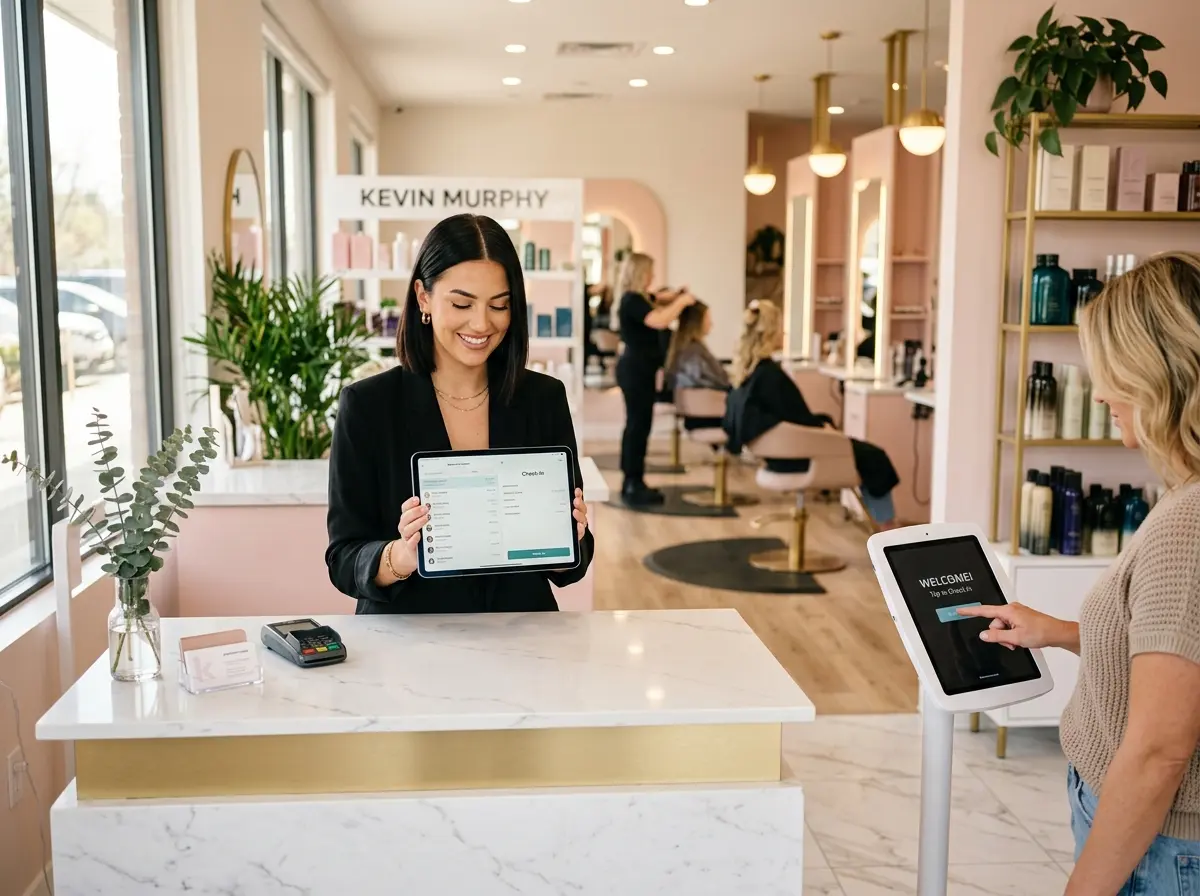
Your front desk team cannot be emotionally present for clients if they're simultaneously answering phones, explaining pricing, reciting hours, and trying to figure out who has the 2:15 appointment. That's not a staffing problem — that's a systems problem. Stella, the AI robot employee and phone receptionist, is designed to handle exactly this kind of operational noise. Her in-store kiosk presence means she can greet walk-ins, answer common questions, explain services and promotions, and handle intake — all while your human staff stays focused on the clients already in their care. Meanwhile, her 24/7 phone answering capability means no call goes to voicemail during a busy Saturday rush, and no potential booking is lost because your receptionist was occupied with someone standing at the counter.
When your team isn't stretched thin, they have the bandwidth to actually notice the client who looks like she's been crying. That's not a small thing. That's everything.
Responding to Emotional Cues with Intention and Skill
Recognition is only half the equation. What your staff does with that information is where the real training comes in. Responding to emotional cues isn't about scripted lines — it's about building a flexible, empathetic communication toolkit.
The Art of the Gentle Check-In
There is an enormous difference between "Is everything okay?" (which often gets an automatic "Fine, thanks") and "You seem like you could use some extra quiet time today — would you prefer we keep conversation minimal during your treatment?" The second version shows awareness, offers agency, and communicates that your team is paying attention. Train staff to offer options rather than ask open-ended questions that put the emotional labor back on the client.
Giving clients control over their own experience — especially when they're stressed — is one of the most powerful things you can do. Something as simple as, "Would you like aromatherapy today, or would you prefer we keep it scent-free?" signals attentiveness without demanding emotional disclosure. Small choices create big comfort.
De-escalation Without the Drama
Not every emotional cue is subtle. Sometimes a client is visibly frustrated — maybe her appointment started late, maybe something wasn't what she expected, maybe she's just having an objectively terrible Tuesday. Staff should be trained to acknowledge without being defensive, apologize without over-explaining, and redirect toward resolution quickly and calmly.
A practical framework to teach: Acknowledge, Empathize, Act. "I completely understand that's frustrating. I'm sorry for the wait. Here's what I'm going to do right now to make this right." Three steps. No spiraling. No excuses. Staff who can deliver this calmly and sincerely — even when they're internally stressed — are worth their weight in exfoliating salt scrubs.
Building a Culture of Emotional Awareness Over Time
One training session won't rewire your team's instincts. Emotional intelligence develops through consistent reinforcement, reflection, and psychological safety in the workplace. Consider introducing brief weekly team huddles where staff share a recent client interaction — good or challenging — and discuss what they noticed and how they responded. This normalizes the conversation around emotional attunement and builds collective wisdom without requiring formal therapy credentials from your estheticians.
You might also consider incorporating emotional intelligence into your hiring criteria. Technical skills can be taught. Genuine empathy and perceptiveness are significantly harder to train from scratch. When interviewing candidates, situational questions — "Tell me about a time you noticed a customer was upset before they said anything" — reveal a great deal about natural instincts.
Quick Reminder About Stella
Stella is an AI robot employee and phone receptionist available for just $99/month with no upfront hardware costs. She greets customers in-store, answers phones around the clock, promotes your services and specials, and keeps your CRM organized — all so your human team can stay focused on delivering the kind of thoughtful, emotionally intelligent care that actually keeps clients coming back. She's always on, never burned out, and never checks her phone during a conversation. Honestly, she sets the bar.
Conclusion: Train the Skill, Protect the Experience
Emotional intelligence isn't a soft skill — it's a business strategy. In an industry built on trust, relaxation, and personal care, the ability of your staff to recognize and respond to what a client is feeling is directly tied to your retention rates, your reviews, and your revenue. Clients don't just remember what services they received. They remember how they felt walking in, how your team made them feel seen, and whether they left feeling better than when they arrived.
Here are your actionable next steps to get started:
- Audit your current onboarding process. Does it include any training on emotional cues or client communication styles? If not, it's time to add it.
- Introduce role-playing scenarios in your next team meeting — cover at least three client emotional states and how to adapt the approach for each.
- Implement the Acknowledge, Empathize, Act framework for handling upset or frustrated clients and practice it until it's second nature.
- Reduce operational distractions for your front-facing staff so they have the mental space to be fully present with clients.
- Build emotional intelligence into your hiring process by adding situational interview questions that reveal empathy and observational awareness.
Your spa's competitive advantage isn't just your menu of services — it's the way clients feel the moment they walk through your door. Invest in that, and everything else gets a little easier.