Stop Walking Past Me: Why Your Sidewalk Presence Actually Matters
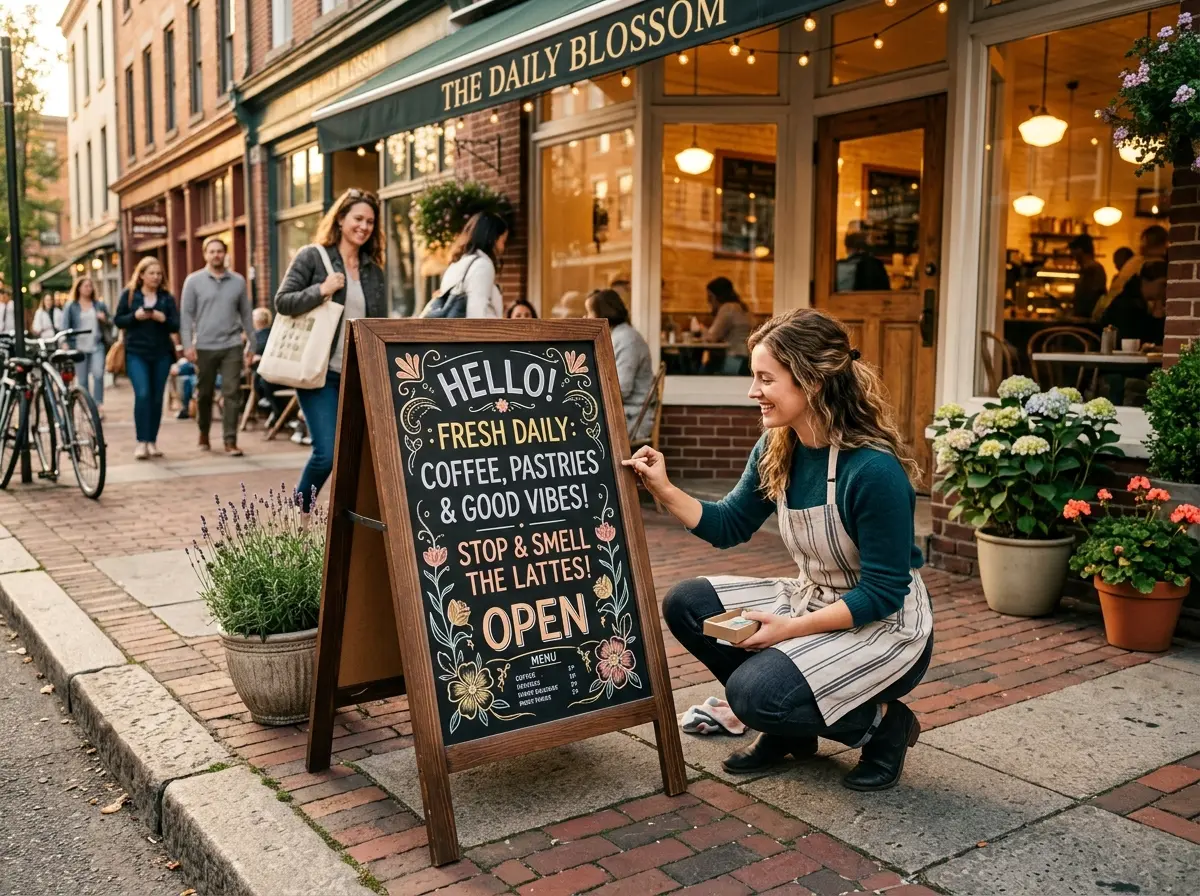
Let's be honest — you've walked past hundreds of businesses in your lifetime without a second glance. A blank window here, a generic "OPEN" sign there, maybe a sad little banner that looks like it survived three hurricanes and a pandemic. And yet, somewhere along the way, a clever little chalkboard sign outside a coffee shop made you stop dead in your tracks and walk right in. That's not an accident. That's strategy.
The A-frame chalkboard sign is one of the most underrated, underutilized, and frankly underrespected marketing tools available to brick-and-mortar business owners. It costs almost nothing compared to digital ads, requires no algorithm to cooperate, and speaks directly to the human beings physically walking past your door — you know, the ones who are already halfway to becoming your customers. According to the U.S. Small Business Administration, foot traffic remains one of the strongest conversion drivers for local businesses, and yet most owners treat the sidewalk like dead space.
This post is your no-excuses guide to writing A-frame chalkboard messages that actually stop people, make them smile (or think), and bring them through your door. We'll cover the psychology behind what works, creative ideas by industry, and how to build a sidewalk sign strategy that doesn't feel like homework.
The Psychology and Principles Behind a Sign That Actually Works
Humor, Curiosity, and the Open Loop
There's a reason the funniest chalkboard signs go viral while the ones reading "Today's Special: Soup" get photographed by nobody. Human brains are wired to seek resolution — when something creates a question or an unfinished thought, we feel compelled to close the loop. Marketers call this the "open loop" technique, and it works just as well on a piece of chalk and slate as it does in a Netflix trailer.
Consider the difference between "Fresh Coffee Available" and "Your ex has already moved on. You deserve better coffee." One states a fact. The other creates a tiny emotional experience on the sidewalk. Signs that use humor, mild absurdity, or a clever twist tend to generate not just foot traffic, but social sharing — and a shared photo of your sign is free marketing to potentially thousands of people.
Specificity Beats Vague Every Single Time
Generic messages are forgettable by design. "Great food inside" tells a passerby absolutely nothing they couldn't guess. But "The burger that made a grown man cry (happy tears)" plants a vivid, specific image that is very hard to shake. The more specific and concrete your message, the more believable and compelling it becomes.
This principle applies across industries. A salon that writes "Bad hair day? We've seen worse. Come in." is infinitely more inviting than "Walk-ins Welcome." Specificity signals confidence, personality, and authenticity — three things customers are desperately searching for when choosing between you and the business next door.
The Right Message for the Right Moment
Timing your sign content to match real-world context is a superpower most business owners ignore. A gym that posts "New Year's resolution still alive? Impressive." in mid-February is speaking directly to the person walking by who's already feeling a little guilty. A restaurant that writes "It's Thursday. You've earned tacos." is validating the exact emotional state of the after-work crowd. Tying your message to the season, the day of the week, local events, or even the weather creates an instant sense of relevance that generic signage simply cannot match.
Leveling Up Your In-Store Experience While You're at It
Don't Let a Great Sign Lead to a Disappointing Welcome
Here's the part nobody talks about: you can write the most brilliant, foot-stopping, laugh-out-loud chalkboard sign in your city — and completely waste it if the inside of your business doesn't match the energy. A customer who walks in curious and excited, only to be ignored by a distracted employee or left waiting at the counter, is not coming back. The sign earns the visit. The experience earns the return.
This is where Stella, the AI robot employee and phone receptionist, fits naturally into the conversation. Stella stands inside your store and proactively greets every single customer who walks in — no coffee breaks, no distracted moments, no "hang on, let me find someone to help you." She can answer questions about your menu, services, specials, and promotions in natural conversation, and she's fully capable of upselling and cross-selling on your behalf. For businesses that also take calls, Stella answers the phone 24/7 with the same knowledge she uses in person, so your brand voice stays consistent whether someone's walking through your door or dialing your number at midnight.
Chalkboard Sign Ideas That Work Across Industries
Restaurants, Cafés, and Bars
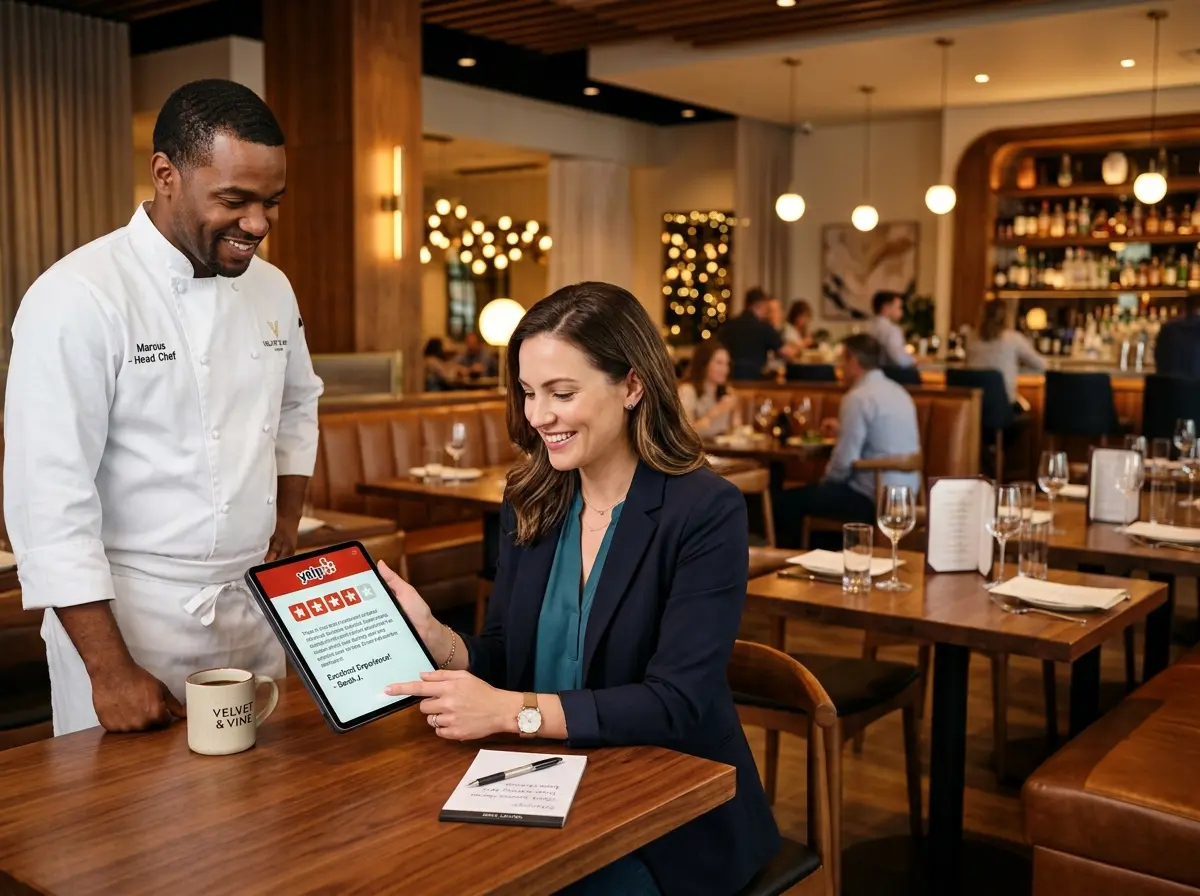
The food and beverage industry practically invented clever sidewalk signage, and for good reason — people make dining decisions impulsively and emotionally. Your sign has a small window to make someone change their lunch plans on the spot.
Some angles that consistently perform well in this space include playing on indulgence guilt ("Salads are great. But have you tried our mac and cheese?"), leveraging the social dynamic of dining ("First dates welcome. Breakups, please go next door."), and using dramatic specificity ("Our chef's grandmother would cry if you walked past this."). Seasonal tie-ins also work beautifully — a coffee shop in October that writes "Pumpkin spice is fine, but our cold brew is why people move to this neighborhood" is doing a lot of work in very few words.
Fitness Studios, Salons, Spas, and Service Businesses
Service businesses tend to default to listing their services on A-frame signs, which is about as exciting as reading a terms and conditions agreement. The better approach is to sell the feeling or the outcome rather than the service itself.
A gym sign that reads "The only bad workout is the one that didn't happen. We're open." speaks to motivation. A spa that writes "Your to-do list will still be there after your massage. It always is." speaks to the specific anxiety of the overworked adult who feels guilty taking a break. A salon that posts "Walk in looking like you. Walk out looking like the version of you that has their life together." is selling transformation and humor in the same breath. The goal is always to create a moment of recognition — the passerby should feel like the sign was written specifically for them.
Retail Shops and Boutiques
Retail chalkboard signs have an interesting opportunity that restaurants don't always have: they can create intrigue about specific products without fully revealing them. "We just got something in that your kitchen has been missing. Come find out what it is." is the sidewalk equivalent of a cliffhanger. Scarcity messaging also performs well in retail — "We only ordered twelve of these. Eight are already gone." activates loss aversion in a way that "New Arrivals" simply does not.
Seasonal and event-driven content is especially powerful for boutiques. Tying a sign to a local festival, a sports team's playoff run, or even an approaching holiday creates immediate relevance and urgency. The sign doesn't need to be funny — it just needs to make the right person feel seen at exactly the right moment.
Quick Reminder About Stella
Stella is an AI robot employee and phone receptionist built for businesses of all types and sizes — whether you're a bustling retail shop, a solo service provider, or anything in between. She works in-store as a kiosk that greets and engages customers, and she answers phone calls around the clock with full knowledge of your business. At just $99 per month with no upfront hardware costs, she's built to be accessible, reliable, and genuinely useful from day one.
Your Next Steps Start at the Sidewalk
If you've made it this far, you're already ahead of most business owners who are still staring at a blank A-frame wondering what to write. Here's how to put everything into action without overthinking it.
Start by identifying your best-performing offer, your most popular product, or the thing customers most frequently comment on positively — then build a sign around the emotion or outcome it delivers. Write three to five versions, say them out loud, and pick the one that makes you want to walk in even though you already own the place. Change your sign at minimum once a week, and consider swapping messaging based on time of day if your traffic patterns shift between morning commuters and evening foot traffic.
Keep a running notes file on your phone for sign ideas — funny things customers say, observations about the weather or the news, overheard complaints that your business actually solves. The best sign ideas don't come from brainstorming sessions; they come from paying attention to the people already in your orbit.
Finally, remember that the sign is the invitation, not the whole party. Once someone walks through your door, the experience needs to match the promise. Invest in both the outside message and the inside welcome, and you'll have a loop that feeds itself — great signs bring people in, great experiences bring them back, and loyal customers become the kind of walking word-of-mouth that no ad budget can buy.
Now go find some chalk and get to work.