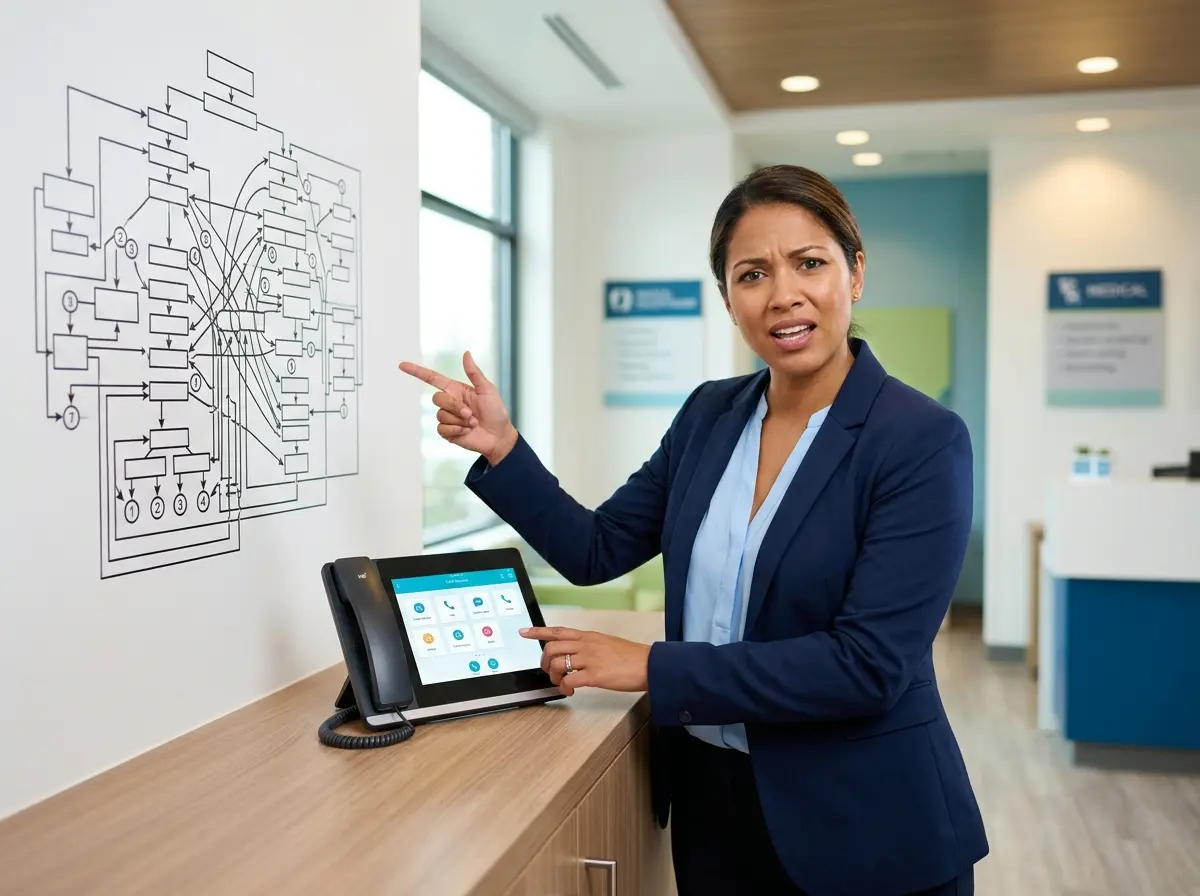
The Moment Every Patient Dreads (And Every Clinic Should Fix)
You know the scene. A patient calls your clinic, probably already a little anxious, maybe in pain, maybe just trying to book a routine appointment before their lunch break ends. And then it happens — the phone tree. "Press 1 for appointments. Press 2 for billing. Press 3 for prescription refills. Press 4 for our office directory. Press 5 to hear these options again." By option 4, they've already googled your competitor.
Phone trees were invented to solve a problem — routing calls efficiently without overwhelming staff — and somewhere along the way, they became the problem. For clinics especially, where patients are often stressed, time-pressed, or dealing with sensitive health concerns, a labyrinthine call routing system isn't just annoying. It's a genuine barrier to care, and a quiet but consistent drain on your patient retention and reputation.
The good news? Simplifying your call routing doesn't require a complete overhaul of your phone system or a full-time receptionist army. It requires a smarter approach — one that puts conversation first and menus dead last.
Why Clinic Phone Trees Are Secretly Sabotaging You
The Patient Experience Problem
Let's be blunt: nobody has ever hung up a call thinking, "Wow, that phone menu was a delight." According to research from Clutch, 80% of callers who reach voicemail or an automated system do not leave a message — they simply hang up and try somewhere else. For a clinic, that's not just a missed call; that's a missed appointment, a missed follow-up, and potentially a patient who's now telling their friends about the frustrating experience they had trying to reach you.
The deeper issue is that phone trees are designed around your internal org chart, not around how patients think. A patient calling about a sore knee doesn't know if that's a "scheduling" issue, an "existing patient" issue, or a "referral" issue. They just know their knee hurts and they want to talk to someone. When you force them to self-triage through a menu system, you're adding cognitive load to someone who's already stressed — and that's not a great look for a healthcare provider.
The Staff Productivity Paradox
Here's the irony that clinic owners rarely admit: complex phone trees, designed to reduce the burden on staff, often increase it. When a caller gets frustrated and punches through options randomly, or reaches the wrong department, they still end up needing a human to sort things out — usually a human who now has to apologize, transfer, and start over. Your front desk team spends more time managing the fallout of the phone system than they would have spent just answering the call cleanly in the first place.
And then there's hold time. The average medical office puts callers on hold for over 90 seconds — a figure that climbs during peak hours. Stack that on top of a confusing menu experience, and you've created a recipe for patient frustration that no amount of cheerful on-hold music can fix.
The Hidden Revenue Cost
Every unanswered or misrouted call has a dollar figure attached to it. A missed new patient inquiry, a prescription refill that doesn't get processed and leads to a lapsed relationship, a follow-up appointment that never gets booked because the patient gave up — these aren't hypothetical losses. They're quiet, consistent revenue leaks that most clinics never think to trace back to their phone system. Fixing your call routing isn't just a customer experience upgrade. It's a financial decision.
Smarter Call Routing — And Where Stella Comes In
Conversational Routing Changes Everything
The shift from menu-based routing to conversational routing is the single biggest improvement most clinics can make. Instead of forcing callers to navigate a decision tree, conversational systems simply ask, "How can I help you today?" and route based on the response. It sounds simple because it is — and it works. Callers reach the right place faster, with far less frustration, and your staff spend less time redirecting lost calls.
This is exactly where Stella fits naturally into a clinic's workflow. Stella answers every incoming call — 24 hours a day, 7 days a week — as a conversational AI receptionist that actually listens and responds intelligently. She can answer common patient questions about hours, services, and policies, collect intake information through natural conversation, take AI-summarized voicemails that get pushed directly to your team, and forward calls to human staff only when genuinely needed. For clinics with a physical waiting room, Stella's in-store kiosk presence also means arriving patients can be greeted, informed, and assisted before they ever reach the front desk. Her built-in CRM and intake forms further reduce administrative burden by capturing patient information automatically, no clipboard required.
How to Actually Simplify Your Clinic's Call Routing
Audit Before You Overhaul
Before you change anything, listen to your current system the way a patient does. Call your own clinic — anonymously, during peak hours — and time how long it takes to reach a human or accomplish a simple task like booking an appointment. You may be surprised, and probably not pleasantly. Map out every menu option and ask yourself honestly: does a patient know what this means, or is this internal jargon dressed up as a helpful choice? "Press 2 for the clinical team" means nothing to someone who just wants to reschedule a physical. Audit your call data too — which options get used, which get abandoned, and where in the menu flow you're losing people.
Reduce Options, Consolidate Paths
The research on this is fairly consistent: phone menus with more than three or four options see dramatically higher abandonment rates. If your menu currently has five, six, or more branches, consolidate aggressively. Ask yourself whether each option truly requires its own pathway, or whether a knowledgeable receptionist — human or AI — could simply handle the routing conversationally. In most clinics, the vast majority of calls fall into just two or three categories: scheduling, billing, and clinical questions. Design your system around reality, not theoretical edge cases.
Set Clear After-Hours Expectations (And Actually Handle Them)
One of the most overlooked aspects of clinic call routing is what happens outside business hours. Patients don't stop needing things at 5 PM, but most clinics essentially go dark — leaving callers with a generic voicemail and no timeline, no options, and no assurance that anyone will ever call back. At minimum, your after-hours experience should clearly state when to expect a callback, provide an alternative for urgent needs, and offer a way to leave a structured message rather than a rambling voicemail into the void. Better yet, consider a solution that handles after-hours calls actively rather than just passively collecting messages.
Quick Reminder About Stella
Stella is an AI robot employee and phone receptionist built to give businesses — including medical clinics — a professional, always-on front-line presence without the overhead of additional staff. She answers calls, greets in-person visitors, promotes services, captures patient information, and keeps your team focused on the work that actually requires a human. At just $99 per month with no upfront hardware costs, she's designed to be accessible for practices of any size.
Your Next Steps: From Phone Tree to Patient-Friendly Routing
Simplifying your clinic's call routing doesn't have to be a massive IT project or a months-long overhaul. It starts with a clear-eyed look at what your current system is actually doing to patient experience — and a commitment to prioritizing the caller over internal convenience. Here's a practical starting framework:
- Call your own clinic as a mystery patient and document every friction point you experience firsthand.
- Review your call data — abandoned calls, hold times, and which menu options are most and least used.
- Trim your menu to three options or fewer, consolidating wherever a knowledgeable voice could handle routing naturally.
- Create an active after-hours experience that sets clear expectations and gives urgent callers a real next step.
- Explore conversational AI reception as a way to handle the majority of incoming contacts without adding headcount.
The phone tree that's been quietly frustrating your patients and leaking revenue doesn't have to stay. The fix is more straightforward than you think, the tools are more accessible than ever, and your patients — the ones still hanging on the line waiting for option 5 to repeat — will genuinely thank you for it.
Your clinic exists to take care of people. It makes sense that the first interaction they have with you should feel that way too.