Running a Restaurant Is Hard Enough Without Your Phone Ringing Off the Hook
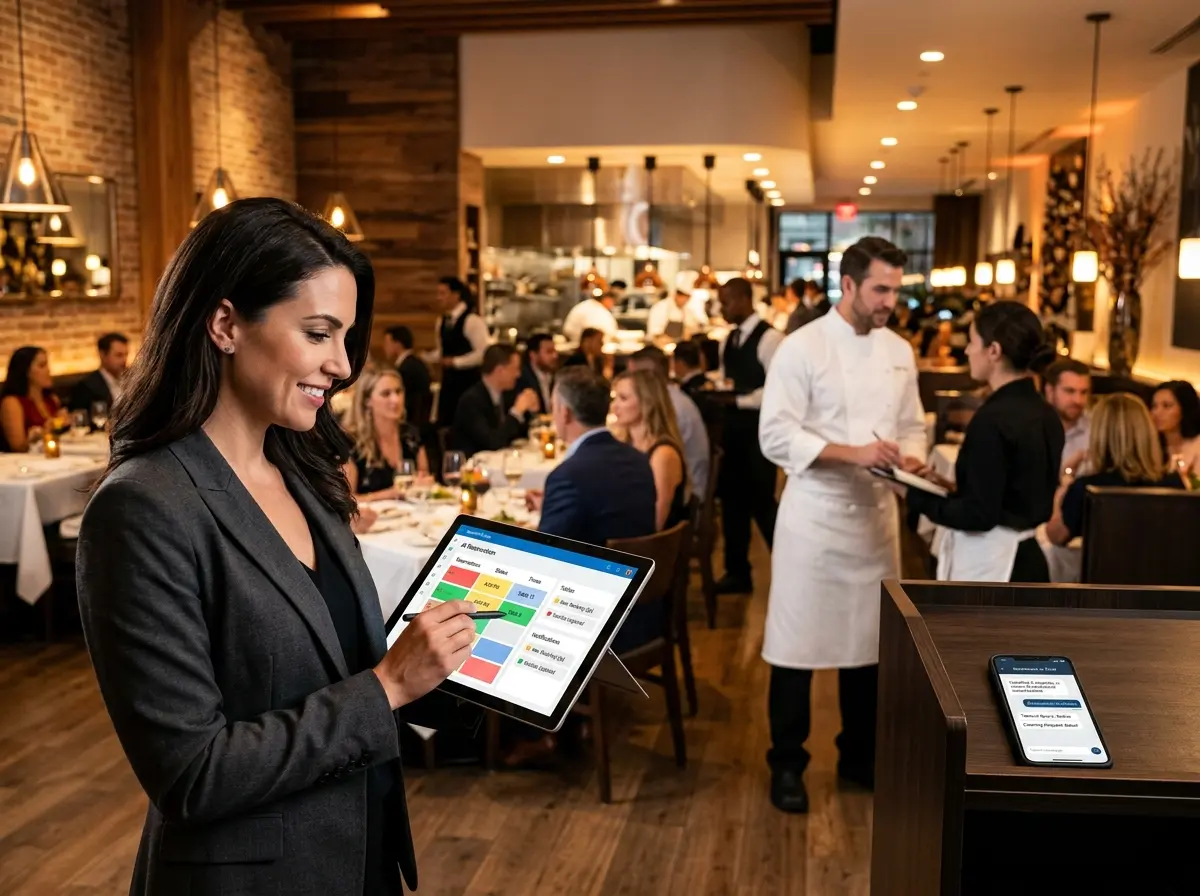
Let's paint a familiar picture: It's a Friday night. Your dining room is packed, your kitchen is in controlled chaos, and your one poor host is simultaneously seating a party of eight, managing a waitlist, and trying to answer the phone — where, of course, someone wants to know if you can accommodate a gluten-free, nut-free, dairy-free birthday dinner for 22 people next Saturday. Oh, and they also want to place a catering order. While your host is on hold.
Sound familiar? You're not alone. Restaurants consistently rank phone management as one of their biggest operational headaches — and it's costing them more than just sanity. Studies suggest that up to 30% of restaurant calls go unanswered during peak hours, which means missed reservations, lost catering contracts, and customers who simply called your competitor instead. The good news? There's a smarter way to handle all of it — and no, it doesn't involve hiring another person to stand by the phone all day.
The Real Cost of Mismanaged Reservations and Inquiries
Missed Calls Are Missed Revenue
Every unanswered call is a potential customer walking out the door before they ever walked in. For a restaurant doing catering, that missed call could represent a $2,000 corporate lunch order. For one handling private dining reservations, it might be a $500 anniversary dinner. These aren't abstract numbers — they're the difference between a profitable month and a frustrating one. And the cruel irony is that you're most likely to miss calls precisely when business is booming, because your staff is too busy actually serving customers to answer the phone.
Reservations Without a System Are a Recipe for Disaster
Anyone who has managed a reservation book knows the special joy of double-bookings, no-shows you forgot to follow up on, and the mysterious reservation for "Mike" that nobody can find any details about. When reservations are taken manually — scribbled on a notepad, entered haphazardly into a spreadsheet, or simply trusted to human memory — errors are inevitable. A disorganized reservation process doesn't just frustrate customers; it creates chaos in your kitchen and dining room, where prep and staffing depend on knowing how many covers are actually coming in.
Catering Inquiries Deserve More Than Voicemail
Catering is one of the highest-margin revenue streams available to restaurants, but it requires detailed upfront communication. Customers want to discuss menus, headcounts, dietary restrictions, delivery logistics, and pricing — often before they've even decided to book. When these inquiries hit a voicemail box and sit there for six hours, you've already lost the customer's momentum. Worse, if a competitor picks up immediately and handles the conversation professionally, you're not just losing a sale — you're losing it to someone who was simply more available than you were.
How Technology (and a Little AI) Can Change the Game
Let AI Handle the First Line of Communication
This is where things get genuinely exciting — or at least, more exciting than listening to hold music. AI-powered phone and in-person reception tools can handle reservation inquiries, answer common questions about your menu and hours, collect catering inquiry details, and even promote your current specials, all without putting a single customer on hold. Stella, an AI robot employee and phone receptionist, is built exactly for this. She answers calls 24/7 with the same conversational knowledge she uses when greeting customers in person at her kiosk — meaning your restaurant has a professional, informed, always-available presence whether someone walks through the door or dials your number at 10 PM on a Tuesday to ask about your catering minimums.
What makes Stella particularly useful for restaurants is her ability to collect structured customer information through conversational intake — gathering names, party sizes, event dates, dietary notes, and contact details naturally during a phone call or kiosk interaction. That information flows directly into her built-in CRM, where you can tag contacts, add notes, and review AI-generated customer profiles. No more mystery reservations for "Mike."
Building a Better Reservation and Catering Workflow
Standardize Your Intake Process
The single most impactful thing a restaurant can do to improve reservation and catering management is to standardize what information gets collected upfront. For reservations, that means name, party size, date and time, contact number, and any special requests. For catering, it means event date, expected headcount, service style, dietary requirements, budget range, and preferred contact method. When every inquiry goes through the same intake process — whether handled by a human or an AI — your team always has what they need to follow up intelligently and prepare properly.
This sounds obvious, but most restaurants don't do it consistently. A staff member in a rush will skip the dietary question. Another will forget to ask for a callback number. Standardizing intake through a structured process (or delegating it to a tool that never skips steps) eliminates the patchwork approach that leads to errors and missed details.
Create a Follow-Up System That Actually Happens
Collecting an inquiry is only half the battle. The follow-up is where catering revenue is won or lost. A well-designed follow-up system should include an acknowledgment within the hour, a detailed proposal or confirmation within 24 hours, and a check-in a few days before the event. Most restaurants agree with this in theory and execute it inconsistently in practice — because someone has to remember to do it, find the original inquiry, and carve out time between services.
Technology solves this by keeping all inquiries organized, tagged, and visible. When your CRM shows you three open catering inquiries that haven't received a follow-up in 48 hours, you act on that. When they're spread across sticky notes and a shared inbox nobody checks, they disappear. The restaurants winning catering business aren't necessarily the ones with the best food — they're often simply the ones who responded fastest and followed up most professionally.
Use Slow Hours to Prepare for Busy Ones
One of the underutilized advantages of AI phone tools is that they work around the clock, meaning inquiries coming in during off-hours don't go cold until Tuesday morning. A customer who calls Sunday night about a corporate lunch gets their questions answered immediately and has their information captured and ready for your team Monday morning. This asynchronous advantage is particularly powerful for catering, where the buying decision often happens outside of business hours when the customer finally has time to think and make calls. Being the restaurant that responds at 9 PM isn't just impressive — it's increasingly expected.
Quick Reminder About Stella
Stella is a friendly AI robot employee and phone receptionist designed to give businesses a professional, always-on customer-facing presence — both as a physical kiosk inside your location and as a 24/7 phone receptionist. She greets customers, answers questions, collects intake information, manages contacts through a built-in CRM, and promotes your current specials without ever calling in sick or putting someone on hold to go check on a table. All of this starts at $99/month with no upfront hardware costs.
It's Time to Stop Losing Business to a Busy Signal
The restaurants that will thrive in the next few years aren't necessarily the ones with the flashiest menus or the trendiest concepts — they're the ones that run tightly, communicate professionally, and make it easy for customers to give them money. Managing reservations, takeout inquiries, and catering requests efficiently isn't a luxury; it's a fundamental competitive advantage that most restaurants are leaving on the table (pun very much intended).
Here are a few actionable steps you can take right now:
- Audit your missed calls. Check your phone records for the past 30 days and count how many calls went unanswered during peak hours. Put a dollar value on what those calls might have represented.
- Standardize your intake questions. Write down exactly what information you need for a reservation and a catering inquiry, and make sure every channel — phone, in-person, web — collects the same data.
- Build a follow-up sequence for catering leads. Even a simple three-step process (acknowledgment, proposal, pre-event check-in) will put you ahead of most of your competition.
- Explore AI reception tools. If your team is consistently overwhelmed during service, the answer isn't always more staff — sometimes it's smarter tools that handle the first line of customer communication so your people can focus on the experience inside your four walls.
Your restaurant deserves to capture every opportunity that calls — literally. Stop letting good revenue ring through to voicemail and start building the kind of responsive, organized operation that turns first-time inquiries into loyal regulars.