When the Last Petal Falls: Surviving (and Thriving) After Peak Season
Spring and summer are basically the Super Bowl for garden centers. Customers are energized, the weather is glorious, and you can barely keep the impatiens stocked. Then September rolls around, the crowds thin out, and suddenly you're left standing in a sea of unsold ornamental kale wondering what just happened.
Here's the thing: the off-season doesn't have to be a slow, painful crawl to next April. In fact, the businesses that use their slow months strategically are the ones that come out of the gate fastest when spring returns. The off-season is less of a curse and more of a gift — a slightly chilly, pumpkin-spiced gift that most garden center owners don't know how to unwrap.
Whether you're staring down a quiet October or bracing for a long winter stretch, this guide will walk you through practical, proven strategies to keep revenue flowing, customers engaged, and your sanity intact until the tulips bloom again.
Rethinking Your Revenue: Diversifying What You Sell
The most obvious off-season challenge is that people simply aren't buying petunias in January. But that doesn't mean they've stopped spending money — it means you need to give them something different to spend it on. The most resilient garden centers have learned to evolve their product and service mix with the seasons rather than fighting the calendar.
Seasonal Products That Actually Sell
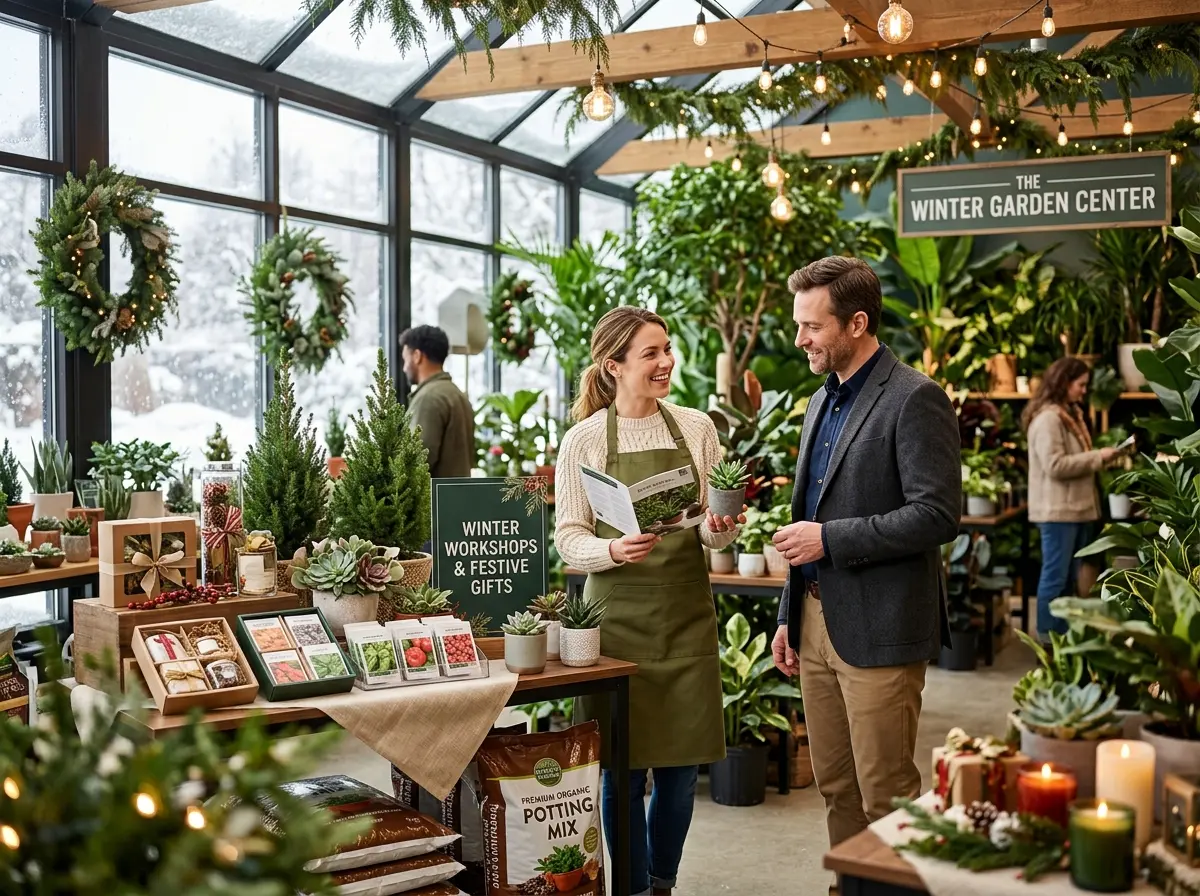
Fall and winter bring their own consumer energy — people are decorating for holidays, thinking about cozy indoor spaces, and looking for gifts. Lean into that. Ornamental gourds, mums, and fall wreaths are a natural bridge through October and November. Transition into holiday greenery, poinsettias, Christmas trees, and gift-wrapped houseplants as December approaches. Houseplants, in particular, have exploded in popularity over the past several years — a trend that shows no signs of slowing. According to the National Gardening Association, houseplant sales have grown steadily, with younger consumers driving significant year-round demand. Your off-season is their prime shopping season.
Workshops, Classes, and Events
Here's a revenue stream that many garden centers underutilize: charging people to learn things. Wreath-making workshops. Holiday centerpiece classes. Indoor succulent arranging sessions. Winter pruning seminars for the serious gardeners in your community. These events do double duty — they bring in direct revenue and they keep your brand top of mind during months when customers might otherwise forget you exist. Price them appropriately (don't undervalue your expertise), promote them early, and consider offering gift cards for them. Nothing says "thoughtful gift" like a spring gardening class for the horticulture-obsessed person in someone's life.
Gift Cards and Loyalty Programs
Gift cards are a garden center's best friend during the holidays. They're essentially pre-selling your spring inventory in December, which is a genuinely beautiful thing. Pair gift cards with a loyalty program that rewards customers for purchases made during the off-season, and you've created a financial incentive for people to keep showing up even when the mercury drops. A simple points-based system — redeemable come spring — can meaningfully shift customer behavior in your favor.
Staying Connected When Foot Traffic Drops
Just because customers aren't walking through your doors every weekend doesn't mean the relationship needs to go dormant. Off-season customer communication is arguably more important than peak-season communication, precisely because you're competing with silence.
How Technology Can Bridge the Gap
This is where smart tools really earn their keep. Stella, the AI robot employee and phone receptionist, is particularly well-suited for garden centers navigating the off-season. While your in-store foot traffic slows, Stella stands ready at your kiosk to greet every visitor, answer questions about your current inventory, and proactively promote whatever seasonal offerings or workshops you have running — no staff hovering required. On the phone side, she answers calls 24/7, so when a customer calls at 8pm wondering if you carry a specific variety of amaryllis bulb for a holiday gift, they get a real, knowledgeable response instead of a voicemail. During slower months when you may be running leaner on staff, that kind of consistent, professional presence is genuinely valuable. And since Stella captures customer contact information and interaction data through her built-in CRM and conversational intake forms, every off-season interaction becomes an opportunity to build your contact list for spring marketing.
Using the Off-Season to Set Up Your Best Spring Ever
Slow seasons aren't just about survival — they're about preparation. The garden centers that crush it in spring aren't the ones who woke up on March 1st and started scrambling. They're the ones who spent the winter months building systems, nurturing customer relationships, and making decisions thoughtfully rather than reactively.
Audit, Analyze, and Plan
Pull your sales data from the past year and actually look at it. What products moved? What sat on the shelf until it was painfully marked down? Which promotions brought people in and which ones were met with collective indifference? The off-season is the only time you'll have the mental bandwidth to answer these questions honestly. Use that information to inform your spring buying decisions, staffing plans, and marketing calendar. If you ran any promotions through a tool that tracked customer interaction data, even better — patterns in what customers asked about or responded to are gold for planning.
Train Your Team and Refine Your Operations
When the rush is on, training takes a backseat to survival. The off-season is your window to fix that. Cross-train staff so everyone understands your full product range. Revisit your customer service standards. Update your policies and make sure everyone knows them. If there were moments last spring where operations felt chaotic — checkout lines, phone calls going unanswered, customers struggling to find help — now is the time to design systems that prevent those same problems from recurring. A calmer season is a smarter season, if you choose to use it that way.
Build Your Marketing Pipeline for Spring
Email marketing, social media content, promotional calendars — all of this takes time to do well, and none of it can be done well when you're elbow-deep in flat trays of begonias in April. Use the off-season to build your email list (workshops and events are great for this), plan your content calendar, and schedule as much as possible in advance. A well-timed email campaign that lands in customers' inboxes in late February — with a "get ready for spring" message and an early-bird promotion — can meaningfully drive traffic when your doors reopen in full force.
Quick Reminder About Stella
Stella is an AI robot employee and phone receptionist that works in your store as a friendly kiosk and answers your business calls around the clock — no breaks, no turnover, no bad days. She greets customers, promotes your current offerings, answers questions, and captures contact information for your CRM. At just $99/month with no upfront hardware costs, she's one of the more affordable ways to maintain a professional, engaged presence during the months when your human team is naturally scaled back.
The Off-Season Is What You Make It
Let's be honest: you didn't get into the garden center business because you love quarterly revenue planning. You got in because you love plants, people, and the particular joy of watching something grow. But the business side of things — the strategy, the systems, the customer relationships — is what allows you to keep doing the part you actually love.
The off-season, approached correctly, is one of the most valuable stretches of the year. Here's how to make the most of it:
- Diversify your product mix to match fall and winter consumer interests — houseplants, holiday greenery, and experiential offerings like workshops.
- Double down on gift cards and loyalty incentives to pre-sell spring and keep customers engaged year-round.
- Invest in tools and systems that keep your business responsive and professional even when staffing is lean.
- Use your data from the past year to make smarter decisions about spring inventory and marketing.
- Build your marketing pipeline now so that when the first hints of spring appear, you're already in your customers' inboxes and top of mind.
The slow season is temporary. The groundwork you lay during it is not. So put on a good podcast, make yourself a warm drink, and get to work — your future spring-season self will be extremely grateful.