Your Clients Loved Their Facial. They Just Can't Remember to Book the Next One.
Here's a scenario that probably sounds familiar: A client walks out of your spa glowing, relaxed, and genuinely enthusiastic about coming back in four weeks for their next treatment. They mean every word of it. Then life happens — emails pile up, the kids get sick, and somehow six months pass before they think about booking again. Meanwhile, you're sitting on a half-empty appointment book wondering where all your regulars went.
Post-treatment follow-up is one of the most powerful (and most neglected) tools in a spa owner's retention arsenal. The research backs this up — acquiring a new customer costs five to seven times more than retaining an existing one, yet most spas put the bulk of their energy into attracting new faces rather than nurturing the clients who already love them. The problem isn't that you don't care about follow-up. The problem is that doing it well, consistently, and at scale is genuinely hard when you're also managing staff, managing inventory, managing your sanity, and occasionally actually running a spa.
That's exactly where AI steps in — not to replace the warm, personal touch your brand is built on, but to make sure that touch actually happens every single time, for every single client, without requiring you or your team to manually chase down hundreds of conversations.
Why Post-Treatment Follow-Up Is Broken at Most Spas
The Good Intentions Gap
Nearly every spa owner understands, intellectually, that following up with clients after a treatment is good for business. Check in on how they're feeling, recommend a complementary product, nudge them toward their next appointment — it's basic relationship management. And yet, studies suggest that fewer than 30% of service businesses follow up with clients consistently after a visit. The gap between knowing and doing is enormous, and it exists for a very simple reason: your staff is busy.
After a full day of treatments, your team isn't exactly eager to spend an hour sending personalized follow-up messages to every client who came through the door. And even if they were, the cognitive load of remembering who had what treatment, what products were recommended, and what the client mentioned during their session is significant. Good follow-up requires context, and context takes time to track and recall.
Generic Outreach Doesn't Cut It Anymore
If your current follow-up strategy is a mass email blast with "Hope you enjoyed your visit! Book again soon!" — you're not alone, but you're also not impressing anyone. Modern clients expect personalization. A message that references their specific treatment, acknowledges their skin concerns, or recommends a product aligned with what they discussed during their appointment feels thoughtful. A generic blast feels like junk mail with your logo on it.
The challenge is that truly personalized outreach — at scale — requires a system. It requires storing the right information about each client, triggering the right message at the right time, and doing all of this without a dedicated marketing coordinator on staff. For small to mid-sized spas, that system has historically been out of reach. AI is changing that math considerably.
Timing Is Everything (And Manual Timing Is Terrible)
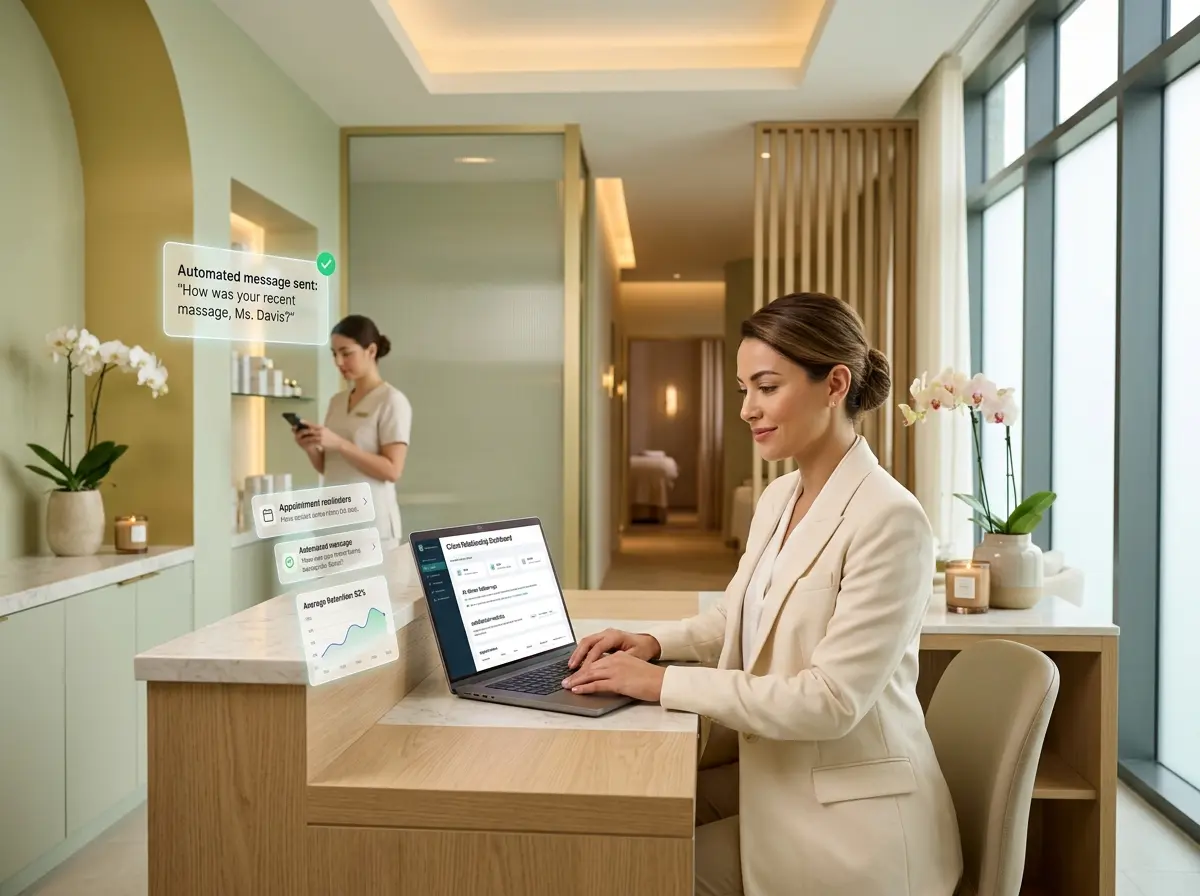
Post-treatment follow-up has a short window of maximum effectiveness. A check-in message sent 24 to 48 hours after a facial lands when the client still feels great and has your business top of mind. That same message sent two weeks later lands in a void. Manual processes almost always result in delayed, inconsistent outreach — if it happens at all. Automated, AI-driven follow-up solves the timing problem entirely by triggering messages based on appointment data rather than human memory and availability.
How AI Tools (Including Stella) Can Handle This for You
Centralizing Client Data So Follow-Up Actually Makes Sense
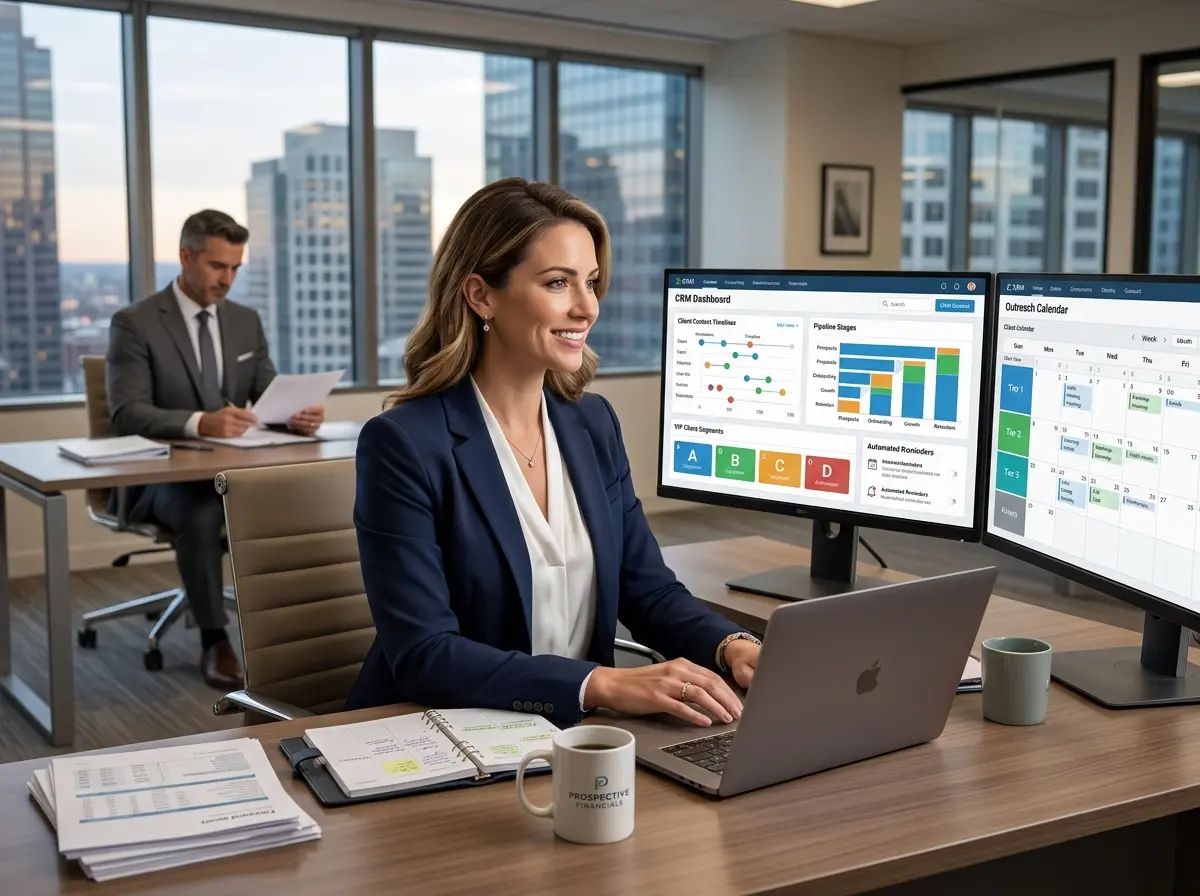
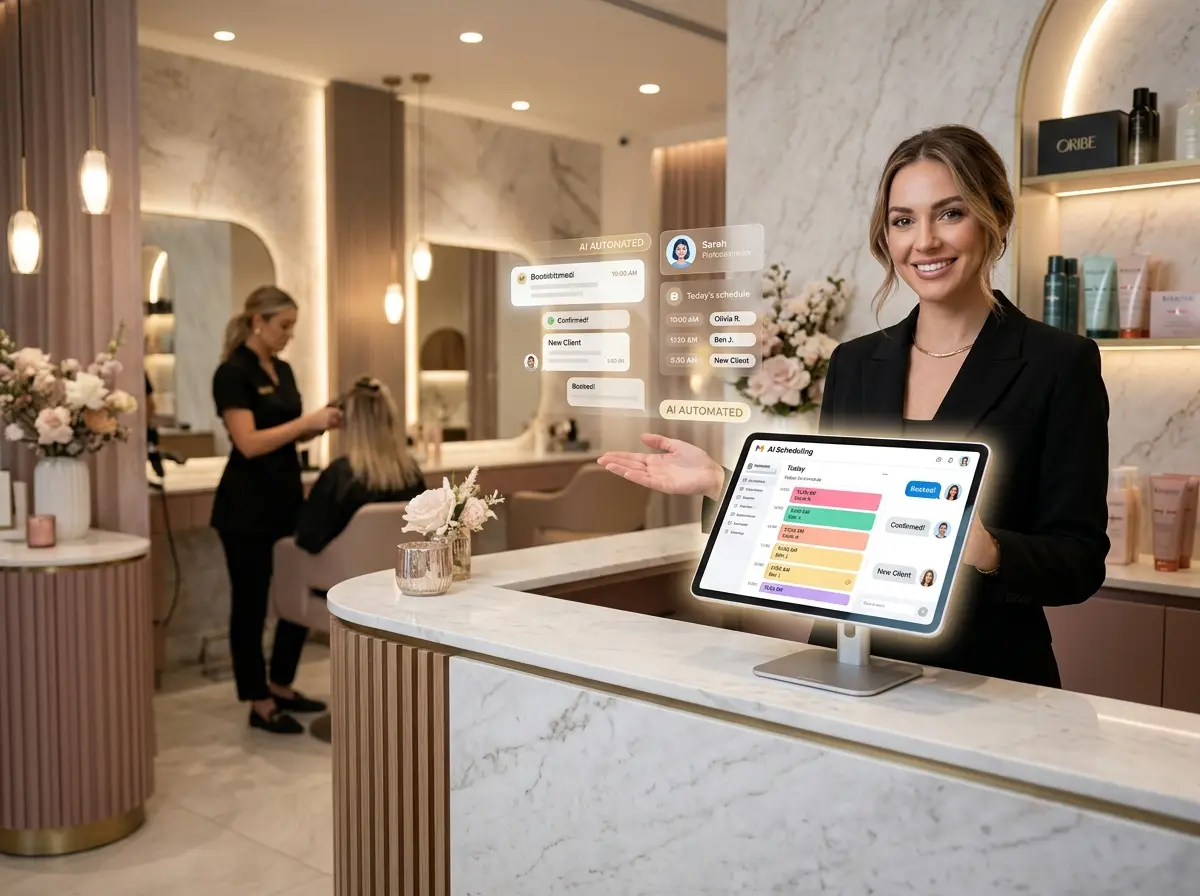
Effective follow-up starts with good data, and good data starts with a system that captures the right information during and after each visit. Stella, the AI robot employee and phone receptionist, helps spas collect client information through conversational intake forms — whether a client is calling ahead to book, stopping by the front desk, or interacting with Stella's in-store kiosk. That intake data feeds directly into her built-in CRM, where you can store custom fields, add tags, write notes, and let AI-generated client profiles do the heavy organizational lifting.
When your client data is clean, tagged, and centralized, follow-up becomes dramatically easier to personalize and automate. You know who came in, what they had done, what products were discussed, and when they're likely due for a return visit. That's the foundation everything else is built on.
Freeing Up Your Team to Focus on In-Room Excellence
Stella also handles the front-of-house and phone-answering workload that typically pulls staff away from high-value tasks. She greets walk-ins at the kiosk, answers calls around the clock, promotes current specials, and handles common questions about services, pricing, and availability — all without interrupting your estheticians or front desk staff. When your team isn't buried in routine inquiries, they actually have the bandwidth to provide the kind of attentive, in-room experience that makes clients want to come back in the first place.
Building a Follow-Up System That Actually Scales
Map Your Follow-Up Touchpoints by Treatment Type
Not every treatment warrants the same follow-up cadence. A client who just had a chemical peel needs very different post-care communication than someone who came in for a relaxation massage. Start by mapping out your core service categories and defining what good follow-up looks like for each one. What should be communicated at 24 hours? At one week? At the four-week rebooking window? When you document this intentionally, you stop relying on individual staff judgment and start operating from a consistent, repeatable system.
For skin treatments, follow-up might include post-care reminders, product recommendations, and a check-in about how their skin is responding. For body treatments, it might focus on hydration tips and the benefits of a complementary service. For wellness-focused treatments, it could include a simple check-in about how they're feeling along with a gentle nudge toward their next visit. The specifics matter less than having them defined and systematized.
Use Conversational AI for the Follow-Up Itself
One of the most underutilized applications of AI in the spa industry is using it to conduct actual follow-up conversations — not just send templated messages, but engage clients in two-way dialogue that feels natural and responsive. AI-powered conversation tools can ask how a client is feeling after their treatment, answer follow-up questions about post-care, take note of concerns to pass along to staff, and guide clients toward rebooking or purchasing the product that was recommended during their visit. This kind of conversational follow-up dramatically outperforms static email in both engagement and conversion.
Track What's Working and Iterate
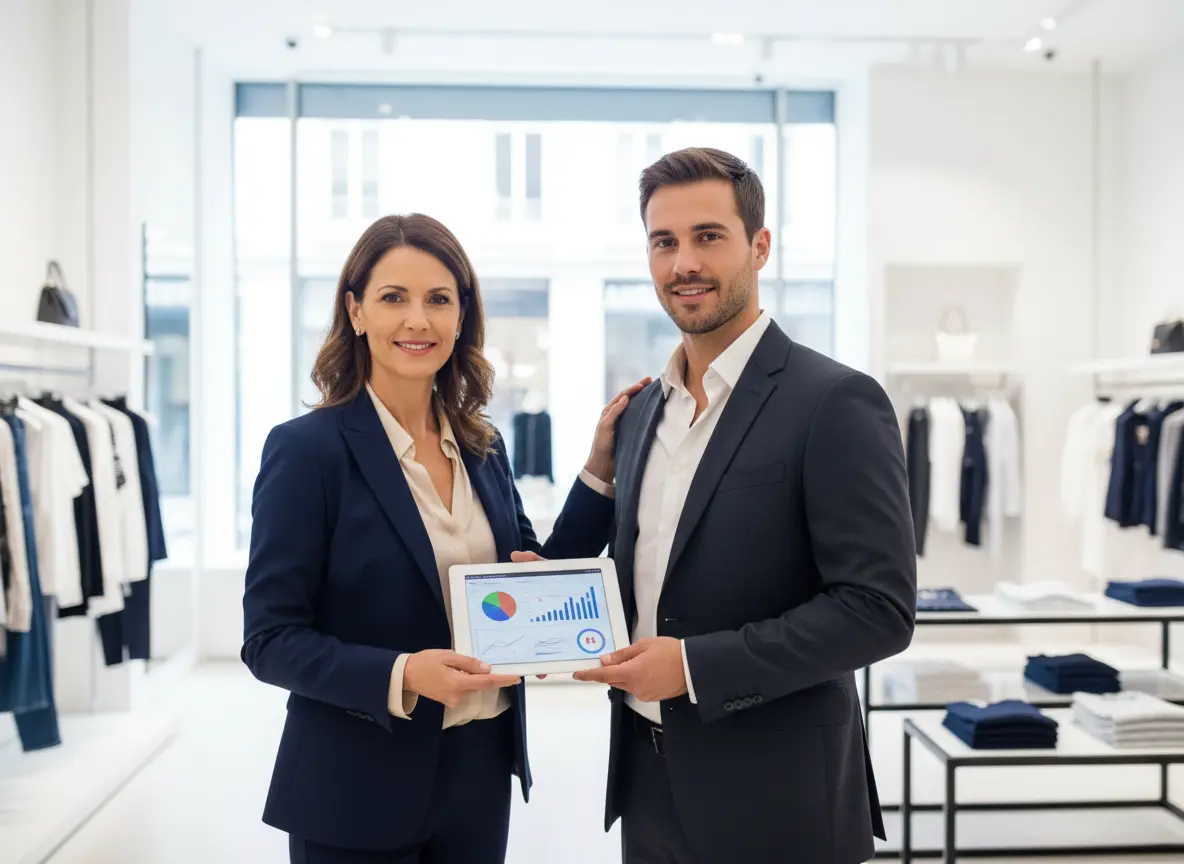
A follow-up system without analytics is just busywork with extra steps. Track your rebooking rates by treatment type, monitor which follow-up messages drive product purchases, and pay attention to which clients are slipping through the cracks despite your outreach. Good AI tools surface these insights automatically, giving you a clear picture of where your retention strategy is strong and where it needs work. Over time, this data lets you refine your messaging, adjust your timing, and invest more heavily in the touchpoints that actually move the needle.
Quick Reminder About Stella
Stella is an AI robot employee and phone receptionist that works both as a physical in-store kiosk and as a 24/7 phone answering system — available for any business at just $99/month with no upfront hardware costs. She handles greetings, inquiries, intake, upselling, and CRM management so your team can focus on delivering exceptional treatments. If you're running a spa and haven't explored what an AI employee could do for your front-of-house operations, it's worth a serious look.
Your Next Steps Toward a Retention-First Spa Business
Post-treatment follow-up isn't a nice-to-have — it's one of the highest-ROI activities available to a spa owner, and it's been sitting largely untapped because the manual version is too time-consuming to do well. AI doesn't just make follow-up easier; it makes it possible to do it right, consistently, for every client, without burning out your team or hiring a dedicated coordinator.
Here's where to start: Audit your current follow-up process honestly. If the answer is "we don't really have one," that's fine — most spas are in the same boat, and now you know exactly what to fix. Define your follow-up touchpoints by treatment category. Invest in a system that captures clean client data at intake and makes that data accessible for personalized outreach. Explore AI tools — including conversational AI for two-way follow-up and phone management solutions like Stella — that can handle the operational volume without adding headcount.
Your clients already like you. They left your spa relaxed, refreshed, and genuinely intending to come back. The only thing standing between that intention and an actual appointment on your books is a well-timed, well-crafted follow-up. Give them the nudge — and let AI make sure it happens every time.