Your Patients Are Googling Their Symptoms at 2 AM — Are You There to Help?
Let's paint a picture. A prospective patient wakes up at 2 AM with a dull ache in their molar. They grab their phone, start searching for answers, and land on your competitor's website — which happens to have a beautifully organized patient education library explaining exactly what might be causing their pain, what treatment options exist, and why their office is the right place to fix it. Meanwhile, your website has a homepage, a contact form, and a stock photo of a woman smiling way too enthusiastically about her dental cleaning.
The good news? This is a completely fixable problem. A patient education library — a curated collection of articles, guides, FAQs, and explainers about dental procedures, oral health, and common concerns — is one of the most underutilized tools in a dental practice's digital marketing arsenal. It builds trust, drives organic search traffic, and positions your practice as the obvious expert choice before a potential patient ever picks up the phone. Let's talk about why you need one and how to actually make it work.
The Case for Patient Education: Trust, Traffic, and Treatment Acceptance
Educated Patients Are Better Patients
There's a reason dentists spend so much chair time explaining procedures — patients who understand what's happening are less anxious, more cooperative, and significantly more likely to follow through with recommended treatment plans. According to research published in the Journal of Dental Education, patient knowledge directly correlates with improved oral health outcomes and higher treatment acceptance rates. When patients arrive at your office already understanding the difference between a crown and a veneer, or why that root canal isn't actually the nightmare they've been dreading, your team spends less time on basic explanations and more time delivering excellent care.
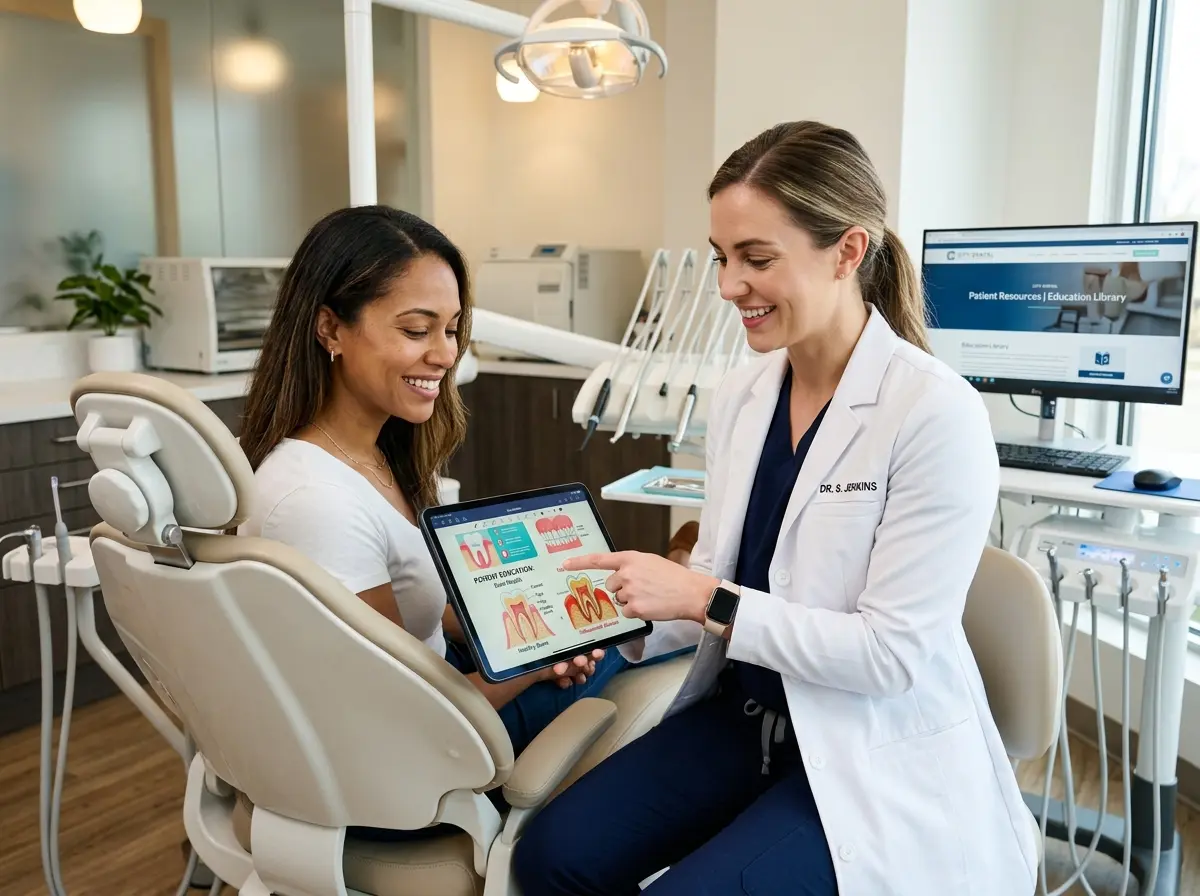
A patient education library on your website extends that educational conversation to the moments when patients are most receptive — when they're researching at home, on their lunch break, or yes, at 2 AM with a toothache. You're essentially giving your patients a head start on their dental journey, which makes every appointment more productive and more profitable.
SEO Benefits That Actually Move the Needle
From a purely practical marketing standpoint, a patient education library is a search engine optimization goldmine. Every article you publish on topics like "what to expect during a dental implant procedure" or "how often should adults get dental X-rays" is another page Google can index and rank. Dental practices that consistently publish educational content generate substantially more organic website traffic than those with static brochure-style websites — and that traffic converts, because the people searching for this information are already in your target audience.
Long-tail search queries — the specific, conversational questions people type into Google — are particularly powerful for local dental practices. When someone in your city searches "why does my tooth hurt when I drink something cold," they're not just curious. They're a potential patient. If your article answers that question clearly and your contact information is prominently displayed, you've just turned a 2 AM Google session into a Monday morning appointment request.
Positioning Your Practice as the Authority
In a market where patients have dozens of dental offices to choose from, authority and trust are your competitive differentiators. A robust patient education library signals that your practice is knowledgeable, transparent, and genuinely invested in patient wellbeing — not just booking appointments. Prospective patients who spend twenty minutes reading your articles before calling your office already trust you before they've met you. That's an extraordinary head start in the sales process, even if calling it a "sales process" in dentistry feels a little uncomfortable. (It is one, though. Just a very wholesome one.)
How Technology Can Support Your Patient Communication Efforts
Bridging the Gap Between Online Research and the First Phone Call
Here's where things get interesting. Your patient education library can drive traffic and build trust all day long, but at some point, a patient has to make contact — and that transition from online research to actual communication is where many practices fumble. A patient reads your excellent article about dental implants at 7 PM, feels ready to book a consultation, calls your office, and gets voicemail. Moment over. Momentum lost.
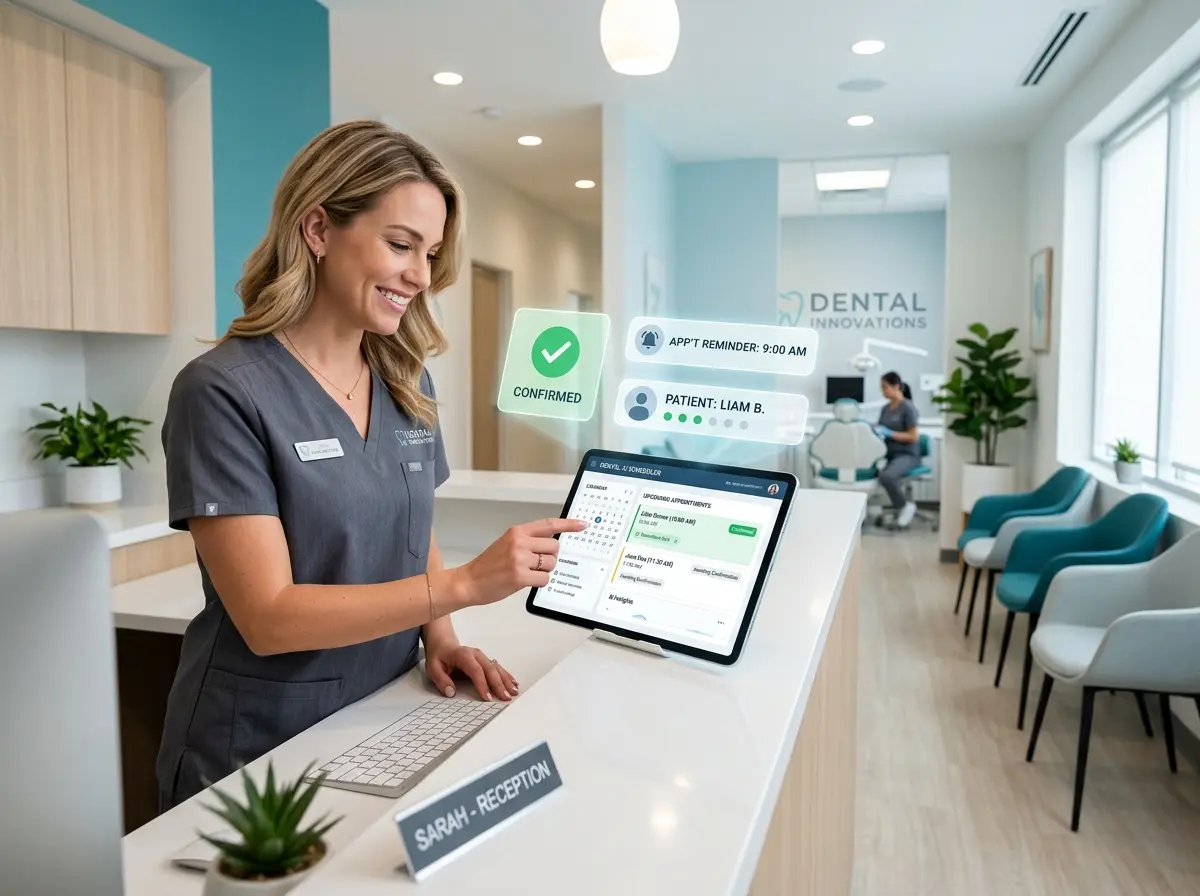
This is exactly the kind of problem that Stella, the AI robot employee and phone receptionist, is designed to solve. Stella answers phone calls 24/7 with full knowledge of your services, pricing, procedures, and policies — so when that newly educated patient calls after hours, she's ready to engage, answer follow-up questions, and capture their information for a callback or appointment. For practices with a physical location, Stella also operates as an in-store kiosk, greeting patients in the waiting room and providing a consistent, knowledgeable presence that complements everything your website is doing online. She also collects patient information through conversational intake forms and manages contacts through a built-in CRM — so no lead falls through the cracks.
Building a Patient Education Library That Actually Gets Used
Choosing the Right Topics
The biggest mistake dental practices make when building a content library is writing about what they think patients want to know instead of what patients are actually searching for. Start with your most frequently asked questions — the ones your front desk answers fifteen times a week. Topics like cost and insurance coverage, procedure pain levels, recovery timelines, and the difference between cosmetic and restorative options are perennial patient concerns that translate directly into high-value search content.
Beyond the basics, consider building content around the specific services you most want to promote. If your practice has invested heavily in clear aligner therapy, a comprehensive library of articles on that topic — covering candidacy, process, cost, maintenance, and results — will attract exactly the right prospective patients. Think of your content library as a magnet for the patients you actually want to see more of in your chairs.
Format, Readability, and the Art of Not Being Boring
Dental content does not have to read like a textbook. In fact, it absolutely should not. Your patients are not dental students — they're people with varying levels of health literacy who want clear, reassuring, and occasionally even entertaining information. Write at approximately an 8th-grade reading level, use headers to break up long articles, include images or diagrams where helpful, and don't be afraid to let your practice's personality show through the writing.
Consider organizing your library into clearly labeled categories — Preventive Care, Cosmetic Dentistry, Restorative Procedures, Pediatric Dentistry, Emergency Dental Care — so patients can navigate intuitively. Add a search bar if your library grows large enough to warrant it. The goal is to make finding information as frictionless as possible, because friction is the enemy of engagement.
Keeping Content Current and Medically Accurate
A patient education library is not a "set it and forget it" project. Dental best practices evolve, new technologies emerge, and outdated information can genuinely mislead patients — which is bad for them and bad for your credibility. Establish a review schedule for your content, at minimum annually, and flag articles that reference specific guidelines or statistics for priority updates. If you're publishing new articles, aim for consistency over volume. One well-researched, well-written article per month will outperform a burst of mediocre content every time.
It's also worth having your clinical team review any articles that touch on medical specifics before they go live. Your marketing instincts are valuable, but your dentists' expertise is what makes the content credible. A byline from a named dentist on your team, complete with credentials, adds an additional layer of authority that generic dental content simply can't match.
Quick Reminder About Stella
Stella is an AI robot employee and phone receptionist available for just $99 per month, with no upfront hardware costs. She greets patients at your front desk, answers calls around the clock, promotes your services, and captures patient information — so your team can focus on delivering great care instead of answering the same questions repeatedly. She's the kind of reliable, professional presence that works perfectly alongside a strong patient education strategy.
Start Small, Think Long-Term, and Get Moving
If you've made it this far and you're thinking, "This sounds great but also like a lot of work," — that's a fair reaction. Building a comprehensive patient education library is a long-term investment, not a weekend project. But the good news is you don't need to launch with fifty articles. Start with ten to fifteen pieces that address your most common patient questions and your highest-priority services. Publish them with proper formatting and clear calls to action directing readers to contact your office. Then build from there, steadily and consistently.
Here are your immediate next steps:
- Audit your current website. What educational content already exists? What's missing?
- Survey your front desk team. Ask them to list the ten questions they answer most often. Those are your first ten articles.
- Choose your format and platform. Most practice management websites support blog or resource section functionality. If yours doesn't, that's a separate conversation worth having with your web provider.
- Assign ownership. Whether it's an in-house team member, a dental marketing agency, or a freelance writer with healthcare experience, someone needs to own this project.
- Set a realistic publishing schedule and treat it like a clinical protocol — something you follow consistently, not something you get to when things slow down (which, as every dentist knows, is never).
Your patients are already out there searching for information about their dental health. The only question is whether they're finding it on your website or your competitor's. A well-built patient education library ensures the answer is yours — and keeps them coming back long after that first late-night Google search.